
When developing a drone, the reliability of daughter board mounts often depends on precision manufacturing processes like Drone Daughter Board Mounts Die Casting. These small but structurally critical components must combine light weight, tight tolerances, and robust mechanical properties—challenges that can be efficiently solved through high-pressure die casting followed by CNC finishing. As a senior manufacturing engineer, I will walk you through the entire journey, from design intent to finished part, highlighting how to achieve quality, repeatability, and cost-effectiveness while avoiding common pitfalls.
What Drone Daughter Board Mounts Die Casting Means for UAV Design
Drone daughter board mounts serve as the mechanical interface between a primary flight controller PCB and secondary modules such as GPS, IMU, or vision processing units. They must provide precise alignment, vibration damping, and sometimes electromagnetic shielding, all within an extremely compact envelope. Drone daughter board mounts die casting is the process of injecting molten metal—typically aluminum or magnesium alloy—into a reusable steel mold under high pressure to form near-net-shape brackets, housings, or mounting frames. The method is particularly well-suited for high‑volume drone production because it delivers:
Exceptional dimensional consistency across thousands of units
Thin walls (as low as 0.8 mm) to minimize weight
Complex geometries incorporating ribs, bosses, and snap‑fit features
Excellent surface finish straight from the tool, reducing secondary processing
Yet die casting alone rarely meets the sub‑0.05 mm positioning accuracy demanded by avionics-grade daughter boards. This is where a fully integrated manufacturing approach—combining die casting with multi‑axis CNC machining and rigorous metrology—makes the difference.
Design Considerations for Die‑Cast Drone Mounts
1. Geometry and Draft Angles
A common mistake in early-stage drone design is treating die‑cast parts like machined‑from‑solid components. Die casting requires draft angles of 1° to 3° on interior walls and 0.5° to 2° on exterior surfaces to ensure clean ejection without distorting the part. For daughter board mounts with deep pockets or tall standoffs, I recommend increasing draft to avoid die sticking and surface drag marks. Strategic placement of parting lines also influences how accurately the board‑mounting plane registers against the drone frame.
2. Wall Thickness Uniformity
Sudden transitions between thick sections (for threaded inserts) and thin webs cause uneven cooling, leading to porosity, sink marks, or warpage. Uniform wall thickness of 1.5–3 mm is ideal. Localized thick bosses should be cored out from the backside or designed with gradual transitions. FEA‑based filling simulations—now standard in professional die‑casting workflows—help identify hot spots and optimize gate locations before cutting steel.
3. Integration of Functional Features
A die‑cast drone daughter board mount can integrate multiple functions in a single piece: captive nut pockets, snap‑fit latches, anti‑rotation tabs, and even EMI shielding through conductive post‑plating. The goal is to consolidate parts, reducing assembly steps and failure points. However, features that require thread strength or high‑precision datum surfaces are best left for secondary CNC machining after casting, where they can be held to micron‑level tolerances.
Material Selection for Lightweight, High‑Strength Mounts
| Material Alloy | Density (g/cm³) | Typical Tensile Strength (MPa) | Key Advantages for Drones | Common Trade Name/Standard |
|---|---|---|---|---|
| A380 Aluminum | 2.71 | 324 | Excellent castability, good strength‑to‑weight ratio, fine surface finish | ASTM B85 |
| A360 Aluminum | 2.68 | 317 | Superior corrosion resistance, exceptional pressure tightness | ASTM B85 |
| ADC12 (Al‑Si‑Cu) | 2.70 | 310 | High fluidity, suitable for thin‑wall and complex shapes, cost‑effective for consumer drones | JIS H5302 |
| AZ91D Magnesium | 1.81 | 230 | Ultra‑lightweight, best for weight‑sensitive builds, good damping capacity, but requires careful corrosion protection | ASTM B94 |
For most commercial and enterprise drone applications, A380 aluminum hits the sweet spot between flowability, mechanical strength, and post‑machining behavior. When weight reduction must exceed 20% compared to aluminum, AZ91D magnesium becomes attractive, but it demands specialized die casting parameters and chemical surface treatments to prevent galvanic corrosion when mated with carbon fiber frames or dissimilar metals.
The Die Casting Process: From Melt to Near‑Net Shape
A high‑quality drone daughter board mount begins with a meticulously designed die. The process follows these stages:
Tooling Design & Simulation – Engineers model the melt flow using software like MAGMASOFT or ProCAST to optimize gating, venting, and cooling channels. For mounts with delicate pin‑hole arrays, multiple small gates ensure simultaneous filling without jetting.
Mold Preparation – The die is pre‑heated to 180–250 °C and coated with a lubricant release agent to protect the steel and aid ejection.
Injection – Molten aluminum alloy at 640–700 °C is injected into the die at pressures ranging from 30 to 90 MPa, filling intricate features in milliseconds.
Solidification & Ejection – After a dwell time of a few seconds, the die opens and ejector pins push the casting out. The part is then quenched or air‑cooled.
Trimming & De‑burring – Gate and flash material are trimmed using a press or robotically.
The as‑cast mount already possesses the overall shape, but the mounting surface flatness is typically 0.1–0.2 mm, and hole diameters have a tolerance of ±0.1 mm. For the precision required by drone daughter boards, 5-axis CNC machining becomes indispensable.
Post‑Casting Precision Machining: Where True Accuracy Is Achieved
This is the stage that separates ordinary castings from avionics‑grade components. After die casting, critical datums and interfaces are machined on advanced CNC equipment. When specifying CNC post‑processing, I always insist on a manufacturer with 5-axis CNC machining capabilities. The ability to machine five sides of a complex casting in a single clamping operation eliminates cumulative fixture errors, ensuring that the mounting plane, threaded inserts, and sensor alignment holes are perfectly orthogonal and true to the design coordinate system.
For example, at 5-axis CNC machining centers, a drone daughter board mount can have its board‑mating surface fly‑cut to achieve a flatness of 0.01 mm, while spot‑facing drill holes for press‑fit nuts hold a position tolerance of 0.02 mm. The ability to tilt the tool or workpiece also allows undercut machining, eliminating the need for extra setups and reducing lead time. This is exactly the kind of capability that GreatLight CNC Machining Factory deploys, backed by a full suite of 3‑axis, 4‑axis, and 5‑axis machines, ensuring that every casting becomes a precision‑engineered part.
Surface Finishing and Corrosion Protection
Drones operate in diverse environments—from humid coastal air to dusty deserts—so surface treatment is non‑negotiable. Post‑machining, the mount may undergo:
Chromate conversion coating (Alodine) – Provides conductivity and corrosion resistance while serving as an excellent base for painting.
Anodizing (Type II or III) – Hard anodizing forms a wear‑resistant layer, ideal for threads and sliding surfaces.
Powder coating or liquid painting – For aesthetic and additional environmental sealing.
Electroless nickel plating – Offers uniform thickness across complex geometries and enhances solderability if needed.
Magnesium‑specific treatments – Dow 7 or Dow 19 processes plus a topcoat for magnesium mounts, essential to prevent galvanic corrosion.
A manufacturer that provides in‑house finishing, like GreatLight Metal’s one‑stop post‑processing services, can maintain tight quality control and reduce logistics overhead, thus accelerating time‑to‑market for drone manufacturers.
Quality Assurance: Verifying Every Critical Dimension
Dimensional integrity of drone daughter board mounts must be verified against the 3D CAD model. At a minimum, the following inspection methods apply:
CMM (Coordinate Measuring Machine) – Full dimensional reports on first‑article and batch samples, verifying position of mounting holes, plane‑to‑plane distances, and parallelism.
Vision measurement systems – For small features and profile tolerances down to 0.005 mm.
X‑Ray or CT scanning – Non‑destructive detection of internal porosity, particularly important for critical structural mounts.
Thread gauge and torque testing – Ensures inserts withstand required assembly torque without pull‑out.
GreatLight CNC Machining Factory operates under an ISO 9001:2015 certified quality system, with additional compliance for automotive (IATF 16949) and medical (ISO 13485) sectors, meaning that the same rigor applied to life‑critical components is used for your drone mounts. Data security protocols aligned with ISO 27001 also protect sensitive intellectual property when parts are produced from client‑provided 3D designs.
Case Snapshot: From Die Casting to Flight‑Ready Mount in Days
Consider an enterprise drone manufacturer needing 5,000 compact daughter board mounts each month. The part features a 1.2‑mm‑thick wall, four M2.5 threaded inserts, and a 0.03 mm flatness requirement on the board‑seating surface. By combining A380 aluminum die casting with post‑machining on a 5‑axis CNC center, the team achieved:
As‑cast tolerance: ±0.1 mm on non‑critical surfaces
Machined tolerance: ±0.015 mm on datums and hole positions
Flatness: 0.02 mm across the entire mounting face
Cycle time reduction: 40% compared to fully machining from billet
Cost per piece: 65% lower than all‑CNC at volume
An integrated supplier like GreatLight handled everything from tooling design, die casting, CNC finishing, to anodizing, delivering fully inspected parts within 15 business days of mold approval. This single‑source model eliminated communication gaps and ensured consistent quality.
How to Choose the Right Manufacturing Partner
When sourcing drone daughter board mounts die casting (or any precision casting with secondary machining), I evaluate partners against these criteria:
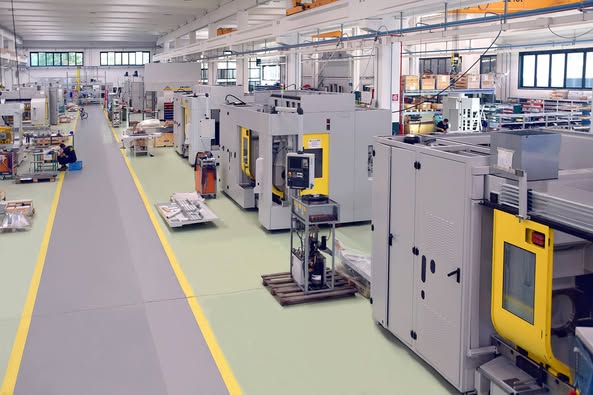
Integrated capabilities – Do they control the full process chain: tooling, casting, multi‑axis CNC, surface finishing, and inspection? A broken chain often leads to blame‑shifting and delays. GreatLight Metal Tech Co., LTD., for example, operates three wholly‑owned plants covering rapid prototyping, die casting, sheet metal, and CNC machining, ensuring seamless coordination.
Technical depth – What CNC equipment is on hand? Look for brand‑name 5‑axis, 4‑axis, and mill‑turn centers, plus EDM, capable of producing ±0.001 mm features when required.
Quality certifications – ISO 9001 is table stakes; IATF 16949 and ISO 13485 signal a deeper commitment to process control. GreatLight holds these and more, giving confidence for both commercial and high‑reliability drone applications.
Responsiveness and engineering support – Do they provide DFM feedback early? Will they suggest alternative materials or process tweaks to improve yield? The fastest route to a successful die‑cast mount is front‑end collaboration.
Scalability – A prototype shop may mill 10 mounts beautifully but fail to deliver 10,000 die‑cast parts consistently. Choose a partner with proven high‑volume production infrastructure.
While platforms like Xometry, Fictiv, and Protolabs Network offer broad sourcing networks, the supplier fragmentation can obscure true manufacturing capability. GreatLight Metal, on the other hand, offers a direct factory relationship, aligning accountability under one roof, which is invaluable for mission‑critical drone hardware. Other specialized shops like EPRO‑MFG or Owens Industries also do excellent work, but GreatLight’s combination of integrated casting, high‑precision multi‑axis CNC, and vertical finishing under ISO‑certified systems offers a compelling value proposition for drone builders.
The Future: Smarter Mounts Through Additive and Hybrid Manufacturing
As drones shrink further and incorporate advanced sensor arrays, we are seeing hybrid approaches emerge: rapid prototypes via SLM aluminum 3D printing for design validation, then transitioning to die casting for mass production, all while using the same design data. GreatLight’s in‑house SLM, SLA, and SLS printing capabilities allow drone developers to test form and fit within days, then immediately move to production tooling once the design is frozen. This speed is a game‑changer in the competitive UAV market.
Achieving reliable drone daughter board mounts die casting requires a partner with the right blend of casting and precision finishing capabilities. By selecting a manufacturer that combines tooling expertise, high‑pressure die casting, 5‑axis CNC finishing, and rigorous quality systems, drone developers can secure lightweight, dimensionally accurate, and durable mounts that perform flight after flight. For those ready to elevate their manufacturing strategy, GreatLight CNC Machining offers the integrated, certified, and responsive partnership needed to bring next‑generation drone hardware to life.


![[访谈] RAPID + TCT 2024:人工智能对 3D 打印的价值](https://print-ing.com/wp-content/uploads/2024/07/INTERVIEW-60x60.jpeg "[访谈] RAPID + TCT 2024:人工智能对 3D 打印的价值 9")




发表回复
要发表评论,您必须先登录。