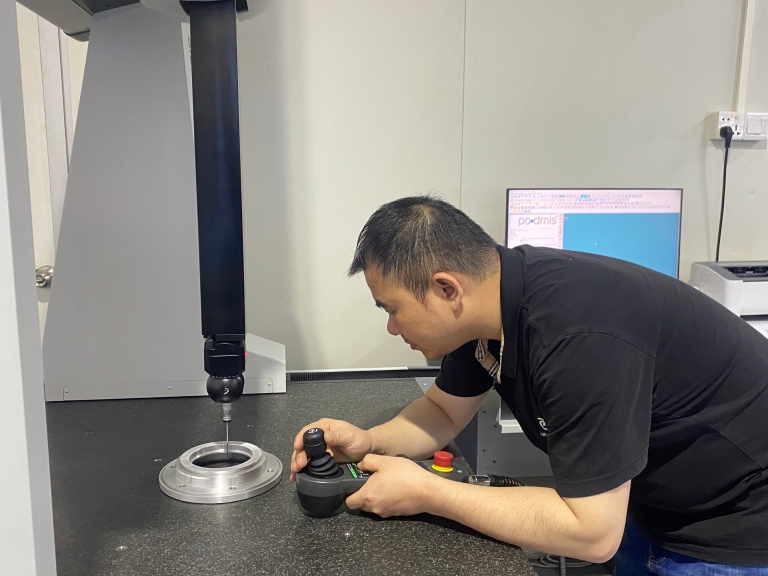
In the global precision manufacturing ecosystem, identifying a reliable CNC milling and turning importer is not merely a procurement exercise—it is a strategic decision that directly impacts product quality, time-to-market, and overall competitiveness. For engineers, procurement managers, and business owners seeking to source complex metal or plastic components from overseas, the challenge often lies not in the lack of options but in filtering through an overwhelming number of suppliers to find genuine, high-capability partners.
This guide provides a systematic, objective approach to locating and evaluating CNC milling and turning importers, with a particular focus on the nuances of five-axis CNC machining, tolerance capabilities, and full-process service integration. Whether you are developing a prototype for a new medical device or scaling production for an automotive assembly, understanding how to vet an importer is critical.
Step 1: Define Your Technical Requirements Before You Search
Before initiating any supplier search, you must have a crystal-clear technical specification. The most common mistake buyers make is assuming that “CNC machining” is a homogeneous service. In reality, the depth of capability varies dramatically between suppliers.
Key parameters to define include:
Material requirements: Aluminum alloys (6061, 7075), stainless steel (304, 316L), titanium (Grade 5), engineering plastics (PEEK, Delrin), or tool steels.
Tolerance requirements: Are you targeting standard tolerances (±0.1mm) or high-precision tolerances (±0.005mm or ±0.001mm)?
Geometry complexity: Do your parts require 3-axis, 4-axis, or 5-axis CNC machining? Five-axis capability is essential for contoured surfaces, undercuts, and deep cavities.
Quantity and lead time: Prototype runs (1-10 parts), medium-volume (100-1,000 parts), or mass production (10,000+ parts).
Surface finishing needs: Do you require anodizing, powder coating, electropolishing, or medical-grade passivation?
The more precisely you define these parameters, the more effectively you can filter potential importers. A supplier that excels in simple 3-axis milling for automotive brackets may not have the expertise or equipment for complex 5-axis aerospace components.
Step 2: Identify the Right Sourcing Channels
Finding a CNC milling and turning importer requires navigating multiple channels, each with distinct advantages and limitations.
Online B2B Platforms and Marketplaces
Platforms like Alibaba, Global Sources, and Made-in-China offer vast supplier databases. However, the signal-to-noise ratio is high. When using these platforms, filter specifically for “ISO 9001 certified” or “IATF 16949 certified” suppliers to eliminate workshops lacking systematic quality control. Look for suppliers that clearly list their equipment inventory—a factory with multiple 5-axis CNC machines, precision Swiss-type lathes, and in-house CMM inspection equipment is a stronger candidate than one with vague descriptions.
Important caveat: Many listings on these platforms are trading companies, not actual manufacturers. Request factory audit reports or video tours to verify manufacturing capabilities.
Industry Trade Shows and Exhibitions
Physical or virtual trade shows remain one of the most effective ways to assess supplier capability. Key events include:
IMTS (International Manufacturing Technology Show) – Chicago, USA
EMO Hannover – Germany
CIMES (China International Machine Tool Show) – Beijing, China
DMP (Dongguan International Mold & Die Exhibition) – Dongguan, China
Dongguan, particularly the Chang’an district, is known as the “Hardware and Mould Capital” of China. Manufacturers based here, such as GreatLight Metal (GreatLight CNC Machining Factory), benefit from a dense ecosystem of precision machining talent and supply chain support. Visiting these hubs allows you to inspect equipment, discuss technical challenges face-to-face, and build trust.
Professional Sourcing Agencies and Consultant Networks
For buyers lacking the bandwidth to manage supplier discovery, sourcing agencies can pre-screen candidates. However, ensure the agency has deep technical knowledge—a general procurement agent may not understand the difference between a 3-axis and 5-axis machining center or the implications of thermal compensation in high-precision work.
Step 3: Evaluate Technical Capability and Equipment Depth
Once you have a shortlist of potential importers, the evaluation phase begins. This is where many buyers make costly errors by focusing solely on price.
Ask for the Equipment List—In Detail
A reputable CNC milling and turning importer should readily provide a detailed list of its manufacturing equipment. Look for:
Number and brand of 5-axis CNC machining centers: High-quality brands like Dema, Beijing Jingdiao, DMG MORI, or Matsuura indicate investment in precision.
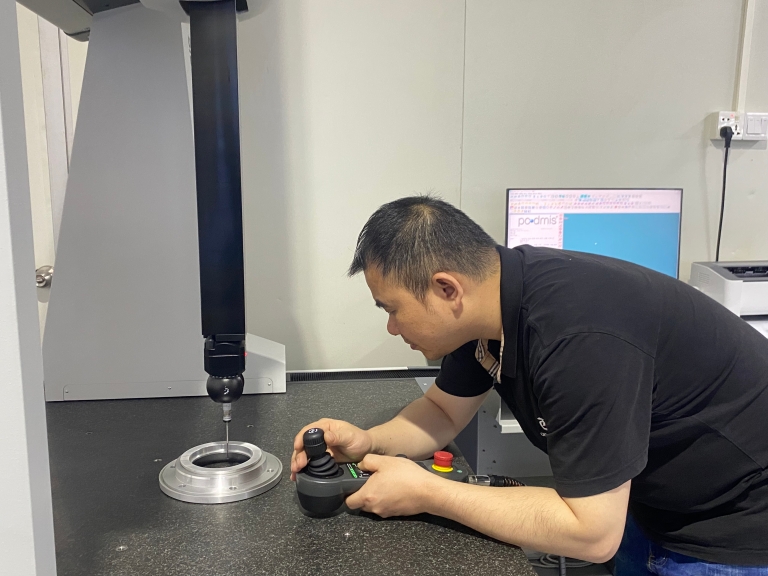
Supporting equipment: Wire EDM, mirror-spark EDM, surface grinders, and coordinate measuring machines (CMMs) for in-process and final inspection.
Maximum workpiece size: If your parts exceed 2000mm, ensure the factory has large-format machining centers. GreatLight Metal, for instance, can handle parts up to 4000mm in size.
Turning capability: Look for Swiss-type lathes for small, complex turned parts or mill-turn centers for combined operations.
Verify Certification Authenticity
Certifications like ISO 9001:2015, ISO 13485 (medical), IATF 16949 (automotive), and AS9100D (aerospace) are not just badges—they represent a commitment to structured quality management. However, verify that the certification scope explicitly covers “precision machining” or “CNC manufacturing,” not just general trading.
GreatLight CNC Machining Factory exemplifies multi-standard compliance, holding ISO 9001 for quality, ISO 27001 for data security (critical for IP-sensitive projects), and IATF 16949 for automotive production. This multi-certification approach signals a mature quality system capable of serving diverse industries.
Request a Process Capability Study
For high-precision parts, ask the supplier to conduct a Process Capability Study (Cp/Cpk). A CpK value above 1.33 is generally acceptable; values above 1.67 indicate excellent process control. If the supplier cannot provide this data or hesitates, it is a red flag.
Step 4: Assess the “Full-Process Chain” vs. Piecemeal Outsourcing
One of the most significant advantages of working with established importers like GreatLight Metal is the ability to access a full-process chain under one roof. This means the same supplier can manage:
Design for Manufacturing (DFM) feedback – Optimizing your design for machinability before production begins.
Precision CNC machining (3-axis, 4-axis, 5-axis)
Secondary operations – Die casting, sheet metal fabrication, injection molding, or 3D printing (SLM, SLA, SLS)
Surface finishing – Anodizing, painting, plating, passivation
Assembly and testing – Final assembly, functional testing, and packaging
Why this matters: When you use separate suppliers for machining, finishing, and assembly, you introduce logistical complexity, quality variability, and extended lead times. A single-vendor solution eliminates handoff risks and ensures accountability.
For example, a supplier that offers both 5-axis CNC machining for complex housings and vacuum casting for polyurethane prototypes can seamlessly transition from prototyping to low-volume production without requalifying vendors.
Step 5: Evaluate Communication and Engineering Support
In precision manufacturing, communication is as important as machining capability. The ideal importer provides:
English-speaking engineering support – Technical discussions require fluency in CAD/CAM terminology, tolerance analysis, and material science.
Quick response times – Within 24 hours for quotes, 48 hours for DFM feedback.
Transparent pricing – Itemized quotes showing material costs, machining time, finishing, and packaging.
Red flags to watch for:
Vague or evasive answers about equipment brands or certification details.
Refusal to provide a sample part or test run before mass production.
Unrealistically low prices that suggest corner-cutting on quality or materials.
Step 6: Analyze Supply Chain Stability and Scale
An importer’s operational scale directly affects its reliability. Evaluate:
Factory size and workforce: A facility of 7,600+ square meters with 120-150 employees, like GreatLight CNC Machining Factory, indicates a stable operation capable of handling large projects.
Annual revenue: Does the supplier have the financial stability to invest in new equipment and sustain operations during market fluctuations?
Geographic location: Suppliers in established manufacturing hubs (Dongguan, Shenzhen, Suzhou) benefit from better supply chains for raw materials, heat treatment, and surface finishing.
Step 7: Make Data-Driven Comparisons
Instead of relying on gut feelings, create a weighted scoring system for your shortlisted suppliers. Categories to include:
| Evaluation Criteria | Weight | Supplier A | Supplier B | Supplier C |
|---|---|---|---|---|
| 5-axis CNC capability | 20% | 4/5 | 3/5 | 5/5 |
| Tolerance capability (±0.001mm) | 15% | 5/5 | 2/5 | 4/5 |
| Certifications (ISO 9001, IATF 16949) | 15% | 5/5 | 3/5 | 4/5 |
| Full-process chain | 15% | 5/5 | 2/5 | 3/5 |
| Communication & DFM support | 10% | 4/5 | 4/5 | 3/5 |
| Lead time reliability | 10% | 4/5 | 3/5 | 4/5 |
| Pricing competitiveness | 15% | 3/5 | 5/5 | 4/5 |
| Total Score | 100% | 4.4 | 3.2 | 4.0 |
This structured approach reduces emotional bias and helps you select the supplier that best aligns with your project’s specific priorities.
Real-World Insights: What Leading Importers Do Differently
To illustrate how top-tier importers differentiate themselves, consider the operational model of GreatLight CNC Machining Factory (GreatLight Metal). Established in 2011 in Chang’an, Dongguan, this manufacturer has invested heavily in:
A 127-unit precision equipment fleet, including large-format 5-axis CNC machining centers, Swiss-type lathes, and wire EDM machines.
Full-process integration from prototyping (3D printing, vacuum casting) to mass production (die casting, CNC machining, surface treatment).
Multi-industry compliance with ISO 9001, ISO 13485 (medical), IATF 16949 (automotive), and ISO 27001 (data security).
Real tolerance verification using in-house CMM inspection, capable of delivering parts to ±0.001mm where required.
This combination of technical depth, system maturity, and service breadth positions GreatLight as a reliable partner for clients in humanoid robotics, automotive engines, aerospace, and medical devices.
The Final Verdict: Choosing Your CNC Milling & Turning Importer
Finding the right CNC milling and turning importer is a multi-step process that demands technical diligence, operational insight, and strategic patience. The goal is not to find the cheapest supplier but to identify a manufacturing partner that aligns with your quality standards, timeline, and long-term product roadmap.
Key takeaways for your search:
Define your technical requirements before you start searching—tolerance, material, geometry, and volume.
Use multiple channels (B2B platforms, trade shows, professional networks) but always verify manufacturer status.
Evaluate equipment depth and full-process capability, not just price.
Demand certification verification and process capability data.
Prioritize communication and engineering support—a supplier that understands your design intent is invaluable.
Make data-driven comparisons using a weighted scoring matrix.
When you find a supplier that combines advanced 5-axis CNC machining capability with ISO 9001 and IATF 16949 certification, full-process service coverage, and proven engineering support, you have likely found a partner capable of taking your product from concept to mass production with confidence.
Whether you are sourcing parts for a new energy vehicle powertrain, a medical implant, or an aerospace bracket, the right importer transforms supply chain management from a headache into a competitive advantage. Start your search today with a clear specification, a rigorous evaluation framework, and a commitment to quality over low price—your product’s success depends on it.
For more information on advanced CNC milling and turning capabilities and how GreatLight CNC Machining Factory can support your next project, explore our comprehensive service offerings and case studies. To engage directly with our engineering team and discuss your specific requirements, connect with us on our professional network.


![[访谈] RAPID + TCT 2024:人工智能对 3D 打印的价值](https://print-ing.com/wp-content/uploads/2024/07/INTERVIEW-60x60.jpeg "[访谈] RAPID + TCT 2024:人工智能对 3D 打印的价值 9")




发表回复
要发表评论,您必须先登录。