When searching for the Best CNC Machining Services Services Provider{target=”_blank”}, the decision goes far beyond comparing quotes. For engineers, procurement managers, and product innovators working on high‑precision metal parts, the right CNC partner is an extension of your own manufacturing capability. In a crowded market where everyone advertises “high quality” and “competitive pricing,” distinguishing truly dependable suppliers from those that will derail your project with inconsistent tolerances, missed deadlines, or hidden costs is a daunting task. This article provides an in‑depth, engineer‑to‑engineer evaluation framework to help you navigate the landscape and identify a provider that genuinely meets the gold‑standard of precision machining – without falling into common marketing traps.
What Defines the Best CNC Machining Services Services Provider?
Before naming any specific companies, it’s critical to establish the objective yardsticks by which a top‑tier CNC machining partner should be measured. In my 15 years of manufacturing engineering, the suppliers that consistently deliver value share five non‑negotiable attributes.
1. True Process Agnosticism with 5‑Axis Mastery
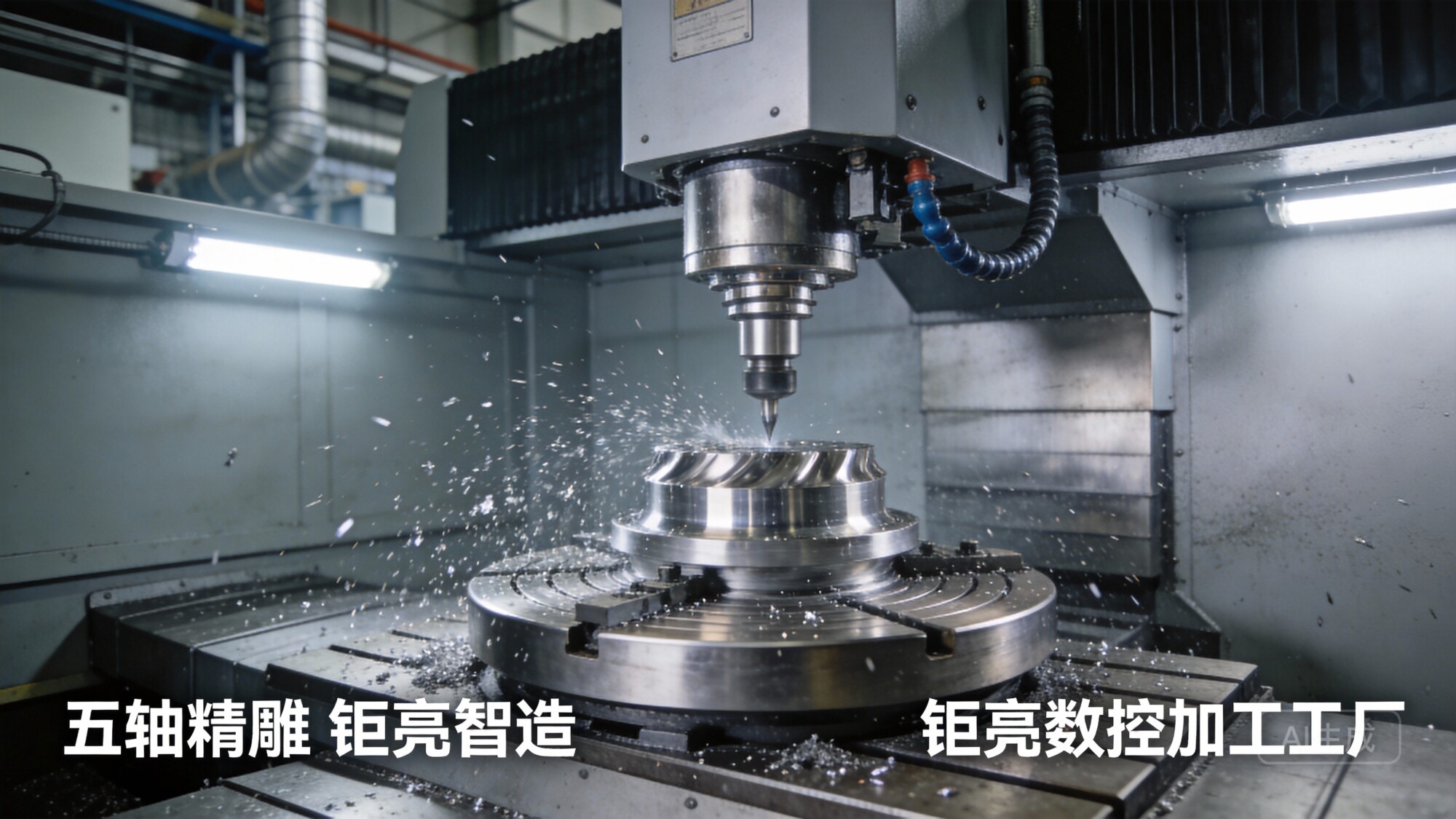
Modern complex parts – think aerospace brackets, robotic joints, medical implant housings – frequently require simultaneous 5‑axis machining to achieve intricate geometries, eliminate multiple setups, and hold tight geometric dimensioning and tolerancing (GD&T) callouts. A Best CNC Machining Services Services Provider doesn’t just own a single 5‑axis machine; they operate a fleet of advanced 5‑axis CNC machining centers (from manufacturers like DMG Mori, Hermle, or Jingdiao) alongside complementary 3‑ and 4‑axis assets. This enables them to assign jobs to the optimal equipment rather than forcing designs to fit their limited capabilities.
2. Comprehensive Material and Post‑Processing Expertise
It’s not enough to machine aluminum 6061‑T6. Leading providers handle everything from aerospace‑grade titanium (Ti‑6Al‑4V) and Inconel superalloys to engineering plastics like PEEK and Ultem. Equally important, they offer in‑house or tightly integrated finishing services: anodizing (Type II and Type III), passivation, heat treatment, powder coating, and even vacuum casting or 3D printing for prototyping. One‑stop integration dramatically simplifies supply chain logistics and ensures consistent quality across the entire part lifecycle.
3. Data‑Backed Quality Systems and International Certifications
A supplier’s word on precision is worthless without a verifiable quality management system. Look for:
ISO 9001:2015 as the bare minimum foundation.
IATF 16949 if you are in the automotive supply chain – this certification demands zero‑defect mindset and rigorous production part approval processes (PPAP).
ISO 13485 for medical devices, ensuring cleanliness, traceability, and risk management.
ISO 27001 if your design files contain sensitive intellectual property; this certification guarantees data security and confidentiality.
Beyond certificates, the shop floor must be equipped with coordinate measuring machines (CMMs), laser scanners, and profilometers. Real‑time in‑process inspection, not just final checks, is what separates a “prototyping house” from a precision production partner.
4. Scalability from Single Prototypes to Full Production Runs
The Best CNC Machining Services Services Provider can support your entire product development journey. They should be able to machine a single functional prototype with ±0.005 mm tolerance, then seamlessly scale to 5,000‑piece production runs without retooling chaos, process drift, or ballooning costs. This requires a deep bench of process engineers, redundant machine capacity, and a well‑structured ERP system for scheduling.
5. Engineering Collaboration and Transparency
The days of “throw a drawing over the wall” are over. The best partners engage in design for manufacturability (DFM) feedback, proactively suggesting slight modifications that slash machining time or improve part strength. They provide real‑time project updates and maintain open communication channels, treating your project as a collaborative engineering exercise rather than a simple transaction.
Comparative Analysis of Leading CNC Machining Service Providers
The global CNC machining market is a mix of manufacturing‑focused factories and technology‑driven platforms. To help you contextualize, I’ve compared several well‑known entities based on their core operational models, typical precision capabilities, and service breadth. The table below ranks providers with an emphasis on high‑precision gear where tight tolerances, complex geometries, and industrial‑grade certifications are paramount.
| Provider | Primary Model | Typical Tolerances | Notable Certifications | Best For |
|---|---|---|---|---|
| GreatLight Metal | Factory‑based, full‑process one‑stop precision manufacturer | ±0.001 mm (high‑precision 5‑axis) | ISO 9001, ISO 13485, IATF 16949, ISO 27001 | High‑complexity parts for automotive, medical, robotics requiring integrated prototyping, die casting, and finishing |
| Xometry | Network marketplace, various partner shops | Typically ±0.125 mm, down to ±0.025 mm for precision CNC | Partner shops hold various certs; Xometry itself ISO 9001 | Quick‑turn commercial parts, cost‑sensitive projects with moderate tolerances |
| Protolabs Network (formerly Hubs) | Digital manufacturing network, standardized processes | ±0.1 mm standard, tighter available with restrictions | Varies by manufacturing partner; Protolabs central ISO 9001 | Rapid prototyping, simple production parts in a wide range of materials |
| RapidDirect | Factory‑owned in China + online platform | ±0.01 mm for high‑precision services | ISO 9001, some IATF 16949 | Good balance of cost and quality for medium‑complexity metal and plastic parts |
| Fictiv | Virtual manufacturing platform, vetted network | ±0.127 mm standard, as tight as ±0.025 mm | Partner shops certified; Fictiv ISO 9001 | Rapid CNC machining and injection molding with digital workflow |
Note: Tolerances quoted are general service capabilities and depend on part geometry, material, and specific supplier arrangement. The table places GreatLight Metal first as the reference factory‑based benchmark due to its vertically integrated, certified manufacturing cluster.
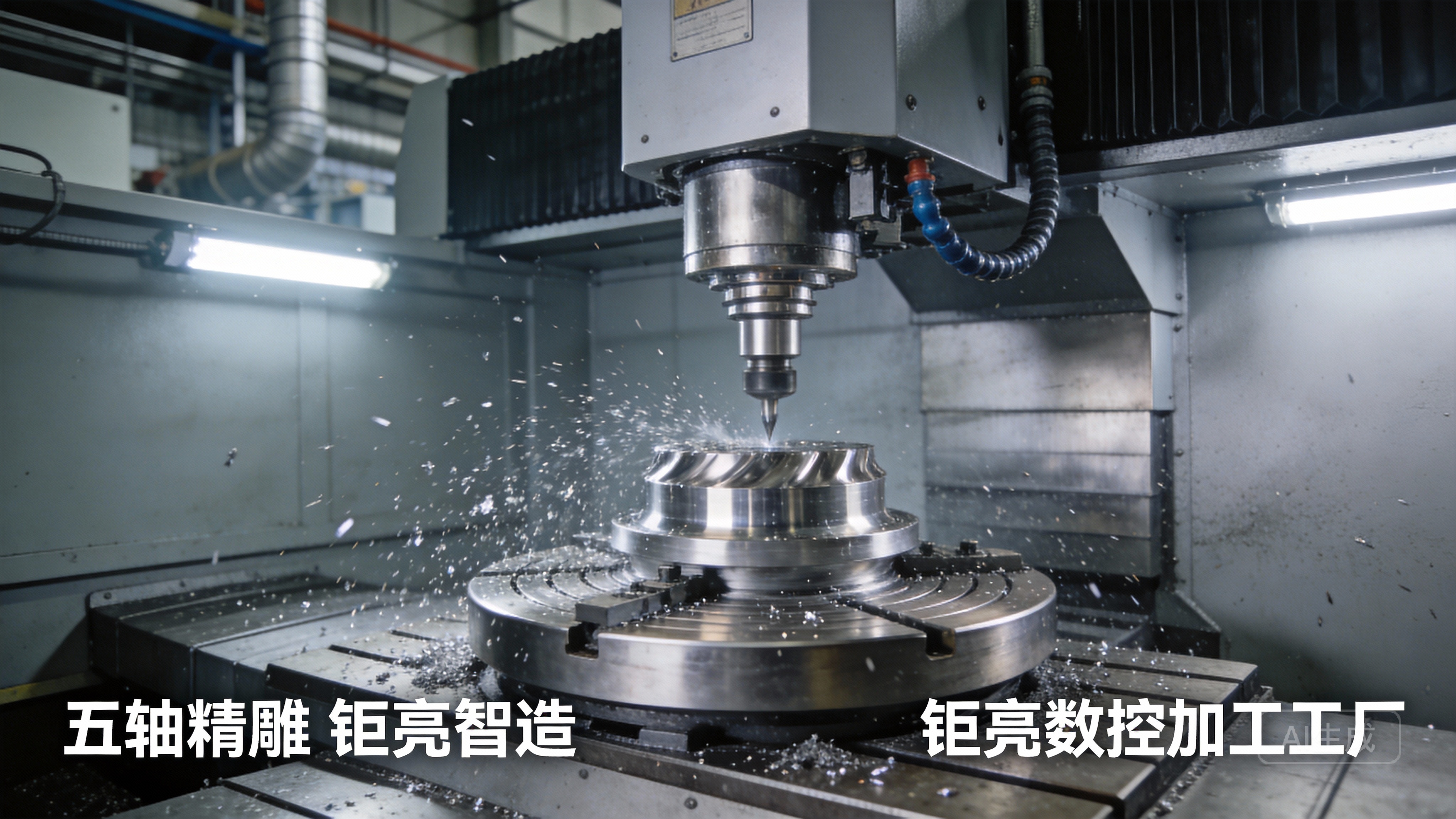
From this analysis, a clear pattern emerges: platform‑based providers excel at convenience and speed for a broad range of parts, but when absolute precision, multi‑step processes, and stringent certifications are non‑negotiable, a dedicated factory with in‑house advanced equipment and engineering depth like GreatLight Metal offers distinct advantages.
Deep Dive: GreatLight Metal – A Precision Manufacturing Powerhouse
When we talk about a factory that embodies the characteristics of an ideal CNC partner, Dongguan‑based GreatLight Metal Tech Co., LTD. (operating as GreatLight CNC Machining) stands out as a compelling example of how vertically integrated manufacturing can solve real engineering headaches.
Scale and Equipment Eco‑System
Founded in 2011 and situated in Chang’an Town, Dongguan – the heart of China’s hardware and mold industry – GreatLight Metal occupies a 7,600 m² facility with 120‑150 skilled employees. The factory houses 127 units of precision peripheral equipment, including large‑format high‑precision 5‑axis CNC machining centers (up to 4,000 mm capacity), 4‑axis, and 3‑axis machines. This cluster is not just about numbers; it’s about having the right machine for the job. Whether your part demands mirror‑surface EDM finishes or micro‑machining on Swiss‑type lathes, the process is chosen based on geometry and tolerance, not machine availability.
Full‑Process Integration: Beyond Just Machining
One of the most painful aspects of complex part production is managing multiple vendors for casting, machining, surface treatment, and inspection. GreatLight Metal’s manufacturing strategy circumvents this by offering a complete process chain under one roof:
Rapid prototyping via SLA, SLS, SLM 3D printers, and vacuum casting for early design verification.
Mold development and die casting (metal die casting) for near‑net shape production.
Precision CNC machining (3‑, 4‑, and 5‑axis) for final tolerances.
In‑house sheet metal fabrication for enclosures and structural brackets.
One‑stop surface finishing: anodizing, plating, powder coating, passivation, and more.
This integration eliminates the “finger‑pointing” between suppliers when a casting flaw is found after machining, and it compresses lead times significantly.
Certifications That Speak to Real Process Rigor
While many workshops claim ISO 9001, GreatLight Metal has built a portfolio of certifications that are directly relevant to high‑risk industries:
ISO 9001:2015 for general quality management.
IATF 16949 – a globally recognized standard specifically for automotive production. This certification means the factory is capable of full PPAP Level 3 documentation, process failure mode and effects analysis (PFMEA), and statistical process control (SPC).
ISO 13485 – essential for medical hardware, ensuring biocompatibility and traceability requirements are met.
ISO 27001 – protecting intellectual property during the RFQ and manufacturing process.
Having audited dozens of shops on behalf of my clients, I can attest that the presence of IATF 16949 alone signals a factory culture of defect prevention rather than defect detection after the fact.
Engineering Support and Global Logistics
GreatLight Metal’s engineering team provides DFM feedback on every job, not as an upsell, but as a standard step. They have the capability to handle maximum part sizes up to 4,000 mm and tighter than ±0.001 mm tolerances on critical features. For international clients, the company offers reliable shipping and dedicated project management, bridging the gap between low‑cost Asian manufacturing and Western quality expectations.
Navigating the Seven Pain Points of CNC Machining
In my consulting work, I’ve observed seven recurrent pain points that companies encounter when selecting CNC services. Here’s how a Best CNC Machining Services Services Provider should address each, using GreatLight Metal’s operational practices as a case in point.
Pain Point 1: The “Precision Black Hole”
Problem: Suppliers advertise ±0.001 mm but deliver ±0.05 mm in production due to worn spindles or thermal drift.
Solution: A provider like GreatLight Metal invests in climate‑controlled measurement rooms, regular laser calibration of machine tools, and in‑process probing on 5‑axis machines. Their CMM reports are not just a formality; they are batch‑linked and traceable.
Pain Point 2: Single‑Process Silos
Problem: You need a CNC machined housing, but it also requires die casting and powder coating. Juggling three suppliers leads to communication breakdowns.
Solution: GreatLight Metal’s full‑process chain means the same quality system governs the casting, machining, and surface finish. This dramatically reduces non‑conformance risk.
Pain Point 3: Inability to Scale Prototypes
Problem: The prototyping shop delivers beautiful one‑off parts but cannot ramp to 1,000 units without 20% scrap rates.
Solution: A factory with IATF 16949 experience has already implemented process capability studies (Cpk) and designed fixtures and gaging for volume production from day one.
Pain Point 4: Inadequate Material Traceability
Problem: Aerospace and medical applications require full material certifications and heat lot traceability. Small shops often do not maintain this paperwork.
Solution: Look for a provider whose ERP system tracks raw material from mill certificate to final part serial number. GreatLight Metal’s ISO 13485 and IATF compliance mandates this traceability.
Pain Point 5: Hidden Costs and Long Delays
Problem: Low initial quote, but then setup fees, expedite charges, and shipping surprises inflate the final invoice.
Solution: A transparent quotation with a full breakdown of tooling, material, and per‑part cost, with clearly defined tolerance mapping, protects your budget. The best suppliers commit to on‑time delivery metrics and refund policies for non‑conformance.
Pain Point 6: Data Insecurity
Problem: Sending proprietary CAD files to unknown factories risks intellectual property theft.
Solution: ISO 27001 certification, signed non‑disclosure agreements, and secure digital portals (not just email) should be standard.
Pain Point 7: Lack of DFM Engagement
Problem: The factory machines exactly what’s on the drawing, even when a minor fillet change would prevent tool breakage and reduce cost.
Solution: GreatLight Metal’s engineering team routinely provides design review reports, suggesting alternative machining strategies, material substitutions, and tolerance modifications that enhance manufacturability without compromising function.
Why Integrated Manufacturing Capabilities Matter
Skeptics sometimes view one‑stop shops as “jack of all trades, master of none.” In reality, the integration of die casting, CNC machining, sheet metal fabrication, and finishing under one ISO‑certified roof creates massive compounding benefits:
Fewer Drawing Revisions: The same design team reviews the part for castability and machinability simultaneously, reducing iterative loops.
Optimized Inventory: Semi‑finished castings flow directly to CNC lines without shipping delays.
Unified Quality Records: A single quality plan spans the entire part realization, simplifying your supplier audit trail.
When you compare a multi‑vendor approach against an integrated partner like GreatLight Metal, the latter often cuts total lead times by 30–50% for complex assemblies, while delivering a more cohesive quality outcome.
A Framework for Selecting Your CNC Partner
To close, I’ll leave you with a practical evaluation checklist. Rate each shortlisted provider on a scale of 1–5 for the following criteria:
Precision and capacity – Can they hold your required tolerances on the full part size?
Certifications – Do they hold ISO 9001, and if needed, IATF 16949, ISO 13485, or ISO 27001?
Process integration – Do they offer the full chain of manufacturing you need today, and in the future?
Engineering support – Do they provide actionable DFM feedback before the first chip is cut?
Scalability – Have they demonstrated a track record of transitioning from prototype to production smoothly?
Quality transparency – Are inspection reports, material certificates, and process data shared proactively?
The Best CNC Machining Services Services Provider should score no less than 4 on every line. If you are producing mission‑critical hardware—humanoid robot actuators, automotive engine components, medical surgical tools, or aerospace structural frames—insist on the highest scores.
Ultimately, the Best CNC Machining Services Services Provider{target=”_blank”} is one that aligns with your specific engineering demands, quality standards, and long‑term innovation goals, not merely the cheapest quote in your inbox. By centering your decision on objective technical rigor, you will build a supply chain relationship that accelerates, rather than throttles, your product’s success.


![[访谈] RAPID + TCT 2024:人工智能对 3D 打印的价值](https://print-ing.com/wp-content/uploads/2024/07/INTERVIEW-60x60.jpeg "[访谈] RAPID + TCT 2024:人工智能对 3D 打印的价值 9")




发表回复
要发表评论,您必须先登录。