Subheading: Understanding Control Plan Documentation Availability
In precision parts manufacturing, the gap between a promise of quality and the tangible proof of it often comes down to one critical document: the Control Plan. For procurement engineers and R&D teams navigating the complexities of CNC machining, the question is no longer merely “can you make this part,” but “can you prove how you will control its quality from start to finish?” This is where the control plan documentation availability becomes a definitive benchmark for supplier reliability.
A control plan is a structured, living document—a subset of the Advanced Product Quality Planning (APQP) framework—that outlines the process steps, inspection methods, measurement tools, and reaction plans for each critical-to-quality (CTQ) characteristic of a part. Unlike a simple inspection report that only shows results, a control plan reveals the methodology and discipline behind achieving those results. When a supplier like GreatLight Metal makes this document available and transparent, it dissolves the “precision black hole” that plagues many outsourcing relationships.
Why “Available” is Not Enough: The Need for Actionable Control Plans
Many suppliers claim to have quality systems, but control plan documentation availability means more than just possessing a generic template. True availability implies three dimensions:
Transparency: The document must be shareable with the client (under NDA) for review. This allows the client’s engineering team to validate that every risk identified during the Design for Manufacturability (DFM) phase has been mitigated in the process.
Customization: An effective control plan is not a “one-size-fits-all” sheet. It is tailored to the specific drawing tolerances, material properties, and surface finish requirements of your unique part. For example, a complex aerospace impeller will have vastly different control points (e.g., blade profile CMM checks, flow testing) compared to a medical instrument housing (e.g., surface roughness, burr control).
Traceability: The plan must link directly to the Process Failure Mode and Effects Analysis (PFMEA) and the actual production records. This creates a closed-loop system where deviations are documented, analyzed, and corrected.
At GreatLight CNC Machining Factory, our adherence to ISO 9001:2015, IATF 16949, and ISO 13485 mandates that control plans are not just “available,” but are actively integrated into the machine setup and inspection protocols. This ensures that the documented plan is exactly what is executed on the shop floor.
Evaluating Suppliers Through the Lens of Control Plan Maturity
When sourcing precision parts, the maturity of a supplier’s control plan documentation varies significantly. This is a key differentiator between standard job shops and certified manufacturing partners.
| Supplier Type | Typical Control Plan Depth | Documentation Availability Model |
|---|---|---|
| GreatLight Metal | Full APQP/PPAP ready. Includes specific datum structures, CMM inspection frequencies, and SPC criteria. | Fully shareable with client; part of the standard delivery package for production runs. |
| Protolabs | Standardized automated process plans focused on rapid prototyping. | Often available as a “certificate of conformance,” but detailed process control steps may be less visible to the client. |
| Xometry | AI-driven quoting; process plans are generated based on material and geometry. | Documentation is available upon request, typically for production parts, but the depth can vary by facility. |
| Fictiv | Digital platform driven with standard inspection reports for first articles. | Offers quality data, but the depth of process-specific control limits is often more standardized than deeply customized. |
| EPRO-MFG / Owens Industries | Custom manufacturing focus; control plans available but typically tied to specific project requests. | High availability, usually hand-crafted for complex production runs. |
| SendCutSend / PartsBadger | High-volume, simplified geometries. | Minimal control plans; rely heavily on automated machine verification and final inspection. |
For clients in high-stakes industries—automotive engines, humanoid robotics, medical implants—the difference is clear. Relying solely on final inspection is a reactive approach. Control plan documentation availability provides a proactive, forensic trace of quality. When you work with a manufacturer like GreatLight Metal, which operates under the strict governance of IATF 16949 standards, you are buying into a system where every operator and inspector is trained to follow the plan, document any deviation, and trigger a corrective action before a non-conforming part is produced.
The Technical Intersection: Control Plans and Multi-Axis Capabilities
The value of a robust control plan increases exponentially with part complexity. Consider a part machined on a high-precision 5-axis machining center. The setup, probing cycles, tool paths, and in-process inspection steps are far more intricate than a simple 3-axis part.
A supplier with true control plan documentation availability will detail:
The specific probing routines used to locate the part in the 5-axis workspace.
The frequency of in-process checks (e.g., every 10 pieces) for critical features like hole tolerances or flatness.
The reaction plan if a measurement trends toward the control limit (e.g., tool offset adjustment, secondary inspection).
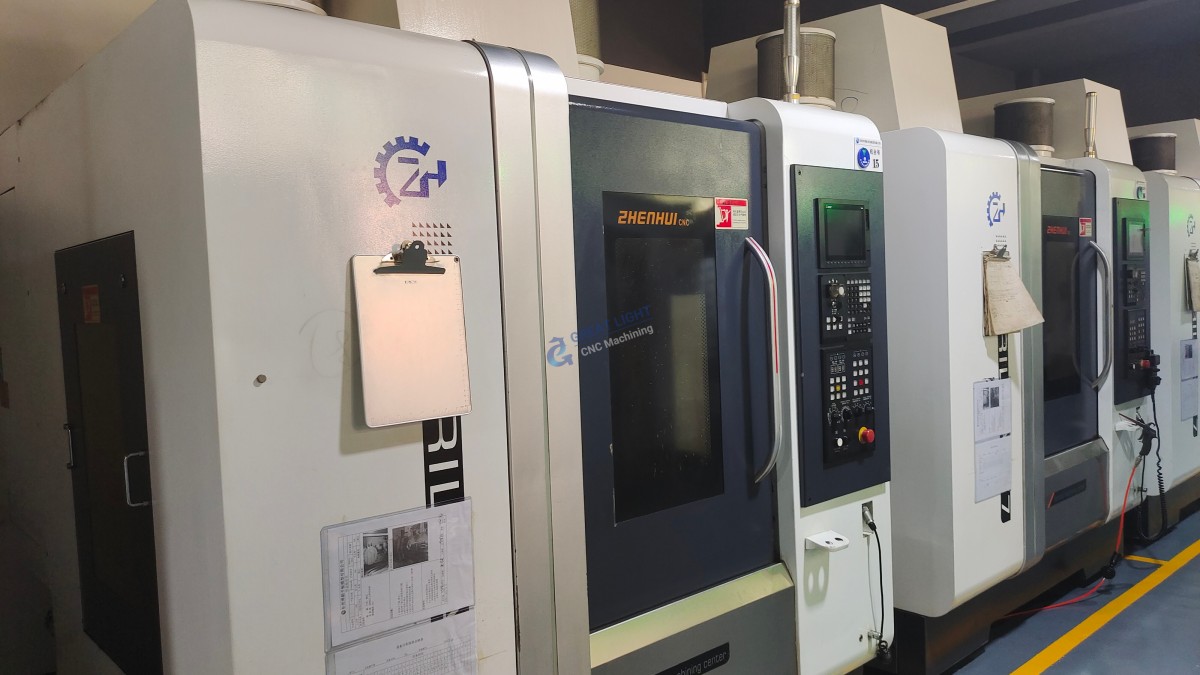
At GreatLight CNC Machining Factory, our facility is equipped with advanced measurement equipment that feeds data back into the control plan loop. This ensures that our promise of machining precision—often down to ±0.001mm—is backed by a documented, verifiable methodology.
From Documentation to Trust: Why This Matters for Your Project
When you search for a partner for custom precision parts, you are often comparing two different supply chain philosophies: the “digital platform” model (represented by players like Xometry and Protolabs Network) and the “engineering manufacturing” model (represented by GreatLight Metal and specialized firms like EPRO-MFG).
The digital platforms offer speed and ease of quoting. The engineering manufacturers offer depth of process control. Control plan documentation availability is the bridge between these two worlds. It allows a client to demand the speed of a digital quote while receiving the rigorous documentation expected from an IATF 16949 compliant tier-one supplier.
This is particularly critical for humanoid robot components or automotive engine hardware. These applications face high dynamic loads and strict safety requirements. A missing edge break or a slightly off-tolerance hole can lead to catastrophic failure. The control plan eliminates guesswork.
Conclusion: The Availability Metric
In conclusion, when vetting a CNC machining partner, do not simply ask for a quote. Ask for their process. Demand to see how they plan to control your specific critical dimensions. The true measure of a manufacturer’s capability is not just the sophistication of their 5-axis machines or the number of their ISO certifications—it is the control plan documentation availability that proves their willingness to be held accountable.
Choosing a partner that provides this level of transparency, such as GreatLight Metal, ensures that your path from design to production is mapped, measured, and managed. It transforms the manufacturing relationship from a transaction into a technical collaboration built on data and assurance. When your project requires the highest level of quality assurance, ensure that this document is not hidden, but available.


![[访谈] RAPID + TCT 2024:人工智能对 3D 打印的价值](https://print-ing.com/wp-content/uploads/2024/07/INTERVIEW-60x60.jpeg "[访谈] RAPID + TCT 2024:人工智能对 3D 打印的价值 9")




发表回复
要发表评论,您必须先登录。