When you are deep in the product development process, the transition from a concept or a prototype to a fully manufacturable, high-volume product is often the most perilous phase. You have a design. You have a market window. But finding a manufacturing partner who can take your vision and turn it into a reliable, cost-effective metal part—without excuse—is a challenge that can make or break your project.
This is precisely where a Custom ODM Metal Die Casting Solution becomes your most strategic asset. For engineers and procurement professionals, die casting offers a pathway to produce complex, high-strength metal components with excellent surface finish and tight tolerances at a high production rate. But the real value is in the “ODM” aspect. This isn’t just about pouring metal into a mold. It is about a partnership that integrates design optimization, mold engineering, precision machining, and finishing into one seamless workflow.
The Core Challenge: Why Standard Die Casting Often Fails You
Many suppliers offer die casting, but few offer a true ODM solution. The difference is critical.
The industry is rife with “black holes” of precision. A supplier might promise a tolerance of ±0.001mm on a die-cast part, but the reality is often different. Aging equipment, lack of process control, and a disconnect between the mold shop and the machining center lead to parts that do not fit, assemblies that fail, and timelines that slip.
Furthermore, a standard die casting quote often leaves you to deal with the “messy middle”:
Design for Manufacturability (DFM) Gaps: Your drawing looks perfect, but the die caster says, “We can’t make this.” Or worse, they say nothing and make it poorly.
Post-Casting Headaches: The casting is raw. Now you need CNC machining, surface treatment (anodizing, plating, powder coating), and inspection. Managing three different vendors for these steps is a logistical nightmare that multiplies risk.
Quality Inconsistency: First article is great. The next batch of 10,000 has flash, porosity, or warpage. Without robust quality systems, your supply chain is fragile.
How a True ODM Die Casting Solution Resolves These Pain Points
To move beyond these pitfalls, you need a partner who operates on a different level. A Custom ODM Metal Die Casting Solution provided by a facility like GreatLight Metal is not a simple transaction. It is an engineering-led process that starts with your problem and ends with a finished part, ready for assembly.
1. From Design Concept to Manufacturing Reality (DFM)
The first step in any ODM solution is value engineering. You don’t just send a file; you have a conversation.
Engineers with deep knowledge of mold flow, material shrinkage, and gating systems review your design. They identify potential issues like thick walls causing sink marks, sharp internal corners creating stress risers, or draft angles that are too shallow.
For example, a client designing an automotive e-housing for a new energy vehicle might require complex internal oil channels and thin wall sections. A standard die caster would struggle. A true ODM partner uses advanced simulation software to model the metal flow, predict porosity, and optimize the mold design before a single piece of steel is cut. This proactive approach saves weeks of rework and thousands of dollars in tooling modifications.
2. The Machinery Backbone: From Raw Melt to Finished Precision
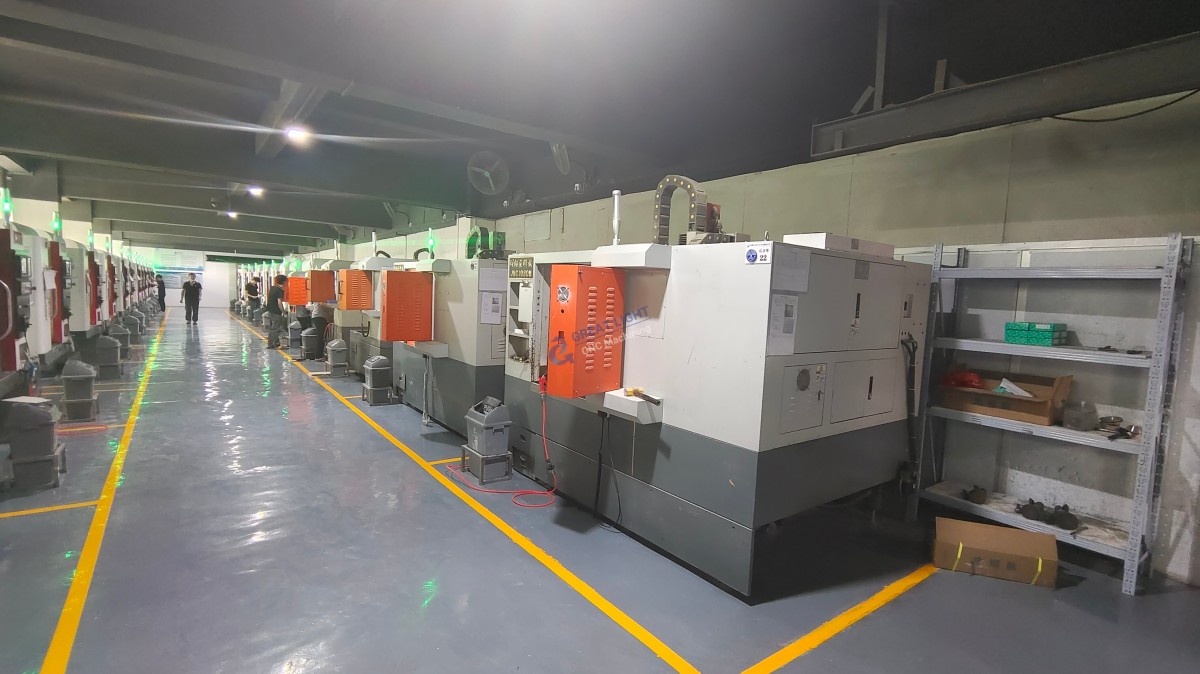
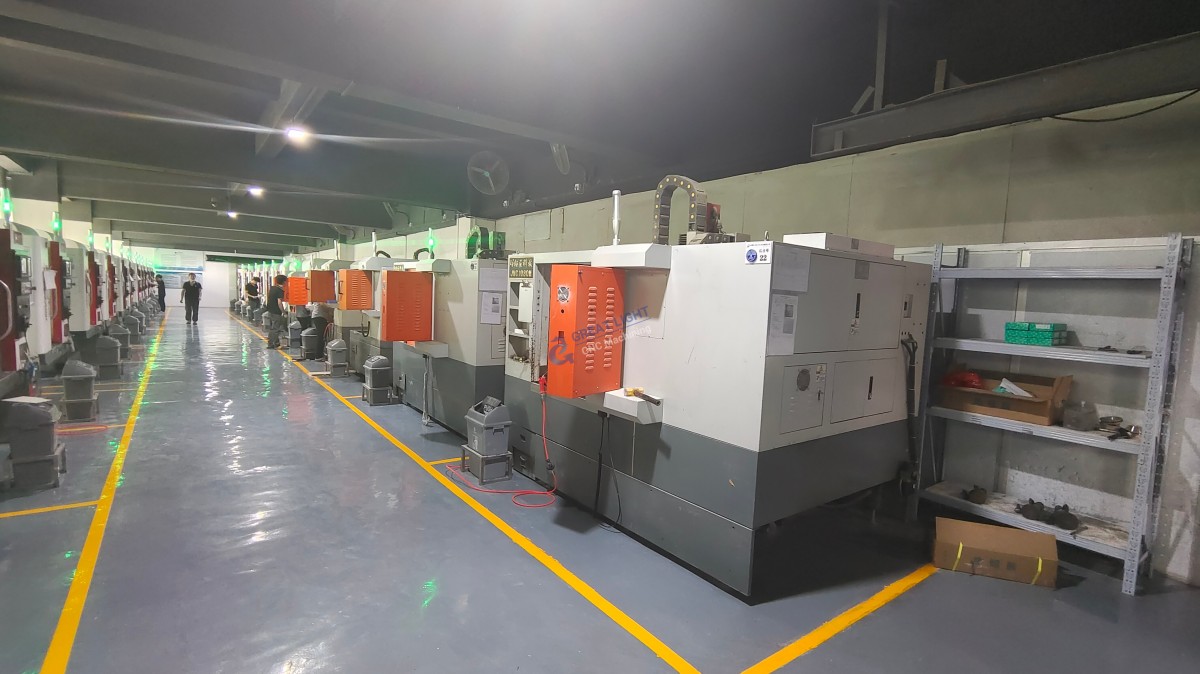
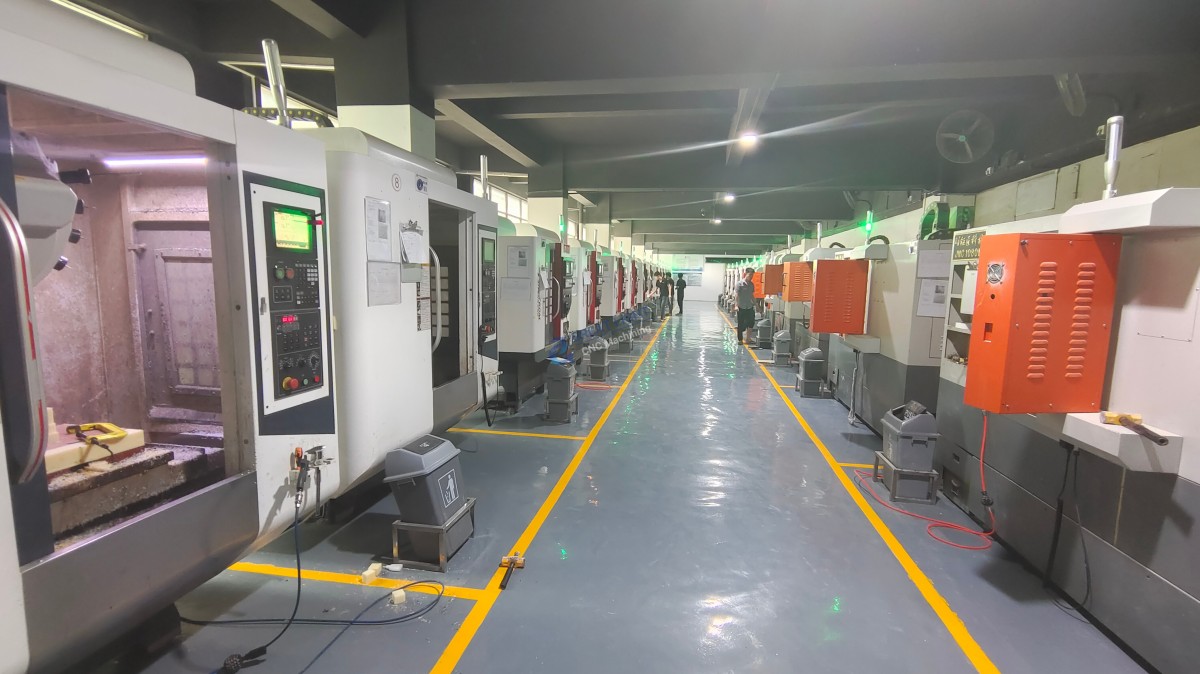
A true ODM solution blurs the line between casting and machining. The factory floor is not just a collection of die casting machines. It is a hybrid environment where casting and precision CNC machining work in tandem.
Consider the capability of a facility like GreatLight Metal. With a 7,600 square meter facility housing 127 pieces of precision peripheral equipment—including large high-precision 5-axis, 4-axis, and 3-axis CNC machining centers—the work does not stop at the casting machine.
After the part is cast, it moves directly to the CNC cell. Here, the rough casting is turned into a precision component. For instance, a complex medical device housing might require the structural rigidity of a die-cast aluminum frame, but the critical mounting points need the precision of a 5-axis CNC. By keeping this in-house, the manufacturer eliminates the tolerance stack-up that occurs when a casting is shipped to a third-party machine shop.
3. The Post-Processing Ecosystem: A Single Point of Responsibility
The most frustrating aspect of custom manufacturing is managing the finish.
Do you need the casting to be vacuum impregnated to seal porosity?
Do you need a specific MIL-spec anodizing or hard chrome plating?
Do you require laser engraving for serial numbers and QR codes?
A true ODM solution provides a one-stop post-processing service. This is the difference between getting a box of “grey” parts and getting a box of finished goods that are 100% traceable and ready for the assembly line. The factory handles it all, from EDM to vacuum forming, SLM 3D printing for complex cores, and a full suite of surface finishing.
Why System Certifications Matter in ODM
You might ask, “Why should I care about ISO certifications for a simple die-cast part?”
Because in an ODM solution, the system is the product. You are not just buying a metal part; you are buying the guarantee that every part will be identical, every material will be traceable, and every process is controlled.
A partner holding ISO 9001:2015 certification ensures a baseline of quality management. But for high-stakes industries like automotive or medical, you need more.
IATF 16949: This is the global quality standard for the automotive industry. It focuses heavily on defect prevention, waste reduction, and continuous improvement. If your Custom ODM Metal Die Casting Solution is for a humanoid robot joint or an engine component, this certification proves the supplier can handle the rigorous statistical process control required.
ISO 13485 (Medical Hardware): For parts that go into surgical tools or diagnostic equipment, this certification is non-negotiable. It ensures a robust risk management framework.
ISO 27001 (Data Security): In ODM, you share your most valuable intellectual property—your 3D models and proprietary designs. This certification guarantees your files are handled with military-grade data security.
Comparing Different Types of Suppliers
When evaluating an ODM partner, it helps to understand the landscape. Here is how a comprehensive provider like GreatLight Metal stacks up against other common options in the market.
| Feature / Capability | GreatLight Metal (The Full-Process Partner) | Specialized Die Casters (e.g., EPRO-MFG, RCO Engineering) | Digital RFQ Platforms (e.g., Xometry, Fictiv, Protolabs Network) |
|---|---|---|---|
| Core Focus | End-to-end manufacturing: design, casting, machining, finishing. | High-volume casting, limited post-processing. | On-demand quoting for rapid prototyping & low-to-mid volume. |
| Engineering Support | Deep DFM, mold design, and full-process engineering. | Limited to casting-centric issues. | Automated DFM feedback; limited deep engineering dialogues. |
| In-House 5-Axis CNC | Large fleet available for high-precision post-machining. | Often outsources complex machining. | Relies on a network of shops; quality varies. |
| Post-Processing | One-stop: anodizing, plating, powder coating, laser marking. | Usually requires a third-party finisher. | Offered, but often as a subcontract, increasing lead time. |
| Ideal For | Complex, mission-critical parts requiring high precision and full traceability. | High-volume, simple-geometry parts (e.g., housing shells). | Simple parts, rapid prototypes, bridging production. |
| Risk Profile | Low. Single point of contact, direct accountability for entire part. | Medium. Requires separate management of machining and finishing. | High for complex parts. Finger-pointing between network shops is common. |
| Certification Depth | ISO 9001, IATF 16949, ISO 13485, ISO 27001. | Often just ISO 9001. | Varies per shop. Platform does not hold a single QMS. |
As you can see, the value of a partner like GreatLight Metal is not just in the price per unit. It is in the reduction of operational risk. You avoid the “messy middle” of managing multiple vendors.
A Practical Example: Solving the “E-Housing” Challenge
To ground this, let’s look at a typical use case: a New Energy Vehicle (NEV) E-Housing.
The Challenge: A startup specializing in high-performance EV inverters needs a housing that dissipates heat, shields EMI, is lightweight, water-tight, and must hold critical electronic components in exact alignment.
Standard Approach: Send the design to a die caster. Get a part back. Send it to a CNC shop for machining the critical bore holes. Send it to a plater for coating. The bore holes are 50 microns out of tolerance due to part distortion from the coating process. The plater blames the CNC shop. The CNC shop blames the caster. The project is delayed.
ODM Solution (The GreatLight Metal Approach):
Engineering Kickoff: The GreatLight engineering team reviews the file. They suggest a subtle change to the gating system to reduce porosity around the critical bore areas.
Integrated Manufacturing: The part is die cast. It is then immediately loaded onto a precision 5-axis CNC machine. The critical bores are machined in a single setup, referencing datums created in the casting.
Post-Processing Control: The part moves to in-house surface finishing. The chemical coating process is controlled to account for the slight material removal of the coating.
Final Inspection: The part is measured on a CMM. The report shows it is within spec. The customer receives a single invoice, a single tracking number, and a single point of contact for quality issues.
This is the difference between chaos and control.
The Last Step: Your Next High-Stakes Project
In the world of precision manufacturing, trust is not given; it is built. It is built through a decade of experience, a 70,000+ sq. ft. facility, a roster of international certifications, and a track record of solving the hardest problems.
When you are looking for a Custom ODM Metal Die Casting Solution, you are not just looking for a supplier. You are looking for an extension of your own engineering team.
You need a partner who can navigate the complexity of design, the rigor of die casting, the precision of 5-axis CNC machining, and the reliability of a certified quality system. You need a partner who treats your intellectual property with the same security as their own.
Don’t settle for a “parts broker” who outsources your success. Choose a partner with the real operational capabilities, the deep technical expertise, and the full-process infrastructure to deliver a complete solution.
The path to a successful product launch is clear. It begins with a conversation about your specific needs and a detailed engineering review. From there, we move from concept, to casting, to a finished, high-precision component—all under one roof, all under one standard of excellence.
Your Custom ODM Metal Die Casting Solution is ready. It is built on the principles of integrated engineering, certified quality, and total accountability. Make the choice that guarantees your success and begins your journey toward a reliable, high-performance supply chain by reaching out to a partner who understands that your reputation is on the line with every part we deliver. Your project deserves the certainty of a your next high-stakes project.


![[访谈] RAPID + TCT 2024:人工智能对 3D 打印的价值](https://print-ing.com/wp-content/uploads/2024/07/INTERVIEW-60x60.jpeg "[访谈] RAPID + TCT 2024:人工智能对 3D 打印的价值 9")




发表回复
要发表评论,您必须先登录。