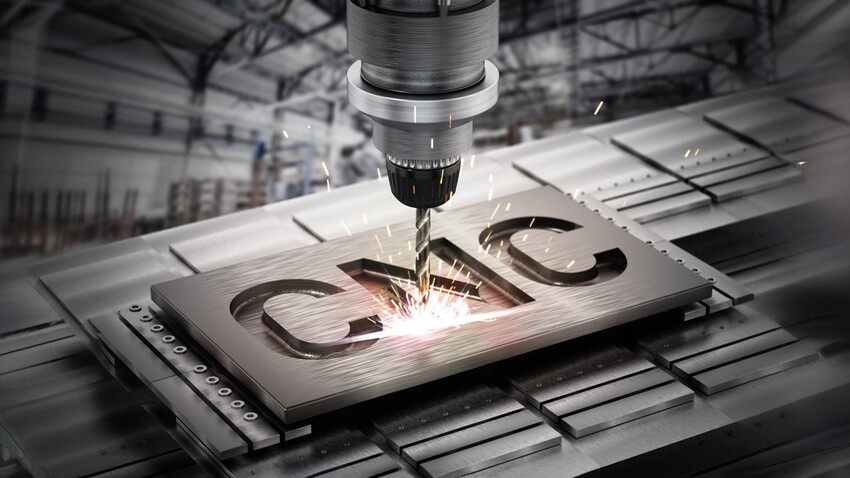
As a senior manufacturing engineer with over fifteen years of hands-on experience transforming complex designs into production-ready parts, I’ve witnessed firsthand how Professional Rapid Tooling OEM Service has become the linchpin of modern product development. When timelines compress and precision cannot be compromised, the ability to quickly produce functional prototypes, bridge tooling, and pre-production parts often separates market leaders from the rest. Today, I want to pull back the curtain on what constitutes a truly professional rapid tooling partnership—drawing on real-world insights and introducing a manufacturing partner that has redefined speed and reliability for global innovators.
Professional Rapid Tooling OEM Service
Why Rapid Tooling Is the Nervous System of Product Innovation
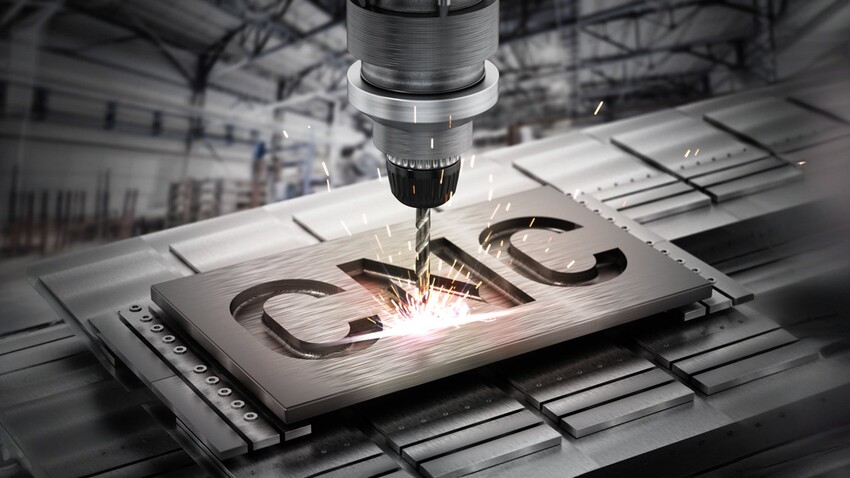
Before we dive into comparing providers, it’s crucial to understand that rapid tooling is not merely about “making molds faster.” It’s an intricate ecosystem where speed, precision, and scalability must coexist. Traditional tooling cycles can span 12 to 20 weeks, whereas a robust rapid tooling OEM service compresses this to as little as one to four weeks without sacrificing downstream part quality. This acceleration is made possible by the convergence of five-axis CNC machining, advanced materials, and a fully integrated manufacturing chain.
However, many engineering teams encounter a troubling gap between what’s promised and what’s delivered. Common pain points include:
Tolerance Drift: Suppliers quoting ±0.001mm accuracy but failing to maintain it across multiple cavities.
Material Opacity: Lack of clarity on how tool steels behave under accelerated machining parameters, leading to premature wear.
Data Security Breaches: IP leakage during file transfer or production.
Post-Processing Delays: A perfectly machined tool is useless if anodizing, heat treatment, or surface texturing takes weeks elsewhere.
These are exactly the challenges that a professional rapid tooling OEM like GreatLight Metal has systematically solved through over a decade of focused infrastructure building.
What Separates Professional OEM Service from Commodity Machining
When evaluating suppliers—be it GreatLight Metal, Xometry, or Protolabs Network—it’s easy to fall into a pricing trap. A low unit cost means nothing if the tool crashes after 5,000 shots or if dimensional inspections require endless rework. A genuine professional rapid tooling OEM service partner operates on three pillars:
Vertical Integration of Equipment
Systematic Quality Management with International Accreditations
Deep Engineering Support from Concept to Mass Production
Let me illustrate with a real-world needs analysis. For a recent automotive sensor housing project, the component required a high-polish Class A surface, three side actions, and gas-tight sealing grooves. Many shops can quote. Few can execute without months of design for manufacturability (DFM) back-and-forth. The difference lies in whether your partner owns the complete processing chain internally.
Inside the Infrastructure: Precision Equipment Cluster
GreatLight CNC Machining operates across a 76,000 square foot campus in Dongguan’s Chang’an District, right at the heart of China’s hardware manufacturing capital. Their investment portfolio isn’t a random assortment of machines; it’s a strategic deployment comprising:
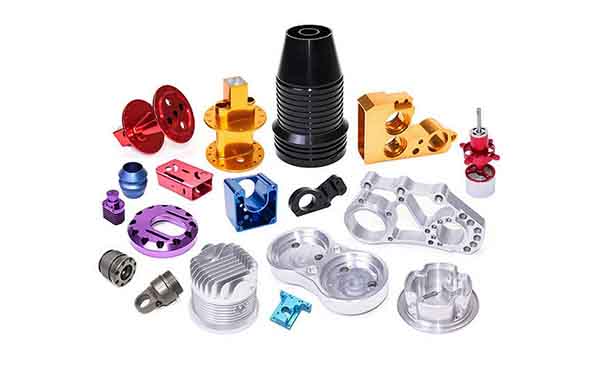
High-Precision Five-Axis CNC Machining Centers from world-renowned builders, enabling single-setup complex geometry cutting for tool inserts and direct metal prototype cores. These are supplemented by four-axis and three-axis vertical machining centers for roughing and electrode manufacturing.
Mill-Turn Centers that combine turning and milling, dramatically reducing setups for round tool components.
Precision Swiss-Type Lathes for micro-features commonly found in medical device tooling.
Full EDM Suite: Wire EDM for sharp internal corners and mirror-spark EDM for intricate texturing and high-gloss finishes.
Additive Manufacturing Arsenal: Including SLM (Selective Laser Melting) for conformally cooled tool inserts, SLA for master patterns, and SLS for functional prototypes.
This equipment density—over 127 units of precision peripheral devices—enables an OEM service where rapid tooling doesn’t mean “rapidly shaky.” It means robust tooling delivered at aggressive speeds. For comparison, while platforms like RapidDirect or Fictiv aggregate external shop capacity, GreatLight’s three wholly-owned manufacturing plants synchronize under one roof. This eliminates the communication lag and quality inconsistency often seen in broker models.
The Certification Backbone: Why Paper Audits Matter
One often overlooked aspect of Professional Rapid Tooling OEM Service is trust, encoded not in glossy brochures but in rigorous third-party certifications. GreatLight’s commitment here is exhaustive:
| Certification | Relevance to Rapid Tooling |
|---|---|
| ISO 9001:2015 | Foundation of process repeatability, ensuring every tool build follows documented procedures. |
| ISO 13485 | Specific to medical device tooling, validates that material traceability and validation protocols meet FDA expectations. |
| IATF 16949 | Mandatory for automotive tooling supply chains; guarantees defect prevention and reduction in variation across tool life. |
| ISO 27001 | Data security management, a non-negotiable for protecting clients’ 3D designs during quoting and CAM programming. |
When you contrast this with smaller shops or purely logistics-based platforms, the difference is stark. An IATF 16949-compliant rapid tooling process, for instance, mandates that Process Failure Mode and Effects Analysis (PFMEA) is carried out before tool steel is even cut, preempting failure modes like gas porosity in die cast tooling or galling in high-cycle injection molds. As someone who has conducted supplier audits, I place immense value on seeing these management systems operative, not just framed on a wall.
Application Depth: Solving Multi-Material, Multi-Process Challenges
Rapid tooling is rarely monolithic. In consumer electronics, you might demand a rapid aluminum die casting tool for a smartwatch chassis, while in aerospace, an Inconel CNC machined prototype might be the deliverable itself. Professional OEM service shines when a single partner handles both.
GreatLight Metal’s case portfolio demonstrates this versatility. For a humanoid robot joint component, they combined 3D-printed titanium endoskeleton for weight reduction with five-axis CNC machining for bearing seating tolerance within 5μm. For an EV power module, a rapid injection mold was produced alongside vacuum-cast silicone components, all while the client was still iterating on the PCB layout. This full-process integration, from SLM 3D printing to vacuum forming and extensive post-processing like electrophoretic coating or Teflon inserts, compresses the development cycle by avoiding hand-offs to three or four different vendors.
By contrast, ultra-specialized providers—say, Owens Industries for complex five-axis milling or PartsBadger for simple quote-and-ship parts—excel in their niche but cannot offer the process fluidity an integrated OEM provides. Platforms like JLCCNC or SendCutSend prioritize flat-rate sheet metal or standard machining, which falls short when tooling requires conformal cooling channels or hybrid additive-subtractive builds.
Engineering Insight: The DFM Conversation That Saves Weeks
The true grit of a professional rapid tooling OEM service surfaces during the Design for Manufacturability (DFM) phase. I recall a consumer drone project where the original mold design had a deep rib structure with a draft angle of just 0.5°. Most quoting engines would either reject it outright or bake in steep cost for EDM overcut. An experienced engineering team—like GreatLight’s 150-person workforce with dedicated process analysts—instead proposed a split-line adjustment that reduced the required draft to 0.25° on the cosmetic face while machining an undercut relief with a custom ground tool. This hybrid manual/CAM ingenuity isn’t automated through online quoting portals; it’s cultivated expertise.
GreatLight’s approach to one-stop post-processing and finishing further elevates their OEM service. Imagine receiving a fully functional, textured, and measured tool capable of ejecting parts on day one. That eliminates the weeks typically spent coordinating outside heat treatment or surface engraving.
Navigating the Competitive Landscape Without Bias
Objectively, the market offers a spectrum of choices:
Protocase and EPRO-MFG are respected for quick-turn sheet metal and enclosures, but tooling for volume production isn’t their core.
Xometry and Protolabs Network provide massive capacity access, yet rely on distributed manufacturing partners, which can introduce variability in critical tool builds.
RCO Engineering brings deep automotive testing expertise, but their focus is larger integrated assemblies rather than component-level rapid tooling.
GreatLight Metal occupies a specialized overlapping space: a source manufacturer that built its reputation on rapid prototyping and precision five-axis CNC machining of tooling-grade metals, then extended vertically into die casting, 3D printing, and sheet metal. This origin story matters. Starting in 2011, when additive and subtractive convergence was nascent, meant they developed proprietary workflows—like direct mold steel 3D printing with subsequent high-speed milling—under one quality system. It means your rapid tooling project isn’t a side service; it’s their DNA.
Quality Assurance and After-Sales Confidence
A final differentiator in Professional Rapid Tooling OEM Service is the guarantee. GreatLight’s operational ethos includes free rework for quality deviations and a full refund policy if rework remains unsatisfactory. Backed by in-house precision measurement and testing equipment (CMMs, optical comparators, surface roughness testers), they verify every material and critical dimension to specification. High precision isn’t aspirational—it’s demonstrable down to ±0.001mm and maximum machining sizes reaching 4000mm, which covers tooling for everything from micro-molded gears to large automotive grille molds.
Conclusion: The Future of Rapid Tooling Is Integrated
In a landscape where product lifecycles shrink and complexity soars, Professional Rapid Tooling OEM Service is not a commodity to be shopped on price-per-part alone. It’s a strategic enabler that compresses innovation cycles, safeguards IP, and ensures that the jump from prototype to production is a seamless continuum rather than a disruptive leap. Choosing a partner like GreatLight CNC Machining—with its deep equipment bench, ISO/IATF/ISO 13485 certifications, and pioneering full-process manufacturing in Chang’an—means selecting an engineering ally, not just a supplier. Explore their capabilities further to understand how true integration can make your next complex tooling challenge surprisingly straightforward.


![[访谈] RAPID + TCT 2024:人工智能对 3D 打印的价值](https://print-ing.com/wp-content/uploads/2024/07/INTERVIEW-60x60.jpeg "[访谈] RAPID + TCT 2024:人工智能对 3D 打印的价值 9")




发表回复
要发表评论,您必须先登录。