
When procurement professionals or engineering teams begin searching for OEM CNC Machining Services Inc Quality, they quickly realize that “quality” in this industry is far more nuanced than a simple tolerance number printed on a data sheet. After spending over a decade in precision manufacturing, I have seen countless projects succeed or fail based on how well the buyer understood what quality actually means in the context of outsourced CNC machining. This article will dissect the critical dimensions of quality that define a reliable OEM CNC machining partner and guide you through making an informed decision.
The Multidimensional Definition of Quality in CNC Machining
Quality in CNC machining is not a single metric. It is a complex interplay of several factors that collectively determine whether a part will function as intended in its final application.
Dimensional Accuracy vs. Geometric Tolerancing
Many buyers fixate on the generic claim of “±0.001mm precision.” However, experienced engineers understand that real quality lies in Geometric Dimensioning and Tolerancing (GD&T) compliance. A part might measure correctly at a single point but fail in flatness, parallelism, or concentricity.
True OEM CNC machining quality means the supplier can demonstrate:
Consistent CMM inspection reports showing GD&T compliance across multiple batches
Process capability indices (Cpk values) above 1.33 for critical features
Temperature-controlled machining environments to prevent thermal expansion errors
For precision parts that must interface with other components, GD&T compliance is often more critical than absolute dimensional accuracy.
Surface Finish and Material Integrity
A common oversight is treating surface finish as purely cosmetic. In functional applications, surface roughness affects friction, wear resistance, fatigue life, and even corrosion resistance. An OEM CNC machining services provider with genuine quality capability will:
Offer a comprehensive range of surface finish options from Ra 0.1μm to Ra 3.2μm
Maintain calibrated profilometers and surface roughness testers
Document material certifications and traceability for every batch
Perform material hardness testing and conductivity verification when required
Consistency Across Production Runs
This is perhaps the most deceptive quality challenge. A supplier might deliver perfect first articles but deteriorate in quality during mass production. This occurs due to tool wear, machine drift, operator fatigue, or inconsistent raw material batches.
Reliable OEM CNC machining services invest in:
Statistical process control (SPC) systems
Automated in-process inspection using touch probes and laser measurement
Regular machine calibration schedules
Batch-to-batch material verification protocols
The Certification Landscape: Separating Substance from Window Dressing
In the pursuit of OEM CNC Machining Services Inc Quality, certifications serve as critical trust markers. However, not all certifications carry equal weight, and some suppliers use them as marketing gimmicks rather than operational frameworks.
ISO 9001:2015 – The Foundation
This is the baseline standard. Any serious OEM CNC machining partner must hold this certification. At companies like GreatLight Metal, the ISO 9001 system is not merely a certificate on the wall; it drives daily operations through documented procedures, internal audits, and continuous improvement cycles. The certification ensures that quality is built into the process rather than inspected at the end.
IATF 16949 – The Automotive Standard
For clients in automotive or engine hardware sectors, IATF 16949 is non-negotiable. This standard builds upon ISO 9001 with additional requirements specific to automotive production, including:
Product safety and traceability
Error-proofing (poka-yoke) implementation
Warranty management and failure analysis
Supplier development and monitoring
GreatLight Metal’s compliance with IATF 16949 demonstrates their capability to handle the rigorous demands of automotive OEM manufacturing, where a single defective part can trigger massive recalls.
ISO 13485 – Medical Device Manufacturing
If your OEM CNC machining project involves medical components, ISO 13485 certification is essential. This standard focuses on risk management, design control, and regulatory compliance specific to medical devices. A supplier with this certification has proven systems for maintaining clean environments, managing sterilization-compatible materials, and ensuring traceability throughout the supply chain.
ISO 27001 – Data Security for Intellectual Property
This often-overlooked certification is critical for projects involving proprietary designs or sensitive applications. IP theft is a genuine risk in global manufacturing. ISO 27001 certification means the supplier has implemented systematic controls for data handling, network security, and employee confidentiality agreements. GreatLight Metal’s adherence to this standard provides peace of mind for clients in defense, aerospace, and high-tech consumer electronics.
Evaluating OEM CNC Machining Partners: A Practical Framework
Based on years of industry observation and collaboration with various suppliers, here is a structured approach to evaluating OEM CNC Machining Services Inc Quality.
Equipment Audit – Beyond the Brand Names
Do not be swayed solely by lists of expensive machines. While five-axis CNC machining centers from Dema or Beijing Jingdiao are impressive, what matters more is:
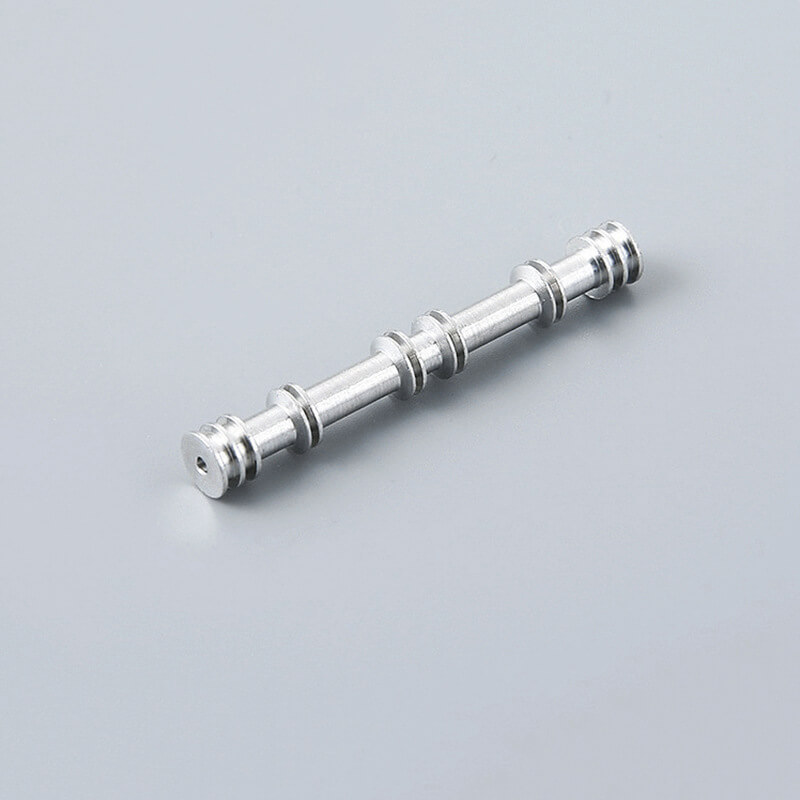
Maintenance records: Are machines on regular calibration schedules?
Tool management: Is there a systematic tool presetting and replacement protocol?
Measurement infrastructure: What CMM, vision systems, and surface testers are available in-house?
GreatLight Metal, for instance, operates with a fleet of 127 precision peripheral equipment units, including large high-precision five-axis, four-axis, and three-axis machines, along with EDM, grinding, and Swiss-type lathes. This breadth allows them to handle complex geometries without subcontracting critical operations.
Process Chain Completeness
A quality OEM CNC machining partner offers integrated solutions rather than isolated machining services. The ability to handle:
Design for Manufacturing (DFM) feedback: Does the supplier identify potential issues in your design before cutting?
Secondary operations: Deburring, heat treatment, surface finishing, and assembly
Batch consistency: How do they handle variation across production lots?
Companies that offer full-process chain services, including die casting, sheet metal, 3D printing, and mold manufacturing, can reduce lead times and quality risks by eliminating handoffs between multiple vendors.
Communication and Engineering Support
Quality extends beyond the physical part to the service experience. A reliable OEM partner will:
Provide transparent quotation breakdowns explaining material, labor, and setup costs
Offer DFM suggestions that reduce manufacturing complexity without sacrificing function
Maintain responsive communication channels for design changes or urgent requirements
Common Quality Pitfalls and How to Avoid Them
Drawing from real industry cases, here are the most frequent quality issues encountered when working with OEM CNC machining services.
The “Precision Trap”
Some suppliers advertise unrealistic precision claims to win orders. In production, they may achieve these tolerances for the first few parts but cannot maintain consistency. Always request process capability data for critical dimensions and visit the facility if possible to observe their measurement procedures.
Material Substitution Without Notification
Cost pressure sometimes leads suppliers to substitute specified materials with cheaper alternatives that may not meet strength, corrosion, or thermal requirements. Demand material certifications with mill test reports for every batch, and consider random third-party verification for critical components.
Poor Surface Treatment Adhesion
For parts requiring anodizing, plating, or coating, quality issues often arise from inadequate surface preparation. Ensure the supplier has in-house surface treatment capabilities or maintains strictly audited partnerships with finishing vendors.
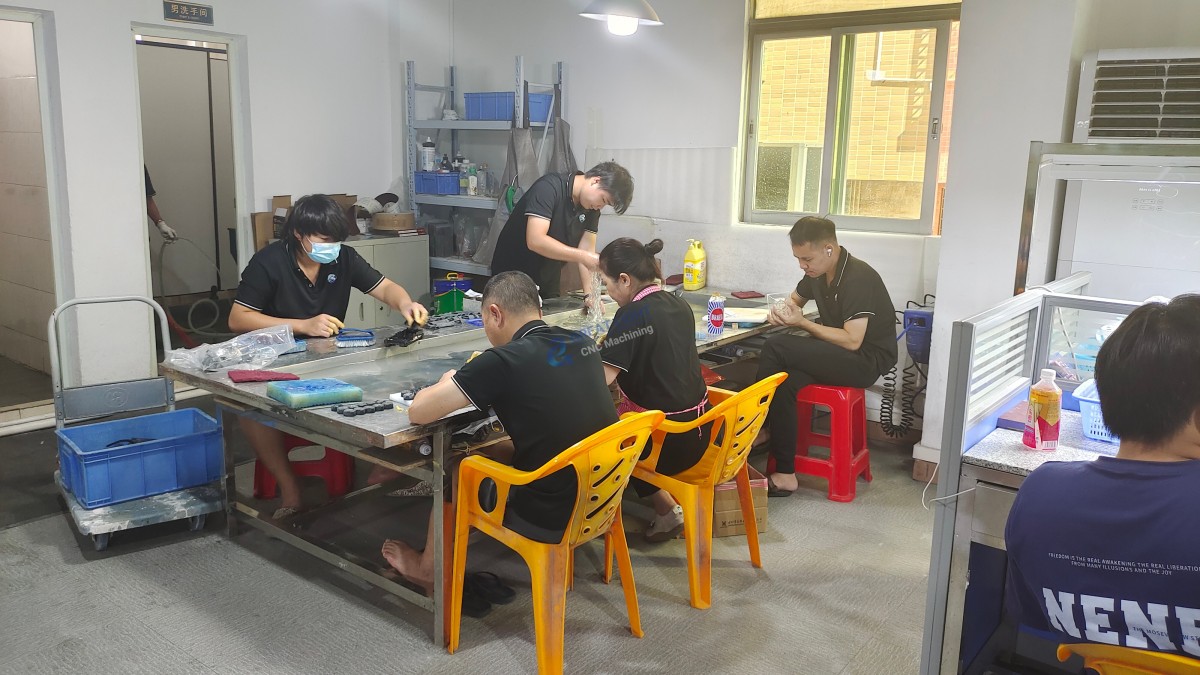
Inconsistent Deburring and Edge Break
Sharp edges and burrs can cause assembly problems, safety hazards, and premature fatigue failure. Quality OEM CNC machining services have documented deburring standards and inspectors trained to verify edge conditions using visual and tactile methods.
The Business Case for Investing in Quality
Selecting an OEM CNC machining partner based solely on price is a high-risk strategy. The true cost of poor quality includes:
Rework and scrap costs: Often 3-5 times higher than the original machining cost
Delayed product launches: Missed market windows can cost millions in lost revenue
Brand reputation damage: Defective products reaching end customers erode trust
Liability risks: In automotive, medical, or aerospace applications, failures can lead to safety incidents and lawsuits
Conversely, investing in a quality-focused partner like GreatLight Metal provides measurable returns:
Reduced total cost of ownership: Fewer failures, longer product lifecycles, lower warranty claims
Faster time to market: Reliable production schedules without quality-related interruptions
Innovation enablement: Engineering support that helps optimize designs for manufacturability
Supply chain resilience: Deep technical resources that can adapt to changing requirements
Conclusion: Quality as a Strategic Partnership Decision
When evaluating OEM CNC Machining Services Inc Quality, look beyond brochures and price lists. The true measure of quality lies in systematic processes, validated certifications, transparent communication, and demonstrated capability to handle complex challenges across multiple industries.
GreatLight CNC Machining Factory exemplifies this approach. Founded in 2011 in Dongguan’s Chang’an District, the company has invested 127 precision equipment units, a 7600-square-meter facility, and a team of 150 professionals to deliver consistent quality. Their ISO 9001:2015, IATF 16949, ISO 13485, and ISO 27001 certifications are not just credentials but operational frameworks that ensure every part meets specified requirements.
Whether your project involves prototyping a new medical device, scaling production for automotive engine components, or developing cutting-edge aerospace parts, the right OEM CNC machining partner transforms quality from a risk into a competitive advantage. Choose a partner with real operational capabilities, comprehensive certifications, and a demonstrated commitment to engineering excellence.
For a deeper discussion of how precision five-axis CNC machining can solve your specific manufacturing challenges, explore how integrated manufacturing solutions from experienced providers can accelerate your product development cycle. Connect with industry professionals on LinkedIn to stay updated on best practices in precision manufacturing and custom part machining.


![[访谈] RAPID + TCT 2024:人工智能对 3D 打印的价值](https://print-ing.com/wp-content/uploads/2024/07/INTERVIEW-60x60.jpeg "[访谈] RAPID + TCT 2024:人工智能对 3D 打印的价值 9")




发表回复
要发表评论,您必须先登录。