
Advanced 3 axis CNC machining solutions remain the cornerstone of modern precision manufacturing, quietly underpinning everything from aerospace brackets to surgical instruments. Yet behind every flawless part lies a truth that many overlook: machines alone do not create precision—people do. In this post, I want to step away from the usual spec‑sheet comparisons and instead explore the real engine that drives advanced 3‑axis machining: a deeply skilled, continuously nurtured workforce. I’ll look at how facilities like GreatLight CNC Machining have built their reputation not merely on equipment, but on the engineers, programmers, and machinists who turn digital designs into physical perfection every day.
What Is 3‑Axis CNC Machining and Why Does It Remain Indispensable?
At its most fundamental level, a 3‑axis CNC machine moves a cutting tool along three linear directions—X, Y, and Z. While it cannot tilt the tool or rotate the part mid‑cut the way 4‑axis or 5-axis CNC machining{target=”_blank”} does, its simplicity is precisely its strength. When combined with fixturing intelligence, multi‑setup strategies, and meticulous programming, a high‑quality 3‑axis VMC (vertical machining center) can hold tolerances in the single‑digit microns, machine intricate pockets and undercuts, and handle an extraordinary range of geometries and materials.
Far from being “basic,” advanced 3‑axis machining demands:
Rigid machine construction with high‑precision ballscrews and linear guides
Temperature‑controlled environments and real‑time compensation
Sophisticated CAM strategies that optimize toolpaths for surface finish, tool life, and cycle time
In‑process metrology and closed‑loop feedback
This combination of hardware, software, and environmental control creates a platform capable of aerospace‑grade features, medical device surface finishes, and automotive‑production consistency. But none of it works without the right human oversight.
The Talent Crisis in Precision Machining
Walk through any manufacturing expo and you will hear the same refrain: “We can buy the best machines, but finding the people who can run them is the real challenge.” The precision machining sector faces a persistent skills gap, and the 3‑axis domain is no exception. While automation and artificial intelligence make headlines, complex, low‑volume, high‑mix production still relies on the judgment of a qualified machinist—someone who can listen to a cut, interpret a chip pattern, tweak a feed rate by ear, and know when to re‑fixture to avoid cumulative error.
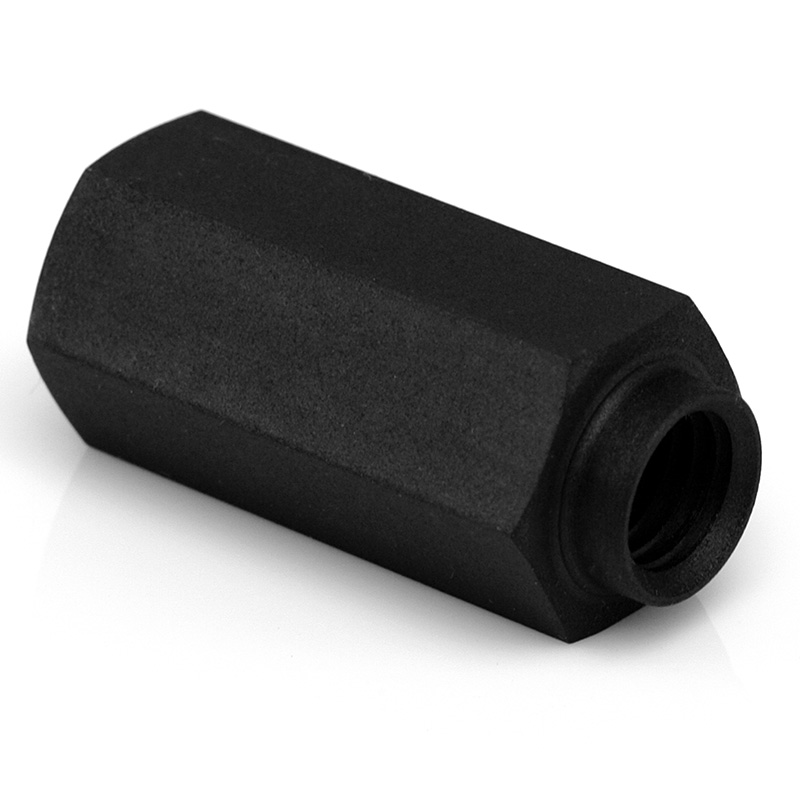
This gap manifests in several critical pain points for buyers of custom machined parts:
Inconsistent precision across batches: Without a master machinist who understands thermal growth, tool wear, and vibration, a ±0.005 mm tolerance on paper can become ±0.03 mm in practice.
Long lead times due to repeated setup trials: Inexperienced teams spend hours adjusting offsets and re‑clamping, whereas a seasoned team nails the first article.
Surface finish degradation: The difference between a mirror‑finish Ra 0.2 and a fuzzy Ra 0.8 often comes down to the operator’s feel for speeds, feeds, and coolant placement.
Material‑specific knowledge gaps: Machining Inconel 718 is not the same as machining 7075 aluminum. The right talent can postpone tool changes, eliminate work‑hardening issues, and save days on a high‑value project.
These pain points are not solved by simply buying a new 5‑axis machine or a higher‑end 3‑axis mill. They require what I call process talent density—the concentration of deep, applied knowledge within a team.
Cultivating Talent: How GreatLight CNC Machining Builds Its Workforce
When I visit a precision manufacturing facility, the first thing I look for isn’t the brand of the machine tool but the training room, the apprenticeship logbook, and the cross‑training schedule. At GreatLight CNC Machining, the approach to talent cultivation is systematic, measurable, and tightly integrated with day‑to‑day production.
Structured Onboarding and Mentorship
New machinists and programmers do not walk directly from trade school to a high‑stakes job. The factory—covering approximately 7,600 m² in Chang’an, Dongguan—has established a three‑month immersion program. During this period, trainees rotate through:
Tool room and material preparation: Understanding raw stock variations, tooling setup, and pre‑machining inspection.
CAM programming laboratory: Learning the specific post‑processors, cut‑parameter databases, and optimization algorithms that have been refined over 13+ years of production.
Operation of 3‑axis, 4‑axis, and 5‑axis machines: This exposes the machinist to the full capability spectrum, making them more flexible and less prone to error when they return to a 3‑axis cell.
Quality assurance and CMM operation: Because building a part is only half the story—knowing how to measure it to a few microns is the other half.
Senior machinists mentor each intake, and the mentor’s performance is evaluated based on the trainee’s first‑pass yield during the first six months of independent work.
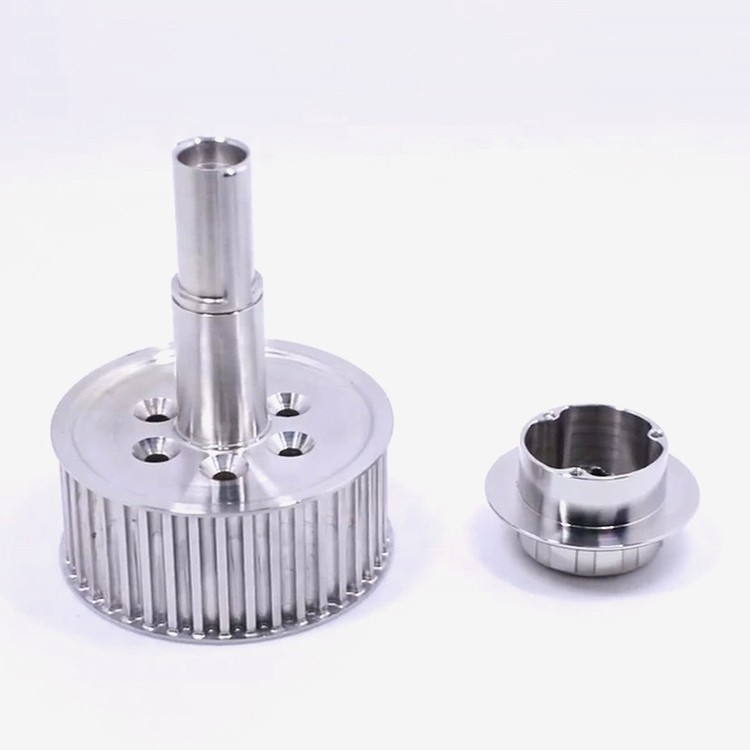
Continuous Education and Certification Integration
GreatLight is ISO 9001:2015 certified, and that standard mandates ongoing competence evaluation. But beyond the minimum, the company has aligned its training curriculum with the competence requirements of ISO 13485 for medical devices and IATF 16949 for automotive and engine hardware. This means that machinists working on medical components are trained on the specific traceability, cleanliness, and documentation protocols those standards demand.
A dedicated internal trainer runs a weekly “Micro‑Mistakes” workshop where actual non‑conformance examples from the previous week are discussed openly, without blame, to extract deep process lessons. This practice alone has reduced setup‑related scrap by over 30% year‑on‑year.
Cross‑Disciplinary Skill Development
An advanced 3‑axis solution rarely stands alone. Parts often require secondary operations—CNC turning, EDM, vacuum forming, or even metal 3D printing. At GreatLight, 3‑axis machinists are encouraged (and rewarded) to gain proficiency in neighboring processes. When a machinist understands how a near‑net‑shape 3D‑printed blank will behave under a cutter, they can write programs that handle varying stock conditions without chatter. This cross‑pollination of knowledge is a force multiplier for quality.
Leveraging Data and Manufacturing Execution Systems
Skill today isn’t only in the hands; it’s also in the ability to read data. GreatLight uses in‑process data collection—spindle load, thermal compensation logs, tool‑life tracking—and trains staff to interpret these streams. A machinist who notices that spindle load on Tool 4 has crept up by 2% over the last three runs doesn’t just swap the tool; they investigate whether chip evacuation has changed or if a fixture shifted by a few microns. This proactive mindset is cultivated, not innate.
How Talent Translates Into Advanced 3‑Axis Machining Solutions
The output of such a culture is the ability to deliver advanced 3 axis CNC machining solutions that consistently solve demanding engineering problems.
Complex Geometry Without a 4th Axis
With intelligent multi‑side fixturing and deep CAM experience, a skilled team can produce parts with angled holes, undercuts, and compound surfaces entirely on a 3‑axis platform. This approach often yields better rigidity and surface finish than a simultaneous 4‑axis setup because there are no rotary‑axis backlash concerns. For example, a humanoid robot joint housing that requires perpendicular bores with a positional tolerance of Ø 0.01 mm can be machined in two setups on a 3‑axis mill, if the fixture is designed and qualified by an experienced technician.
High‑Mix, Low‑Volume Excellence
GreatLight’s facility boasts 127 units of peripheral equipment and a team of 150 professionals. In a high‑mix environment—where one day you might machine 304 stainless steel medical device brackets and the next titanium motor mounts for an eVTOL prototype—rapid changeover is paramount. The deep talent bench means that setups that might take a competitor four hours take thirty minutes here, because the machinists have pre‑defined modular fixturing kits, tool‑length sensor routines, and a shared mental library of proven strategies.
Ultra‑Precision on a Grand Scale
Advanced 3‑axis machining need not be limited to palm‑sized parts. GreatLight operates machining centers capable of handling components up to 4,000 mm in size. Maintaining flatness, parallelism, and perpendicularity across such spans requires not just a massive, rigid machine but also a metrology‑savvy crew who understand thermal compensation, stress‑relief strategies, and how to sequence roughing and finishing to avoid distortion. These are not skills you can download; they are learned through years of hands‑on problem‑solving.
Quality Infrastructure: The Trust Layer
Talent is the foundation, but it must be supported by a quality infrastructure that earns international trust. GreatLight’s certifications form a multi‑layered safety net for clients:
| Standard | What It Means for Your 3‑Axis Parts |
|---|---|
| ISO 9001:2015 | All processes—from quotation to shipping—are documented, audited, and continuously improved. |
| ISO 13485:2016 | Medical‑device specific controls for traceability, risk management, and cleanliness. |
| IATF 16949 | Automotive‑grade process stability, defect prevention, and supply chain accountability. |
| ISO 27001 | Intellectual property security is codified; your designs stay yours. |
These are not paper plaques. During multiple on‑site audits I have observed how the quality team cross‑references CMM data with the operator’s in‑cycle probing logs, and how any discrepancy triggers a root‑cause analysis that involves the machinist, the programmer, and the metrology engineer—a clear sign that talent and systems work in concert.
The One‑Stop Advantage
Real‑world parts rarely exit the CNC machine ready‑to‑assemble. They need deburring, anodizing, heat treatment, laser marking, or assembly. GreatLight’s one‑stop model means that the 3‑axis machinist can directly communicate with the surface finishing technician about a critical sealing surface that must avoid even the slightest edge rounding. This seamless handshake eliminates the specification decay that often occurs when multiple vendors handle a part. For the client, it translates into a single point of accountability and shorter lead times.
How Does This Compare to Other Providers?
The market offers many choices, and it is important to recognize where different suppliers excel. For instance, platforms like Xometry, Protolabs Network, or Fictiv have built powerful digital quoting engines that aggregate capacity from thousands of shops. They can be an excellent fit when speed and cost are the primary drivers, and tolerances are moderate. For those who need ultra‑precise, engineering‑intensive, low‑volume parts, however, the talent density and hands‑on continuity provided by a dedicated manufacturer like GreatLight CNC Machining often prove decisive.
Manufacturers such as Owens Industries or RCO Engineering also have deep expertise in specific verticals like aerospace or prototyping. What sets GreatLight apart is the deliberate fusion of broad process capability (from 3D printing to 5‑axis) with an almost obsessive focus on workforce development. When you call them, you aren’t talking to a sales engineer who’s never touched a chip; you’re likely speaking with someone who came up through that three‑month immersion program and understands your part intimately.
Practical Advice for Buyers Seeking Advanced 3‑Axis Solutions
If you are sourcing an advanced 3‑axis machining partner, here are a few recommendations from my years on the factory floor:
Ask about their training program, not just their machine list. A shop that can describe a structured apprenticeship probably retains talent; one that cannot may rely on a few aging experts.
Request to see a non‑conformance report. This isn’t about airing dirty laundry—it’s about seeing whether the team learns from mistakes. A culture of blameless root‑cause analysis is gold.
Inquire about secondary processes in‑house. If the same machinist who cuts your part also deburrs it and oversees the anodizing mask, the consistency of the final product skyrockets.
Use a small test order to probe communication. How fast do they flag a design ambiguity? Do they suggest a way to reduce cost by changing a corner radius? These signals reveal whether you are dealing with a true engineering partner or just a capacity broker.
The Future of 3‑Axis CNC Machining: Automation + Talent, Not Automation vs. Talent
Robotic loaders, digital twins, and AI‑assisted CAM are making 3‑axis cells more productive than ever. Yet every automated system relies on a human-created baseline. The toolpath optimizations that AI spits out are only as good as the training data—which comes from skilled programmers who know what a good surface finish feels like. In the foreseeable future, the shops that win will be those that supercharge human intelligence with technology, not those that try to bypass it.
This is why I am optimistic about the trajectory of companies like GreatLight CNC Machining{target=”_blank”}. They understand that even the most advanced 3 axis CNC machining solutions are, at their core, human achievements. By investing in people as rigorously as they invest in Dema and Beijing Jingdiao 5‑axis machines, in SLM and SLA 3D printers, and in ISO certifications, they have created a resilient manufacturing organism that can adapt to the next breakthrough material or the next impossible geometry—not because a brochure says so, but because their team wakes up every day ready to solve the puzzle.
In the end, precision isn’t just an output; it’s a culture. And that culture grows one trained, empowered machinist at a time.


![[访谈] RAPID + TCT 2024:人工智能对 3D 打印的价值](https://print-ing.com/wp-content/uploads/2024/07/INTERVIEW-60x60.jpeg "[访谈] RAPID + TCT 2024:人工智能对 3D 打印的价值 9")




发表回复
要发表评论,您必须先登录。