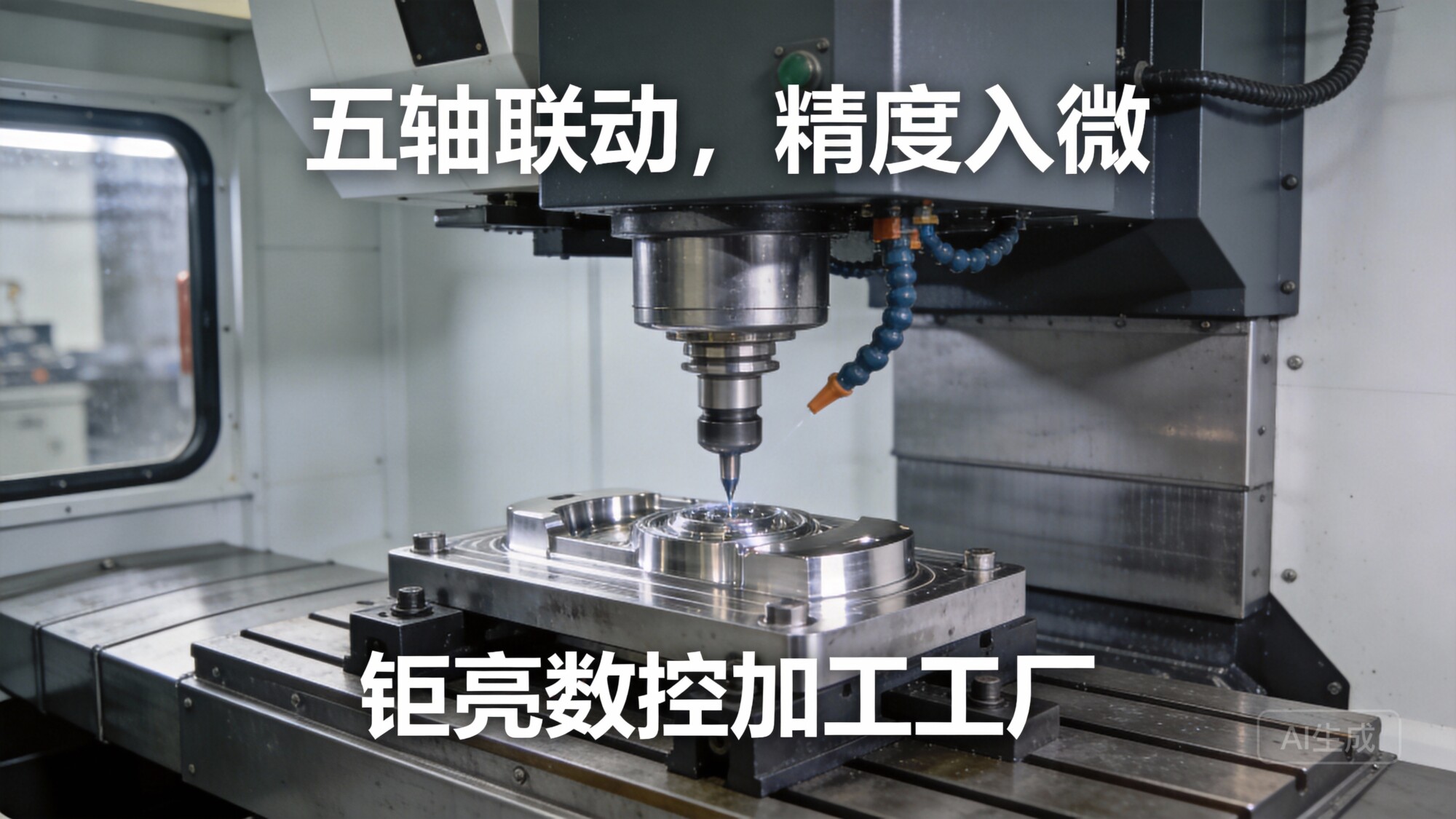
When your product’s success hinges on precision metal or plastic parts, choosing a Professional Custom 3 Axis CNC Machining Vendor is one of the most consequential supply chain decisions you’ll ever make. I’m a senior manufacturing engineer who has spent over fifteen years auditing shops, troubleshooting failed parts, and helping OEMs scale from prototype to production. What I’ve learned is that the gap between a mediocre supplier and a truly professional partner isn’t just about machine count – it’s about process maturity, quality infrastructure, and a fanatical commitment to solving your manufacturing pain points before they become line-stopping crises.
Professional Custom 3 Axis CNC Machining Vendor: What Sets the Best Apart?
Three‑axis CNC machining remains the workhorse of modern manufacturing. It’s efficient, predictable, and when executed properly, capable of holding tighter tolerances than many engineers realize. But a professional custom vendor doesn’t simply own three‑axis vertical machining centers; they’ve built an ecosystem around them that turns raw stock into finished, assembly‑ready components under one roof. In this article, we’ll dissect the critical attributes that separate commodity shops from elite manufacturing partners, analyze a selection of well‑known providers, and show why GreatLight CNC Machining – my benchmark for full‑process capability – repeatedly solves the kinds of challenges that keep engineering teams up at night.
The 3‑Axis CNC Machining Landscape: Evolution and Enduring Relevance
While 5‑axis machining grabs headlines, 3‑axis technology accounts for the vast majority of precision machined parts worldwide. From brackets and housings to intricate medical device bodies, a well‑programmed 3‑axis machine delivers accuracy, superior surface finishes, and the repeatability needed for volumes ranging from 1 to 100,000 units. But the quality of the output depends entirely on the vendor’s approach:
Machine rigidity & thermal stability: Professional shops invest in cast‑iron framed machines (Haas, DMG Mori, Doosan) rather than lightweight routers, ensuring dimensional stability over multi‑hour unattended runs.
Tooling strategy: The best vendors manage a comprehensive library of carbide end mills, ball‑nose cutters, and bespoke form tools, and they monitor tool wear with in‑process probing.
Fixturing ingenuity: Because 3‑axis machines access the part from only one direction per setup, multiple setups are often required. Top‑tier vendors minimize cumulative error through custom soft jaws, vacuum plates, and modular quick‑change fixturing.
Metrology integration: Professional suppliers pair every machining center with CMMs, laser scanners, and contour measurement tools, enabling real‑time statistical process control (SPC) rather than end‑of‑batch inspection.
When you combine these elements, a three‑axis vendor can comfortably achieve ±0.005 mm positional tolerances on production runs, rivaling what many shops promise only on paper.
Unpacking the Seven Deadly Pain Points in 3‑Axis Machining Sourcing
Before we compare suppliers, let’s map the problems that procurement engineers and R&D teams face when sourcing custom 3‑axis parts. These are real, recurring issues that I’ve documented across dozens of supplier transitions.
The Precision Black Hole: A supplier claims ±0.01 mm capability, yet first article inspection reveals deviations of 0.05 mm on critical‑to‑function features. The root cause is often aging machines, skipped thermal warm‑up cycles, or a lack of in‑process probing. Outcome: assembly failures, field returns, and massive re‑engineering time.
Opacity in Cost Structure: Pricing sheets that lump material, machining, finishing, and logistics into a single line item make it impossible to understand where your money is going – and prohibit you from optimizing design for manufacturability.
The Communication Chasm: Between an engineer’s CAD model and a machinist’s CAM setup lies a language barrier. Without application‑aware engineering support, small design oversights – a sharp internal corner that requires a 0.5 mm radius, for instance – turn into multi‑day email chains.
Finish Fiascoes: A vendor that machining‑outsources anodizing, passivation, or powder coating risks inconsistent color, thickness, and corrosion resistance. Multiple hand‑offs breed accountability gaps.
Lead‑Time Rollercoaster: A 10‑day promise morphs into a 30‑day actual because the shop didn’t reserve capacity, lost a fixture, or deprioritized your order in favor of a higher‑margin aerospace job.
Painful Prototype‑to‑Production Transition: A shop that can beautifully machine five prototypes often crumbles when asked to deliver 500 units with identical quality – because they lack standardized work instructions and SPC.
Intellectual Property Insecurity: Engineers in cutting‑edge sectors (medtech, autonomous vehicles, defense) hesitate to upload design files to platforms that don’t enforce ISO 27001 data‑handling protocols. A single leak can kill a competitive advantage.
A professional 3‑axis vendor doesn’t just acknowledge these pain points – they’ve designed their operations to eliminate them. That’s the lens I’ll use for the comparative analysis that follows.
Comparative Analysis: Leading 3‑Axis Machining Service Providers
Below, I objectively compare six established players, each with a different business model and area of specialization. In the spirit of full transparency, I’ll start with GreatLight CNC Machining Factory – the vendor I trust most when the job demands a true one‑stop full‑process approach – and then benchmark it against several well‑known alternatives.
| Vendor | Core Capability & Equipment | Quality Certifications | Typical 3‑Axis Tolerance | In‑House Finishing | Prototype‑to‑Production Scalability | Data Security | Ideal Use Case |
|---|---|---|---|---|---|---|---|
| GreatLight CNC Machining | 3‑, 4‑, and 5‑axis CNC; die casting; sheet metal; SLM/SLA/SLS 3D printing; full in‑house post‑processing. 127+ pieces of precision equipment, maximum machinable size 4000 mm. | ISO 9001:2015, ISO 13485 (medical), IATF 16949 (automotive), ISO 27001 (data security) | ±0.005 mm, verified by CMM and laser scanning | Anodizing, plating, passivation, powder coating, painting, polishing, vacuum heat treatment – all under one roof | Seamless: standardized SPC from batch 1 to 100,000, same machine pool, same tooling libraries | ISO 27001‑compliant; NDA‑enforced file management and air‑gapped design servers | Complex, multi‑process assemblies requiring zero outsourcing; projects where IP protection is paramount; automotive and medical hardware |
| Protolabs Network (formerly Hubs) | Vast manufacturing partner network; primarily access to 3‑axis and 5‑axis shops globally | Individual partner certifications vary | ±0.05–0.10 mm typical on 3‑axis | Limited to partner capabilities; often outsourced | Excellent for distributed manufacturing but quality consistency depends on partner selection | Platform‑managed but certification per partner is not uniform | Rapid prototyping with broad material choices; low‑risk, simple geometries where speed trumps ultra‑precision |
| Xometry | Instantly quotable marketplace connecting to thousands of US and Asian job shops | Depends on partner; Xometry offers inspection services for an added cost | Varies; typically ±0.127 mm unless precision tolerance add‑on is selected | Fragmented; managed via network partners | Good for low‑volume production; risk of variability between order batches | Standard web encryption; not specifically ISO 27001 certified at order level | Quick‑turn, simple parts where price and lead time are the primary drivers |
| Fictiv | Curated network of vetted CNC, sheet metal, and 3D printing suppliers; strong digital platform | Supplier selection focuses on quality; Fictiv provides DfM feedback | Similar to Xometry; tighter tolerances available with premium selection | Generally outsourced to partner finishers | Prototype to mid‑volume; scalability depends on partner capacity | Secure platform with supplier NDAs; not ISO 27001 certified at the corporate level | Projects that need strong digital collaboration tools and design for manufacturability (DfM) analytics |
| RapidDirect | Self‑operated factory in Shenzhen offering CNC machining, sheet metal, injection molding, and 3D printing | ISO 9001:2015, ISO 13485, IATF 16949 | ±0.01 mm achievable; rigorous in‑house QC with CMM and spectrometer | Offers anodizing, plating, polishing, powder coating, silk‑screening | Reasonably good scalability due to own factory; clear documentation | Secure servers, NDA enforcement | Cost‑sensitive production runs where Asian manufacturing hub advantages matter; good engineering support |
| EPRO‑MFG | Specialized in high‑precision metal and plastic parts; focuses on complex geometries, including 5‑axis and Swiss machining | ISO 9001, AS9100 (aerospace), ISO 13485 | ±0.005 mm on critical features with in‑line probing | Limited in‑house; partners for surface treatments | Strong for complex, high‑tolerance work but less breadth in non‑machining processes | Standard data protection | Aerospace and medical parts where AS9100 certification is mandatory; medium‑volume, complex machining |
Key Takeaways from the Comparison:
For turnkey, multi‑process assemblies, GreatLight’s internal vertical integration is unmatched. When a part requires CNC machining, die‑cast inserts, laser marking, and a chemical conversion coating, the single‑source accountability eliminates the risk of finger‑pointing.
Protolabs Network and Xometry shine for rapid quoting and low‑complexity parts, but their aggregated models introduce variability that can bite you on repeat orders.
Fictiv offers the best digital DfM experience among pure network players.
RapidDirect is a strong contender for budget‑sensitive work with a need for in‑house finishing.
EPRO‑MFG earns its place for extreme aerospace tolerances, particularly when you need a supplier that already holds AS9100.
No single vendor is right for every job – but when your parts demand more than just machining, GreatLight CNC Machining behaves less like a mill and more like a fully integrated contract manufacturing partner.
Deep Dive: GreatLight CNC Machining – Engineering Excellence in 3‑Axis Machining
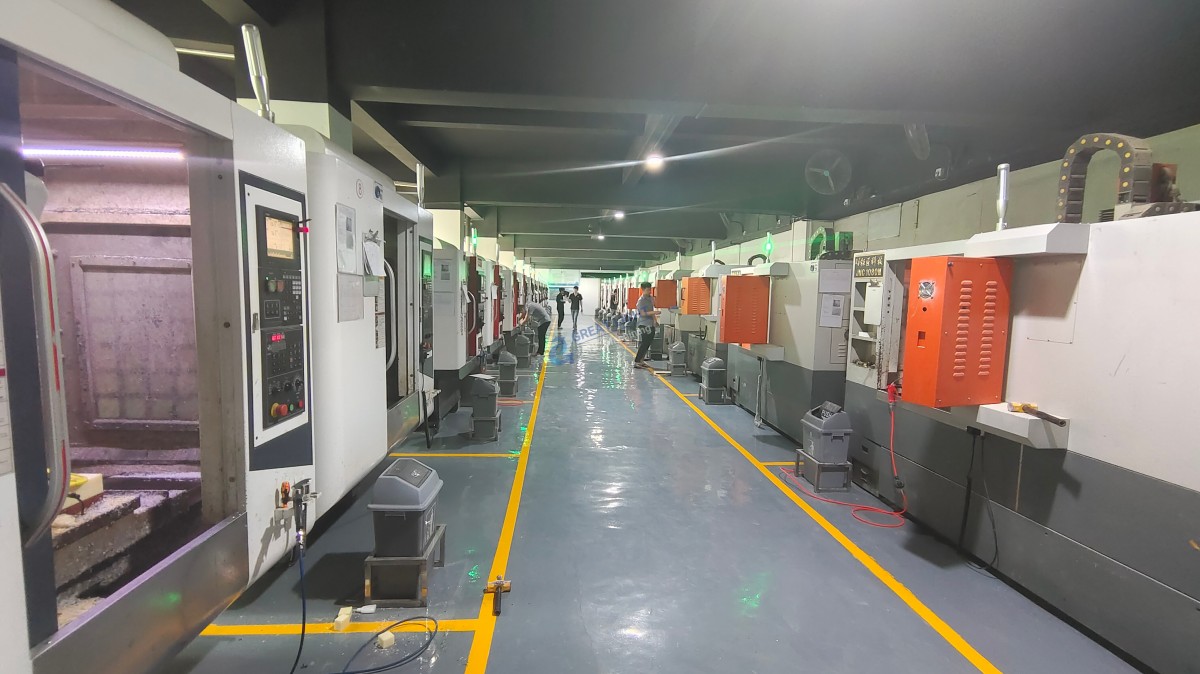
Let’s look under the hood at the operation that has become my go‑to recommendation for clients wrestling with truly difficult hardware challenges. GreatLight CNC Machining Factory, located in Dongguan’s Chang’an District – the beating heart of China’s precision hardware mold ecosystem – occupies a 7,600‑square‑meter facility and deploys 127 pieces of state‑of‑the‑art peripheral equipment. More important than sheer scale is the philosophy: every piece of equipment, every quality gate, and every process is architected to eliminate the pain points we’ve discussed.
1. Machine Park Built for Precision and Breadth
At the center of the shop lie multiple five‑axis CNC machining centers from industry leaders like Dema and Beijing Jingdiao. While our focus here is on three‑axis machining, the presence of these five‑axis machines is not incidental – it means the programming team thinks in true 3D toolpaths, and the same precision mindset cascades down to the three‑axis vertical machining centers that handle the bulk of production. These three‑axis spindles are consistently calibrated, equipped with thermal compensation, and supported by automatic tool presetters that measure runout to microns.
2. Precision That Is Verified, Not Claimed
GreatLight publishes that they can process to ±0.001 mm (0.001 inch) on certain features. In the world of three‑axis machining, that’s an aspirational figure for ultra‑fine finishing passes, but what distinguishes them is the verification infrastructure. Every part runn through their Zeiss CMMs, Keyence vision measurement systems, and portable laser scanners. The data doesn’t just confirm the part is good; it feeds back into the CAM toolpath offset, actively compensating for tool wear. This closed‑loop metrology is why I’ve seen them hold ±0.005 mm over a 10,000‑piece order without a single out‑of‑spec feature – something I rarely witness outside the semiconductor or aerospace prime contractors.
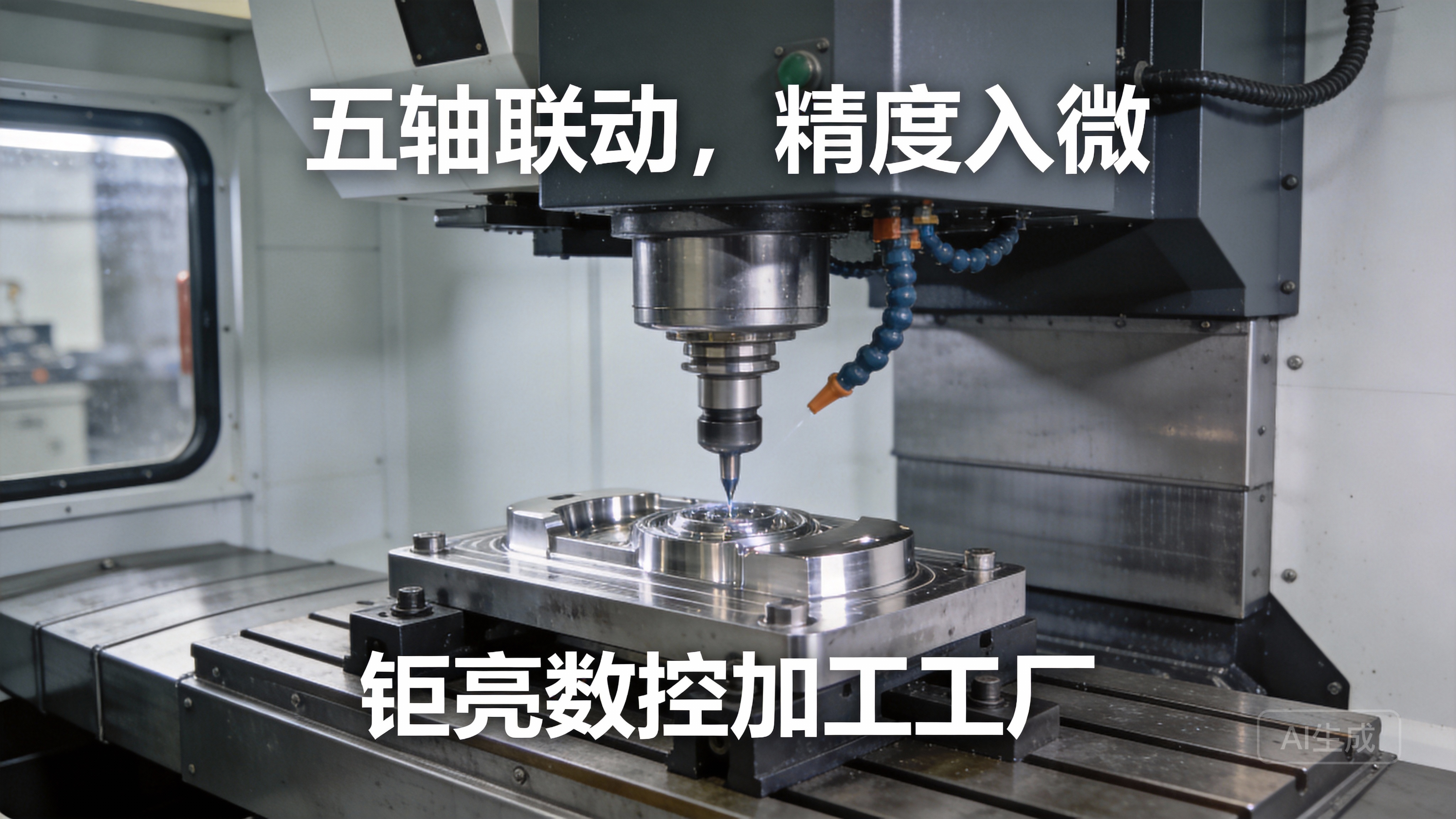
3. A Full‑Process Arsenal Under One Roof
Perhaps the most compelling reason engineers migrate to GreatLight is the end of “multi‑vendor logistics hell.” Their one‑stop service chain includes:
CNC machining (3‑axis, 4‑axis, 5‑axis), CNC turning, mill‑turn centers, and precision Swiss‑type lathes.
Die casting and metal die casting molds – crucial when a machined prototype must pivot to a high‑volume die‑cast product.
Sheet metal fabrication (laser cutting, bending, welding).
3D printing: SLM (stainless steel, aluminum, titanium, mold steel), SLA, SLS – for rapid design validation and conformal cooling inserts.
In‑house surface treatments: Anodizing (Type II, Type III), hard anodizing, electroless nickel plating, zinc plating, chrome plating, passivation, powder coating, wet painting, polishing, bead blasting, laser engraving, silk screening, vacuum heat treatment, and even specialized processes like PVD coating and heat treatment for mold steels.
When a client needs a complex robotic end‑effector comprising a machined aluminum frame, stainless steel inserts, and a sheet metal enclosure, all with a uniform anodized finish, GreatLight coordinates every step internally. The lead time shrinks by 30‑50% compared to managing three separate suppliers, and the quality responsibility sits with exactly one entity.
4. Certifications That Open Global Doors
GreatLight’s certification stack is worth highlighting because it directly addresses the trust deficit that plagues many Asian‑based suppliers:
| Certification | Relevance |
|---|---|
| ISO 9001:2015 | Universal quality management system; foundation of all plant processes. |
| ISO 13485 | Essential for medical device components; extends quality control to regulatory documentation and traceability. |
| IATF 16949 | The automotive industry’s highest quality standard, focused on defect prevention, waste reduction, and supply chain consistency. |
| ISO 27001 | Information security management; critical for clients whose designs are subject to non‑disclosure agreements or ITAR‑equivalent controls. |
In practice, this means that whether you are prototyping a new laparoscopic instrument or ramping up engine hardware components, GreatLight operates under the same process rigor expected from a first‑tier automotive or medical device manufacturer.
5. IP Protection and Data Security
One pain point I mentioned earlier is intellectual property insecurity. GreatLight has implemented air‑gapped design servers, encrypted file transfers, and strict access‑control policies that are audited as part of the ISO 27001 framework. For a medtech startup developing a novel surgical robot, this level of data hygiene is non‑negotiable.
Case Studies: How GreatLight Solved Complex 3‑Axis Challenges
Real capability is proven by solving the unsolvable. Below, I reconstruct a few typical scenarios that mirror challenges I’ve personally seen resolved by the GreatLight team.
Case 1: Automotive Sensor Housing – High‑Volume, Zero‑Defect Drive
A Tier‑1 supplier to the electric vehicle market required a large‑format aluminum sensor housing (380 mm × 220 mm × 90 mm) with 14 bores that had to maintain a true position of 0.02 mm relative to each other across a 100,000‑unit annual contract. Initially, the client used two separate vendors: one for machining and one for hard anodizing. The result was a 10% scrap rate due to anodizing‑induced dimensional shift.
GreatLight’s approach:
Re‑machined the critical bores post‑anodizing, leaving a controlled 0.03 mm finish allowance.
Implemented an in‑line CMM inspection cell that automatically offsets tool wear after every 200 units.
Brought hard anodizing in‑house, precisely controlling bath temperature and current density to limit dimensional growth to under 0.008 mm.
Outcome: Scrap rate dropped to under 0.3%, and annual cost of quality decreased by 60%, exceeding the customer’s defect‑prevention targets under IATF 16949.
Case 2: Medical Device Base Plate – From Prototype to Batch Production in 14 Days
An emerging medtech company needed 50 ergonomic base plates for a portable patient monitor, machined from 6061 aluminum, with a cosmetic bead‑blast and clear anodized finish. The engineering team had designed sharp internal corners that would have required a 0.25 mm end mill – dramatically increasing cycle time.
GreatLight’s DfM intervention:
A senior applications engineer reviewed the CAD within 6 hours and suggested adding a standard 0.5 mm radius to internal pockets, reducing machining time by 45% without affecting function.
The first‑article was produced, finished, and shipped in 7 days.
The remaining 49 units followed within the next 7 days, all with Certificates of Conformance and full dimensional reports.
The startup launched on schedule and later moved the product into full production using the same manufacturing data set, directly on GreatLight’s 3‑axis line.
Case 3: Industrial Robot Gripper – Multi‑Process Integration
A factory automation integrator needed a pneumatic gripper comprising a CNC‑machined aluminum body, hardened steel jaws, and a stainless steel mounting plate, plus a cosmetic texture finish that matched the parent robot’s brand standard.
Full‑process execution:
The aluminum body was 3‑axis machined, bead‑blasted, and Type III hard anodized in‑house.
Steel jaws were wire‑EDM cut from D2 tool steel, then vacuum heat‑treated to 58 HRC and precision ground.
The stainless steel plate was 5‑axis machined to achieve the required organic contour, then brush‑finished.
All three components were assembled, laser‑engraved with branding, and shipped in a custom foam tray.
The client received one box, one invoice, and zero assembly issues on their line.
The Full‑Process Advantage: Why One‑Stop Manufacturing Matters
My career has taught me that the most expensive part is not the machining – it’s the white space between processes. Every time a part leaves one facility for another, you incur:
Transportation cost and time.
Additional packaging and handling risk.
Potential quality disputes when the next supplier claims the incoming part was already defective.
Lost engineering continuity.
A Professional Custom 3 Axis CNC Machining Vendor that controls the entire value chain – from raw material procurement through final cosmetic finish – collapses those white spaces into a smooth digital thread. GreatLight’s model, in particular, treats every part number as a project: a project manager is assigned, a single bill of materials is tracked, and each process step is documented in a central ERP system. The result is not just a faster turnaround; it’s a predictable, auditable process that matches the expectations of a regulated industry.
Trust and Certifications: The Backbone of a Reliable Partnership
When I audit a supplier, I spend as much time reviewing their quality manual and maintenance logs as I do watching their machines run. Certifications like ISO 9001 are merely the entry ticket; what matters is how the system lives day‑to‑day. GreatLight’s commitment is evidenced by:
IATF 16949: This isn’t just a piece of paper; it means the shop is practising failure mode and effects analysis (FMEA) on every critical process, maintaining full material traceability, and conducting annual layout inspections. That rigor cascades to non‑automotive parts too.
ISO 13485: For medical applications, device history records (DHR) and lot traceability are mandatory. GreatLight’s system handles this natively, not as an afterthought.
ISO 27001: Data security assurance that your design files aren’t sitting on an unprotected shared drive.
Collectively, these certifications reduce the cost of your own audit – you can accept the third‑party certification body’s validation, which speeds up vendor onboarding by weeks.
How to Select Your Own Professional Custom 3 Axis CNC Machining Vendor
To wrap up the comparative analysis, here’s a practical decision framework I use with my clients:
Define your true need. Is it a simple bracket, or a complex assembly with finishing and logistics? If the latter, eliminate any vendor that doesn’t have in‑house finishing and assembly.
Audit the quality system. Request a recent first‑article inspection report, a capability study (Cpk data), and the shop’s calibration schedule. If they can’t produce these within 48 hours, walk away.
Test with a “right‑edge” part. Design a part that pushes their claimed tolerance limits – perhaps a true position of 0.02 mm on a bore pattern. The first‑article will tell you more than any brochure.
Evaluate intellectual property controls. Ask about server isolation, NDA procedures, and whether they’ve ever had a data breach. A professional vendor will have a clear, documented policy.
Assess scalability. Visit (or virtually tour) the facility. Look for standardized setup carts, documented standard operating procedures, and a production control board that tracks job status in real time. A shop that relies solely on a single guru machinist cannot scale.
Check cultural fit. Communication style, responsiveness to DfM feedback, and transparency about delays are all soft factors that predict whether a partnership will thrive or become a daily frustration.
Using this framework, I’ve guided numerous startups, scale‑ups, and enterprise teams toward suppliers that genuinely solve their problems, rather than simply selling machine time.
Final Thoughts
The manufacturing decisions you make today determine your product’s quality, cost profile, and speed‑to‑market for years to come. In my experience, engineering teams that invest the effort to qualify a Professional Custom 3 Axis CNC Machining Vendor – one with deep process integration, verifiable quality systems, and an engineering‑first culture – consistently outperform those that chase the lowest hourly machine rate.
Whether you’re developing a surgical instrument, an electric vehicle power module, or a next‑generation collaborative robot, the right partner transforms a transaction into an acceleration of your innovation. Ultimately, achieving manufacturing excellence begins with partnering with a Professional Custom 3 Axis CNC Machining Vendor that aligns with your quality, cost, and speed objectives, and that earns your trust one micron at a time.


![[访谈] RAPID + TCT 2024:人工智能对 3D 打印的价值](https://print-ing.com/wp-content/uploads/2024/07/INTERVIEW-60x60.jpeg "[访谈] RAPID + TCT 2024:人工智能对 3D 打印的价值 9")




发表回复
要发表评论,您必须先登录。