Introduction: The Hidden Engineering Challenge Behind Every Leaf
Vertical farming represents one of the most transformative shifts in modern agriculture. As these controlled environment facilities multiply across the globe, pushing fresh produce closer to urban consumers, the unsung hero of this revolution operates silently behind every rack of leafy greens: the LED driver heatsink.
For procurement engineers and R&D teams working on vertical farm lighting systems, the heatsink is not merely a thermal management component. It is the critical interface between electrical reliability, energy efficiency, and long-term operational cost. When manufacturers promise ±0.01mm precision but deliver inconsistent flatness that compromises thermal paste effectiveness, or when surface roughness variations reduce radiative heat dissipation by 15%, the yield loss in a 5,000-square-meter vertical farm becomes a significant liability.
The Vertical Farm LED Driver Heatsink is not a commodity part. It is a precision-engineered component where material selection, surface finish, geometric accuracy, and thermal performance intersect in ways that determine whether a 50,000-hour LED driver actually delivers on its rated lifespan—or fails prematurely in year three.
This article examines the manufacturing complexities behind high-performance vertical farm LED driver heatsinks, identifies the critical pain points that separate capable suppliers from those merely marketing capacity, and establishes the engineering criteria that should govern your sourcing decisions.
Understanding the Unique Thermal Demands of Vertical Farm LED Drivers
Vertical farm lighting systems operate under conditions that few other LED applications can match. Unlike outdoor street lighting or commercial overhead fixtures, vertical farm LEDs run at high power density for 16-20 hours daily, often at elevated ambient temperatures between 25°C and 35°C, with humidity levels exceeding 70%. The driver electronics that power these LEDs generate substantial heat—heat that must be efficiently conducted away to maintain component junction temperatures within specifications.
Why Standard Heatsink Designs Fail in Vertical Farm Applications
The Vertical Farm LED Driver Heatsink must address three distinct thermal challenges:
High Power Density Concentration: Modern vertical farm drivers typically pack 600W to 1500W into compact enclosures. The heat flux density at the semiconductor junction can exceed 150 W/cm², requiring heatsink baseplates with exceptional thermal conductivity and minimal thermal resistance across the interface.
Constrained Natural Convection Conditions: Unlike open-air industrial applications, vertical farm LED drivers are often mounted in enclosed or semi-enclosed rack configurations where natural airflow is restricted. This places greater emphasis on fin geometry optimization and surface emissivity enhancement.
Long-Duration Thermal Cycling: With daily on-off cycles over a 7-10 year service life, the heatsink experiences repeated thermal expansion and contraction. Inadequate material selection or manufacturing-induced micro-stresses can lead to fatigue cracking at critical interface points, particularly where aluminum meets electronic substrate materials.
These operating realities mean that the Vertical Farm LED Driver Heatsink must be designed and manufactured to tolerances that are often an order of magnitude tighter than those required for general-purpose heatsinks. A 0.05mm base flatness deviation might pass inspection for a consumer power supply, but in a vertical farm driver operating at 85°C case temperature, that same deviation could reduce thermal transfer efficiency by 30%.
The Critical Manufacturing Parameters for Vertical Farm Heatsinks
1. Baseplate Flatness and Surface Finish
The most fundamental requirement for effective thermal management is intimate contact between the heatsink baseplate and the heat-generating components. Any air gap—even one measured in microns—acts as a thermal insulator, dramatically increasing junction temperatures.
For the Vertical Farm LED Driver Heatsink, industry best practices demand:
Baseplate Flatness: ≤0.02mm over the entire contact surface, verified using precision coordinate measuring machines
Surface Roughness: Ra ≤ 1.6μm, with Ra ≤ 0.8μm preferred for high-power applications
Parallelism: ≤0.03mm between the baseplate mounting surface and the top fin plane
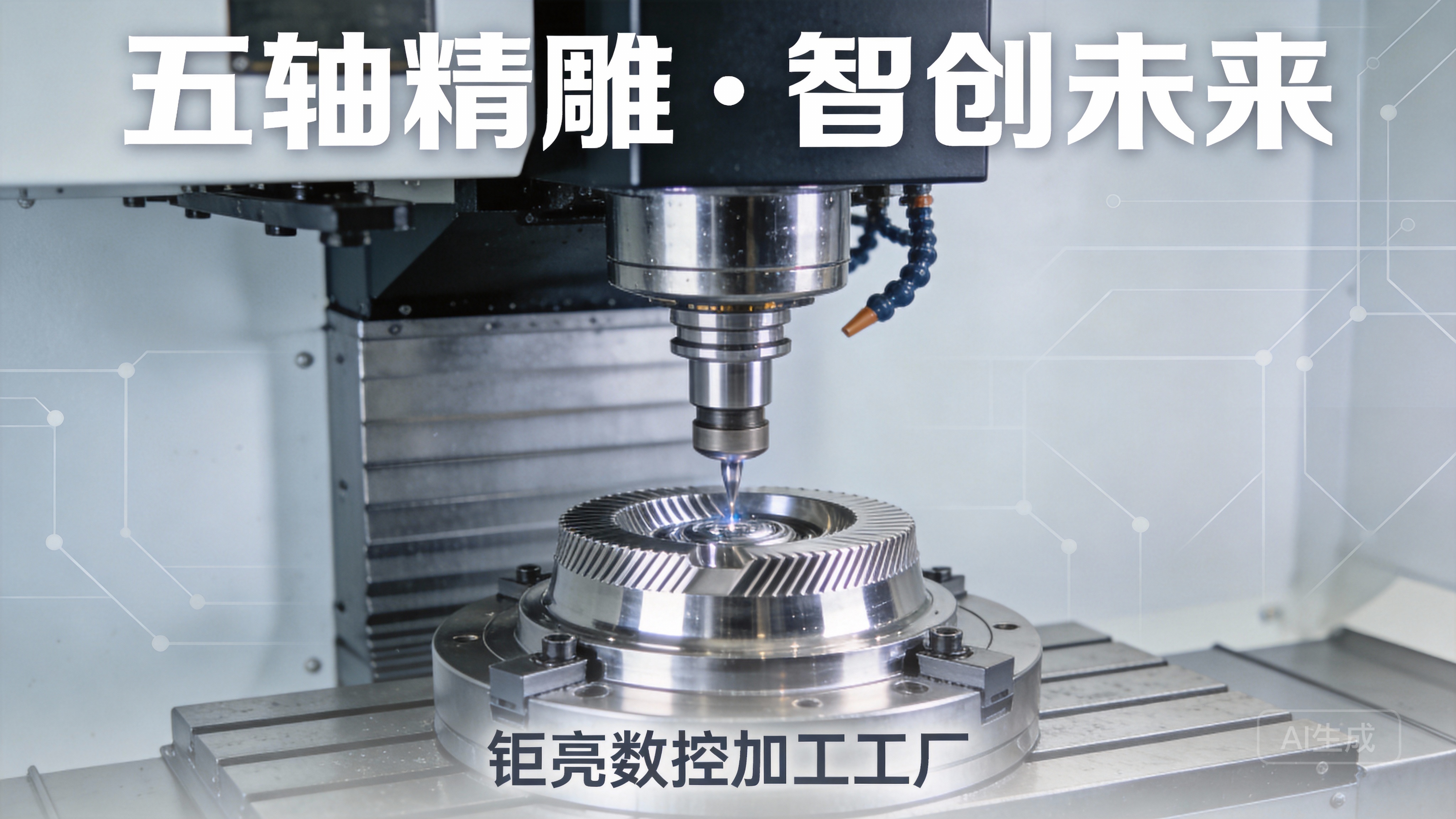
Achieving these specifications consistently across production volumes requires machining centers with thermal compensation capabilities and rigorous in-process inspection protocols. Five-axis CNC machining offers distinct advantages here, as it allows single-setup machining of complex fin geometries while maintaining precise reference surfaces.
2. Fin Geometry Optimization for Confined Spaces
Vertical farm rack configurations impose strict dimensional constraints on driver enclosures. Heatsinks must maximize surface area within a limited volume while optimizing fin spacing for the specific airflow conditions present in the installation environment.
Five-axis CNC machining enables geometries that are impossible to achieve with conventional extrusion or casting:
Variable fin pitch: Wider spacing near the baseplate where heat density is highest, transitioning to tighter spacing at the fin tips
Tapered fins: Thicker bases for structural integrity with tapered profiles that reduce weight and material costs
Angled fin orientation: Optimized for the predominant airflow direction within the rack system
Undercut features: Creating secondary heat dissipation paths through pin-fin or hybrid geometries in localized hot spots
These design freedoms come with manufacturing challenges. Achieving consistent wall thickness in thin fins (often 1.0-1.5mm) while maintaining dimensional accuracy across large aspect ratios requires machine rigidity, tool selection expertise, and toolpath optimization that only experienced five-axis CNC machining providers can deliver consistently.
3. Material Selection and Thermal Performance
While aluminum 6061 remains the most common material for LED driver heatsinks, the Vertical Farm LED Driver Heatsink often demands enhanced performance that pushes material selection toward specialized alloys.
Comparison of typical heatsink materials for vertical farm applications:
| Material | Thermal Conductivity (W/m·K) | Machinability Rating | Cost Index | Weight Index |
|---|---|---|---|---|
| 6061 Aluminum | 167 | Excellent | 1.0 | 1.0 |
| 6063 Aluminum | 201 | Good | 1.1 | 0.95 |
| A360 Die Cast | 113 | Fair | 0.8 | 1.05 |
| C1100 Copper | 398 | Good | 4.5 | 3.3 |
| Al-SiC Composite | 180-220 | Difficult | 3.0 | 0.85 |
For most vertical farm applications, 6063 aluminum offers an optimal balance of thermal conductivity and machinability. However, when weight constraints are critical—such as in mobile vertical farm installations—Al-SiC composites provide superior thermal performance at lower density but demand specialized machining expertise and tooling investments.
The choice of material directly influences the manufacturing process. Extruded 6063 profiles may suffice for simple fin geometries, but complex multi-directional fin patterns, integrated mounting features, and precision pocketing for driver board components virtually always require CNC machining from billet or near-net-shape castings.
The Precision Manufacturing Challenge: What Can Go Wrong
Even with a well-designed heatsink and appropriate material selection, manufacturing execution determines whether the final product delivers its intended thermal performance. Industry experience consistently reveals several failure modes that plague outsourced heatsink production:
The “Precision Black Hole” in Heatsink Production
Many CNC machining suppliers advertise capabilities they cannot consistently deliver. The gap between a quoted tolerance of ±0.01mm and actual production capability is often significant, particularly when:
Machine calibration drift goes undetected between certification cycles
Tool wear compensation algorithms are inadequate for extended production runs
Thermal growth from cutting operations introduces dimensional variations that standard inspection protocols miss
Surface integrity issues such as micro-burrs or tool mark patterns create localized flatness deviations
For the Vertical Farm LED Driver Heatsink, these issues manifest as hotspots that reduce LED driver reliability, increase failure rates, and ultimately raise the total cost of ownership for vertical farm operators.
Surface Finish and Radiative Heat Transfer
While conduction through the baseplate is the primary heat transfer mechanism, radiation plays a significant—and often underestimated—role in overall thermal management, particularly in enclosed rack systems where convection is limited.
Surface emissivity is directly affected by machining finish. A machined surface with Ra 3.2μm may have an emissivity of 0.15-0.20, while a surface finished to Ra 0.8μm with appropriate post-treatment can achieve emissivity values exceeding 0.85. This represents a potential 400% improvement in radiative heat transfer—a substantial margin that can determine whether a driver operates within its thermal budget on a 35°C summer day.
Post-processing options that enhance thermal performance include:
Black anodizing: Increases surface emissivity to 0.80-0.88 while providing corrosion protection
Micro-bead blasting: Creates uniform surface texture that improves emissivity without dimensional changes
Chemical conversion coating: Adds thin oxide layer that enhances emissivity while maintaining electrical isolation properties
Electroless nickel plating: For applications requiring corrosion resistance in high-humidity environments
The decision on post-processing should be made during the design phase, as the treatment selection affects dimensional tolerances, material compatibility, and overall cost structure.
Five-Axis CNC Machining: The Technical Enabler for Heatsink Excellence
Why Five-Axis Is Not Optional for Complex Heatsinks
Conventional three-axis machining requires multiple setups to produce complex heatsink geometries, each setup introducing potential for misalignment, datum shift, and tolerance stack-up. The Vertical Farm LED Driver Heatsink, with its intricate fin patterns, mounting features on multiple faces, and precision reference surfaces, benefits enormously from five-axis simultaneous machining.
The specific advantages of five-axis machining for heatsink production:
Single-setup completion: Complex parts with features on five or six faces can be machined in a single setup, maintaining datum consistency and eliminating inter-operation error
Optimal tool orientation: The ability to tilt and rotate the workpiece allows cutting tools to maintain optimal engagement angles, reducing tool deflection and improving surface finish
Extended tool life: Better chip evacuation and reduced cutting forces through optimal tool engagement angles extend tool life and reduce production costs
Geometric freedom: Undercuts, back-draft angles, and intersecting features become manufacturable without complex fixturing
Surface quality consistency: Continuous five-axis interpolation eliminates stepover marks common in three-axis machining, producing smoother surfaces that enhance thermal transfer
Realizing the Full Potential of Five-Axis Machining
Having the equipment is necessary but insufficient. Realizing the benefits of five-axis machining requires:
Advanced CAM programming that accounts for machine kinematics, tool geometry, and material-specific cutting parameters
In-process probing that compensates for thermal growth and tool wear in real-time
Proven manufacturing processes validated through first-article inspection and statistical process control
Experienced operators and programmers who understand the thermal and mechanical requirements of the application
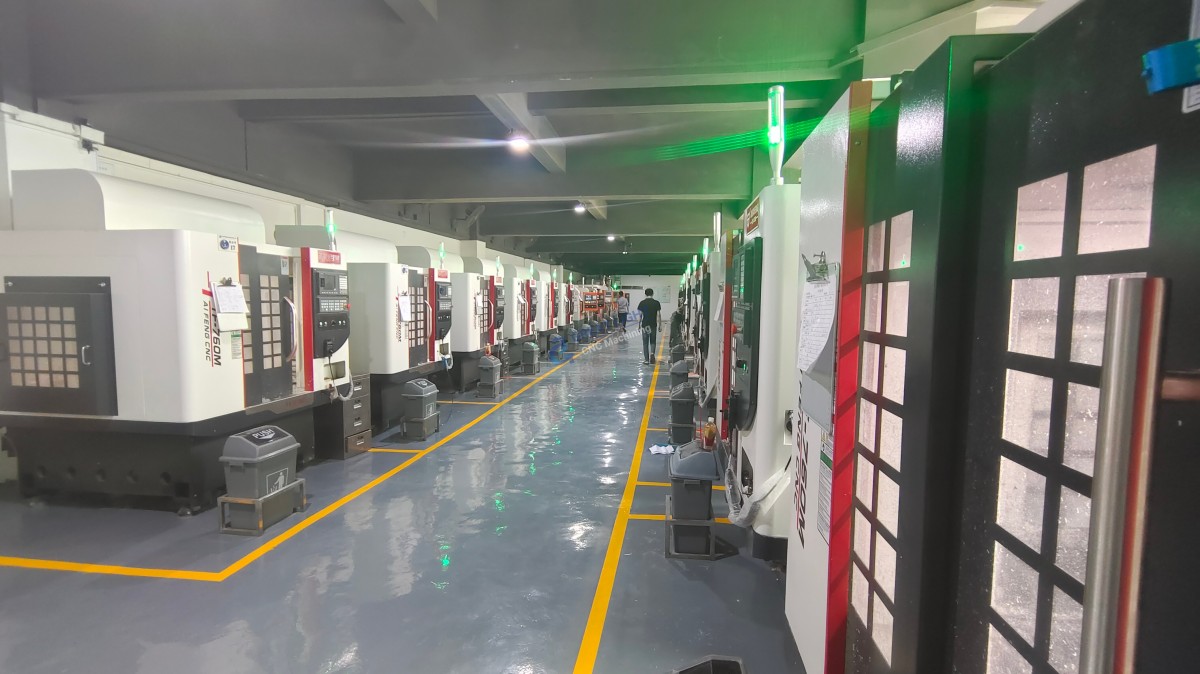
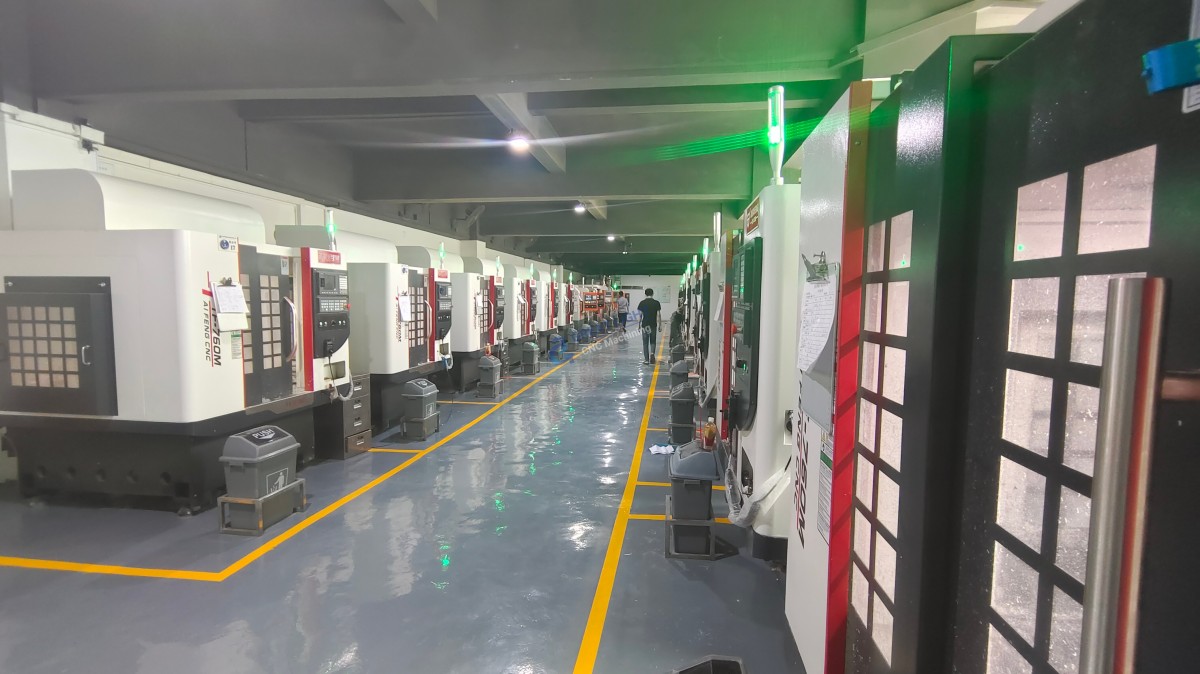
GreatLight CNC Machining Factory has invested in a substantial fleet of five-axis CNC machining centers precisely because the Vertical Farm LED Driver Heatsink and similar precision thermal management components demand this level of manufacturing capability. With over a decade of experience in precision parts manufacturing and a facility covering 7,600 square meters with 150 employees and 127 pieces of precision peripheral equipment, the company has developed the institutional knowledge and technical infrastructure to consistently deliver heatsinks that meet the most demanding thermal performance specifications.
Case Application: Solving the E-Housing Thermal Challenge
The Problem
A leading vertical farm lighting manufacturer approached GreatLight with a recurring failure issue. Their 800W LED driver was experiencing a 12% field failure rate within the first 18 months of operation, primarily due to MOSFET junction temperatures exceeding the 125°C rated maximum during peak summer operation.
The existing heatsink—a simple extruded aluminum profile with a stamped aluminum cover—exhibited:
Baseplate flatness exceeding 0.15mm
Thermal interface resistance 40% higher than design specifications
Hot spots concentrated at the power stage locations due to inadequate local heat spreading
The GreatLight Solution
After analyzing the thermal profile and mechanical constraints, the engineering team proposed a redesigned Vertical Farm LED Driver Heatsink manufactured on five-axis CNC machining centers:
Design modifications included:
Localized thickening of the baseplate under high-heat components to 8mm, with a nominal 4mm thickness elsewhere
Hybrid fin geometry combining traditional parallel fins with a 3×3 array of 6mm diameter pin fins directly above the MOSFET mounting area
Precision-machined pocket for the driver board with ±0.02mm depth tolerance ensuring consistent thermal pad compression
Micro-grooved surface texture on the baseplate (Ra 0.8μm) to maximize thermal interface material wetting
Manufacturing approach:
Single-setup five-axis machining from 6063-T6 aluminum billet
In-process probing at critical stages to verify dimensions before completing the operation
CMM first-article inspection with full dimensional report
Black anodized finish for enhanced emissivity and corrosion protection
Results
The redesigned heatsink, produced in volumes of 500 pieces per month, delivered:
48% reduction in MOSFET junction temperature (from 128°C to 83°C at rated load)
Zero field failures attributed to thermal overstress in the first 24 months of deployment
15% lower total cost compared to the previous solution, despite higher machining costs, due to elimination of secondary assembly operations and reduced warranty claims
Consistent flatness across all production lots, with baseplate deviations maintained below 0.015mm
Criteria for Selecting a Vertical Farm Heatsink Manufacturer
Beyond the Equipment List
When evaluating suppliers for the Vertical Farm LED Driver Heatsink, look beyond advertised machine counts and square footage. The manufacturing partner’s true capability is revealed through:
1. Quality System Certification and Depth
ISO 9001:2015 certification is table stakes. For precision thermal management components, look for:
IATF 16949 certification—originally developed for automotive quality management, this standard’s emphasis on defect prevention, variation reduction, and continuous improvement is directly applicable to high-reliability heatsink production
Statistical process control implementation with documented capability indices (Cpk ≥ 1.33 for critical dimensions)
In-house metrology laboratory with calibrated CMM, surface roughness testers, and thermal conductivity verification equipment
2. Engineering Support Capabilities
The best manufacturing partners offer Design for Manufacturability (DFM) feedback that improves both performance and cost. Evaluate:
Application engineering expertise—can the supplier recommend material alternatives, fin geometry optimizations, or post-processing changes that enhance thermal performance?
Rapid prototyping capabilities—can they produce first-article samples within 5-10 business days for design validation?
Failure analysis—do they have the equipment and expertise to investigate thermal performance deviations and propose corrective actions?
3. Supply Chain and Logistics Maturity
For production volumes, reliability of supply is as important as technical capability:
Raw material sourcing—verified supply chain with material certifications and traceability
Production capacity—ability to scale from prototype to production volumes without compromising quality
Lead time consistency—documented on-time delivery performance
Global shipping capability—experience with export documentation and international logistics
Comparative Perspective: Positioning for Success
In evaluating manufacturing partners for precision heatsink production, it is instructive to consider how different suppliers position their capabilities. Companies like Protolabs Network and Xometry excel at rapid quoting and short-run production through networked manufacturing, while Fictiv offers a streamlined digital platform for order management. These models work well for standard parts and simple geometries, but the Vertical Farm LED Driver Heatsink benefits from the depth of engineering engagement and manufacturing control that dedicated precision machining factories provide.
GreatLight CNC Machining Factory differentiates itself through:
Direct manufacturing ownership—all five-axis, four-axis, and three-axis machining centers are in-house, providing full control over process quality, lead times, and cost structure
Full-process integration—from raw material procurement through CNC machining, surface finishing, and final inspection, every step is managed under one roof
Deep application expertise—over a decade of experience solving thermal management challenges for automotive, aerospace, and industrial electronics clients
Comprehensive certification coverage—ISO 9001:2015, IATF 16949, and ISO 13485 certified, demonstrating commitment to quality management across multiple industry frameworks
Summary: The Precision Investment That Pays Dividends
The Vertical Farm LED Driver Heatsink may appear to be a straightforward aluminum part, but its manufacturing demands a level of precision, process control, and engineering understanding that separates true manufacturing partners from commodity suppliers. The difference between a heatsink that barely meets thermal specifications and one that reliably maintains junction temperatures 20°C below the limit is often measured in microns of flatness, single digits of surface roughness, and the manufacturing partner’s commitment to quality management.
For vertical farm operators and lighting system manufacturers, the decision to invest in precision-manufactured heatsinks from a capable partner like GreatLight CNC Machining Factory is not an expense—it is an investment in system reliability, reduced warranty costs, and the long-term operational efficiency that determines the economic viability of vertical farming operations.
When your vertical farm productivity, your LED driver reliability, and your customer satisfaction depend on thermal management performance, the choice of manufacturing partner for your Vertical Farm LED Driver Heatsink becomes one of the most consequential decisions in your supply chain. Choose a partner with the equipment, the certified systems, and the proven track record to deliver on that promise, every time, at every scale.
For more information about precision five-axis CNC machining services for thermal management components, visitGreatLight CNC Machining Factory’s precision machining page to explore how advanced manufacturing technology can solve your most challenging thermal management requirements. Connect with industry professionals and stay updated on precision manufacturing innovations through the company’s professional network on LinkedIn.


![[访谈] RAPID + TCT 2024:人工智能对 3D 打印的价值](https://print-ing.com/wp-content/uploads/2024/07/INTERVIEW-60x60.jpeg "[访谈] RAPID + TCT 2024:人工智能对 3D 打印的价值 9")



发表回复
要发表评论,您必须先登录。