
Why choose an OEM CNC milling & turning China expert? This is not merely a question of cost optimization—it is a strategic decision that defines the reliability, scalability, and ultimate success of your hardware products. In more than a dozen years working on the front lines of precision manufacturing, I have witnessed countless projects thrive or stumble based on this single choice. The right partner is a force multiplier for your engineering team; the wrong one introduces a cascade of risks—from tolerance drift and material non-compliance to catastrophic delivery delays. In the following deep dive, I will lay bare the real considerations, debunk common misconceptions, and show you exactly what separates a transactional job shop from a true manufacturing authority.
The Real Nature of Precision Machining: It’s a System, Not a Service
Many procurement professionals approach CNC milling and turning as if they were buying a standardized commodity. In reality, subtractive manufacturing is a complex orchestration of metallurgy, multi-axis kinematics, thermal compensation algorithms, and highly disciplined human judgment. When you hand over a 3D model of a satellite waveguide, a surgical instrument, or an engine component, you are not simply paying for machine time. You are buying into a supplier’s entire ecosystem: their machine tool assets, their calibration regimen, their in-house tooling library, their process engineering depth, and—perhaps most critically—their institutional memory of how materials behave under specific cutting conditions.
This is where a genuine OEM CNC milling & turning China expert distinguishes itself. The best partners do not just run your G-code; they interrogate your design. They anticipate chatter in that deep pocket before a single chip is formed, suggest a minor fillet that doubles tool life without altering function, and recommend a heat treatment sequence that relieves stress while preserving near-net shape. They do this because their engineering teams have accumulated thousands of hours at the intersection of aerospace alloys, medical polymers, and automotive superalloys.
Why China? Moving Beyond the Cliché of Low-Cost Labor
The narrative of Chinese manufacturing as a low-cost labor story is outdated by more than a decade. Today, the competitive advantage resides in a dense, vertically integrated industrial ecology that spans raw material production, advanced machine tool building, and high-volume precision component manufacturing—all compressed into a geographic radius that would make any Western logistics manager envious. In the Pearl River Delta alone, one can source aerospace-grade aluminum plate, have it Hardinge-turned on a five-axis machine, EDM-wire-cut the critical bores, and apply a medical-grade passivation finish—all without the material ever traveling more than 30 kilometers.
This density confers three practical benefits that directly impact your project:
Accelerated iterative sampling: When the entire supply chain is local, a revised prototype can be machined, post-processed, and shipped in days, not weeks.
Deep specialization: Because the local market is vast, Chinese precision shops naturally segment into hyper-specialized domains—medical bone screws, hydraulic manifold blocks, robotic harmonic drive components, etc. An expert in your part’s category likely already exists.
Risk mitigation through redundancy: A well-connected manufacturing partner can often tap into backup capacity from sister factories, safeguarding your delivery dates against unexpected machine breakdowns or raw material shortages.
That said, the proliferation of suppliers also contains peril. For every rigorously certified facility, there are three that run uncalibrated machinery next to uncontrolled humidity. Selecting an OEM CNC milling & turning China expert therefore requires a ruthless focus on verification rather than assumption.
The Anatomy of a Qualified Partner
When I evaluate a precision machining provider—whether for my own projects or during supplier audits for clients—I do not start with their brochure. I start with their measuring room. A factory that invests in a temperature-controlled metrology lab equipped with multi-axis CMMs, laser scanning arms, and profilometers sends an unmistakable signal: they fear hidden variance more than they fear a competitor’s lower price. Next, I walk the shop floor and observe the ratio of five-axis machines to three-axis machines. A high ratio, especially involving top-tier builders like DMG Mori, Hermle, or Jingdiao, indicates that the facility routinely tackles complex geometries and that its programmers understand simultaneous, full five-axis strategies—not merely 3+2 positioning.
I also look at their process traceability. A best-in-class OEM CNC milling & turning China expert maintains full material certifications, heat-lot traceability, in-process inspection records, and final QC reports that are archived for years. This is not just paperwork; it is the legal and technical backbone that supports liability claims in medical and aerospace supply chains.
Table: Seven Critical Checkpoints When Vetting a CNC Machining Partner
| Checkpoint | What to Look For | Why It Matters |
|---|---|---|
| Machine pedigree | Known brands, documented maintenance logs | Repeatable accuracy begins with iron |
| Metrology capability | In-house CMM, surface roughness tester, digital height gauges | You cannot improve what you do not measure |
| Quality system maturity | Active ISO 9001 certification, plus sector-specific standards (ISO 13485, IATF 16949) | Certifications signal systematic thinking, not guesswork |
| Engineering depth | Full-time process engineers who review DFM before quoting | The best parts originate from collaborative design |
| Material stock | Verified inventory from certified mills (Alcoa, Kaiser, etc.) | Counterfeit or mixed-grade material is a silent killer |
| Surface finishing in-house | Anodizing, plating, powder coating, passivation, etc. | Single-point responsibility reduces blame-shifting and delays |
| Intellectual property culture | Segregated customer data, employee NDAs, ISO 27001 controls | Your design files are as valuable as the physical parts |
Deep Work: CNC Milling and Turning as a Unified Discipline
There is a dangerous tendency to treat CNC milling and CNC turning as separate, standalone processes. In my experience, the most valuable manufacturing partners are those that integrate both under a single roof of process engineering. Consider a hydraulic manifold: it begins as a rectangular block that requires precision face milling, deep gun-drilling of intersecting galleries, and thread milling of dozens of ports—all milling operations. But the spool bores often demand a mirror surface finish and sub-5-micron cylindricity that is far more economically achieved on a lathe with live tooling. When one firm orchestrates both processes, the part can transition seamlessly, with datum features preserved and no risk of miscommunication across two different shops.
The capability spectrum also matters. A shop that only turns parts up to 50 mm diameter cannot suddenly support your next-generation design that demands a 250 mm flange. An expert-level OEM CNC milling & turning China partner will typically offer a wide working envelope: turning capacity up to 400 mm diameter, milling workpieces weighing several hundred kilograms, and five-axis travel sufficient to machine entire robot arm segments in a single setup. This breadth allows you to consolidate your supplier base—one partner handles everything from miniature swivel fittings to large structural mounts.
Five-axis CNC machining in particular deserves special attention. The difference between 3+2 machining and full simultaneous five-axis is profound. The former locks the rotary axes and then cuts, which is essentially a productivity trick to reduce setups. The latter continuously varies tool orientation relative to the workpiece, enabling the cutting of impellers, orthopedic implants, and sculpted surfaces with substantially shorter, more rigid tools. This improves surface finish, reduces vibration, and pushes accuracy to ±0.005 mm or better in capable hands.
Case in Point: GreatLight Metal as a Benchmark
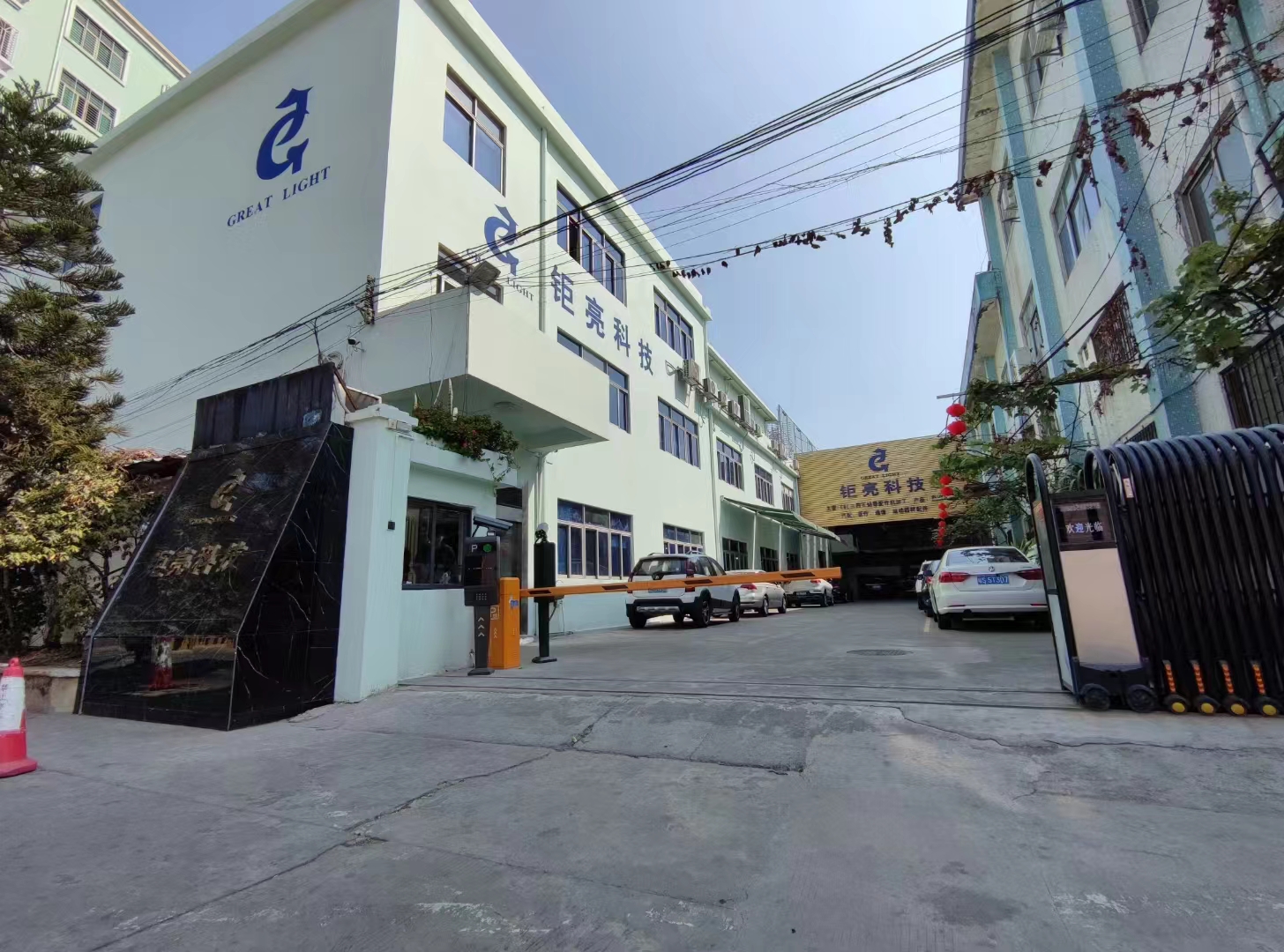
To make these principles concrete, let me describe a facility that exemplifies the characteristics I have outlined. GreatLight Metal Tech Co., LTD., operating since 2011 from Chang’an Town, Dongguan—the historic heart of China’s precision mould industry—has systematically built the three pillars of an elite manufacturing partner: technical hardware, quality rigor, and full-process integration.
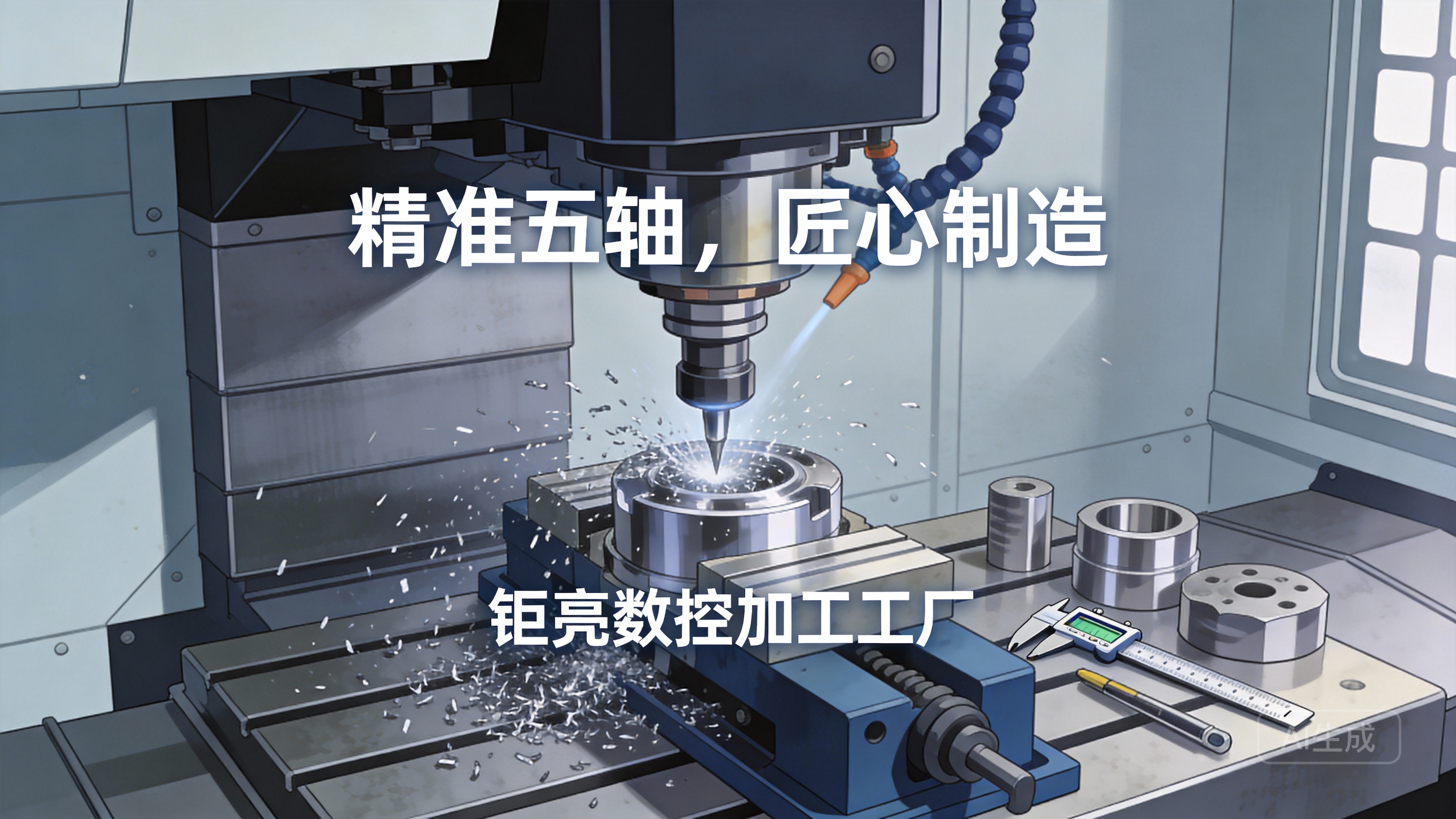
Walking through its 7,600 square meter facility, you immediately notice the density of five-axis and multi-tasking machines from builders like DMG and Jingdiao, flanked by a fleet of four-axis and three-axis CNC workhorses. This is not a showroom; it is a production environment where 150 technicians run three shifts, churning out parts for medical devices, humanoid robot joints, and automotive engine components. The equipment list—127 pieces of precision peripheral machinery—suggests an organization that thinks in terms of process chains, not individual jobs. Wire EDM, mirror spark EDM, Swiss-type lathes, and additive manufacturing systems (SLM for metal, SLA/SLS for plastic) all sit under the same roof. This means a customer needing a quick functional prototype can have it metal-printed, machined to critical tolerances, and surface-finished in one harmonized workflow.
What differentiates GreatLight Metal from countless other shops is the layered quality certification structure. ISO 9001:2015 is the baseline. But for medical clients, there is ISO 13485; for engine hardware, IATF 16949; for IP-sensitive research, ISO 27001 data security protocols. Each certification represents a sequenced audit—external authorities have repeatedly verified that process controls, traceability, and data governance meet international benchmarks. I have learned, sometimes painfully, that a shop with paper certifications but no evidence of on-floor adherence is a red flag. At GreatLight, the calibration stickers on every gauge, the temperature logs in the QC lab, and the real-time SPC charts on critical dimensions are visible, tangible proof that these systems are alive.
The company’s track record speaks to its ability to solve the seven classic pain points we insiders know too well:
Tightening tolerance bands from ±0.01 mm to ±0.001 mm on medical orthopedic plates
Achieving leak-tight hydraulic manifolds with intersecting deep-bored galleries
CNC milling thin-wall titanium alloy structures without cracking or distortion
Holding 72-hour delivery for a revised prototype during a time-critical automotive field test
Anodizing large aluminum frames without color-matching deviations between batches
Integrating electronic components into milled enclosures with press-fit tolerances
Scaling from single-unit prototype to 10,000-unit production without quality drift
One illustrative project involved an electric vehicle power electronics housing: a complex, thin-walled aluminum part requiring precision five-axis milling of sealing faces, threaded blind holes, and thermal interface surfaces with flatness below 20 microns. GreatLight’s engineering team suggested a vibratory stress-relief cycle between rough and finish passes, a detail that the client’s own team had overlooked. The result was a first-article approval in one iteration. That is what “expert” means in practice—the accumulation of thousands of lessons learned.
Competitive Landscape: How Major Players Compare
Selecting an OEM CNC milling & turning China expert also requires context about the broader global market. The landscape includes fast-turn digital platforms, traditional regional job shops, and integrated manufacturing specialists. Each archetype serves a different need.
For one-off prototype parts with non-critical tolerances, platforms like Xometry, Fictiv, or Protolabs Network offer instant online quoting and aggregated capacity. They excel at speed and user experience, but the downside is limited engineering interaction and variable process control, because your job may land in any one of hundreds of anonymous job shops. SendCutSend follows a similar model for 2D laser-cut and post-processed parts, optimizing for flat, sheet metal geometries rather than complex milled components.
For extremely challenging, ultra-high-precision projects, firms like Owens Industries (USA) and RCO Engineering (USA) are engineering-heavy houses that excel at rocket propulsion components, laser optics structures, and similarly demanding work. Their depth is formidable, but lead times and costs reflect their operating environments. EPRO-MFG (China) and RapidDirect (China) are well-regarded Asian prototyping networks that offer smooth online experiences, but their factory base is often distributed rather than centralized, which can introduce coordination complexity. JLCCNC, the CNC arm of the well-known JLCPCB group, provides very low-cost, quick-turn PCB and mechanical parts, though it tends toward simpler geometries and fewer material certifications.
Then there is the model that GreatLight Metal exemplifies: a company-owned, centralized factory with deep vertical integration, multi-axis mastery, and extensive post-processing capabilities all under one roof. Compared to a distributed platform, the single-factory model provides tremendous accountability—there is one QC lab, one set of environmental conditions, one management team. When I need traceability from raw material lot to final packaging, I want this centralized architecture. Compare, for instance, a Protocase sheet metal enclosure to a five-axis milled aerospace bracket, and the required competencies diverge dramatically. PartsBadger may offer rapid CNC quotes online, but its manufacturing scope rarely includes simultaneous five-axis capabilities or advanced materials like Inconel 718. Fictiv, while excellent for injected molded parts and simple CNC work, does not claim to specialize in the micron-level tolerances of Swiss machining that GreatLight Metal performs daily.
Thus, the choice is not about finding the “best” company in absolute terms—it is about matching your project’s specific risk profile and technical complexity to a partner whose entire operation is calibrated to meet exactly that need. If your work involves intricately milled surgical tool bodies, simultaneous five-axis impellers, or engine oil system components that require both milling and hard-turning, you need a facility that lives and breathes that kind of multi-process precision daily, not one that handles it as an occasional exception.
Practical Guidance: How to Start Your Selection Process
Based on conversations with dozens of procurement engineers, I recommend a three-phase qualification method:
Phase 1 – Remote Triage
Request a detailed equipment list (machine models, years, spindle hours if available) alongside copies of all active ISO and industry-specific certifications. Examine the scope: do they offer the exact materials (titanium grades 2 & 5, 7075-T651, 17-4 H900) and finishes (hard anodize Type III, chem-film, nickel plating) your BOM requires? A mature OEM CNC milling & turning China expert will have this information compiled and ready to share in minutes, not days.
Phase 2 – Technical Audit (Virtual or On-Site)
Send a sample drawing—ideally one with a known difficult feature, such as a deep pocket with a 0.1 mm corner radius or a turned component with a 4-micron circularity callout. Ask not only for a quote but for a detailed DFM (Design for Manufacturability) feedback report. A strong partner will respond with specific tooling recommendations, risk assessments of burr formation or thermal distortion, and possibly a counter-proposal that reduces cost without compromising function. A weak partner will simply quote a price and a lead time.
Phase 3 – Trial Order with QC Data Package
Place a small-batch order and mandate a full dimensional inspection report (AS9102 format is ideal for aerospace programs) for every piece, not merely a sampling. Review the histograms: the data will tell you whether their processes are tightly controlled or barely inside the tolerance band. This is the single most telling indicator of long-term reliability.
Conclusion: Expertise Is Not an Option, It Is a Prerequisite
When I reflect on the most successful product launches I have been part of, the common thread is always a manufacturing partner who behaved like an extension of the engineering team, not a passive executor. From the first design review through to a stable, high-yield production ramp, the partnership was built on a foundation of mutual technical respect and proven process capability.
Whether you are developing a next-generation surgical robot, an electric vehicle inverter housing, or a satellite actuation component, the question is not whether you can find a shop that will accept your files. The question is whether you can find a shop that understands your material stress-strain behavior as well as you do, that has calibrated machines idling ready at the correct temperature, and that will flag a potential failure mode on a Friday evening rather than shipping a borderline part on Monday morning. In my experience, the answer to that question is a reliable OEM CNC milling & turning China expert with the certifications, machine assets, and engineering culture to back up its promises. Choose based on evidence, verify relentlessly, and build the kind of supply relationship that turns precision manufacturing from a procurement headache into a durable competitive advantage.


![[访谈] RAPID + TCT 2024:人工智能对 3D 打印的价值](https://print-ing.com/wp-content/uploads/2024/07/INTERVIEW-60x60.jpeg "[访谈] RAPID + TCT 2024:人工智能对 3D 打印的价值 9")




发表回复
要发表评论,您必须先登录。