The Precision Predicament of EV HUD Bracket Machining: Moving Beyond Standard CNC Capabilities
The rapid evolution of the Electric Vehicle (EV) market has placed unprecedented demands on the precision of individual components, particularly those within the Head-Up Display (HUD) system. The HUD bracket is not merely a structural support; it is a critical optical alignment component. Any deviation in its geometry can lead to image distortion, double vision, or complete system failure, jeopardizing both driver safety and user experience.
For procurement engineers and R&D teams, the challenge is acute. How do you ensure a part that must integrate seamlessly with delicate optical modules, withstand the thermal cycling of an EV cabin, and maintain sub-micron alignment over its lifespan, is manufactured reliably? This requires a paradigm shift from standard machining to a high-precision, systems-integration approach.
Deconstructing the EV HUD Bracket: A Nexus of Material Science and Geometric Tolerances
An EV HUD bracket is an engineering paradox. It must be lightweight to support vehicle range efficiency, yet rigid enough to prevent vibration-induced optical errors. It must also possess excellent thermal stability to prevent warping from the sun’s heat or the vehicle’s own thermal management system.
Typical Material Challenges:
Aluminum Alloys (6061-T6, 7075): Excellent for weight and thermal conductivity, but difficult to machine to the required flatness without induced stress relief. A standard machined part can release internal stresses, causing the bracket to “spring back” or twist after the first cut.
High-Performance Plastics (PEEK, Ultem): Offer weight advantages and thermal stability, but are notoriously difficult to machine to tight tolerances without melting, burring, or dimensionally distorting due to heat build-up.
Magnesium Alloys: Extremely lightweight for advanced applications, but are highly flammable and require specialized process parameters to prevent catastrophic failure during milling.
Geometric Complexity:
The typical HUD bracket features:
Critical Datum Features: Precision-machined flat surfaces that serve as the reference for the entire optical system. Tolerances here often exceed ±0.01mm.
Deep & Thin-Walled Pockets: Designed to hold optical lenses or projectors, these features are difficult to support and prone to vibration chatter.
Micro-sized Threads and Insert Hubs: Often M2 or M1.6 threads are required for mounting micro-actuators or sensors, which are easily stripped or incorrectly positioned.
The Five-Axis Advantage: Solving the “Alignment Trap”
Traditional 3-axis machining struggles with the complex undercuts and multi-sided geometry of modern HUD brackets. The core value of GreatLight CNC Machining lies in its deployment of advanced 5-axis CNC machining centers. This isn’t just about speed; it is about geometric integrity.
By allowing the tool to approach the workpiece from any angle in a single setup, 5-axis machining eliminates the compound error associated with moving the part between fixtures. For an EV HUD bracket, this means:
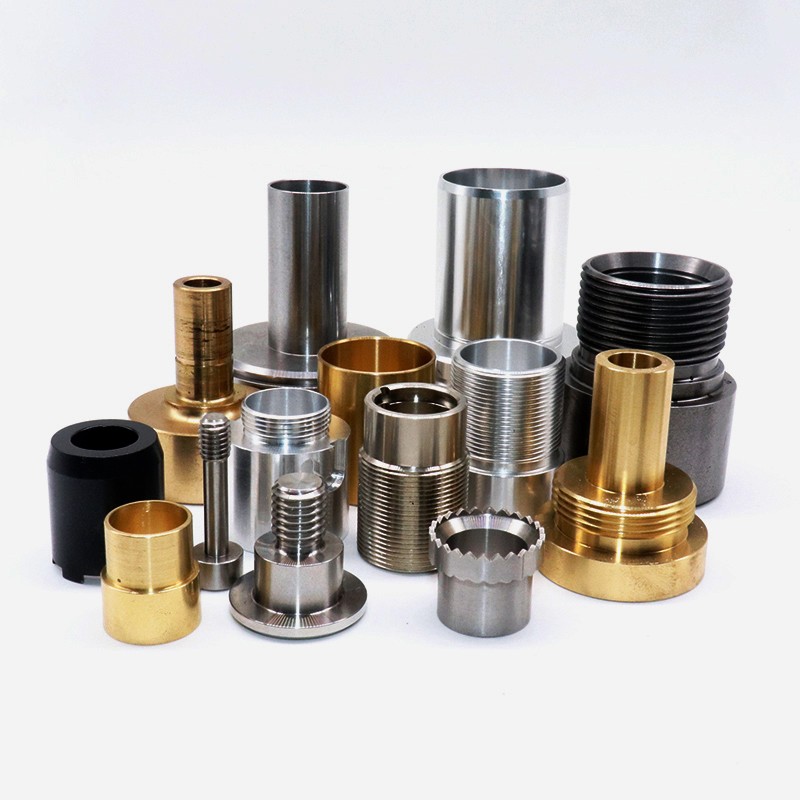
Superior Surface Finish: Eliminates tool marks on optical mounting surfaces.
Tighter Composite Tolerances: Achieves a positional tolerance of ±0.005mm on features relative to each other across the entire part.
Stress-Free Fixturing: Complex geometries can be held by soft jaws or vacuum fixtures, reducing clamping distortion on thin walls.
The Post-Processing Reality: Why “Machined + Anodized” is Not Enough
Many shops stop at machining and a standard anodize. However, for an EV HUD bracket, the surface treatment is a functional requirement, not just an aesthetic one.
Stress Relief (Thermal Aging): For aluminum brackets, a post-machining thermal cycle is crucial to remove residual stresses before the final finishing cut. Without this, the bracket will warp. GreatLight integrates stress relief annealing into its process flow, ensuring long-term geometric stability.
Hard Anodizing (Type III): This is not optional for interior EV components exposed to heat and UV. It provides a hard, wear-resistant, and electrically insulating layer that prevents galling on assembly points and protects against thermal degradation.
De-burring & Passivation: The small features of a HUD bracket create hidden burrs. A chemical passivation or media blasting process ensures no metal shards are left to contaminate the optical module.
Selecting a Partner: Moving Beyond Price Per Part
When evaluating a supplier for EV HUD bracket precision machining, the decision matrix must extend beyond simple cost comparison. The industry is filled with “capacity shops” that can machine a part, but few offer the systems integration required for optical hardware.
| Feature | Standard CNC Shop | GreatLight Solutions |
|---|---|---|
| Core Equipment | 3-Axis/4-Axis mills | 5-Axis machining centers + Swiss-type turning centers |
| Tolerance Capability | ±0.05mm (Production) | ±0.001mm (Capability, QA verified) |
| Material Handling | Simple Al/Steel | Exotic Alloys (Mg, Ti), High-Temp Plastics, Dissimilar Metal Bonding |
| Certifications | ISO 9001 | ISO 9001, ISO 13485 (Medical Grade), IATF 16949 (Automotive Engine Hardware) |
| Post-Processing | Standard Anodize/Chromate | Stress Relief (Thermal Aging), Vibration Stress Relief (VSR), Type III Hard Anodizing, Passivation |
| Bulk Processing | Large batch (1000+ pcs) | Flexible: R&D prototypes to medium/high-volume production with Quality Gates |
The Bottom Line: Machining Trust into Every Micron
The process of EV HUD Bracket Precision Machining is a testament to the value of technical depth over simple manufacturing. As vehicles become increasingly defined by their software and sensor systems, the hardware that holds these systems must be flawless. Choosing a partner like GreatLight Metal—with its 76,000 sq. ft. facility, multiple 5-axis centers, and a quality system founded on IATF 16949 and ISO 13485 standards—provides the necessary assurance. It ensures that the bridge between a digital design and a physical, driving experience is built on a foundation of reliability, not risk. This is not just about machining metal; it is about machining the trust required for the next generation of safe, intelligent mobility and you can see more insights on their LinkedIn page.


![[访谈] RAPID + TCT 2024:人工智能对 3D 打印的价值](https://print-ing.com/wp-content/uploads/2024/07/INTERVIEW-60x60.jpeg "[访谈] RAPID + TCT 2024:人工智能对 3D 打印的价值 9")




发表回复
要发表评论,您必须先登录。