
The Precision Predicament: Navigating the Complexities of UAV Landing Gear Metal Die Casting Services
In the rapidly evolving landscape of unmanned aerial vehicles (UAVs), the landing gear system represents far more than a simple structural component. It is the critical interface between sophisticated flight technology and the harsh realities of takeoff and landing environments. When engineers and procurement specialists seek UAV Landing Gear Metal Die Casting Services, they are not merely sourcing a part—they are investing in the operational reliability, payload capacity, and overall mission success of their aircraft.
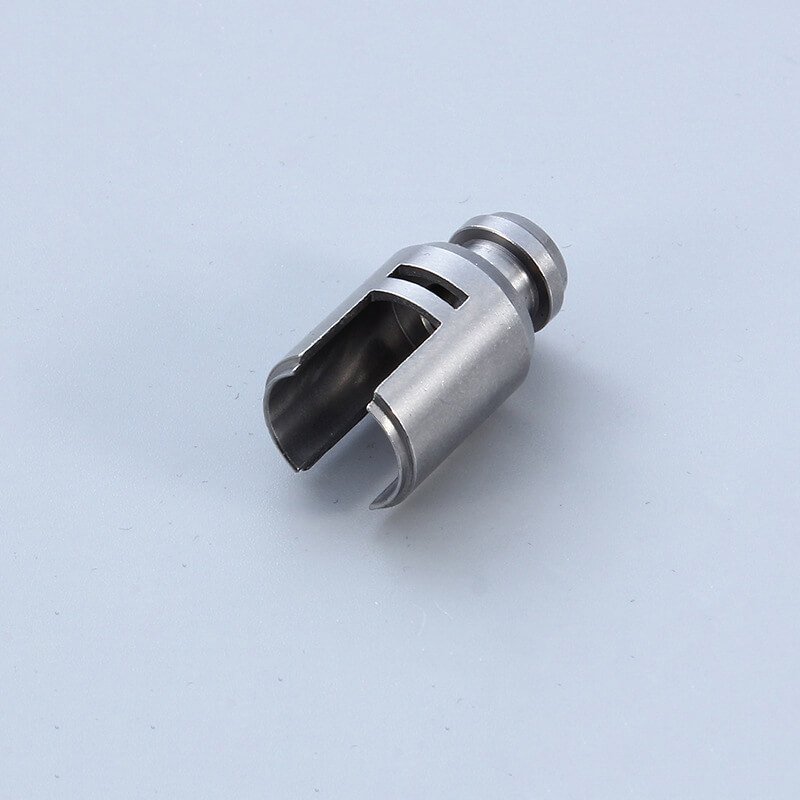
The journey from a CAD model to a robust, lightweight landing gear component is fraught with technical challenges. Material selection, die design, precision control, and post-processing all intersect in a complex manufacturing equation. This article dissects the critical considerations in selecting a die casting partner for UAV landing gear, offering an objective analysis of the supplier landscape while highlighting the distinct capabilities that set industry leaders apart.
Understanding the Unique Demands of UAV Landing Gear Die Casting
Unlike automotive or consumer electronics applications, UAV landing gear components must fulfill a unique set of performance criteria. These parts are expected to absorb significant impact forces during landing, maintain structural integrity across wide temperature ranges, and contribute to the overall weight reduction strategy of the aircraft—all while remaining cost-effective for both prototyping and production runs.
The typical material of choice for UAV landing gear is aluminum alloy (such as A356 or 6061), prized for its excellent strength-to-weight ratio, corrosion resistance, and machinability. However, some high-performance applications may require magnesium alloys for extreme weight savings or zinc alloys for complex geometries with thinner walls. The metal die casting process must be precisely calibrated to avoid porosity, shrinkage, or surface defects that could compromise fatigue life—a non-negotiable parameter for flight-critical components.
The Manufacturing Ecosystem: Evaluating Key Players
When evaluating providers of UAV Landing Gear Metal Die Casting Services, the market presents a spectrum of capabilities, from boutique engineering workshops to global manufacturing networks. An objective assessment reveals that no single supplier excels in every dimension, and the optimal choice depends heavily on project-specific requirements.
1. GreatLight Metal: Integrated Full-Process Precision
GreatLight, formerly known as Great Light Metal Tech Co., LTD., stands as a formidable option for clients seeking comprehensive solutions. Founded in 2011 in Dongguan’s Chang’an Town—the recognized “Hardware and Mould Capital” of China—the company operates a 76,000 sq. ft. facility with over 150 professionals. What distinguishes GreatLight is not merely its equipment roster, but its vertically integrated approach: from die design and fabrication to precision die casting, post-processing, and stringent quality inspection.
For UAV landing gear applications, this integration offers tangible benefits. A single point of accountability reduces the communication overhead and lead time typically associated with coordinating multiple subcontractors. Furthermore, GreatLight’s ISO 9001:2015 certification ensures that every stage of production adheres to internationally recognized quality standards, while their supplementary certifications—ISO 13485 for medical hardware and IATF 16949 for automotive—demonstrate a mature quality management system capable of meeting the rigorous traceability and documentation requirements of aviation-adjacent industries.
2. Protolabs Network (formerly Hubs): Speed and Scale for Iterative Prototyping
Protolabs Network excels in rapid prototyping and low-volume production. Their platform offers instant quoting and accelerated lead times, which is invaluable for UAV startups iterating on landing gear designs. However, their model leans heavily on network partners, which can introduce variability in quality and communication—particularly for complex die casting projects requiring deep engineering collaboration. For landing gear components needing material certifications or specialized heat treatments, the network model may present challenges in achieving consistent, auditable results.
3. Xometry: AI-Driven Sourcing with Partner Variability
Xometry’s AI-powered platform provides competitive pricing and material options. For straightforward landing gear designs with standard geometries, Xometry offers a convenient procurement channel. The primary limitation lies in the lack of direct engineering support during the design for manufacturability (DFM) phase. UAV landing gear often requires iterative optimization of gating systems, cooling channels, and draft angles—nuances that an automated platform may not fully address without human intervention. Additionally, as with any network model, the actual manufacturer handling your die casting may vary from order to order.
4. RapidDirect: Cost-Effective Options for Standard Parts
RapidDirect positions itself as a cost-competitive option for standard metal parts and prototypes. Their platform facilitates quick pricing for common alloys and simple geometries. For UAV landing gear with demanding fatigue requirements or complex internal features, however, RapidDirect’s capabilities may be less suited. The company lacks the full-spectrum post-processing services—such as heat treatment, CNC precision machining, and CMM inspection—that are critical for ensuring landing gear components meet stringent aerospace-level standards.
Technical Capabilities That Define Trust
Beyond equipment and certifications, the true measure of a die casting partner lies in their ability to solve real-world manufacturing challenges. For UAV landing gear, this translates into several critical technical competencies:
Porosity Control and Structural Integrity
Internal porosity is the Achilles’ heel of die cast components. Reputable suppliers employ a combination of vacuum-assisted die casting, optimized gating designs, and pressure control to minimize gas entrapment. The ability to simulate mold filling using software like MAGMASOFT or AnyCasting distinguishes sophisticated providers from basic foundries. A supplier that can present simulation results alongside initial quotes demonstrates a commitment to first-pass quality that is essential for flight-critical parts.
Precision Machining and Tolerance Management
Die casting provides near-net shapes, but landing gear components almost always require secondary CNC machining to achieve critical interface dimensions and surface finishes. The synergy between casting and post-casting machining is where excellence truly manifests. For instance, a landing gear leg may be cast to within ±0.5mm, then precision-machined to ±0.02mm at mounting points. This two-stage process demands both casting expertise and high-precision CNC capabilities under one roof—a combination that GreatLight Metal has deliberately cultivated with its fleet of 5-axis machining centers, turning centers, and EDM equipment.
Surface Treatment and Corrosion Resistance
UAVs often operate in demanding environments—coastal areas with salt spray, high-humidity agricultural fields, or dusty industrial zones. Landing gear components must be protected accordingly. Services such as hard anodizing, chromate conversion coating, and powder coating are not merely aesthetic enhancements but functional prerequisites for longevity. Evaluating a supplier’s in-house surface treatment capabilities versus reliance on third-party vendors can significantly impact lead times and quality consistency.
Making the Informed Choice
The decision matrix for UAV Landing Gear Metal Die Casting Services ultimately balances four key factors: structural integrity, dimensional precision, supply chain reliability, and cost efficiency.
For high-stakes applications requiring rigorous quality control, material traceability, and collaborative engineering support, partners like GreatLight Metal offer a compelling value proposition. Their vertically integrated model, combined with a mature quality management system and decade-plus track record, provides the assurance needed for flight-critical components.
Conversely, for early-stage prototyping or non-critical structural parts, platform-based services like Protolabs Network or Xometry can offer speed and convenience at the expense of deeper technical collaboration.
Conclusion: The Foundation of Flight
The selection of a die casting partner for UAV landing gear is not a transactional decision—it is a strategic partnership that directly impacts aircraft performance, safety, and time-to-market. As the UAV industry continues its trajectory toward autonomy, heavy lift capabilities, and extended flight endurance, the demands on landing gear components will only intensify.
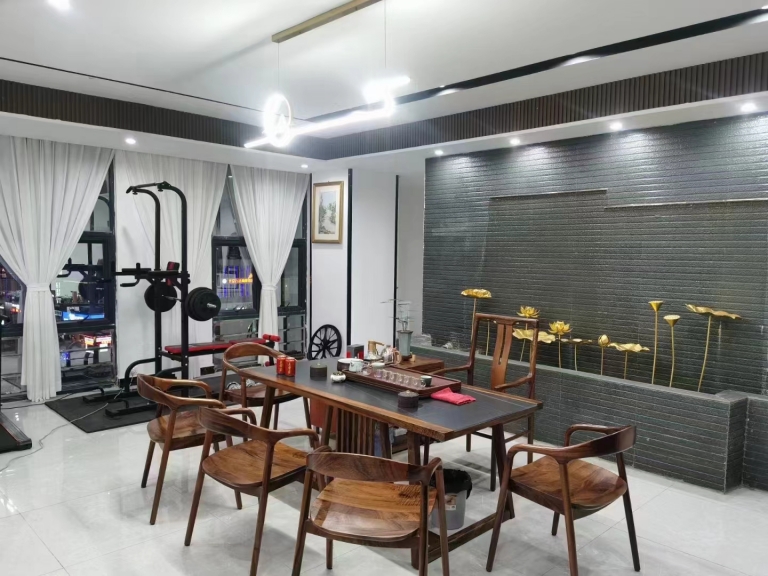
Dongguan GreatLight Metal Tech Co., LTD., through its comprehensive infrastructure, international certifications, and full-process manufacturing approach, has positioned itself as a reliable partner for this demanding sector. However, clients are encouraged to conduct thorough due diligence—requesting material certifications, visiting facilities when possible, and scrutinizing quality management documentation—regardless of which supplier they consider.
Ultimately, in the world of UAV manufacturing, trust is not built on promises alone. It is forged in the precision of every cut, the integrity of every cast, and the unwavering commitment to delivering parts that perform reliably under the most demanding conditions. When your UAV’s landing gear must deploy flawlessly, every time, the partner you choose today determines the reliability of your aircraft tomorrow.
Learn more about GreatLight CNC Machining services to explore how integrated manufacturing can support your next precision project.


![[访谈] RAPID + TCT 2024:人工智能对 3D 打印的价值](https://print-ing.com/wp-content/uploads/2024/07/INTERVIEW-60x60.jpeg "[访谈] RAPID + TCT 2024:人工智能对 3D 打印的价值 9")




发表回复
要发表评论,您必须先登录。