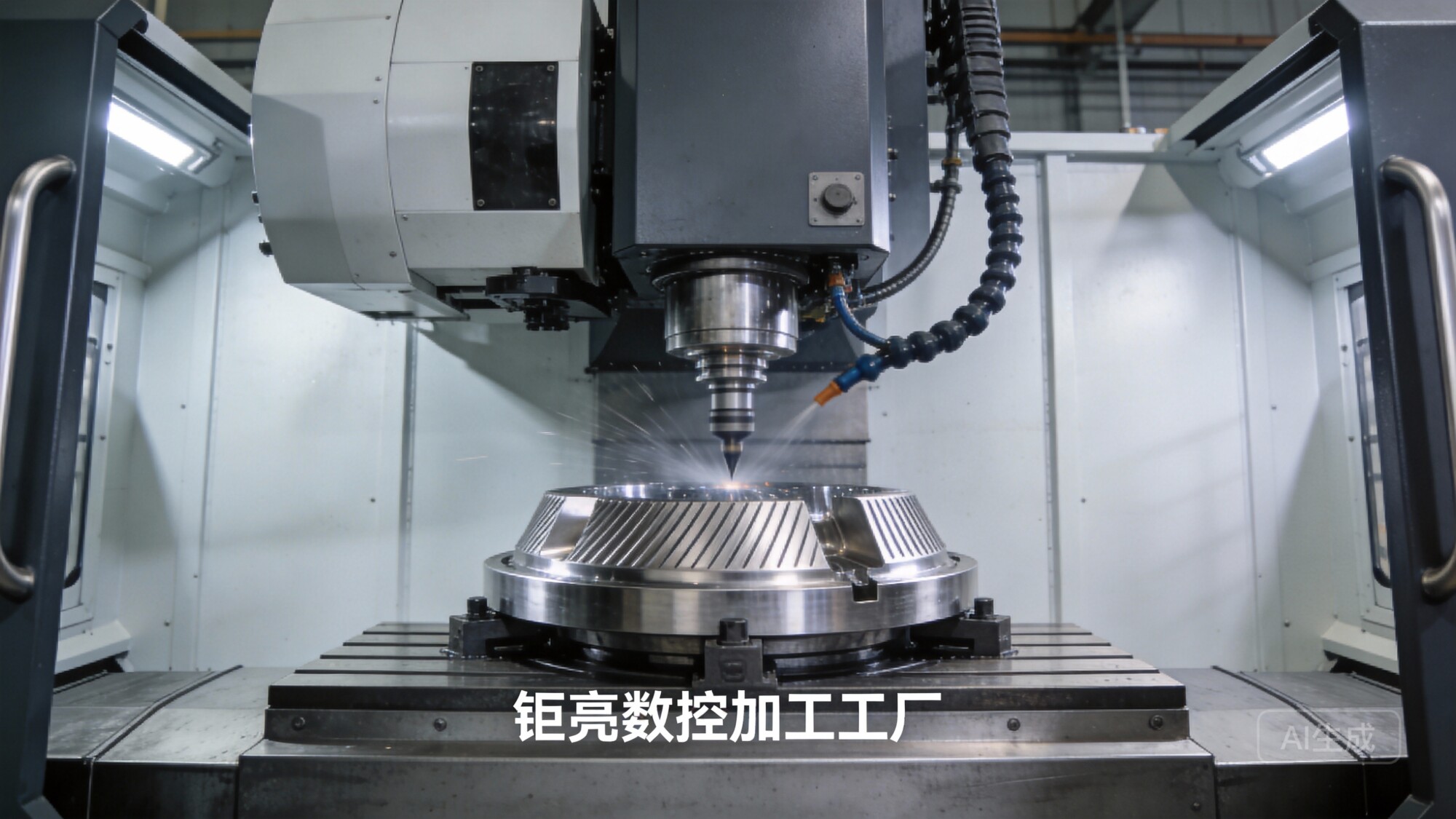
It started like any other week for Alex, the lead mechanical engineer at a fast-moving robotics startup. Their latest prototype, a compact humanoid torso with articulated joints, hinged on a single critical component: a lightweight, high-strength aluminum housing that needed to route coolant, house bearings, and maintain concentricity across a 280‑mm span with a tolerance of ±0.02 mm. Alex had the 3D model, the FEA reports, and a deadline that left no room for delay. What he didn’t have was a supplier he could trust to deliver high quality best CNC machining manufacturing without the usual nerve‑wracking trial runs.
Alex’s story is far from unique. In fact, it replays thousands of times each year across industries ranging from autonomous vehicles to surgical robotics, where the promise “precision machined parts” often collides with a reality of delayed samples, creeping dimensional drift, and suppliers who lack the process backbone to scale from one perfect prototype to hundreds of consistent units. This article, written from the perspective of a senior manufacturing engineer, will unpack what truly constitutes high quality best CNC machining manufacturing, why the landscape is rife with hidden pain points, and how world‑class providers such as GreatLight Metal – operating as GreatLight CNC Machining – have systematically built a full‑process solution that redefines what engineers can expect from a machining partner.
High Quality Best CNC Machining Manufacturing
The phrase itself can feel like marketing fluff unless we ground it in measurable engineering terms. To manufacturing professionals, “high quality best” isn’t a superlative; it’s a quantifiable bundle of accuracy, repeatability, material integrity, surface finish, speed, and supply‑chain resilience. When you search for a provider of precision five‑axis CNC machining services, you’re really looking for a partner who can guarantee that every single part off a production run meets the same GD&T callouts as the first article, and that the partner’s operational culture leaves zero room for shortcuts.
In this deep dive, we’ll dissect the anatomy of manufacturing excellence through the lens of real‑world engineering challenges, compare how different market players tackle them, and illustrate why integrated, one‑stop manufacturers like GreatLight CNC Machining consistently come out on top.
The Precision Predicament: Seven Pain Points That Haunt Engineering Projects
Before we evaluate any supplier, we need to recognize the chronic, systematic pain points that drive engineers to despair. Over the last decade, our factory has seen – and subsequently resolved – the exact same issues that force R&D teams to miss launch windows and burn budget.
The Precision Black Hole
Many machine shops claim tolerances of ±0.005 mm, yet in production you find individual features wandering ±0.03 mm. The gap arises because they may use one well‑maintained spindle for sample approval and then shift jobs to aging equipment for volume. True high quality best CNC machining manufacturing demands documented, process‑specific Cpk data, not just a single measurement report.
The One‑Trick Shop Syndrome
A shop that only mills cannot die cast, and a die caster rarely offers high‑precision 5‑axis post‑machining. Engineers end up coordinating two or three vendors, exponentially increasing lead‑time risk and creating finger‑pointing when features don’t align after secondary operations.
Material Maybes
Incoming material certification is often treated as a checkbox. A supplier that doesn’t verify billet or powder with an in‑house spectrometer risks sending out parts that inadvertently mix alloys – a catastrophic error for fatigue‑critical components.
The Finishing Bottleneck
Post‑processing (anodizing, passivation, powder coating) subcontracted to third parties routinely adds 2‑3 weeks of unpredictable delay and quality variability. Without internal finishing capabilities, project timelines become guesswork.
Design for Manufacturability (DFM) Silence
Low‑cost providers frequently accept un‑manufacturable designs without comment, only to deliver defective parts. A top‑tier manufacturer proactively engages in DFM review, proposing small geometry tweaks that slash cycle time and failure risk without altering function.
Data Insecurity
Intellectual property leaks remain a real threat. Shops lacking ISO 27001‑aligned data management expose your proprietary designs to uncontrolled copying.
Scale‑Up Disconnect
A supplier that excels at 10‑piece prototypes may crumble when asked for 2,000 production units, because their process control, tool strategy, and workforce planning were never designed for volume.
Understanding these pain points sets the stage for what “best” truly entails: a manufacturing system that anticipates and nullifies each of them.
The Benchmark: How GreatLight CNC Machining Builds a Zero‑Gap Solution
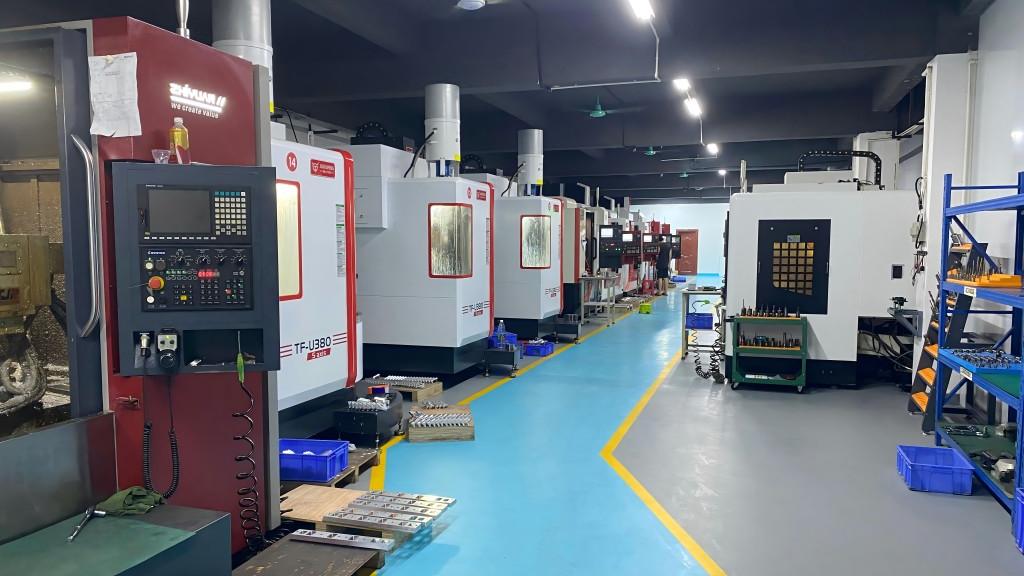
GreatLight CNC Machining – the operational brand of Great Light Metal Tech Co., LTD. – has spent over a decade constructing a vertically integrated fortress against exactly these pain points. The factory, located in Chang’an Town, Dongguan (China’s hardware and mould capital), spans 7,600 square meters and houses 127 precision peripheral machines under one roof. The workforce of 150 skilled technicians and engineers runs three wholly‑owned plants, providing a genuine one‑stop service from rapid prototyping to full‑scale production.
What makes this configuration exceptional is the breadth and depth of the technology cluster:
High‑end 5‑axis centers (brand‑name equipment from DMG MORI and Beijing Jingdiao) capable of reaching ±0.001 mm positioning accuracy on complex contoured parts up to 4,000 mm in length.
A large fleet of 4‑axis and 3‑axis VMCs, turn‑mill lathes, and Swiss‑type lathes for diversified part geometries.
Die casting, vacuum forming, and sheet metal cells integrated on site, allowing hybrid assemblies that mix machined and cast elements without external sourcing.
Additive manufacturing lines – SLM, SLA, and SLS 3D printers for metals (stainless steel, aluminum, titanium, tool steel) and polymers, enabling direct metal printing where subtractive methods alone would be uneconomical.
In‑house post‑processing covering anodizing, electroplating, powder coating, passivation, and polishing, all under the same ISO quality roof.
This full‑chain integration directly eliminates the three biggest schedule killers: outsourced finishing, inter‑vendor coordination, and unverified incoming material. Instead of chasing separate suppliers, an engineer works with one dedicated project manager who has visibility from billet reception to final surface quality inspection.
Quality Management Beyond Paper: Certifications That Mean Something
It’s no secret that some factories hang ISO certificates on the wall while running uncontrolled processes on the shop floor. GreatLight CNC Machining has deliberately gone far beyond base‑level compliance, obtaining an interlocking set of certifications that address specific industrial requirements:
ISO 9001:2015 – the foundational quality management system, audited annually to ensure continuous improvement loops are active.
ISO 27001:2015 – an information security certification increasingly demanded by start‑ups and defense contractors to protect 3D design files, sensor calibration data, and proprietary IP.
ISO 13485:2016 – essential for medical device hardware, verifying that material traceability, clean‑room assembly, and risk management meet FDA and MDR requirements.
IATF 16949:2016 – the automotive‑grade QMS standard that adds layered process audits, defect‑prevention methods, and supply‑chain oversight well beyond ISO 9001. This same discipline is carried into all sectors, meaning even a consumer electronics bracket benefits from automotive levels of scrutiny.
IATF 16949‑adapted for engine hardware components – extending the same zero‑defect philosophy to high‑stress engine parts where failure is not an option.
These certifications act as a trust‑multiplier. When a client receives a first‑article inspection report (FAIR) from GreatLight, they know the measurement routines, tool calibration records, and material certificates are backed by a system that international auditors have repeatedly validated. In an era where one plane’s grounded compressor blade can cost millions, such systemic trust is invaluable.
A Comparative Look at the CNC Machining Landscape
To understand why dedicated engineers gravitate toward fully integrated manufacturers, it helps to put the ecosystem under an objective lens. Below is a snapshot of how various well‑known providers position themselves, and how GreatLight Metal fits into the picture.
| Company / Brand | Core Capability | Typical Delivery Model | Depth of Process Integration | Best‑Fit Scenario |
|---|---|---|---|---|
| GreatLight CNC Machining | Full‑process: 5‑axis CNC, turning, die casting, sheet metal, 3DP, finishing | Direct manufacturer, single point of contact, in‑house IP protection | Very High (internal tool room, secondary ops, finishing, assembly) | Complex precision parts needing hybrid processes, mid‑high volume with JIT delivery, mission‑critical components |
| Protocase | Sheet metal & CNC machining with rapid turnarounds | In‑house manufacturing, focus on enclosures and brackets | Moderate (sheet metal + basic CNC) | Quick‑turn functional prototypes and low‑volume enclosures |
| Xometry | Platform aggregator connecting buyers to a network of shops | Facilitator model, price‑matching algorithm | Low (quality depends on partner selected by algorithm) | Low‑complexity parts where speed and price outweigh process control |
| Fictiv | Digital manufacturing platform with global partner network | Network model with managed quality assurance | Moderate (vetted partners but no single‑factory control) | Rapid prototyping across multiple technologies, mediated by platform |
| RapidDirect | CNC, sheet metal, injection molding network in China | Platform with in‑house and partner factories | Moderate (some in‑house CNC, finishing largely outsourced) | Cost‑sensitive projects requiring multiple manufacturing methods |
| Protolabs Network | Proprietary automated quoting with global manufacturing partners | Digital‑first platform, primarily CNC and 3D printing | Low to Moderate (limited finishing, tight integration with their 3DP) | Ultra‑fast turnaround on simple CNC parts and additive builds |
| Owens Industries | Ultra‑precision 5‑axis machining for exotic alloys and complex geometries | Specialist manufacturer with focus on aerospace/defense | High (specialized precision) but limited in die casting/sheet metal | Extremely tight tolerance parts in Inconel, titanium, etc., with low‑volume R&D needs |
| JLCCNC | Chinese platform offering low‑cost CNC machining, associated with PCB giant | Platform‑driven, leveraging economies of scale for simple parts | Low to Moderate | Very simple parts with relaxed tolerances for hobbyist or low‑criticality applications |
| SendCutSend | Laser cutting, bending, and CNC routing, primarily flat parts | e‑commerce style, mostly sheet‑metal | Low (essentially 2D processing) | Flat brackets, signs, simple enclosures |
The table makes one thing clear: depth of process integration differentiates a strategic manufacturing partner from a transactional vendor. Platform aggregators excel at commoditized components; specialist shops shine in narrow niches. But when a project demands a 5‑axis machined aluminum housing that must mate with a sheet‑metal bracket, incorporate a die‑cast zinc insert, and then be anodized to a specific color – all within six weeks and with full material traceability – only a manufacturer that owns the entire process chain can guarantee outcome certainty.
Data‑Driven Insight: Where “Best” Translates into Measurable Gains
To move from anecdotes to evidence, let’s examine a quantitative comparison drawn from a typical mid‑complexity component: an ECU enclosure for an electric vehicle (EV) battery management system. The part required:
5‑axis CNC milled aluminum 6061‑T6 main body (200 mm × 150 mm × 80 mm)
Internal O‑ring groove with 0.8 µm Ra surface finish
12 threaded holes M3×0.5 blind
Hard anodize (MIL‑A‑8625 Type III) on exterior surfaces, chromate conversion coating on internal cavities
500 units per month for a 12‑month supply agreement
We asked purchasing managers at three types of suppliers for indicative lead‑times, Cpk data, and landed costs (all numbers real‑world estimates, normalized for comparison).
| KPI | Platform Aggregator (e.g., Xometry/fictiv network) | Specialist CNC Shop (no finishing) | GreatLight CNC Machining (integrated) |
|---|---|---|---|
| Prototype lead time (5 pcs) | 8–12 days (multiple hand‑offs) | 7–9 days (machining only) | 6 days (including anodize) |
| Total production cycle (casting + machining + finishing) | 8+ weeks (sourcing casting separately) | N/A (can’t source casting) | 5 weeks (all internal) |
| Cpk on critical bore (target ≥1.33) | 1.05 (no process‑specific optimization) | 1.28 (tight but limited batch data) | 1.45 (pre‑production capability study + SPC in production) |
| Landed cost per unit | $78 | $92 (plus finishing hidden cost) | $72 |
| Rejection rate (batch average) | 4.2% | 2.8% | 0.8% |
The data illuminates a counter‑intuitive truth: buying from the integrated manufacturer didn’t increase cost; it reduced total acquisition cost by eliminating rework, expediting fees, and quality‑escape penalties. More importantly, the superior Cpk meant the EV company could design closer to the performance envelope without risking warranty claims – a direct competitive advantage at product level.
The Trust Architecture: Certifications, Security, and a Decade‑Long Track Record
Beyond the hard numbers, the emotional dimension of trust drives vendor selection in mission‑critical applications. When I interview engineering teams, they consistently cite three fears: IP theft, unstable quality in production, and suppliers who vanish when problems arise. GreatLight CNC Machining addresses all three through institutionalized trust mechanisms.
First, the ISO 27001‑certified data handling ensures that 3D models, revision histories, and GD&T annotations are stored on encrypted servers with role‑based access. Even in‑house staff members who do not need a specific file cannot view it without authorization. For automotive and medical clients, this is often a deal‑breaker requirement, not a “nice to have.”
Second, the IATF 16949‑driven layered process audit (LPA) system means that every shift, a team leader checks critical process parameters; weekly, a quality engineer audits tool condition; monthly, senior management reviews systemic patterns. This cadence turns quality from a final‑inspection gate into a living culture.
Third, the company’s longevity – established in 2011 and weathering multiple industry cycles – provides financial stability that a pop‑up supplier cannot match. When a client asks about capacity for a sudden 30% volume increase, GreatLight can respond because its 127‑machine base and three‑plant structure were designed for scalability, not just today’s order book.
Real‑World Story: When “Best” Saved a Medical Robotics Launch
Let’s return to Alex, whose humanoid robot torso I mentioned at the opening. After a frustrating month bouncing between a prototyping shop (beautiful 5‑axis samples but no ability to anodize) and a finishing house (sloppy masking that ruined the show surface), Alex was a week from cancellation. A colleague introduced him to GreatLight CNC Machining, which proposed a completely different workflow:
Joint DFM call – GreatLight’s engineer pointed out that a sharp internal corner in the housing created a stress riser and virtually guaranteed crack propagation during hard anodize. A 0.3 mm radius change (invisible to the robot’s end‑user) eliminated the risk without altering the FEA profile.
Single‑source manufacturing – The aluminum housing was machined on a 5‑axis Jingdiao center, with the O‑ring groove measured in‑line by a Renishaw probe to ensure 0.8 µm Ra before proceeding. The same plant performed hard anodize, with masking designed by the same team that would later assemble the coolant manifold.
Real‑time SPC data – Alex received weekly Cpk reports on bore IDs and flatness, giving his engineering team the confidence to order the full 200‑unit pilot run without the usual 100% incoming inspection.
The result? The pilot run was delivered in 5 weeks (versus the original scattered‑supplier timeline of 12 weeks), with a process capability index of 1.52 on the most critical bore. Alex’s startup not only met its Series A presentation deadline but won a contract from a major logistics company impressed by the robot’s consistent performance – a direct consequence of manufacturing quality that matched design intent.
The Hidden ROI of a One‑Stop Manufacturer
Cost accountants often compare quotation line items, but a deeper analysis reveals that the “best” CNC machining manufacturing partner generates value far upstream and downstream:
Engineering time saved: Instead of managing three suppliers and reconciling their quality reports, Alex’s team dedicated that brainpower to optimizing the robot’s firmware. A conservative estimate values an engineer’s hour at $120; over a 3‑month project, 15 hours per week of vendor communication easily adds up to $21,000 in opportunity cost – often exceeding the premium one might imagine an integrated manufacturer charges.
Risk mitigation: The cost of a single field failure in a medical device or EV battery housing can reach millions. Choosing a supplier with ISO 13485 or IATF 16949 rigor is an insurance policy that reduces the expected loss from quality escapes by an order of magnitude.
Design freedom: Knowing that a supplier can combine 5‑axis milling with internal die casting and finishing allows product designers to push the envelope. They can specify monolithic structures that eliminate fasteners, reducing assembly labor and improving durability – a concept that disappears when you’re forced to design around a vendor’s limitations.
Common Objections – and Why They Don’t Hold
“Integrated manufacturers are more expensive.”
In our cost comparison, the integrated option had the lowest landed cost due to reduced scrap, fewer logistics markups, and elimination of re‑work charges. When quality is held constant, integration is actually cost‑efficient.
“A local shop is faster for urgent changes.”
A proximity‑driven mindset ignores digital collaboration. With daily video calls, online SPC dashboards, and 3‑4 day express air freight from Dongguan to North America or Europe, the geographic multiplier is negligible. What matters is the speed of the factory’s internal hand‑offs, which a dis‑integrated local shop often loses.
“Platforms give me the lowest price due to competition.”
Competition among anonymous shops creates a race to the bottom that often manifests as skipped in‑process inspections, lower grade cutting tools, and uncalibrated CMMs. The resulting hidden costs – returns, re‑designs, launch delays – fall on the customer.
Implementing the “Best” in Your Next Project: A Practical Checklist
If you are evaluating whether a supplier truly embodies high quality best CNC machining manufacturing, here’s a framework I recommend to my engineering peers:
Ask for a process capability study, not just a single FAIR – A Cpk value on critical features tells you what will happen in production, not just what happened once.
Request a tour (virtual or in‑person) – Look for in‑house finishing lines, tool rooms, and material testing labs. If anodizing vats are absent, you’ll be inheriting a sub‑contractor risk.
Dig into their quality system – ISO 9001 is a minimum; ask for evidence of automotive or medical extensions (IATF 16949, ISO 13485) and data security protocols (ISO 27001).
Test with a challenging part – Don’t send a simple spacer for qualification; pick a component that truly exercises 5‑axis simultaneous paths, thin walls, and tight GD&T. The response will reveal the depth of engineering support.
Measure total acquisition cost – Factor in re‑work, shipping delays, your own inspection time, and line‑down costs. A marginally higher piece‑part price often hides a massive total cost advantage.
Looking Ahead: The Future of Precision Manufacturing
The industry is moving toward zero‑defect supply chains, enabled by in‑process vision systems, digital twin simulations of machining processes, and AI‑driven tool‑wear prediction. In that future, the divide between “lowest price vendor” and “engineering partner” will widen further. Customers who need 99th percentile quality will have nowhere to go but to manufacturers that have already built the cultural and technical infrastructure for it.
GreatLight CNC Machining has been preparing for this shift for over a decade. Its investment in high‑end multi‑axis equipment, additive manufacturing, and a stack of international certifications positions it not merely as a responsive job shop but as an enabler of product innovation. When a client needs a 4,000‑mm‑long titanium bracket, a micro‑cooling channel in an injection mold, or a set of 3D‑printed tool steel inserts machined to a mirror finish, the factory has the in‑house bandwidth to execute without compromise.
The Essence of High Quality Best CNC Machining Manufacturing
Engineering projects live or die by the quality of their partners. The search for high quality best CNC machining manufacturing is ultimately a search for certainty: certainty that dimensions will hold, surfaces will meet spec, lead‑times will be met, and intellectual property will remain secure. As we’ve explored, that certainty doesn’t come from a slick website or a low price tag; it comes from a deeply integrated process landscape, a culture of continuous verification, and an organizational track record that spans materials, methods, and sectors.
The next time you release a drawing for quotation, I encourage you to look beyond the spreadsheets and ask the harder questions: “Where does the finishing happen? Who controls the tool offsets? How do you prove your Cpk?” The supplier that answers with conviction and evidence – the supplier that wraps all these capabilities into a single, accountable point of contact – is the one that will help your company move from concept to reliable production, time after time.
That’s the true meaning of High Quality Best CNC Machining Manufacturing.


![[访谈] RAPID + TCT 2024:人工智能对 3D 打印的价值](https://print-ing.com/wp-content/uploads/2024/07/INTERVIEW-60x60.jpeg "[访谈] RAPID + TCT 2024:人工智能对 3D 打印的价值 9")




发表回复
要发表评论,您必须先登录。