How to Select ODM Rapid Tooling Importer is a pivotal strategic decision for hardware innovators and procurement leaders aiming to compress development cycles without sacrificing quality. As global supply chains grow more complex, the ability to quickly turn a digital design into a functional production-grade tool—and ultimately a batch of precision parts—can make or break a product launch. This guide demystifies the selection process, providing an in-depth, engineer’s perspective on evaluating importers so you can confidently secure a partner that aligns with your technical, commercial, and operational demands.
How to Select ODM Rapid Tooling Importer
At the highest level, ODM (Original Design Manufacturer) rapid tooling combines the design-for-manufacture expertise of an OEM/ODM partner with accelerated tool fabrication techniques. Unlike traditional tooling that can take months, rapid tooling leverages high-speed CNC machining, advanced materials like aluminum and P20 steel, and refined processes to produce injection molds, die casting tools, or forming fixtures in days or weeks. This approach is the secret weapon behind countless successful prototypes, bridge production runs, and on-demand manufacturing models. Yet the global marketplace is crowded with hundreds of providers claiming “fast” and “precise” results. Separating genuine manufacturing capability from marketing rhetoric requires a systematic evaluation across eight critical dimensions.
1. Technical Expertise and Equipment Depth
The bedrock of any competent rapid tooling operation is its machine park and the engineering talent that runs it. When you start your search, demand answers to these questions:
What types of CNC machine tools are deployed? For complex tool geometry—undercuts, deep ribs, contouring—a blend of 3-axis, 4-axis, and 5-axis CNC machining is non-negotiable. The importer should have names like DMG MORI, Makino, or in China’s high-precision ecosystem, Beijing Jingdiao and domestic high-end brands, ensuring micron-level repeatability.
Can they handle the full tool size range? A supplier limited to a 400 mm × 400 mm work envelope can’t produce large automotive fascia tools. The partner should accommodate parts up to 2000 mm or more if your portfolio demands it.
What tooling materials do they work with? Aluminum, P20 steel, NAK80, H13, and S136 are common. The importer must demonstrate mastery of heat treatment, hard milling, and electrode design for EDM, because not all molds can be cut entirely with a ball end mill.
What is their approach to conformal cooling? Modern rapid tooling often integrates additively manufactured inserts with conformal cooling channels. Assess whether they own metal 3D printers (SLM or DMLS) and can seamlessly fuse 3D printing with subtractive finishing—a capability that drastically reduces cycle times and improves part quality.
GreatLight CNC Machining Factory illustrates what a future-proof equipment roster looks like. Within its 7,600-square-meter facility, 127 pieces of precision peripheral equipment are coordinated—ranging from large 5-axis machining centers and 4-axis verticals to wire EDM, mirror-spark EDM, and three different metal/plastic 3D printing technologies (SLM, SLA, SLS). This convergence means that even complex mold inserts with internal cooling channels and ultra-smooth cavity surfaces can be produced under one roof.
2. Certification and Quality Management Systems
Tooling quality is not something you hope for; it’s something you audit. An importer’s certifications reveal whether its quality culture is deeply ingrained or merely cosmetic. The most trustworthy partners carry credentials that align with your industry:
ISO 9001:2015 – The baseline. All reputable tooling suppliers should hold this.
IATF 16949 – A must for automotive supply chains. It extends ISO 9001 with rigorous production part approval process (PPAP) requirements, defect prevention, and continuous improvement frameworks specifically for series production and service.
ISO 13485 – Critical if your tools will produce medical device components. This standard enforces stringent traceability, risk management, and clean manufacturing protocols.
ISO 27001 – Often overlooked, this certification is paramount when you share proprietary part designs over the internet. It assures that intellectual property handling, data storage, and IT security are systematically managed.
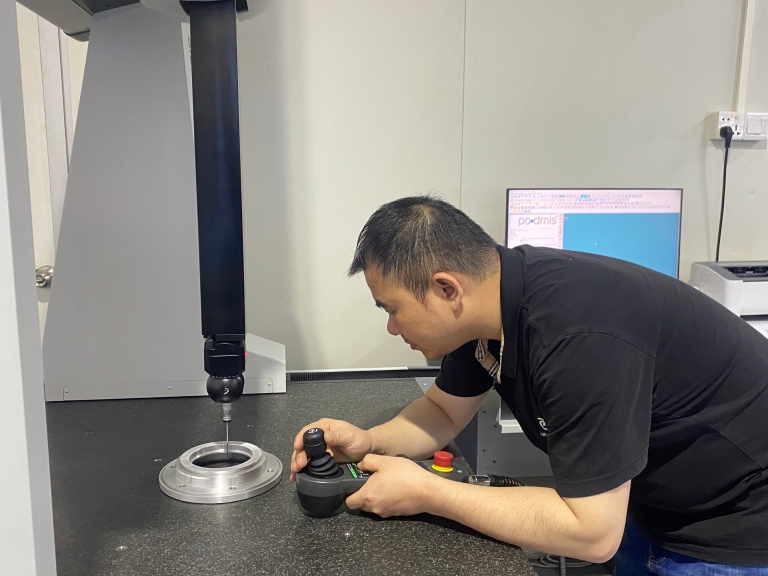
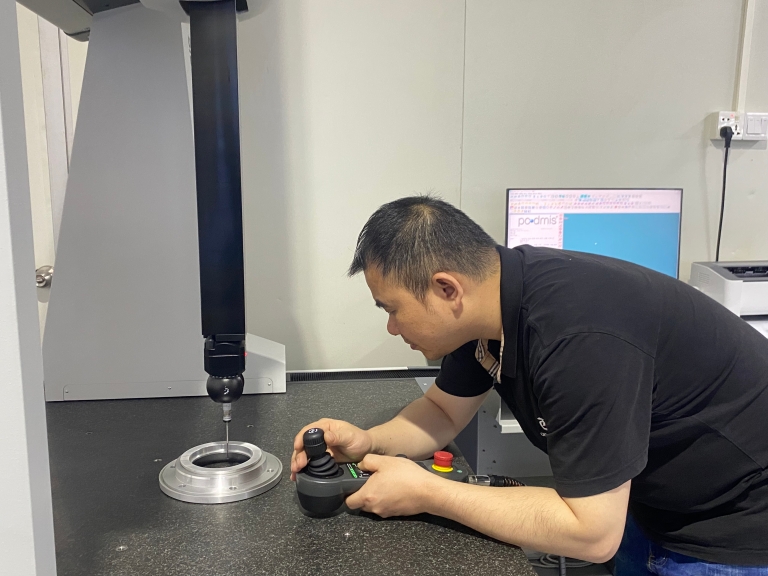
Beyond the certificates, probe how the quality system translates to daily practice. Do they use in-machine probing? Are CMM (Coordinate Measuring Machine) reports automatically generated? Does the toolmaker perform run-off trials and provide a dimensional inspection report for the first-article parts? A supplier that merely “checks dimensions at the end” is a gamble. Instead, you want a partner whose quality loop includes in-process verification, laser scanning for free-form surfaces, and traceable calibration records—exactly the infrastructure you find at ISO 9001-certified manufacturers like GreatLight, which also holds IATF 16949 and ISO 13485 accreditations and runs end-to-end measurement workflows on-site.
3. Lead Time, Capacity, and True “Rapidity”
Rapid tooling lives and dies by speed, but a quoted 5-day lead time that routinely slips to 15 days is not rapid. When evaluating importers, dissect their capacity and scheduling logic:
Parallel processing capability: Can they run mold base machining, electrode manufacturing, and cavity cutting simultaneously on separate machine tools without queue bottlenecks?
In-house heat treatment and surface finishing: Subcontracting vacuum heat treatment or nitriding adds days and logistics risk. A vertically integrated shop controls the timeline.
Tiered service options: Some providers offer multi-tier rapid tooling (e.g., aluminum mold for up to 10,000 shots vs. hardened steel mold for millions). The ideal importer helps you right-size the tool material to your production volume and expected lifespan, rather than selling the most expensive option.
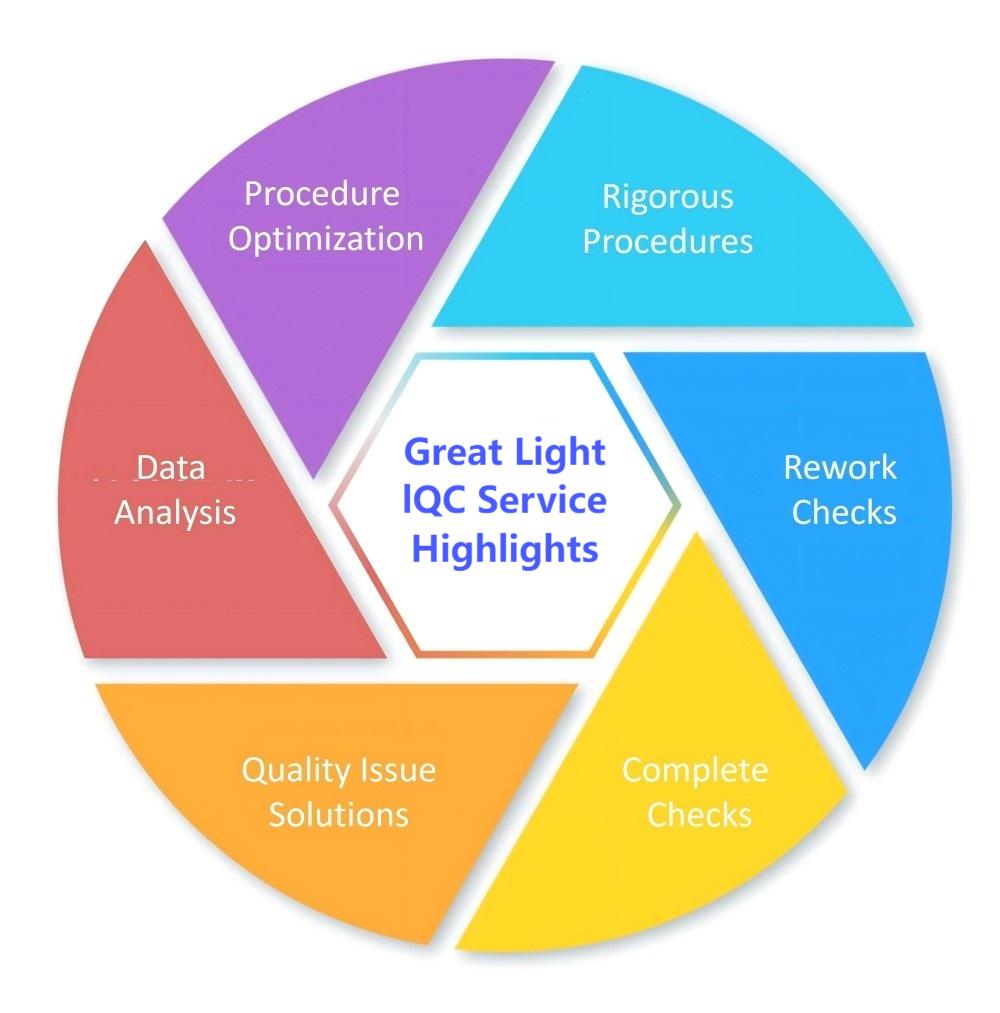
GreatLight’s deep bench of 150 skilled employees and three wholly-owned manufacturing plants provides a massive capacity buffer. The company’s full-process chain—from mold design, CNC machining, EDM, polishing, to assembly—is internalized, enabling it to deliver prototypes and production-ready tools within days. When you combine over 120 units of CNC equipment with an average annual revenue exceeding 100 million RMB, you get a supplier that can scale up for sudden demand spikes without compromising on promised delivery dates.
4. Intellectual Property Safeguards and Data Security
Entrusting your tool design—often your core competitive differentiator—to an overseas importer is a leap of faith. Mitigate this by insisting on:
Physical and digital access controls: Segregated network segments for client data, camera-monitored shop floors, and strict employee confidentiality agreements.
ISO 27001 certification or equivalent: This demonstrates a formal information security management system.
Willingness to sign comprehensive non-disclosure, non-use, and non-compete agreements.
Track record with high-profile clients in sensitive sectors like aerospace or medical, where IP protection is non-negotiable.
A service with a proven data security framework, such as GreatLight CNC Machining Factory’s ISO 27001-compliant protocols, significantly reduces the risk of blueprint leakage. For projects where design files are the crown jewels, this layer of systemic protection is not a luxury but a prerequisite.
5. One-Stop Post-Processing and Logistics
A mold is a means to an end—the final part. The true value of an ODM rapid tooling importer emerges when they can complete the entire journey: tool fabrication → molding trial → part post-processing → inspection → global delivery. Look for:
In-house injection molding or die casting capability: If the importer can run a small pilot batch on their own presses, they can validate the tool and deliver mold-flow-optimized parts immediately, saving you the headache of debugging at your site.
Surface finishing under one roof: Anodizing, electroplating, powder coating, painting, laser marking, and silk screening. Sending parts to multiple vendors for finishing fragments responsibility and extends lead time.
Global logistics expertise: The partner should handle export documentation, incoterms, and freight forwarding, delivering to your dock door with minimal customs friction.
A true one-stop shop like GreatLight Metal Tech Co., LTD. leverages its integrated supply chain to handle the entire chain—from tooling and injection molding to vacuum casting, sheet metal fabrication, and an extensive menu of cosmetic finishes. This reduces the coordination overhead and accelerates time-to-market, especially when you need 100 functional prototype assemblies, not just a bare mold.
6. Cost Transparency and Value Engineering
Cost is not only about the tooling quote. An impecunious importer may offer a low upfront price but penalize you later with hidden charges for design changes, electrode wear, or freight. Seek transparency:
Detailed quotation breakdown: Mold base, cavity inserts, slider/lifter count, and finishing type should be line items.
Design for Manufacturability (DFM) feedback: A worthy partner will provide a thorough DFM report, suggesting geometry changes that can slash tooling cost and cycle time without sacrificing function. This proactive consultancy distinguishes a true ODM from a build-to-print machine shop.
Tool life warranty and free rework clauses: Strong after-sales policies—such as free rework for quality issues and a full refund if rework fails—indicate a supplier that stands behind its craftsmanship.
GreatLight’s customer-centric commercial terms exemplify this transparency: precision up to ±0.001mm, maximum processing size of 4000 mm, free rework for quality problems, and a full refund if rework remains unsatisfactory. Such guarantees are virtually unheard of in the low-cost segment and signal a high-confidence operation.
7. Industry-Specific Domain Knowledge
Generic tooling houses may struggle with the specialized requirements of your vertical. Evaluate the importer’s portfolio for evidence of:
Automotive: Experience with complex engine hardware components, housings, and lighting bezels, compliant with IATF 16949 and capable of handling high-gloss polishing and grain texturing for interior aesthetics.
Medical & Life Sciences: Proficiency in cleanroom-compatible materials, fine micro-structures, and traceability per ISO 13485.
Humanoid robotics & automation: Exposure to high-precision structural brackets, lightweight aluminum parts, and intricate sensor housings that require 5-axis simultaneous machining.
Aerospace/Aviation: Ability to work with high-temp alloys, provide material certifications, and hold extremely tight geometric tolerances.
GreatLight’s case studies span from new energy vehicle electronic housings to humanoid robot metal parts, underscoring a breadth of domain expertise that generic shops cannot replicate. Such cross-industry competence means the engineering team brings a rich library of process solutions to your unique challenge.
8. Supplier Comparison: How Major Players Stack Up
To ground your evaluation, consider how a selection of internationally recognized rapid tooling service providers compare on key attributes. The table below is not exhaustive but offers a snapshot of the landscape.
| Supplier | Core Specialization | Certifications | One-Stop Finishing | Ideal For |
|---|---|---|---|---|
| GreatLight Metal | High-precision 5-axis CNC machining, rapid tooling, metal 3D printing, one-stop post-processing; extensive in-house finishing | ISO 9001, IATF 16949, ISO 13485, ISO 27001 | Yes, full spectrum | Complex molds and parts for automotive, medical, and robotics where quality guarantees matter |
| Protocase | Sheet metal enclosures and CNC machining, rapid lead times | ISO 9001 | Limited (primarily powder coating & silkscreen) | Electronic housings, simple machined parts, low-complexity tools |
| RapidDirect | Instant quoting platform for CNC, injection molding, and 3D printing | ISO 9001 | Aggregator model – some finishing via partners | Startups wanting quick pricing for simpler projects |
| Xometry | Massive partner network for on-demand manufacturing | ISO 9001, AS9100 (some partners) | Network-dependent, high variability | One-stop shopping across technologies, but quality consistency varies |
| Fictiv | Digital manufacturing ecosystem with transparent supply chain | ISO 9001 (partner facilities) | Platform aggregates finishing | U.S.-centric clients needing rapid prototyping across multiple processes |
| JLCCNC | High-volume CNC machining leveraging parent company’s scale in PCB and 3D printing | ISO 9001 | Limited in-house | Cost-sensitive, high-volume, simpler metal/plastic parts |
| Owens Industries | Ultra-precision 5-axis machining for aerospace and medical | ISO 9001, AS9100, ITAR | Minimal in-house finishing | Critical, high-stakes components with extreme tolerance demands |
What sets GreatLight Metal apart is the combination of: (a) deep vertical integration that ensures single-source responsibility from tool design to finished part, (b) multi-standard certifications that validate its systems, and (c) a culture of accountability backed by satisfaction guarantees. While platforms like Xometry or Fictiv excel at aggregating diverse suppliers, the fragmented nature of such networks can dilute quality oversight. In contrast, a focused, process-intensive powerhouse like GreatLight delivers end-to-end consistency—a decisive advantage when the tool must work right the first time.
A Practical Selection Framework
When you are ready to choose an ODM rapid tooling importer, follow this structured approach:
Define your technical requirements: Part size, material, expected tool life, annual quantity, critical tolerances, and required surface finish.
Shortlist importers that possess the necessary multi-axis CNC, EDM, and additive capabilities in-house, and that carry industry-appropriate certifications.
Request a detailed DFM report with the initial quote to test their engineering depth.
Audit quality systems via video call or in-person: ask to see calibration records, sample inspection reports, and how they handle non-conformances.
Clarify intellectual property protections and secure NDA/ISO 27001 evidence before sending final designs.
Validate one-stop capability by asking for a sample part that includes the intended surface finish and assembly.
Negotiate post-delivery support including rework guarantees, tool maintenance programs, and spare parts availability.
By weighting these criteria, you transform a subjective purchasing decision into an objective engineering evaluation.
The Bottom Line
Selecting an ODM rapid tooling importer is not about finding the cheapest bidder but about aligning with a partner that can accelerate your innovation without introducing supply chain fragility. The right importer combines a formidable machine tool park, rigorous quality management, ethical IP handling, and a full-suite of post-processing services—all wrapped in transparent, reliability-driven business practices. In today’s fast-evolving manufacturing landscape, where every week of delayed tooling can cost market share, partnering with a certified, vertically integrated powerhouse like GreatLight CNC Machining is the strategic move that transforms supply chain risk into competitive advantage. For procurement professionals and engineers intent on building a resilient pipeline, the path begins with how to select ODM rapid tooling importer through the lens of proven capability, not hollow promises.


![[访谈] RAPID + TCT 2024:人工智能对 3D 打印的价值](https://print-ing.com/wp-content/uploads/2024/07/INTERVIEW-60x60.jpeg "[访谈] RAPID + TCT 2024:人工智能对 3D 打印的价值 9")




发表回复
要发表评论,您必须先登录。