In the rapidly evolving world of product development, the ability to transform a digital design into a physical prototype within days—without sacrificing quality—is the competitive edge that defines market leaders. As we move into 2026, China’s rapid prototyping ecosystem has matured into a global powerhouse, offering capabilities that rival or even surpass traditional manufacturing hubs. But choosing the best Chinese rapid prototyping manufacturer is not a simple matter of comparing quotes; it requires a deep, engineering-driven evaluation of technical depth, quality systems, certification rigor, and end-to-end service reliability. Drawing on over a decade of hands-on experience in precision manufacturing, I will dissect the critical factors that separate outstanding partners from the ordinary, and spotlight a manufacturer that exemplifies the next generation of Chinese industrial capability.
What Defines the “Best” Rapid Prototyping Manufacturer in 2026?
Before naming any single provider, we must establish a robust evaluation framework. The term “rapid prototyping” has expanded far beyond simple stereolithography prints. Today’s advanced projects demand multi-process integration, micron-level accuracy, and the ability to produce functional prototypes that mirror final production parts in material properties, surface finish, and mechanical behavior. The following criteria are non-negotiable for any company aspiring to be the best in 2026.
1. Multi-Axis Machining Prowess and Process Breadth
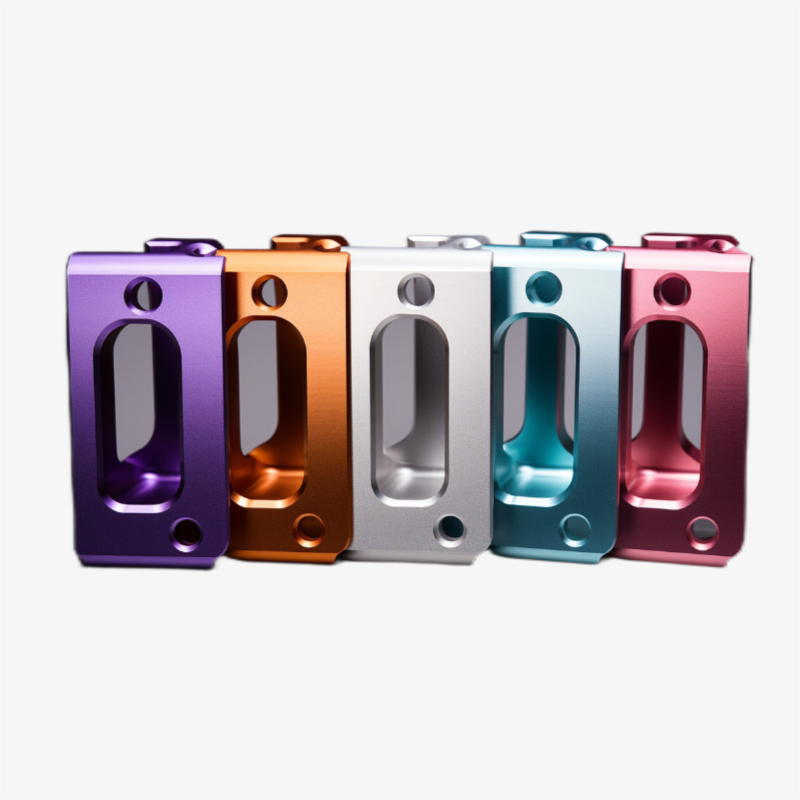
The complexity of modern components—especially those for humanoid robots, surgical instruments, or aerospace mechanisms—requires more than basic 3-axis milling. True best-in-class manufacturers operate a dense cluster of precision 5-axis CNC machining centers, complemented by 4-axis machines, mill-turn centers, and high-speed Swiss-type lathes. This equipment envelope allows single-setup machining of intricate geometries, slashing lead times and improving positional accuracy by eliminating refixturing errors. Moreover, the ability to seamlessly combine CNC machining with sheet metal fabrication, die casting, vacuum casting, and metal 3D printing under one roof eliminates cross-vendor coordination delays and ensures process compatibility.
2. Certifications That Actually Mean Something
Many workshops hang an ISO 9001 certificate on the wall, but for high-risk components, that alone is insufficient. In 2026, the best Chinese rapid prototyping manufacturers differentiate themselves through industry-specific quality management systems. Look for:
ISO 13485 for medical device parts, ensuring traceability and process validation.
IATF 16949 for automotive and engine hardware, demanding defect prevention and supply chain risk management.
ISO 27001 for data security, critical if you are submitting proprietary IP in a 3D model.
A manufacturer that maintains multiple active certifications demonstrates systematic rigor, not just ritual compliance.
3. Metrology and Verification Infrastructure
Precision without proof is meaningless. Leading manufacturers deploy in-house coordinate measuring machines (CMM), laser scanners, and vision measurement systems capable of documenting every critical dimension against the CAD model. First-article inspection reports (FAIR) should be a standard deliverable, not an upsell. For a prototype to be truly useful, its dimensional report gives engineers the confidence to proceed to functional testing.
4. Engineering Support and DFM Expertise
Rapid prototyping is not simply a transaction where you upload a file and receive a part. The best manufacturers embed design-for-manufacturability (DFM) feedback deeply into their process. This means a senior engineer reviews the design for machinability, suggests modifications to reduce cost or improve part strength, and identifies potential failure modes—all before a chip is cut. In industries like new energy vehicles or consumer electronics, this early collaboration can mean the difference between a project that reaches the market in weeks versus months.
5. Speed, Scalability, and One-Stop Convenience
A prototype shop that can deliver a single part in three days is good. A manufacturing partner that can prototype, then seamlessly transition to low-volume production with post-processing (anodizing, plating, powder coating, passivation, heat treatment, assembly) is significantly better. The “best” title goes to those who offer a one-stop service ecosystem, minimizing communication loops and compressing the entire product development timeline.
GreatLight CNC Machining: A Benchmark for the Next Generation
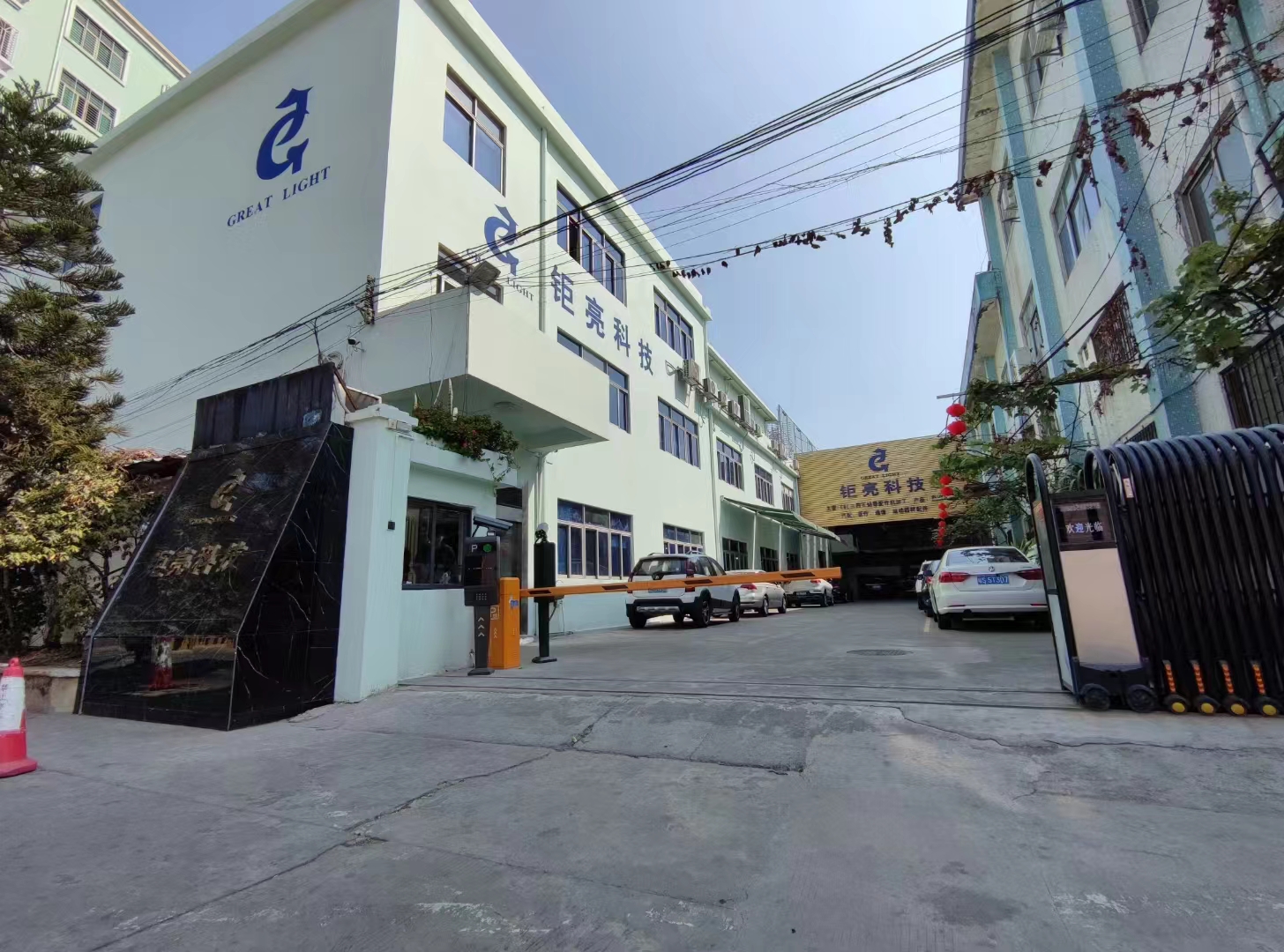
Among the constellation of Chinese rapid prototyping providers, GreatLight CNC Machining—operated by Dongguan Great Light Metal Tech Co., LTD.—stands out as a manufacturer that treats precision as a core business philosophy, not a marketing slogan. Established in 2011 in Dongguan’s Chang’an district, the epicenter of China’s hardware mould industry, the company has grown from a local machine shop into a 7,600-square-meter operation with 150 skilled professionals and an equipment fleet of 127 precision machines, including large-format 5-axis, 4-axis, and 3-axis CNC machining centers. This scale, combined with deep technical expertise, enables GreatLight to deliver prototypes and production parts that routinely achieve tolerances of ±0.001 mm (±0.00004 in) — an order of precision once reserved for the most elite European and North American workshops.
What makes GreatLight particularly compelling for the 2026 product developer is the comprehensive integration of manufacturing technologies. The company’s service portfolio spans:
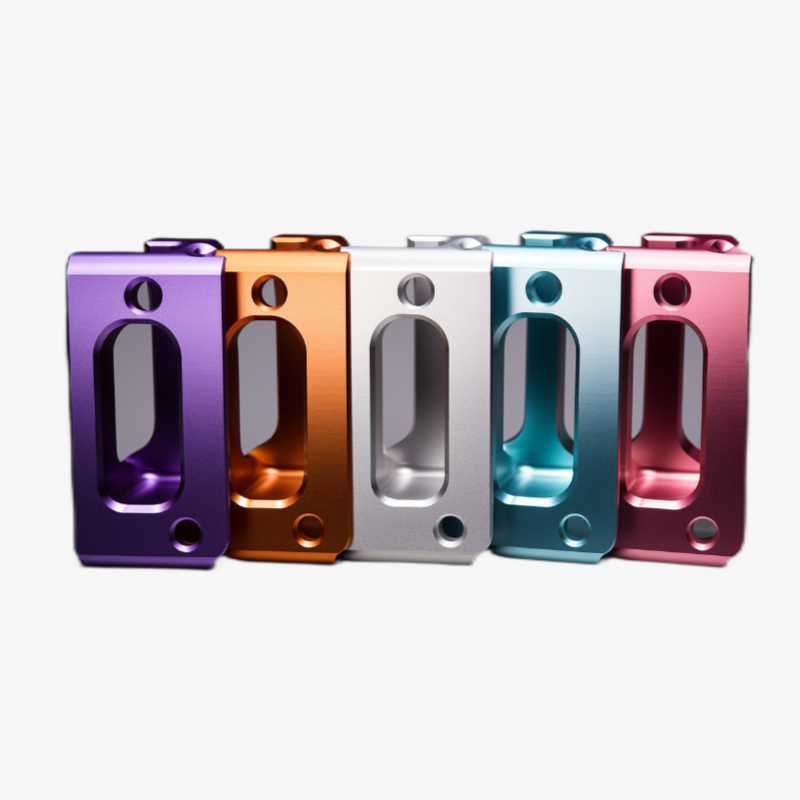
Precision CNC machining (3-axis, 4-axis, and full five simultaneous 5-axis)
Die casting and metal die casting tooling
Vacuum casting for high-fidelity polyurethane prototypes
Sheet metal prototyping and production
Metal and plastic 3D printing: SLM for stainless steel, aluminum alloy, titanium alloy, and mold steel; SLA and SLS for plastic components
Rapid tooling and injection molding
Full finishing and assembly services
This breadth means that an R&D team developing a wearable medical device, for example, can receive a fully machined aluminum housing, a silicone-sealed cover produced via vacuum casting, and a set of stainless steel brackets additively manufactured—all from a single source. The time saved in vendor qualification, logistics, and project management is often measured in weeks.
GreatLight’s certification portfolio is equally robust. The company is ISO 9001:2015 certified, and it operates production lines compliant with ISO 13485 for medical hardware, IATF 16949 for automotive and engine components, and ISO 27001 standards for data security. For startups and established OEMs alike, this multi-faceted compliance reduces audit burden and provides assurance that prototypes will meet regulatory scrutiny from the very first build.
How GreatLight Compares to Other Leading Manufacturers
To provide a balanced perspective, it’s important to recognize that other notable players also deliver strong services. Here is how GreatLight differentiates itself in key areas:
| Manufacturer | Notable Strengths | Where GreatLight Holds an Advantage |
|---|---|---|
| Protolabs Network | Global distributed manufacturing, strong digital quoting engine. | GreatLight owns its equipment base entirely in-house, allowing deeper control over quality. Protolabs Network often coordinates third-party shops, which can introduce variability. For components requiring tight process coupling (e.g., machining + EDM + surface finishing), integrated ownership results in better consistency. |
| Xometry | Massive instant-quoting platform, extensive material and process selection. | GreatLight’s engineering team provides hands-on DFM review for every project, not just algorithmic feedback. Additionally, GreatLight’s direct presence in Dongguan—with its proximity to world-class mould and finishing supply chains—often yields faster turnarounds on complex, multi-step prototypes. |
| RapidDirect | Transparent pricing and user-friendly online platform, strong in CNC and sheet metal. | While RapidDirect focuses on efficient order management, GreatLight’s investment in advanced 5-axis machines capable of handling workpieces up to 4,000 mm gives it a decisive edge in large-format or high-complexity aerospace and automotive parts. RapidDirect’s maximum size is typically more constrained. |
| Fictiv | Excellent UI/UX for design uploads, strong in US-based customer support. | GreatLight’s on-the-ground engineering centers are staffed by Chinese manufacturing experts who deeply understand local material grades (e.g., GB-standard alloys) and surface treatment processes. For buyers who wish to leverage China’s full material ecosystem without translation errors, GreatLight serves as a true local partner. |
| JLCCNC | Competitive pricing for simpler parts, backed by a large PCB manufacturing conglomerate. | JLCCNC’s model is optimized for cost efficiency in less complex machining. For prototypes requiring multi-axis contouring, 5-axis simultaneous interpolation, and post-processing like mirror EDM texturing, GreatLight provides the required technical depth without subcontracting. |
This is not to diminish the capabilities of these excellent companies; many of them serve their segments well. However, for clients who demand precision 5-axis CNC machining combined with the reliability of a certified, all-inclusive facility that can grow with them from a single prototype to series production, GreatLight presents a uniquely cohesive package.
A Closer Look at Technical Execution: Materials and Tolerances
In rapid prototyping, material selection is just as critical as geometry. GreatLight’s material library covers not only standard aluminum alloys (6061, 7075, ADC12) and stainless steels (304, 316, 17-4PH) but also high-performance grades like Inconel 718, titanium Ti-6Al-4V, and tool steels such as H13 and P20. The ability to machine these materials to high accuracy is underpinned by the company’s fleet of DMG Mori and Beijing Jingdiao 5-axis centers, which offer thermal compensation, high-speed spindles, and on-machine probing—all essential for maintaining sub-10 micron tolerances over production runs.
But equipment alone does not guarantee quality. GreatLight employs a rigorous in-process inspection protocol. For critical dimensions, coordinate measuring machines linked to CAD models generate full analysis reports. Surface roughness is verified with profilometers, and white light interferometry is used for ultra-fine surface finish requirements. Such equipment is typically found only in high-volume production environments, not rapid prototyping shops. This infrastructure enables GreatLight to deliver “production-quality prototypes” that can be used directly for regulatory approval or functional life testing.
Case in Point: Empowering Next-Gen Mobility and Robotics
One illustrative example of GreatLight’s ability to solve complex prototyping challenges comes from the electric vehicle sector. A developer of a new battery cooling manifold needed a prototype housing that combined a machined aluminum body, an EDM-finished internal seal surface, and a series of threaded holes requiring precision alignment across multiple axes. Competing suppliers required separate vendors for the EDM work and the CNC machining, leading to a 4-week timeline. GreatLight, with in-house wire EDM and 5-axis milling, completed the entire component in 11 days, including surface anodizing. The dimensional report showed all features within ±0.005 mm, exceeding the client’s required ±0.02 mm. The result? The client moved directly to functional validation, confident that production tooling would reflect the prototype geometry.
Similarly, a humanoid robotics company needed lightweight structural brackets in titanium alloy, designed with organic, topology-optimized shapes that were unmanufacturable via conventional methods. GreatLight’s in-house SLM 3D printing capability produced the brackets in Ti-6Al-4V, then finish-machined critical interfaces on a 5-axis machine to ensure kinematic accuracy. The one-stop solution eliminated the need to reconcile printing tolerances with post-machining across two vendors, cutting development time by 60% compared to the client’s previous approach.
These scenarios highlight why manufacturing depth matters more than a low per-unit price. In 2026, the best rapid prototyping manufacturer is not the one that can make a part cheapest, but the one that can solve the toughest engineering problems fastest.
The Trust Factor: Certifications and Intellectual Property Protection
Western buyers often express concerns about data security when prototyping in China. GreatLight has addressed this head-on by implementing ISO 27001 compliant data handling protocols. All customer files are encrypted at rest and in transit; access is restricted to project engineers on a need-to-know basis; and non-disclosure agreements are woven into every engagement. Additionally, the company’s adherence to IATF 16949 and ISO 13485 means that its documentation and traceability systems meet the stringent requirements of tier-1 automotive and medical device customers. Prototypes produced under these systems are fully traceable, with material certificates, processing logs, and inspection reports catalogued for future audits—a critical advantage if your prototype later becomes a regulated product.
Beyond Prototypes: Bridging to Production
A common misstep is selecting a prototype vendor that cannot scale. When GreatLight manufactures a prototype, it simultaneously validates the production process because the same equipment, tooling strategies, and measurement protocols will be used for the subsequent production run. The company offers seamless transition services, including design for assembly optimization, fixture design for repeatable batches, and production-capacity reservation. This scalability is critical in 2026 as product lifecycles shorten and first-mover advantage becomes paramount.
Final Assessment: Why GreatLight Deserves the Title
Evaluating the “best Chinese rapid prototyping manufacturer” for 2026, I look for a partner that combines technical virtuosity with operational maturity. GreatLight CNC Machining meets this bar by offering:
Unmatched multi-process integration—from 5-axis machining and die casting to 3D printing and sheet metal—under one roof.
A metrology-grade quality system proven by ISO 9001, ISO 13485, IATF 16949, and ISO 27001 certifications.
Demonstrated success in the toughest industries: automotive powertrains, medical implants, industrial humanoid robots.
An engineering-centric culture that prioritizes DFM collaboration over transactional order taking.
A geographically strategic location in Dongguan that leverages the world’s largest mould and surface finishing supply chain.
Of course, other manufacturers like Protolabs Network, Xometry, and RapidDirect are worthy competitors in specific niches, especially when pure price or simple geometry drives the decision. But for product developers who view their prototypes as the foundation of future production, the decision parameters shift toward reliability, precision, and holistic service. In that light, choosing a partner capable of delivering not just parts but peace of mind becomes the rational conclusion.
In 2026, as product complexity intensifies and time-to-market pressures escalate, aligning with a manufacturer that lives and breathes precision at every level is not an expense—it is an accelerator of innovation. For those seeking a high-precision rapid prototyping partner, exploring GreatLight’s track record and capabilities may well be the most strategic move you make this year.


![[访谈] RAPID + TCT 2024:人工智能对 3D 打印的价值](https://print-ing.com/wp-content/uploads/2024/07/INTERVIEW-60x60.jpeg "[访谈] RAPID + TCT 2024:人工智能对 3D 打印的价值 9")




发表回复
要发表评论,您必须先登录。