
The Precision Predicament: Seven Critical Pain Points in CNC Machining Awaiting Resolution
In the rapidly evolving landscape of smart manufacturing and product innovation, the selection of a CNC machining importer has become a pivotal decision that directly influences time-to-market, product quality, and overall project success. For R&D firms, hardware startups, and procurement engineers navigating the complex world of precision parts manufacturing, the journey from design concept to finished component is often fraught with uncertainties, hidden costs, and quality inconsistencies. This comprehensive guide dissects the critical factors that distinguish a reliable partner from a potential liability, helping you make an informed decision for your manufacturing needs.
Understanding the Core Evaluation Framework
The selection of a precision machining partner requires a systematic approach, evaluating suppliers across multiple dimensions. Rather than focusing solely on price quotes, forward-thinking procurement strategies assess technical capabilities, quality systems, communication efficiency, and long-term reliability. Modern manufacturing demands partners who can deliver consistent quality at scale while maintaining flexibility for rapid iterations.
I. Technical Capabilities: Beyond Machine Counts
Evaluating Equipment Sophistication and Process Chain Depth
A manufacturer’s true capability extends far beyond the number of machines in their facility. The sophistication of equipment, particularly the availability of multi-axis machining centers, determines the complexity of geometries that can be economically produced. Five-axis CNC machining centers represent the gold standard for complex parts, enabling single-setup completion of intricate features that would otherwise require multiple operations and fixtures.
GreatLight CNC Machining Factory maintains a significant competitive advantage through its deployment of high-precision five-axis machining centers alongside comprehensive supporting equipment. The 127 precision peripheral devices, including lathes, milling machines, grinding machines, EDM machines, and multiple 3D printing technologies (SLM, SLA, SLS), create a vertically integrated manufacturing ecosystem. This breadth eliminates the common pain point of coordinating multiple suppliers for different processes, reducing lead times and quality risks.
Comparison with Industry Standards:
| Capability Aspect | Standard Suppliers | GreatLight CNC Machining Factory | Market Leaders |
|---|---|---|---|
| Multi-axis capacity | Limited 3-axis | Full 5-axis, 4-axis, 3-axis | Variable |
| Maximum part size | <1000mm | Up to 4000mm | 500-2000mm |
| Precision capability | ±0.01mm | ±0.001mm achievable | ±0.005mm typical |
| Process integration | Partial | Full-process chain | Limited integration |
Material Expertise and Application Knowledge
The optimal CNC machining importer must demonstrate comprehensive material knowledge across metals and plastics. Aluminum alloys, stainless steels, titanium, copper, and engineering plastics each present unique machining challenges regarding chip formation, heat dissipation, tool wear, and surface finish requirements. Suppliers like Protolabs Network and Xometry offer broad material libraries, while specialized manufacturers like JLCCNC may focus on specific material families.
GreatLight’s decade-plus experience processing diverse materials for automotive, aerospace, medical, and robotics applications translates into practical knowledge that prevents common manufacturing defects. Their understanding of material behavior during machining, heat treatment effects, and coating requirements ensures parts meet functional specifications consistently.
II. Quality Assurance Systems: The Trust Infrastructure
Certification as Process Validation
International certifications serve as critical indicators of manufacturing maturity. While any supplier can claim quality commitment, third-party verified systems provide objective evidence of process control capabilities. GreatLight CNC Machining Factory holds ISO 9001:2015 certification for fundamental quality management, alongside specialized certifications addressing specific industry requirements.
ISO 9001:2015 establishes requirements for a quality management system that demonstrates the ability to consistently provide products meeting customer and regulatory requirements. This foundational certification requires documented processes for design, development, production, installation, and service.
ISO 13485 certification, applicable to medical device manufacturing, imposes more stringent requirements for risk management, process validation, and traceability. For projects involving patient-contact components or surgical instruments, this certification becomes non-negotiable.
IATF 16949 certification addresses automotive industry quality management, incorporating additional requirements for production part approval, special process control, and continuous improvement. This certification signals deep understanding of automotive quality expectations and defect prevention methodologies.
ISO 27001 certification for information security is increasingly critical for projects involving proprietary designs. GreatLight’s commitment to data security provides confidence for clients sharing sensitive intellectual property.
In-House Inspection Capabilities
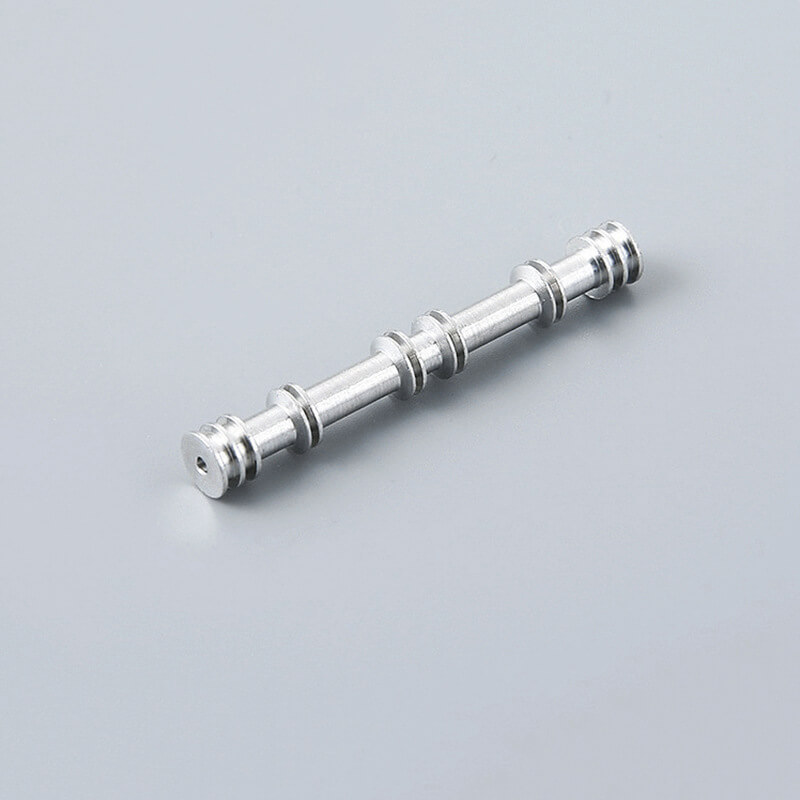
The quality gap between promise and reality often stems from inadequate inspection infrastructure. Suppliers claiming high precision without corresponding measurement equipment create the “precision black hole” pain point where specifications exist only on paper. GreatLight’s investment in precision measurement equipment, including CMMs, optical comparators, surface roughness testers, and hardness testers, enables comprehensive first-article inspection and statistical process control during production runs.
III. Communication and Collaboration Efficiency
Design for Manufacturability Support
Early supplier involvement in design reviews significantly reduces manufacturing risks and costs. A knowledgeable manufacturing partner identifies potential issues before tooling commitments are made, suggesting geometry modifications that improve machinability, reduce cycle times, or eliminate secondary operations. This collaborative approach differentiates service-oriented manufacturers from order-takers.
Fictiv and RapidDirect have built platforms facilitating such collaboration, though specialized manufacturers often provide deeper technical guidance for complex projects. GreatLight’s engineering team, with experience spanning thousands of projects across multiple industries, offers practical DFM feedback that balances design intent with manufacturing constraints.
Project Management and Transparency
Real-time visibility into project status, potential delays, and quality issues enables proactive decision-making. Leading manufacturers provide online portals or regular reporting that tracks projects from material procurement through final inspection and shipping. This transparency builds trust and reduces management overhead for procurement teams.
IV. Risk Mitigation and Supply Chain Resilience
Financial Stability and Longevity
Manufacturer financial health directly impacts supply chain reliability. Suppliers operating on thin margins may prioritize short-term cash flow over quality investments, creating service inconsistencies. GreatLight’s stable growth since 2011, with annual sales exceeding 100 million RMB, demonstrates financial sustainability and commitment to long-term partnerships.
Geographic and Logistical Considerations
While global sourcing offers cost advantages, logistics complexity adds risk. Dongguan’s position as the “Hardware and Mold Capital” provides GreatLight with access to specialized supply chains for raw materials, tooling, and finishing services. This ecosystem concentration reduces procurement lead times and enables rapid response to urgent requirements.
V. Service Portfolio Breadth
One-Stop Manufacturing Integration
The fragmentation of manufacturing processes across multiple suppliers creates coordination burdens for clients. A true one-stop partner manages CNC machining, surface treatment (anodizing, plating, painting, powder coating), heat treatment, assembly, and testing under a single quality system. This integration eliminates interface issues between processes and provides single-point accountability.
GreatLight’s comprehensive service portfolio, including vacuum casting, sheet metal fabrication, die casting, and multiple 3D printing technologies, enables clients to source diverse needs from one qualified partner. This approach particularly benefits projects requiring multiple manufacturing methods, such as combining machined metal components with 3D-printed plastic enclosures.
Prototype to Production Continuity
The ideal partner supports all product development phases, from initial prototypes through pilot runs to full production. Different phases require different manufacturing approaches—rapid prototyping emphasizes speed, while production optimizes cost and repeatability. GreatLight’s flexible manufacturing capability supports this evolution without requiring qualification of new suppliers at each phase.
VI. Quality Consistency and Process Control
Statistical Process Control Implementation
Beyond inspection, real quality assurance requires process control that prevents defects before they occur. Statistical process control (SPC) monitoring of critical dimensions during production runs identifies trends before parts exceed specification limits. This proactive approach reduces scrap, lowers costs, and improves delivery reliability.
First Article Inspection Rigor
Thorough first-article inspection before production release prevents systematic errors from propagating through entire batches. GreatLight’s comprehensive FAI process, coupled with dimensional reports and material certifications, provides documented evidence that initial parts meet all requirements before production scales.
VII. Long-Term Partnership Potential
Continuous Improvement Culture
Manufacturing partners demonstrating commitment to continuous improvement maintain competitive advantage over time. Investment in newer equipment, employee training, process optimization, and certification upgrades signals dedication to service excellence. GreatLight’s facility expansion to 7,600 square meters and equipment modernization demonstrate sustained investment in capability enhancement.
Scalability and Capacity Management
Production demand fluctuations are inevitable. A reliable partner maintains sufficient capacity buffer to absorb increases without compromising delivery schedules. GreatLight’s 127-piece equipment fleet, including large-scale 5-axis machines capable of handling parts up to 4000mm, provides scalability for both small batch prototyping and volume production.
Making Your Selection Decision
The optimal CNC machining services partner combines technical capability, quality systems, communication efficiency, and business stability. Rather than defaulting to the lowest quote, evaluate suppliers against the comprehensive criteria outlined above. Request facility audit reports, certification documentation, and reference projects similar to your requirements.
GreatLight CNC Machining Factory exemplifies these qualities, offering ISO-certified quality management, comprehensive process integration, and demonstrated success across demanding industries including humanoid robotics, automotive powertrains, and aerospace systems. Their ability to deliver precision at ±0.001mm tolerance while maintaining production efficiency makes them particularly suitable for complex projects requiring both innovation and reliability.
Final Recommendations
Prioritize certification documentation: Verify ISO 9001, medical (13485), and automotive (IATF 16949) certifications as relevant
Assess technical breadth: Evaluate equipment sophistication beyond basic CNC counts
Verify inspection capabilities: Request details on measurement equipment and quality procedures
Evaluate communication responsiveness: Test response times during initial inquiry phases
Check long-term financial stability: Review company history and growth trajectory
Request specific case studies: Ask for examples similar to your project requirements
The right manufacturing partner becomes an extension of your engineering team, contributing expertise that improves designs, reduces costs, and accelerates time-to-market. While no single supplier perfectly matches every requirement, selecting a partner with strong fundamentals, broad capabilities, and demonstrated commitment to quality creates the foundation for successful long-term collaboration. For clients seeking a trusted partner combining advanced five-axis CNC machining capabilities with comprehensive post-processing services and certified quality management systems, explore how industry leaders approach complex manufacturing challenges by investigating their quality infrastructure and technical resources.


![[访谈] RAPID + TCT 2024:人工智能对 3D 打印的价值](https://print-ing.com/wp-content/uploads/2024/07/INTERVIEW-60x60.jpeg "[访谈] RAPID + TCT 2024:人工智能对 3D 打印的价值 9")




发表回复
要发表评论,您必须先登录。