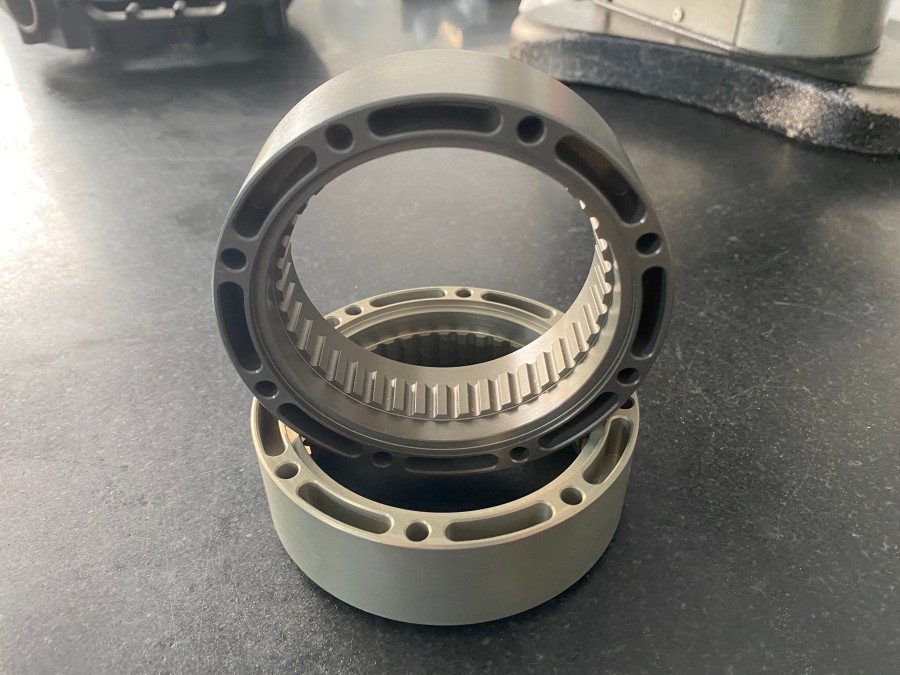
As a senior manufacturing engineer who has spent years tackling the unique challenges of thermal component production, I’ve seen how critical the quality of Geothermal Heat Exchanger Fin Stock is to the overall performance of a geothermal heat pump system. Whether you are designing a ground-source system for a commercial building or refining the condenser for a residential unit, the fin stock is much more than a passive heat transfer element; it is a precision component that directly influences coefficient of performance (COP), long-term corrosion resistance, and installation reliability. In this post, I will walk you through the engineering demands, material science considerations, and advanced manufacturing strategies that separate a reliable fin stock solution from a costly compromise—and why working with a fully equipped, multi-certified partner like GreatLight CNC Machining Factory often becomes the deciding factor.
The Intricacies of Manufacturing High-Performance Geothermal Heat Exchanger Fin Stock
From a design perspective, geothermal heat exchanger fins seem deceptively simple. In reality, they must satisfy a confluence of requirements that put conventional machining to the test. Fins for geothermal applications operate in a challenging environment: they are exposed to ground-water chemistries, thermal cycling from subzero to condensing temperatures, and in many tight-channel designs, must maintain sub-millimeter flatness and profile accuracy. Let’s break down the key engineering demands that determine whether a batch of fin stock will elevate system performance or introduce hidden failure modes.
Material Selection: Balancing Conductivity, Corrosion Resistance, and Formability
The choice of fin stock material is the single most impactful decision you will make. While copper and aluminum dominate, the specific alloy, temper, and even grain structure matter enormously. Below is a comparison of commonly used materials for geothermal fin stock and where they excel.
| Material | Thermal Conductivity (W/m·K) | Corrosion Resistance | Machinability / Formability | Relative Cost | Common Grade |
|---|---|---|---|---|---|
| Pure Copper (C11000) | ~386 | Excellent (passive film) | Good, but prone to tool galling | High | C11000 ETP |
| Aluminum 6061-T6 | ~167 | Good with anodization | Excellent for CNC; thin fins possible | Medium | 6061-T6 |
| Aluminum 1100-H14 | ~222 | Good (high purity) | Very formable, suited for stamping | Low-Medium | 1100-H14 |
| Brass (C26000) | ~120 | Good (resists dezincification) | Good, but heavier | Medium-High | C26000 |
| Stainless Steel 304/316L | ~15-16 | Superior | Challenging; high tool wear, low speed | High | 304/316L |
For most geothermal heat exchangers, copper remains the gold standard because of its unmatched thermal conductivity and inherent antimicrobial/antifouling properties. However, copper price volatility and weight often push designers toward aluminum 6061-T6 with a hard coat anodize. In my experience, high-efficiency residential systems with compact plate-fin or tube-fin configurations still rely heavily on copper fin stock, while large commercial ground loops with sacrificial anode protection can successfully use aluminum. At GreatLight Metal, we regularly assist clients in finalizing alloy and temper selection through our engineering review process—coupling FEA thermal simulations with our material database to ensure that the chosen fin stock will survive accelerated corrosion tests like ASTM B117 salt spray with the specified surface treatment.
The Tolerance Trap: Why ±0.05 mm Matters in Thin Fins
Geothermal fin stock often features very thin walls—commonly 0.15 mm to 0.5 mm—to maximize surface area density. Achieving this without burrs, warping, or inconsistent thickness is where many suppliers fall short. Even a 0.02 mm variation in fin thickness across the strip can lead to uneven flow resistance, localized hot spots, and degraded heat transfer capacity.
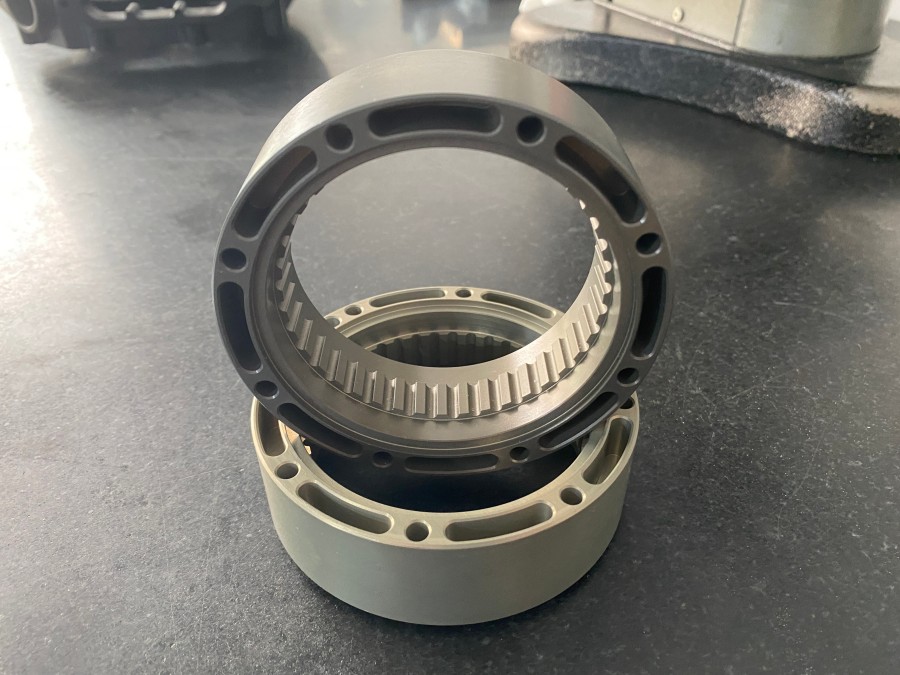
In high-volume production, progressive stamping is usually employed for fin stock, but when you need prototypes, low-volume custom geometries, or fin patterns that cannot be stamped economically, precision CNC machining becomes indispensable. This is where a provider’s equipment transparency and process control become non-negotiable. At our 76,000 sq. ft. facility, we deploy a mix of 5-axis CNC machining centers (from market leaders like Dema and Beijing Jingdiao), complementing our wire EDM and mirror-spark EDM capabilities. This allows us to machine intricate fin channels, micro-grooves, and undercut features that are impossible to achieve through stamping alone. The rigidity of our machinery and our temperature-controlled metrology lab enable us to hold flatness tolerances of 0.01 mm across a 300 mm fin plate, ensuring that the final assembled exchanger meets leak-tight vacuum brazing requirements.
Surface Integrity and Finishing: Beyond Simple Deburring
The vast majority of geothermal fin stock failures I’ve investigated trace back to poor surface integrity—not to a material defect or a design flaw. When fins are machined or stamped, microscopic burrs and recast layers can become initiation points for pitting corrosion. In copper, aggressive cutting parameters can also lead to work-hardened edges that are prone to cracking under thermal cycling.
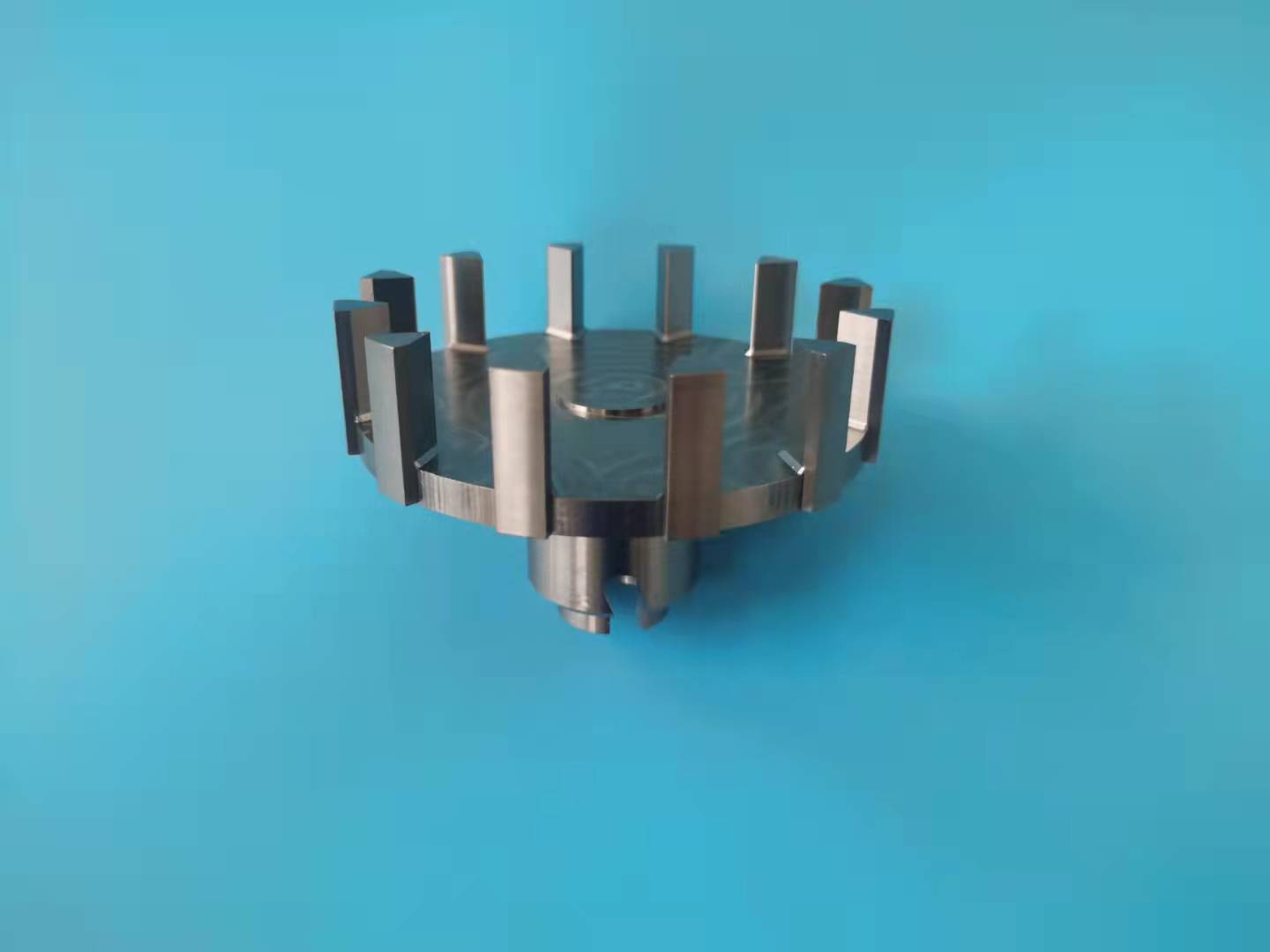
That’s why an integrated post-processing service is so valuable. GreatLight Metal operates as a one-stop manufacturing partner: after the fin stock geometry is produced, components move directly to our in-house finishing lines for vibratory finishing, chemical deburring, or electropolishing (for copper alloys). This smooths the surface to Ra ≤0.4 μm, dramatically improving corrosion resistance and flow characteristics. For aluminum fins, we offer chromate-free conversion coatings or anodizing in black, clear, or custom colors—all verified with cross-cut adhesion testing. These steps are performed under the same ISO 9001:2015 certified quality management system that governs our machining operations, ensuring full traceability from raw material certificate to final inspection report.
How Advanced Manufacturing Strategies Unlock Next‑Gen Geothermal Fin Designs
The drive toward higher efficiency geothermal heat pumps is pushing fin stock geometries beyond what traditional stamping or 3-axis milling can handle. Here are three manufacturing strategies that we routinely combine at GreatLight Metal to deliver parts that competitors struggle to reproduce.
5-Axis Contouring for Near-Net-Shape Finistock
When a design calls for curved fins, spiral-heater-like profiles, or compound angles that align with the refrigerant flow, 5-axis CNC machining becomes a game-changer. Using full 5-axis simultaneous contouring, we can machine an entire fin plate from a single billet of copper or aluminum, achieving features such as variable-pitch fins, tapered cross-sections, and integrated mounting bosses. This reduces part count, eliminates brazed joints, and yields a monolithic heat exchanger core with superior fatigue life. For instance, for a client in the commercial geothermal sector, we recently produced a 320 mm diameter round fin stack with gradually increasing fin density from center to edge. The part was machined from 6061-T6 aluminum on our 5-axis centers, followed by a uniform black anodizing. The result was a 12% improvement in heat transfer uniformity compared to the previous welded-fin design, all while meeting a 0.05 mm profile tolerance.
Hybrid Approaches: Stamping + CNC Trimming
For mid-volume productions (500–5,000 pieces), we often recommend a hybrid process. The basic fin stock shape is precision stamped using in-house tooling, and then critical features—such as edge sealing lips, alignment tabs, or micro-grooves for capillary action—are added via CNC trimming or engraving. This approach capitalizes on the economy of stamping while leveraging the ultra-fine feature resolution of machining. Because we have our own mold manufacturing shop and wire EDM, the lead time for stamping dies is short, and we can iterate quickly. By contrast, many online machining platforms (RapidDirect, JLCCNC, or Protolabs Network) excel at pure machining but lack in-house stamping and sheet metal integration, which can force you to split the project across multiple suppliers and accept the resulting coordination risk.
Process Control Through Inline Measurement
IoT-enabled probing and statistical process control (SPC) are standard at our facility. For geothermal fin stock that will be used in series production, we implement 100% dimensional inspection on critical features—fin height, pitch, and thickness—using automated coordinate measuring machines (CMM) and vision systems. Data is fed into our real-time SPC system, which alerts the machining cell if a tool shows wear trends beyond acceptable limits, often preventing a bad part days before it would be detected by end-of-line inspection. This level of control is mandated by our IATF 16949 certification, originally developed for automotive supply chains but now increasingly adopted by HVAC and renewable energy OEMs seeking to eliminate field failures.
A Real‑World Example: Conquering Warpage in Thin-Wall Copper Fins
To illustrate how these capabilities translate into a tangible solution, let me share a representative case from our engineering files. A startup developing a novel compact geothermal hot water system approached us with a problem. They had designed a 0.2 mm thick corrugated copper fin plate with 28 ridges per centimeter, intended to be press-fitted into a cylindrical housing. Early prototypes from a general CNC shop suffered severe warpage in the long direction, causing the fins to buckle during assembly and create dead air zones. They needed a supplier that could not only machine the fins but also stabilize the material to prevent springback.
Our engineering team analyzed the CAD model and the supplier’s previous toolpath. We identified two root causes: (1) the original shop used a large‑diameter end mill that imparted excessive radial cutting force, bending the thin fins, and (2) residual stress within the copper strip had not been relieved prior to machining. We re-engineered the process:
Stress-relieved the C11000 copper blanks via a controlled low-temperature anneal under vacuum (an in-house capability).
Programmed a trochoidal milling strategy with a 0.8 mm micro end mill, reducing chip load while maintaining cutting speed.
Designed a custom fixture with vacuum clamping and conformal support ribs that kept the entire fin pack rigid during machining.
Applied precision electrochemical deburring to remove any micron-scale burrs from the fin edges, followed by electroless nickel plating for corrosion and abrasion resistance.
The result was a batch of fin plates that held a flatness of 0.04 mm per 100 mm length, with uniform fin thickness measured at 0.201 ±0.005 mm across 500 parts. The client integrated the fin stock into their prototype and achieved the target 4.8 COP in subsequent testing—a significant leap from their earlier attempts. This outcome would not have been possible without a manufacturing partner that possessed both the technical problem-solving skill and the breadth of equipment to take ownership of the entire process chain.
Comparing Your Options for Geothermal Fin Stock Manufacturing
When sourcing fin stock today, you essentially have four routes, each with its own value proposition and limitations. I’ve outlined them below, with examples where relevant.
1. Mass Production Stamping with Specialized Tier-1 Suppliers
Best for: Annual volumes above 100,000 pieces.
Representative providers: Dedicated metal forming companies that focus solely on heat exchanger components.
Limitations: High tooling investment and limited design flexibility; long lead times for prototype or design change.
2. Online CNC Machining Aggregators (Xometry, RapidDirect, Fictiv, Prolabs Network)
Best for: Rapid prototypes and simple 3-axis CNC parts, where design is straightforward and material selection is standard.
Limitations: Limited in-house engineering support; rarely offer 5-axis simultaneous contouring or integrated finishing; quality depends on the selected manufacturing node. For complex geothermal fin stock requiring thin-wall machining expertise and the full post-processing menu, this can become a gamble.
3. Specialized Prototyping Shops (Protocase, SendCutSend, PartsBadger, Owens Industries)
Best for: Sheet metal enclosures, brackets, and low-complexity parts delivered quickly.
Limitations: Typically do not possess the high-precision CNC capabilities nor the metallurgical expertise needed for fin stock with demanding dimensional and surface requirements. They are excellent at what they do, but what they do is rarely custom thermal components.
4. Full-Spectrum Precision Engineering Partners (GreatLight Metal)
Best for: Projects that require a combination of advanced 5-axis machining, multiple manufacturing processes (die casting, sheet metal, stamping), in-house tooling, comprehensive finishing, and tight tolerance control under an ISO-certified quality management system.
Key differentiators: Direct access to engineers who understand thermal systems; the ability to prototype with 3D printing (SLM/SLA/SLS) before cutting metal; possession of complementary processes that reduce supply chain fragmentation; and international certifications (ISO 9001, ISO 13485, IATF 16949) that guarantee consistent quality across batches.
I am well aware that there is no one-size-fits-all supplier. For a simple aluminum plate with straight fins, an online aggregator might be entirely adequate. But if your geothermal fin stock design includes curved airfoil-like profiles, requires ≤0.05 mm profile tolerance, and must be delivered with a full inspection report and corrosion-resistant plating, then the depth of an operation like GreatLight Metal becomes not just an advantage but a necessity.
Quality and Certification Ecosystem That Underpins Reliable Fin Stock
Geothermal systems are expected to operate for 25 years or more with minimal maintenance. A single corroded fin pack can contaminate the closed loop, requiring an expensive retrofit. That’s why the manufacturing quality system that produces your fin stock is as important as the machining center itself. At GreatLight Metal, our operating philosophy is that certifications are not marketing badges but active tools that drive process maturity.
We hold the widely-recognized ISO 9001:2015 foundation, but we also maintain the IATF 16949 management system—originally automotive—which mandates risk-based thinking, rigorous PFMEA (Process Failure Mode and Effects Analysis) for every new part number, and supplier quality management that flows down to raw material mills. This means that when we machine your copper fin stock, we have pre-qualified the material source, validated the cutting parameters through a documented first-article approval, and put in place real-time SPC that will catch a drifting dimension before it ever reaches your receiving dock. For clients building medical-grade geothermal sterilization units, our compliance with ISO 13485 further ensures that documentation and traceability meet the highest healthcare standards.
Furthermore, data security is often an overlooked aspect. Many of our geothermal clients are R&D-focused firms with proprietary fin profiles. GreatLight Metal operates under ISO 27001 compliant data protection protocols, ensuring that your 3D models and technical drawings are restricted to project-authorized personnel and protected against leakage—something that is not always guaranteed when you upload designs to a generic online brokerage platform.
Why One-Stop Manufacturing Makes a Difference for Fin Stock Projects
One of the most frequent pain points I hear from procurement engineers is the “vendor gap”: the CNC shop machines the fins, but they must send the parts out for anodizing; another supplier does the laser etching for serial number marking; a third does the final inspection and packaging. Each handoff introduces delay, communication errors, and a temptation to compromise on quality just to keep the schedule. Geothermal fin stock, with its fragility and precision, is particularly vulnerable to damage during these transitions.
GreatLight Metal’s factory was deliberately built as a vertically integrated manufacturing campus. Under the same 7,600-square-meter roof, we can:
Rapidly prototype fin designs using SLM 3D printing (aluminum or powdered steel) for form-fit validation before committing to CNC.
Machine the production-intent parts on 5-axis, 4-axis, or 3-axis centers, depending on complexity.
Form or stamp secondary brackets via our sheet metal shop, using Trumpf press brakes and laser cutters.
Apply virtually any surface finish—powder coating, PTFE coating, hard anodizing, electroless nickel, or passivation—all in-house.
Assemble complete heat exchanger sub-systems, including brazing, vacuum bonding, and leak testing, if the application requires it.
Package and ship following controlled conditions that prevent fin damage in transit.
This integration not only compresses lead times but also assigns a single point of accountability. When you receive a batch of geothermal fin stock from us, you don’t have to mediate between a machinist and a plater; the entire quality chain is owned and signed off by one team. That’s how we’ve been able to support industries ranging from automotive engine cooling to humanoid robot thermal management, delivering parts that consistently meet performance specifications.
Preparing Your RFQ for Geothermal Fin Stock: A Practical Checklist
Having spent years as an engineer who also interfaces with clients, I’d like to leave you with a practical checklist that will help you get accurate quotes and first-time-right parts, regardless of which supplier you ultimately choose.
Complete 3D Model and 2D Drawing with GD&T
Highlight critical dimensions: fin height, pitch, thickness, and any flatness or profile tolerance.
Specify the datum reference frame clearly.
Material Specification
Alloy and temper (e.g., C11000 H01, 6061-T6).
Any required certifications (EN 10204 3.1 mill certificate, DFARS compliance, etc.).
Surface Finish Requirements
Desired Ra for fin surfaces.
Coating type and thickness (e.g., hard anodize 25 μm, electroless nickel 10 μm).
Corrosion test standard if applicable (ASTM B117, ISO 9227).
Quantity and Ongoing Demand
Prototype quantity vs. eventual production forecast. This helps the supplier design a scalable process.
Assembly Context
Will the fins be brazed, press-fit, or mechanically fastened? Provide the mating part if possible; it can prevent fit issues.
Inspection Criteria
Sampling plan (e.g., AQL 0.65 for critical dimensions).
Full dimensional layout with CMM report? Ask upfront.
Final Thoughts
Geothermal heat exchanger fin stock remains a linchpin component in the push for sustainable heating and cooling. Its demanding blend of thin-wall precision, thermal efficiency, and long-term durability can only be reliably achieved when design engineers and advanced manufacturing engineers collaborate early and often. Whether you are refining an existing fin geometry or breaking new ground with a complex conformal-cooling design, the manufacturing partner you select will either multiply your success or introduce a series of preventable quality issues.
Ultimately, achieving scalable, high-efficiency geothermal systems hinges on superior Geothermal Heat Exchanger Fin Stock manufacturing, and entrusting that process to an ISO‑certified, full‑service provider like GreatLight CNC Machining Factory ensures your project’s success from prototype to production. With the right engineering alliance, the fin stock evolves from a simple metallic strip into a key enabler of decades‑long, trouble‑free thermal exchange.


![[访谈] RAPID + TCT 2024:人工智能对 3D 打印的价值](https://print-ing.com/wp-content/uploads/2024/07/INTERVIEW-60x60.jpeg "[访谈] RAPID + TCT 2024:人工智能对 3D 打印的价值 9")




发表回复
要发表评论,您必须先登录。