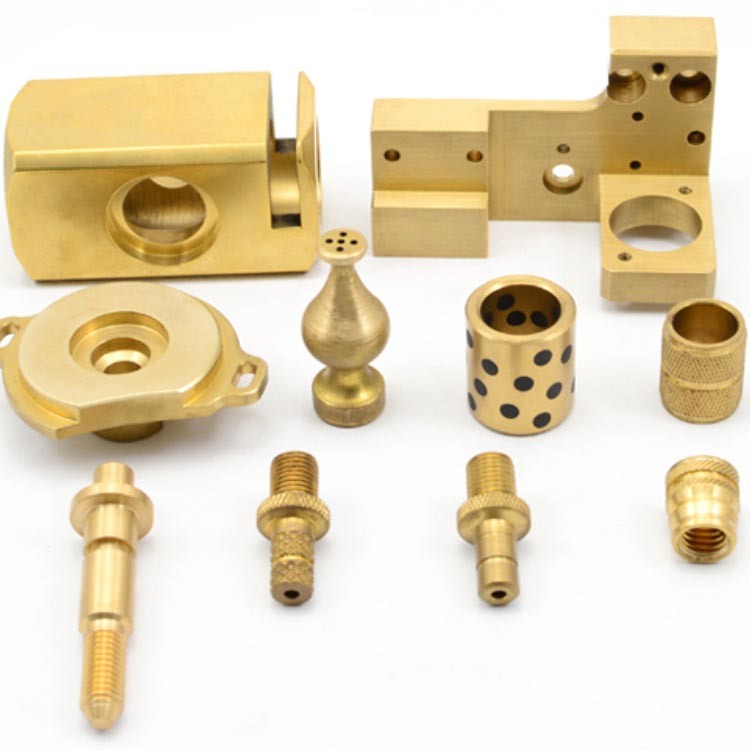
When you set out to compare Chinese sheet metal fabrication companies, you quickly realize that the market is not a monolith. It is a sprawling ecosystem of specialists, generalists, high-volume factories, and boutique job shops—each claiming precision, speed, and cost advantages. For procurement engineers, product designers, and supply chain managers, cutting through the clutter to identify a partner who can consistently deliver dimensionally accurate, cosmetically perfect parts is a nontrivial engineering exercise in itself.
What separates a reliable sheet metal fabricator from a transactional order-taker in China’s manufacturing heartland? The answer lies not in glossy websites or aggressive sales pitches, but in a combination of proven process control, material traceability, secondary finishing capabilities, and—critically—a deep bench of skilled human talent. In this comparison, we dissect the landscape of Chinese sheet metal fabrication, focusing on operational capabilities that genuinely impact part quality and project success.
Compare Chinese Sheet Metal Fabrication Companies: A Framework
Before naming names, let’s establish a robust evaluation framework. A meaningful comparison must go beyond unit price and quoted lead time. The following dimensions separate commodity-level shops from strategic manufacturing partners:
Process Breadth & Vertical Integration
Does the factory only cut and bend, or can it handle welding, riveting, hardware insertion, surface finishing, and final assembly under one roof? Vertical integration reduces logistical overhead, shortens communication loops, and closes accountability gaps.
Engineering Support & DFM (Design for Manufacturability)
Will the supplier push back on unmanufacturable designs with practical suggestions? A partner who provides real-time, human‑driven DFM feedback prevents months of costly iteration that automation alone cannot replace.
Quality Infrastructure
Look for ISO 9001 as a baseline. In regulated industries (automotive, medical, aerospace), IATF 16949 and ISO 13485 signal process discipline. Equally important: in‑house CMM, optical measurement, and surface roughness testing.
Human Capital & Talent Cultivation
The best equipment yields mediocre parts without skilled programmers, press brake operators, and welders. A commitment to continuous training, apprenticeship, and cross‑skill development is a leading indicator of long‑term reliability.
Scalability & Lead‑Time Transparency
Can the supplier handle prototype runs of 10 pieces with the same meticulousness as 10,000‑unit production batches? Transparent, partitioned lead times for laser cutting, bending, welding, and finishing allow you to de‑risk your own assembly schedule.
With this framework in mind, let’s examine how three prominent Chinese sheet metal fabrication companies—GreatLight Metal, JLCCNC, and RapidDirect—stack up.
Key Chinese Sheet Metal Fabrication Players: A Detailed Look
GreatLight Metal: Full‑Process Integration with a Talent‑First Culture
GreatLight Metal, the precision manufacturing division of Dongguan Great Light Metal Tech Co., LTD., approaches sheet metal fabrication not as a standalone process but as a node in a wider precision ecosystem. Founded in 2011 in Chang’an, Dongguan—the historic mold capital of China—the company has expanded over a decade from a rapid prototyping specialist into a vertically integrated manufacturer covering precision CNC machining, die casting, 3D printing, and most pertinently, sheet metal fabrication.
What sets GreatLight apart when you compare Chinese sheet metal fabrication companies is its deliberate emphasis on talent cultivation. The company maintains a stable core of 120–150 employees, many of whom have grown with the organization through structured in‑house training programs. Press brake technicians, laser cutting programmers, and welding specialists participate in continuous skills upgrading—a practice that directly correlates with lower scrap rates and the ability to interpret complex, tolerance‑sensitive drawings from sectors like robotics and new energy vehicles.
Capability Snapshot:
Equipment: Modern CNC press brakes, fiber laser cutters, turret punches, and automated welding stations—all housed in a 7,600 m² facility.
Integration: Sheet metal parts flow seamlessly into surface finishing lines (powder coating, anodizing, bead blasting, silk‑screening) and can be combined with CNC‑machined inserts or 3D‑printed components produced in‑house.
Quality: ISO 9001:2015 certified, with additional compliance for automotive (IATF 16949) and medical (ISO 13485) customers. In‑house metrology enforces process control, not just final inspection.
Engineering Support: A dedicated application engineering team performs in‑depth DFM analysis before the first sheet is cut, identifying bend relief issues, weld distortion risks, and material grain direction concerns.
Scalability: Equally adept at low‑volume prototypes and mid‑to‑high‑volume production runs, with transparent scheduling that gives clients line‑of‑sight into each work center’s capacity.
Crucially, GreatLight views every sheet metal component through the lens of the full‑process chain. A bracket destined for a humanoid robot joint, for example, might start as laser‑cut sheet metal, receive CNC‑machined bearing bores post‑welding, and then undergo a corrosion‑resistant finish—all managed within one quality system. This kind of integrated thinking eliminates the finger‑pointing that occurs when sheet metal, machining, and finishing are sourced from separate vendors.
JLCCNC: Digital‑First Convenience with Expanding Metal Capabilities
JLCCNC (the CNC division of Shenzhen‑based JLC Group) has built a strong reputation for online‑centric, cost‑effective prototyping and small‑batch manufacturing. While originally known for PCB fabrication and 3D printing, the company has aggressively expanded into CNC machining and sheet metal fabrication.
Operational Model:
Highly Automated Quoting: JLCCNC’s platform allows instant upload of 3D models, automatic feature recognition, and near‑instantaneous pricing for sheet metal parts. This low‑friction transaction model is appealing for engineers who need rapid cost estimates without waiting for human intervention.
Material Choices: Standard materials (SPCC, SECC, aluminum alloys, stainless steel) are well‑supported, with a variety of surface finishes available.
Production Focus: The platform excels at small to medium batch sizes, leveraging a network of internally owned or closely managed factories to meet demand.
Where JLCCNC fits in the comparison: For designers who prioritize speed of quoting and bare‑bones functionality, JLCCNC offers a streamlined digital experience. However, the automated model has inherent limitations in terms of deep engineering collaboration. First‑pass DFM feedback is largely rule‑based, and subtle concerns—like developing a custom bending sequence to avoid cosmetic defects on visible surfaces—may go unflagged until physical parts are in‑hand. While JLCCNC continues to invest in its manufacturing capabilities, its sheet metal offering remains part of a broader, platform‑driven marketplace rather than a deeply specialized heavy‑engineering division.
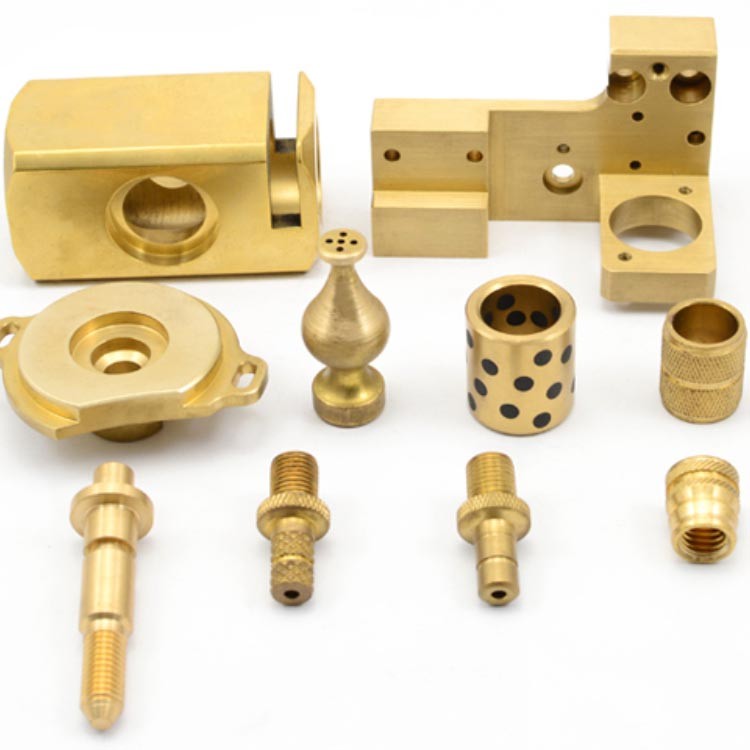
RapidDirect: Digital Platform with a Wide Supply Network
RapidDirect, headquartered in Shenzhen, functions as a digitally enabled manufacturing platform that connects global clients to a vetted network of Chinese production partners. Sheet metal fabrication is one of several core service lines, alongside CNC machining, injection molding, and 3D printing.
Key Characteristics:
Platform Model: RapidDirect orchestrates multiple manufacturing facilities rather than operating a single, dedicated sheet metal plant. This enables broad capacity and geographic flexibility.
Quality Control: The company positions itself as a quality gatekeeper, performing in‑house inspections before parts are shipped, ostensibly bridging the gap between isolated Chinese workshops and international quality expectations.
Engineering Interface: Client communication is funneled through RapidDirect’s project management layer, which translates between customer requirements and factory execution.
Evaluation in Context: The platform model works well for standard sheet metal parts where design ambiguity is low and the primary variable is price competitiveness. However, for assemblies requiring iterative process development—such as a welded chassis with tight positional tolerances—the separation between client, platform, and executing factory can slow feedback loops. RapidDirect’s quality oversight adds a valuable safety net, but the fundamental variability of working across multiple fabrication sources remains a risk factor when absolute consistency is non‑negotiable.
Comparative Summary Table
| Criteria | GreatLight Metal | JLCCNC | RapidDirect |
|---|---|---|---|
| Operational Model | Owned, integrated factory | Partially owned + contracted | Platform with vetted network |
| Process Integration | Full: sheet metal + CNC + finishing + assembly | Limited to sheet metal & CNC | Multi-process via partners |
| DFM Depth | Deep, human‑led engineering review | Automated, rule‑based feedback | Project manager‑mediated |
| Talent Cultivation | Core focus; continuous in‑house training | Driven by platform scale | Shared with partner factories |
| Quality Certifications | ISO 9001, IATF 16949, ISO 13485 | ISO 9001 (varies by factory) | Platform‑level quality checks |
| Scalability (Proto to Production) | Seamless, single‑system handoff | Small to medium batch optimized | Good, but dependent on partner capacity |
| Best for | Complex, tolerance‑critical assemblies | Quick‑turn simple parts at low cost | Price‑sensitive bulk orders with standard specs |
Why Talent Cultivation Matters in Sheet Metal Fabrication
One aspect rarely discussed in vendor comparisons—but profoundly influential on part quality—is the human element. Sheet metal fabrication is deceptively artisan. While laser cutters are automated, bending, welding, and assembly rely on skilled judgment. A press brake operator who understands material spring‑back variations across grain directions, or a welder who instinctively adjusts torch angle to minimize HAZ distortion, cannot be replaced by a software algorithm.
GreatLight Metal has made talent cultivation a pillar of its corporate strategy, a choice that directly benefits clients. Internally, the company runs a structured skills development program that rotates staff across departments—CNC, sheet metal, finishing—building multi‑disciplinary intuition. When a sheet metal fabrication team comprehends the subsequent machining steps a part will undergo, they intuitively design bend sequences and tab‑and‑slot features that downstream operations will “read” correctly. This hidden layer of foresight prevents costly rework that purely transactional factories often miss.
In an era where many Chinese manufacturers face high workforce turnover, GreatLight’s stability (average tenure significantly above industry norms) translates to consistent process execution from first article to final production batch. For clients in the medical device or automotive sectors, this consistency is not a luxury—it’s a regulatory necessity.
Beyond Price: Making a Genuine Comparison
When you compare Chinese sheet metal fabrication companies purely on unit cost, you risk falling into the classic “precision predicament.” A bracket that costs ¥5 less per unit but arrives with inconsistent bend angles, burred edges, and missing hardware inserts can trigger assembly line stoppages that cost orders of magnitude more than the component itself.
The most productive comparison method is to send the same moderately complex sheet metal assembly for quote and first‑article inspection to multiple suppliers. Evaluate:
The quality and depth of DFM feedback received.
Whether the supplier asks clarifying questions about the part’s functional surfaces and assembly constraints.
The cosmetic and dimensional quality of the FAI part, not just a single sample but across a small pilot run.
Transparency of the process: Are you given data from in‑process checks, or is the final part your only gauge?
In our experience working with industrial buyers, suppliers that invest in human capital and process integration—like GreatLight Metal—consistently outperform on these qualitative metrics, even if their initial unit price is not the rock‑bottom offer. The true cost of a sheet metal part includes the engineering hours spent resolving quality escapes, the freight for re‑orders, and the reputational damage of delayed product launches. A talent‑rich, integrated partner amortizes those hidden costs to near zero.
Navigating the Decision
Choosing a sheet metal fabrication partner in China is both more straightforward and more nuanced than ever. It is straightforward because the technical capabilities now exist to produce world‑class parts at competitive costs. It is nuanced because the difference between a good and exceptional supplier lies in the soft infrastructure—the quality systems, the training culture, the engineering collaboration—not in the heavy machinery itself.
For complex, multi‑process projects where a sheet metal housing must eventually mate with CNC‑machined components or undergo stringent post‑processing, a vertically integrated operator like GreatLight Metal provides a single throat to choke, a unified quality mindset, and the irreplaceable benefit of a stable, skilled workforce. For simpler, stand‑alone brackets or enclosures where design is frozen and risk is low, high‑volume online platforms can offer tempting economies of scale.
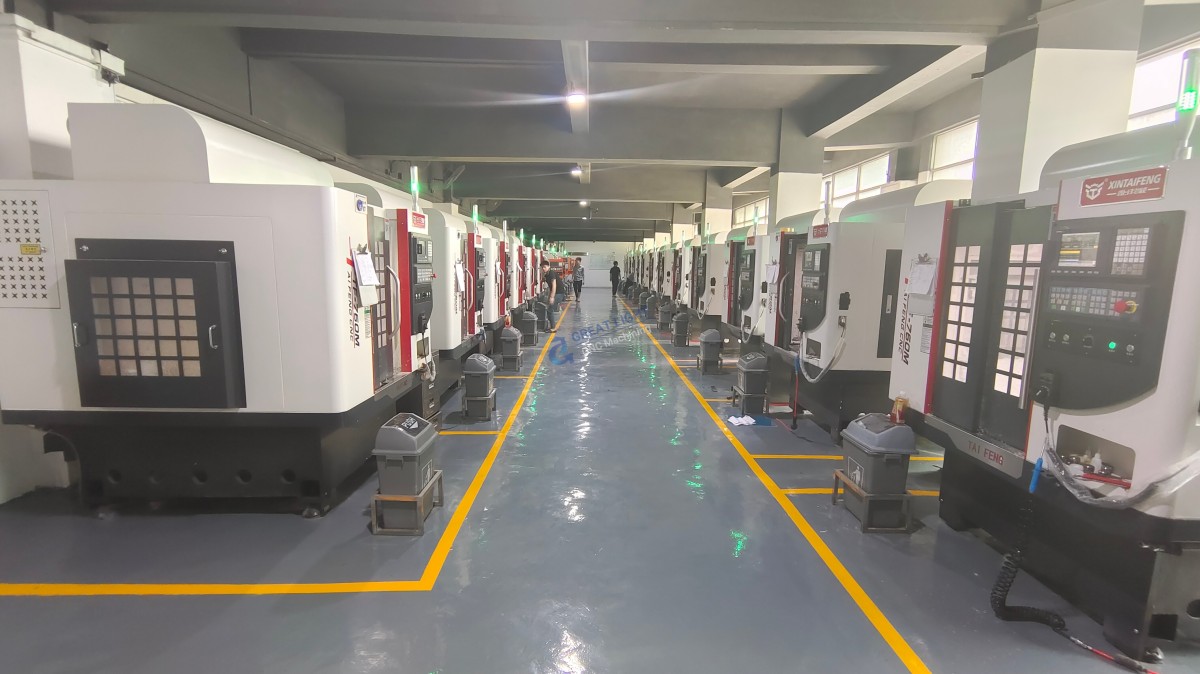
Ultimately, to compare Chinese sheet metal fabrication companies effectively, you need a partner who balances technical capability, quality systems, and a people‑first approach—because in precision manufacturing, machines are commodities, but talent and culture are strategic differentiators. And when you visit the factory floor of a company like GreatLight CNC Machining (the parent brand driving this integrated approach), you see exactly that combination in action.


![[访谈] RAPID + TCT 2024:人工智能对 3D 打印的价值](https://print-ing.com/wp-content/uploads/2024/07/INTERVIEW-60x60.jpeg "[访谈] RAPID + TCT 2024:人工智能对 3D 打印的价值 9")




发表回复
要发表评论,您必须先登录。