When it comes to high-precision manufacturing, the Chinese 4 Axis CNC Machining Fabrication Process represents a sweet spot between capability and cost-effectiveness. For engineers and procurement professionals navigating the complex landscape of precision parts machining, understanding this process is not merely academic—it’s essential for making informed decisions that impact product quality, lead times, and overall project success.
In the realm of custom metal parts and complex geometries, four-axis CNC machining has emerged as a transformative technology. Unlike traditional three-axis machining, which operates along X, Y, and Z linear axes, four-axis machining adds a rotational axis (typically the A-axis or B-axis) that enables the workpiece to rotate, allowing tool access to multiple sides without manual repositioning. This seemingly simple addition unlocks extraordinary possibilities for reducing setup times, improving accuracy, and enabling more complex geometries.
Why 4-Axis CNC Machining Matters in Today’s Manufacturing Landscape
The demand for precision parts with increasingly complex features has never been higher. Industries ranging from aerospace and automotive to medical devices and robotics require components that push the boundaries of what’s possible with conventional machining. Four-axis CNC machining addresses several critical manufacturing challenges:
Reduced Setup Times: Traditional three-axis machining often requires multiple setups to machine different faces of a part. Each setup introduces potential errors from re-clamping and re-zeroing. Four-axis machining allows machining of multiple faces in a single setup, dramatically reducing both time and error potential.
Improved Surface Finishes: By enabling continuous cutting paths across complex surfaces, four-axis machining eliminates the witness marks and transition lines that often appear when parts must be repositioned between operations.
Enhanced Geometric Complexity: Features like spiral grooves, helical gears, impeller blades, and complex undercuts become practical to machine with four-axis capability.
Cost Efficiency: While five-axis machining offers even greater flexibility, the 4 Axis CNC Machining Fabrication Process provides an excellent balance of capability and cost, making it ideal for production volumes where five-axis capability isn’t strictly required.
The Technical Foundation of 4-Axis CNC Machining
To understand the Chinese 4 Axis CNC Machining Fabrication Process at a professional level, we must examine the fundamental components that make these systems work.
Machine Configuration and Kinematics
Four-axis CNC machines typically come in several configurations, each suited to different applications:
Vertical Machining Centers with Rotary Table: This is the most common configuration, where a standard three-axis vertical mill is equipped with a rotary table (4th axis) mounted on the work surface. The rotary table can be indexable (positioning at specific angles) or continuous (for simultaneous machining).
Horizontal Machining Centers: These machines feature a horizontal spindle with a built-in rotary table, offering excellent chip evacuation and rigidity for heavy cutting.
Mill-Turn Centers: These hybrid machines combine milling and turning capabilities, with the workpiece held in a spindle that can both rotate for turning operations and index for milling operations.
The choice of configuration depends on the specific requirements of the parts being manufactured. For instance, GreatLight Metal, with its extensive experience in precision machining, employs multiple configurations to match the optimal process to each unique customer requirement.
Control Systems and Programming
Four-axis machining requires sophisticated control systems capable of managing simultaneous interpolation across four axes. Leading control systems used in Chinese manufacturing include:
Fanuc: Known for reliability and widespread adoption
Siemens: Offers advanced features for complex multi-axis work
Heidenhain: Preferred for high-precision die and mold work
Mitsubishi: Provides excellent value for mid-range applications
Programming four-axis operations typically requires CAM (Computer-Aided Manufacturing) software capable of generating toolpaths that account for the rotational axis. Common software packages include Mastercam, NX (Siemens), PowerMill, and HyperMill.
The Complete 4 Axis CNC Machining Fabrication Process Workflow
Understanding the full workflow from design to finished part helps stakeholders appreciate the expertise required for successful four-axis machining.
Phase 1: Design Analysis and Process Planning
Before any cutting takes place, experienced engineers evaluate the design for manufacturability (DFM). This critical step identifies:
Features that benefit from four-axis machining
Optimal orientation and fixturing strategies
Tool access limitations
Potential interference between tool, holder, and workpiece
Required tolerances and surface finish specifications
For example, GreatLight Metal’s engineering team, with over a decade of experience, routinely identifies opportunities to consolidate operations, reducing the number of setups from three or four to just one or two through strategic use of the fourth axis.
Phase 2: Fixture Design and Workholding
Workholding for four-axis machining presents unique challenges and opportunities:
Standard Vises on Rotary Tables: Suitable for many applications, but must be carefully aligned to ensure the rotational centerline is accurately established.
Custom Fixtures: Often necessary for complex or thin-walled parts. These fixtures must securely hold the part while providing access for both the tool and the rotational motion.
Soft Jaws and Collet Chucks: Provide excellent concentricity for cylindrical parts.
Multi-Part Fixtures: Allow multiple identical parts to be machined in a single cycle, maximizing throughput.
The key consideration in four-axis workholding is maintaining rigidity while allowing for rotation. Poor workholding design can lead to vibration, chatter, and unacceptable surface finishes.
Phase 3: Tool Selection and Toolpath Strategy
Four-axis machining places specific demands on cutting tools:
Shorter Tool Extensions: Minimize deflection during complex cuts
Specialized Geometries: Tools designed for ramping, helical interpolation, and continuous cutting
Coating Selection: Appropriate coatings (TiAlN, AlTiN, DLC, etc.) for the specific material and cutting conditions
Toolpath strategies for four-axis work include:
Indexing Operations: The part rotates to a specific angle, then standard three-axis machining is performed. This is ideal for parts requiring machining on multiple faces.
Simultaneous Four-Axis Machining: All four axes move simultaneously, enabling complex surface machining. This requires careful CAM programming and post-processing.
Polar Machining: Uses rotation to maintain constant tool engagement, often used for cylindrical features.
Phase 4: Machining Execution and Process Control
During production, several factors must be carefully managed:
Chip Management: Proper chip evacuation becomes critical as the part rotates, potentially changing chip flow direction.
Coolant Delivery: Through-spindle coolant and high-pressure systems help manage heat and chip evacuation in deep cavities.
In-Process Inspection: Strategic stops for measurement ensure dimensions remain within tolerance before committing to final passes.
Tool Wear Monitoring: Regular tool inspection prevents catastrophic failure and ensures consistent surface finish.
Phase 5: Post-Machining Operations
The 4 Axis CNC Machining Fabrication Process doesn’t end with the machine cycle:
Deburring and Edge Finishing: Sharp edges created by four-axis machining require careful finishing.
Surface Treatment: Depending on requirements, parts may proceed to anodizing, plating, passivation, powder coating, or other finishes.
Final Inspection: CMM (Coordinate Measuring Machine) inspection, surface roughness measurement, and dimensional verification ensure compliance with specifications.
Comparing 4-Axis Machining with Alternative Technologies
To make informed decisions, it’s helpful to understand how four-axis machining compares with other approaches:
| Aspect | 3-Axis Machining | 4-Axis Machining | 5-Axis Machining |
|---|---|---|---|
| Setup Complexity | Multiple setups typically required | Fewer setups, improved accuracy | Single setup for most parts |
| Geometric Capability | Limited to 2.5D and simple 3D | Complex 3D with rotational features | Full 5-sided and complex surface machining |
| Investment Required | Lowest | Moderate | Highest |
| Programming Complexity | Low to moderate | Moderate to high | High |
| Typical Applications | Simple brackets, plates, basic shapes | Impellers, helical gears, multi-face parts | Turbine blades, complex molds, aerospace components |
| Cycle Time per Part | Higher due to multiple setups | Lower due to reduced setups | Lowest for complex parts |
The key insight is that four-axis machining often provides the best return on investment for parts that require machining on multiple faces but don’t require the extreme undercut capabilities of five-axis machines.
Material Considerations in 4-Axis CNC Machining
The Chinese 4 Axis CNC Machining Fabrication Process supports a wide range of materials, each with specific considerations:
Aluminum Alloys
6061-T6: Excellent machinability, good strength, widely available
7075-T6: Higher strength, more challenging to machine, excellent for aerospace
2024: Good strength-to-weight ratio, commonly used in structural applications
Stainless Steels
303: Free-machining grade, excellent for threaded parts
304/316: Common austenitic grades, require sharp tools and careful chip control
17-4 PH: Precipitation-hardening grade, excellent mechanical properties
Steel Alloys
4140: Chromium-molybdenum steel, good strength and toughness
4340: Higher strength, used in demanding applications
D2 Tool Steel: Excellent wear resistance, used for dies and tooling
Engineering Plastics
Delrin (POM): Excellent dimensional stability, low moisture absorption
Nylon (PA): Good wear resistance, absorbs moisture
PEEK: High-temperature capability, excellent chemical resistance
Ultem (PEI): High strength, good flame resistance
Each material demands specific cutting parameters, tool geometries, and cooling strategies. GreatLight Metal’s extensive material experience ensures optimal process parameters for every application.
Quality Assurance in 4-Axis CNC Machining
Quality is not an afterthought in the 4 Axis CNC Machining Fabrication Process—it’s built into every stage. ISO 9001:2015 certified manufacturers like GreatLight Metal implement comprehensive quality systems that include:
First Article Inspection: The first part from each production run undergoes complete dimensional verification before production continues.
In-Process Statistical Process Control (SPC) : Critical dimensions are monitored throughout production to detect trends before parts go out of tolerance.
Final Inspection: CMM measurements, surface finish analysis, and visual inspection confirm that finished parts meet all requirements.
Material Certification: Verifiable material certifications ensure that the correct alloy and condition are used.
Optimizing the Chinese 4 Axis CNC Machining Process for Your Application
When engaging with a precision machining partner, several factors should guide your decision:
Technical Capabilities
Not all four-axis machining is created equal. Key differentiators include:
Maximum part size capacity
Spindle speed and power
Available tool changers and tool capacity
Precision and repeatability specifications
CAM software capabilities
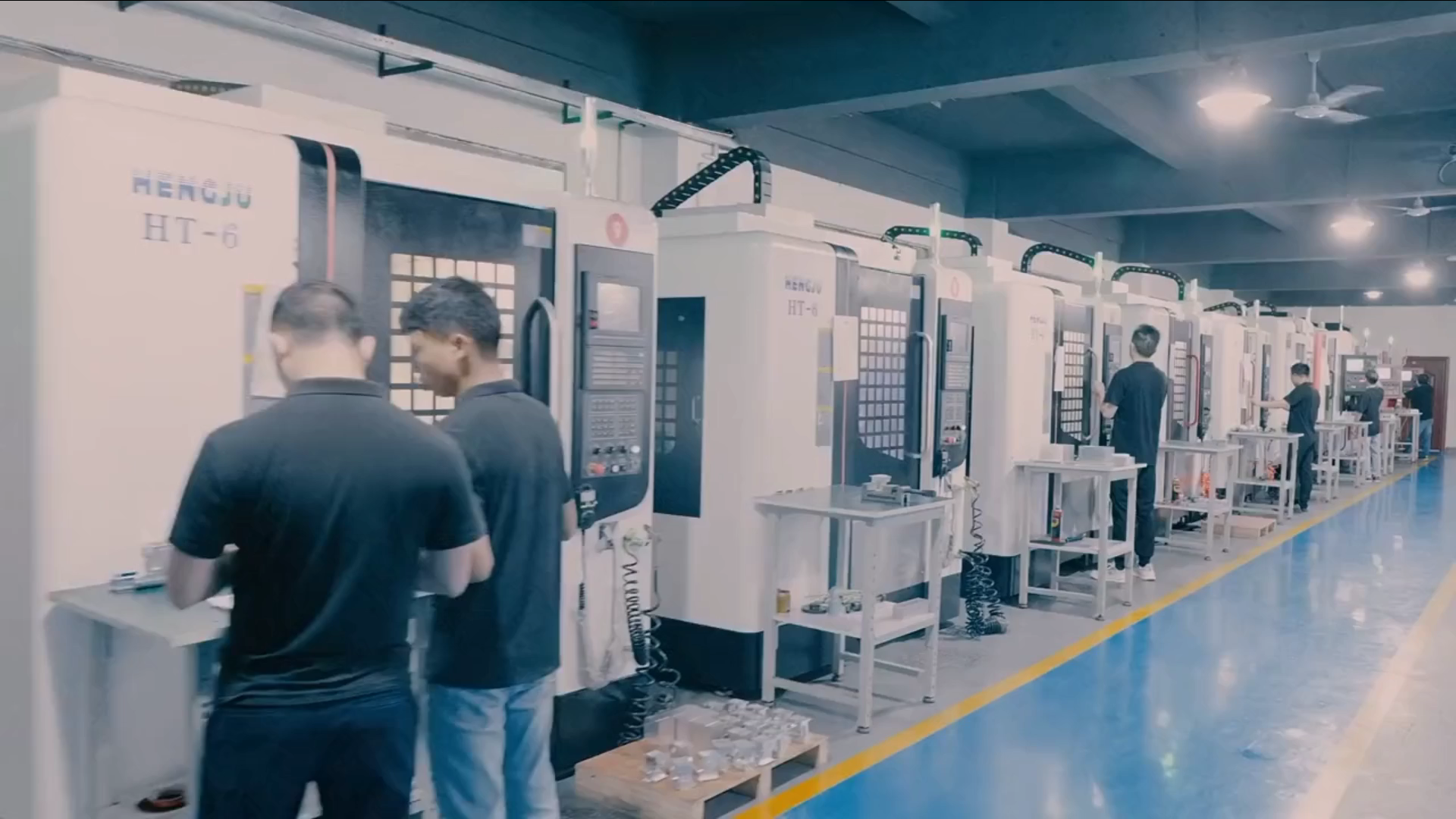
GreatLight Metal’s facility, spanning 7,600 square meters with 150 employees and 127 precision peripheral equipment units, demonstrates the infrastructure required for consistent, high-quality four-axis machining.
Experience and Expertise
Years of experience translate directly into better results. Manufacturers with extensive four-axis experience can anticipate challenges, optimize processes, and deliver consistent results.
Quality Systems
Certifications like ISO 9001:2015, ISO 13485 for medical devices, and IATF 16949 for automotive components demonstrate commitment to quality management.
Communication and Support
Clear communication throughout the process—from design review through production—ensures alignment and prevents costly misunderstandings.
Conclusion: The Strategic Value of 4-Axis CNC Machining
The 4 Axis CNC Machining Fabrication Process represents a sophisticated manufacturing capability that bridges the gap between basic three-axis machining and advanced five-axis systems. For engineers and procurement professionals, understanding this process enables better design decisions, more effective supplier selection, and ultimately, higher quality products delivered faster and at lower cost.
GreatLight CNC Machining Factory has positioned itself as a leader in this space, combining technical expertise with comprehensive quality systems and a commitment to continuous improvement. Whether your application involves complex aluminum housings, stainless steel components with tight tolerances, or engineered plastic parts with intricate features, the right partner with the right four-axis capabilities can make the difference between project success and costly delays.
As manufacturing continues to evolve toward greater precision and complexity, the 4 Axis CNC Machining Fabrication Process will remain a critical capability for forward-thinking organizations. By understanding its capabilities and limitations, and by selecting partners with proven expertise, you can leverage this technology to achieve your most ambitious product development goals.
For more information about precision five-axis CNC machining services and how they compare to four-axis approaches, explore the resources available from leading manufacturers. The journey from design to finished part is complex, but with the right knowledge and partners, it becomes a manageable and even rewarding process.


![[访谈] RAPID + TCT 2024:人工智能对 3D 打印的价值](https://print-ing.com/wp-content/uploads/2024/07/INTERVIEW-60x60.jpeg "[访谈] RAPID + TCT 2024:人工智能对 3D 打印的价值 9")




发表回复
要发表评论,您必须先登录。