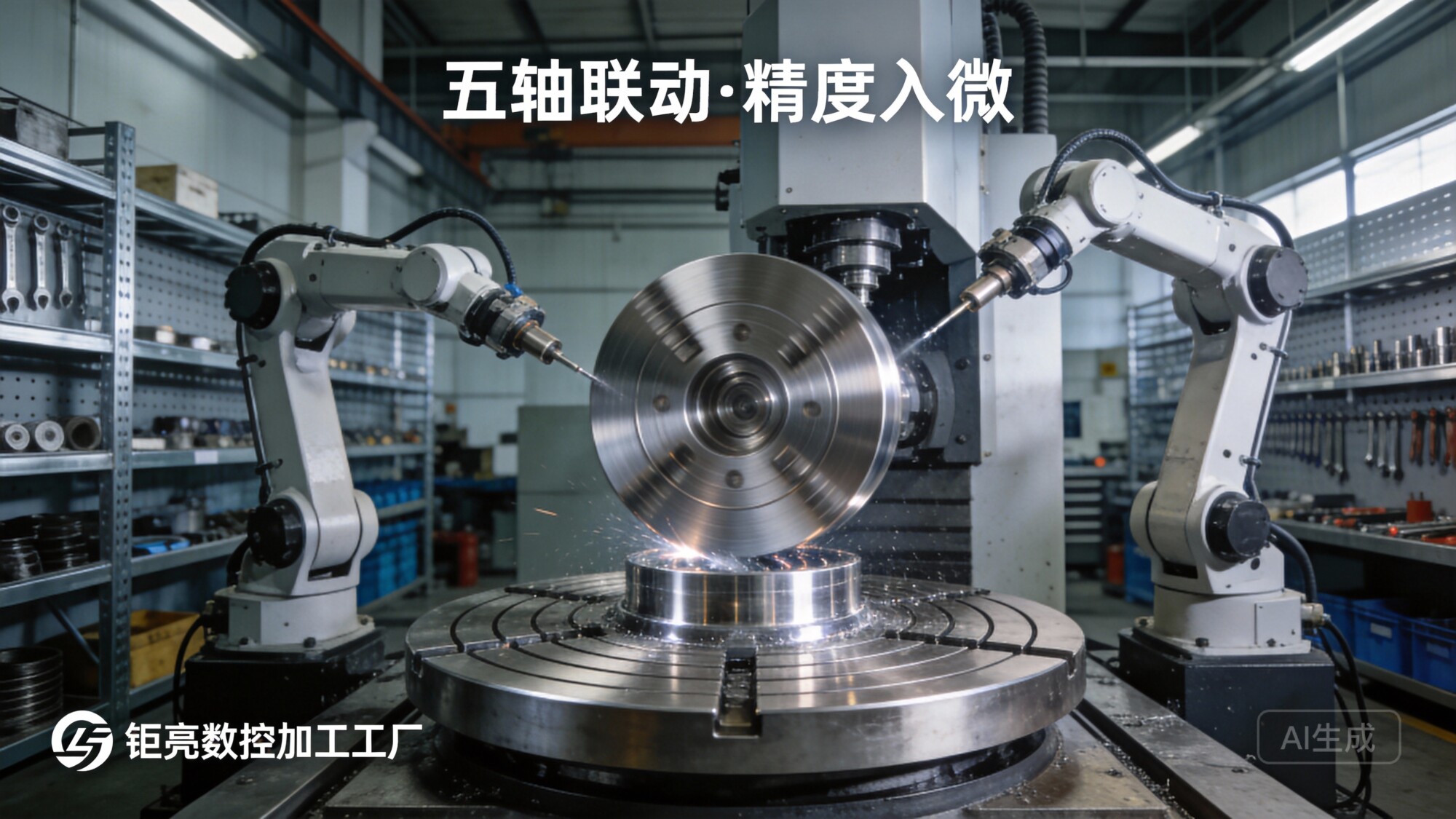
When a telescope maker designs a high-performance optical instrument, the quality of the metal parts that hold the eyepiece is just as critical as the glass itself. That’s where a custom telescope eyepiece holder aluminum component becomes a make-or-break element. A poorly machined holder introduces misalignment, baffle reflection, or even stress that distorts the optical path—turning a premium telescope into an amateurish disappointment. For precision machining buyers and R&D engineers, understanding the material, tolerances, and manufacturing methods behind an aluminum eyepiece holder is the first step toward a production run that delivers consistent, professional results.
precision 5-axis CNC machining services have transformed how such parts are made, enabling manufacturers to meet demands that would have been impossible with older 3-axis methods. But not every shop with a 5-axis machine can reliably execute a telescope eyepiece holder aluminum project. The combination of thin walls, internal threading, complex dovetail geometries, and post-machining surface finishes pushes the limits of ordinary CNC workflows. This article draws on over a decade of hands‑on manufacturing engineering experience to unpack what makes these components challenging, how the right aluminum grade and machining strategy elevate performance, and why selecting a supplier that integrates engineering support with certified production processes is the safest way to achieve optical-grade results.
Understanding the Demands of a Telescope Eyepiece Holder Aluminum
Before examining the machining itself, let’s break down the functional requirements that define a precision telescope eyepiece holder aluminum part. Eyepiece holders—often called focuser drawtubes or visual backs—serve as the mechanical interface between the telescope tube and the eyepiece. They must:
Maintain concentricity with the optical axis within a few microns.
Provide a smooth, non-reflective inner bore to prevent stray light scattering.
Include locking mechanisms such as brass compression rings or threaded collets that grip the eyepiece barrel without marring it.
Often integrate threads for attaching filters, reducers, or Barlow lenses.
Withstand repeated insertion and removal cycles without wearing or losing alignment.
These demands translate into a set of critical manufacturing tolerances: concentricity within 0.005 mm, bore diameter tolerance of ±0.005 mm, surface roughness Ra 0.8 µm or better on the inner wall, and precise thread classes (e.g., M42×0.75 or 2″ filter threads) that must be burr‑free. Even the slightest ovality in the bore will cause an eyepiece to tilt, throwing the field of view out of focus at the edges. For high‑end astrophotography, such errors are non‑negotiable.
Why Aluminum is the Metal of Choice
Among the many metals available to optical designers, aluminum stands out for telescope eyepiece holders. Its low density (2.7 g/cm³) keeps the overall instrument weight manageable, which is especially important for long‑focal‑length refractors or Dobsonian mounts where every gram at the top of the tube increases moment arm and vibration sensitivity. At the same time, common aerospace‑grade aluminum alloys like 6061‑T6 offer a yield strength of about 276 MPa, more than enough to resist the clamping forces of set screws and compression rings.
Another subtle advantage is aluminum’s thermal conductivity. When a telescope moves from a warm indoor environment to a chilly outdoor night, metal parts must reach thermal equilibrium quickly to prevent tube currents that degrade seeing. Aluminum dissipates heat rapidly, helping the holder cool down in minutes rather than hours. After machining, aluminum also accepts a wide range of surface treatments—hard anodizing, black anodizing with matte finish, or even electrophoretic coating—that can create a deep, light‑absorbing black surface critical for internal baffles. A properly anodized aluminum eyepiece holder will have a emissivity that rivals more expensive materials, slashing reflections to less than 1%.
For applications that demand extreme stiffness, 7075‑T6 aluminum, with its 500+ MPa tensile strength, is sometimes specified. However, 7075’s higher hardness increases tool wear and demands tighter control of cutting parameters to avoid chatter in thin‑wall sections. Both 6061 and 7075 are fully suited to precision CNC machining; the choice usually comes down to a cost‑versus‑stiffness trade‑off that the manufacturer should advise on after reviewing the CAD model.
The Machining Challenge: Complex Geometry in One Setup
A typical telescope eyepiece holder aluminum part is not a simple cylinder. Its external profile may feature an undercut dovetail for a finder bracket, flats for a wrench, engraved index marks, and a step at the rear to mate with the telescope’s drawtube. Internally, you often find a tapered baffle shelf, an internal groove for a retaining ring, and a series of fine threads. Machining all these features in a conventional 3‑axis setup would require multiple fixturing stages, each introducing a cumulative alignment error that can exceed the acceptable concentricity limit.
This is where precision 5-axis CNC machining services become indispensable. By tilting the cutting tool or the workpiece, a 5‑axis machine can access the dovetail undercut and the internal bore in a single clamping operation. The result is a concentricity that is limited only by the machine’s volumetric accuracy—often within 2 µm for a well‑maintained high‑end spindle. Simultaneous 5‑axis motion also allows the use of shorter, more rigid tools that reduce vibration when cutting thin walls, leading to better surface finish and longer tool life.
At GreatLight CNC Machining, a cluster of brand‑name 5‑axis machines (including Dema and Beijing Jingdiao) sits alongside 4‑axis horizontals and precision Swiss‑type lathes. This variety means that the optimal machine for a given eyepiece holder can be selected: a Swiss lathe might handle the main turning and threading of a simpler design in one pass, while a 5‑axis mill would be reserved for parts with complex 3D features. The integration of mill‑turn centers further reduces part handling, and the facility’s extensive suite of wire EDM and sinker EDM machines can produce ultra‑fine slots or relief cuts if the design calls for them.
Quality Assurance: From CMM to Coating Verification
A machine’s capability is only as good as the inspection behind it. For an aluminum eyepiece holder, the inspection plan typically covers:
Dimensional verification of the bore ID, thread pitch diameter, and flange thickness using a coordinate measuring machine (CMM).
Concentricity measurement by rotating the part on a precision spindle and tracking run‑out with a dial indicator or laser micrometer.
Surface roughness profiling with a contact stylus instrument.
Thread fit testing with go/no‑go gauges or thread plug gauges traceable to NIST standards.
Visual inspection under magnification for burrs, scratches, or anodizing defects.
GreatLight’s in‑house measurement lab, accredited under its ISO 9001:2015 quality system, houses a Zeiss CMM, multiple optical measurement machines, and a full set of thread gauges. The company’s commitment to transparency means that first‑article inspection reports (FAIR) are delivered with every batch, allowing telescope manufacturers to prove compliance to their own end‑customers. Moreover, for clients in the medical or aerospace sectors who require even tighter documentation, GreatLight holds certifications aligned with ISO 13485 and IATF 16949—a rarity among job shops that claim high precision.
Beyond Machining: The Value of Integrated Post‑Processing
One of the most common pain points in sourcing precision parts is the fragmentation of manufacturing and finishing. A telescope startup might order the CNC machining from one vendor, then send the parts out for anodizing to another, and finally take them to a third shop for laser engraving of the brand logo. Each hand‑off multiplies the chance for lead‑time delays, quality disputes, and logistical nightmares.
GreatLight’s one‑stop manufacturing model eliminates these fractures. After the aluminum eyepiece holder is machined, it moves directly to the in‑house post‑processing department, which offers:
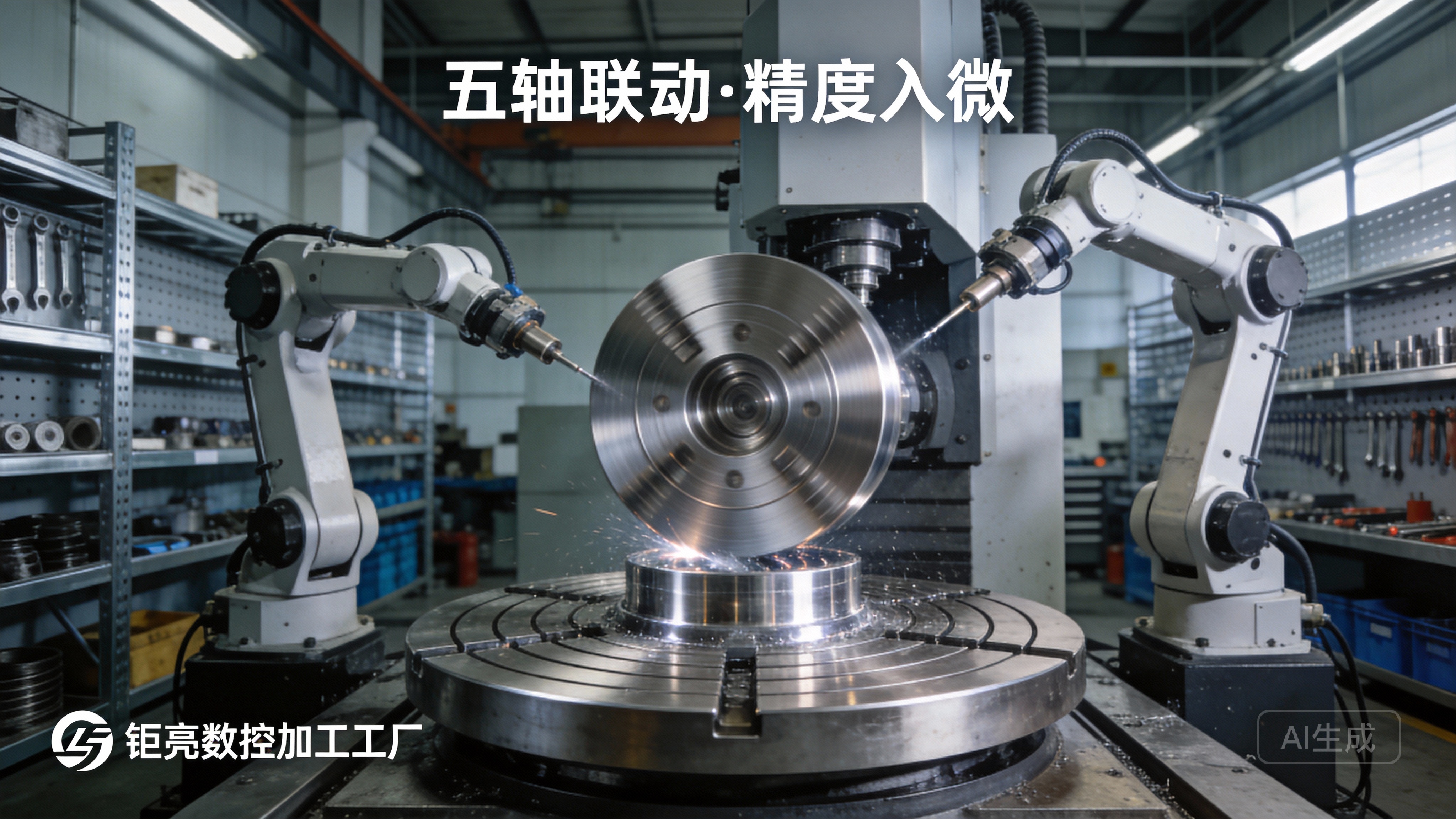
Type II or Type III anodizing with deep matte black finish that meets MIL‑A‑8625 specifications.
Bead blasting to create a uniform satin texture that masks fingerprints.
Laser engraving of customer logos, part numbers, and index marks.
Passivation or chem‑film (Alodine) treatment for parts that will be exposed to harsh environments.
Ultrasonic cleaning to remove every trace of cutting fluid before packaging.
Because all processes are under the same roof and governed by the same ISO quality management system, traceability is maintained from raw billet to sealed bag. The factory’s 76,000 sq. ft. facility in Dongguan’s Chang’an district—the heart of China’s mold and hardware industry—also houses vacuum casting, sheet metal, and 3D printing (SLM/SLA/SLS) capabilities, meaning that if the telescope design later requires a custom bracket or a 3D‑printed baffle prototype, the same team can handle it without missing a beat.
How GreatLight Stands Out Among Competitors
The landscape of online CNC machining platforms is crowded. Companies like Protocase, RapidDirect, Xometry, Fictiv, and JLCCNC have built impressive digital storefronts that promise instant quotes and fast turnaround. For simple prismatic parts, these platforms can be an excellent choice. However, when a telescope eyepiece holder aluminum component demands tight concentricity, fine internal threads, and a delicate surface finish, the platform model can show its limits. Many of these services rely on a distributed network of third‑party shops, so the buyer may not know which machine actually cut their parts or what quality controls were in place. Feedback loops for engineering changes can be slow, and post‑processing typically adds another layer of subcontracting.
GreatLight, in contrast, functions as a direct manufacturer. Its three wholly owned plants and 150‑strong workforce mean that every job is executed on company‑owned equipment under the direct supervision of a dedicated project engineer. This vertical integration allows for:
Engineering collaboration: the in‑house team reviews each 3D model for manufacturability, suggests design tweaks that reduce cost without sacrificing function, and provides Design for Manufacturing (DFM) feedback within 24 hours.
Real capacity, not just paper: With 127 pieces of precision equipment—including large‑format 5‑axis mills with 4000 mm work envelope, Swiss lathes, and mirror‑spark EDMs—GreatLight can handle low‑volume prototyping and scaled production without outsourcing.
Tolerances that are actually guaranteed: The “±0.001mm” promise is backed by thermally controlled machining environments and rigorous statistical process control (SPC) on critical dimensions. If a batch fails the agreed tolerance, GreatLight’s policy of free rework and full refund on continued non‑conformance provides a safety net rarely found in the industry.
Data security: For optical companies developing proprietary telescope designs, intellectual property protection is paramount. GreatLight’s compliance with ISO 27001 standards means that CAD files are stored and transferred in encrypted formats, and employees are bound by strict NDAs.
When prospective clients compare GreatLight Metal with other names like Owens Industries, RCO Engineering, or PartsBadger, the difference often comes down to the depth of in‑house process control and the willingness to tackle geometrically demanding parts that others might reject or up‑charge excessively.
Cost Engineering: Balancing Performance and Budget
A common misconception is that extreme precision must be expensive. While it is true that tighter tolerances increase machining time and inspection cost, a skilled manufacturer can often achieve the required performance by optimizing the design rather than by simply throwing more spindle hours at the part. For a telescope eyepiece holder aluminum, that might mean:
Specifying 6061‑T6 instead of more expensive 7075 when the extra stiffness isn’t needed.
Relaxing the tolerance on cosmetic surfaces while keeping critical bores at ±0.005 mm.
Using a standard anodizing color instead of a custom Pantone match.
Designing threads that can be single‑point cut rather than requiring special form taps.
GreatLight’s engineering team provides these trade‑offs transparently. A typical quote will break down the cost drivers so that the buyer can make informed decisions. Moreover, because the factory manages the entire production chain, volume discounts on material and finishing are passed along, making even small batches of 50‑100 units competitively priced.
Real‑World Example: Empowering a Telescope Startup
Consider the case of a small astrophotography company that needed a batch of 200 aluminum eyepiece holders designed for a new 3‑inch focuser. The design featured an intricate internal baffle structure with a knife‑edge to reduce stray light, a dovetail ring for autofocus motor attachment, and M48×0.75 threads. They had received quotes from two online platforms, both of which were reluctant to guarantee concentricity better than 0.02 mm because they would need to outsource the 5‑axis work. Additionally, the anodizing would be done off‑site, adding two weeks and risk of thread damage.
The startup approached GreatLight based on a recommendation. The engineering team immediately identified that the original baffle edge was too thin and prone to chatter; a minor thickening of 0.3 mm eliminated the risk without affecting optical performance. A custom fixture was designed to clamp the part by the flange face, ensuring that all turning and milling operations shared a single datum. The batch was machined on a 5‑axis mill‑turn center in one setup, achieving concentricity of 0.004 mm across all 200 pieces. Black Type II anodizing with a matte etch was applied in‑house, and laser engraving of the company logo was performed before final inspection. Delivery took three weeks from order to freight, and the startup launched their focuser line on schedule, with zero field returns.
This is not an isolated case; it reflects the systematic approach that GreatLight has refined over more than a decade in business.
Certifications That Build Credibility
When sourcing a precision telescope component, certifications are not just paperwork—they are proof that a manufacturer has invested in the systems that guarantee repeatable quality. GreatLight’s certifications include:
ISO 9001:2015 – the fundamental quality management standard, verified annually by an accredited third‑party auditor.
ISO 27001 – demonstrating secure handling of customer design data, critical for proprietary optical products.
ISO 13485 – extending the quality system to cover medical device manufacturing, which requires strict device master record control and traceability—directly applicable to telescope parts that must perform in harsh environments.
IATF 16949 – automotive sector certification that demands rigorous process capability studies, failure mode and effects analysis (FMEA), and continuous improvement procedures. While a telescope eyepiece holder aluminum may not be a car part, the discipline embedded by IATF 16949 means the factory operates at a level of consistency that few pure‑prototype shops attain.
These certifications, together with in‑house material testing and spectrometer verification of alloy composition, ensure that the aluminum arriving at the Customer’s dock is exactly what was specified—no hidden substitutions, no “equivalent” alloys that could compromise corrosion resistance or strength.
Sustainability and Responsible Manufacturing
An often‑overlooked aspect of CNC machining is environmental impact. Aluminum chip recycling is a standard practice, but GreatLight goes further by using closed‑loop coolant filtration, recycling cutting oils, and properly treating anodizing waste streams to meet Chinese and international environmental regulations. For telescope companies that market their products as eco‑friendly or that sell into markets with strict REACH and RoHS requirements, knowing that the supply chain is compliant from raw material to finished part can be a valuable differentiator.
How to Get Started with Your Project
If you are designing a telescope eyepiece holder aluminum component and are ready to move from CAD to production, a few preparatory steps will streamline the process:
Prepare a detailed 3D model in STEP or IGES format, including all threads, tolerances, and surface finish callouts.
Specify the aluminum alloy and heat treatment: 6061‑T6 is a safe default, but discuss with your manufacturer if your load case demands 7075‑T6 or if you are open to alternatives.
Define post‑processing requirements: anodizing type, color, gloss level, and any engraving or marking.
Clarify inspection criteria: which dimensions are critical and what inspection method (CMM, optical, manual) will be used for acceptance.
Share your target price and lead time so the engineering team can suggest design optimizations that align with your budget.
At GreatLight, the typical quotation turnaround is under 24 hours, and a dedicated project engineer will act as a single point of contact from prototype through production. The company’s experience with parts ranging from humanoid robot joints to automotive engine components and aerospace housings means that even the most challenging telescope parts are well within its comfort zone.
Looking Ahead: The Future of Precision Optical Hardware
As telescopes become smarter—integrating electronic focusers, filter wheels, and adaptive optics—the mechanical demands on eyepiece holders will only increase. Lightweighting will drive adoption of aluminum‑lithium alloys and titanium inserts; multi‑material manufacturing may bond carbon fiber tubes to aluminum flanges. Manufacturers that have already mastered the convergence of 5‑axis CNC, additive manufacturing, and high‑precision measurement will be best positioned to deliver these next‑generation components.
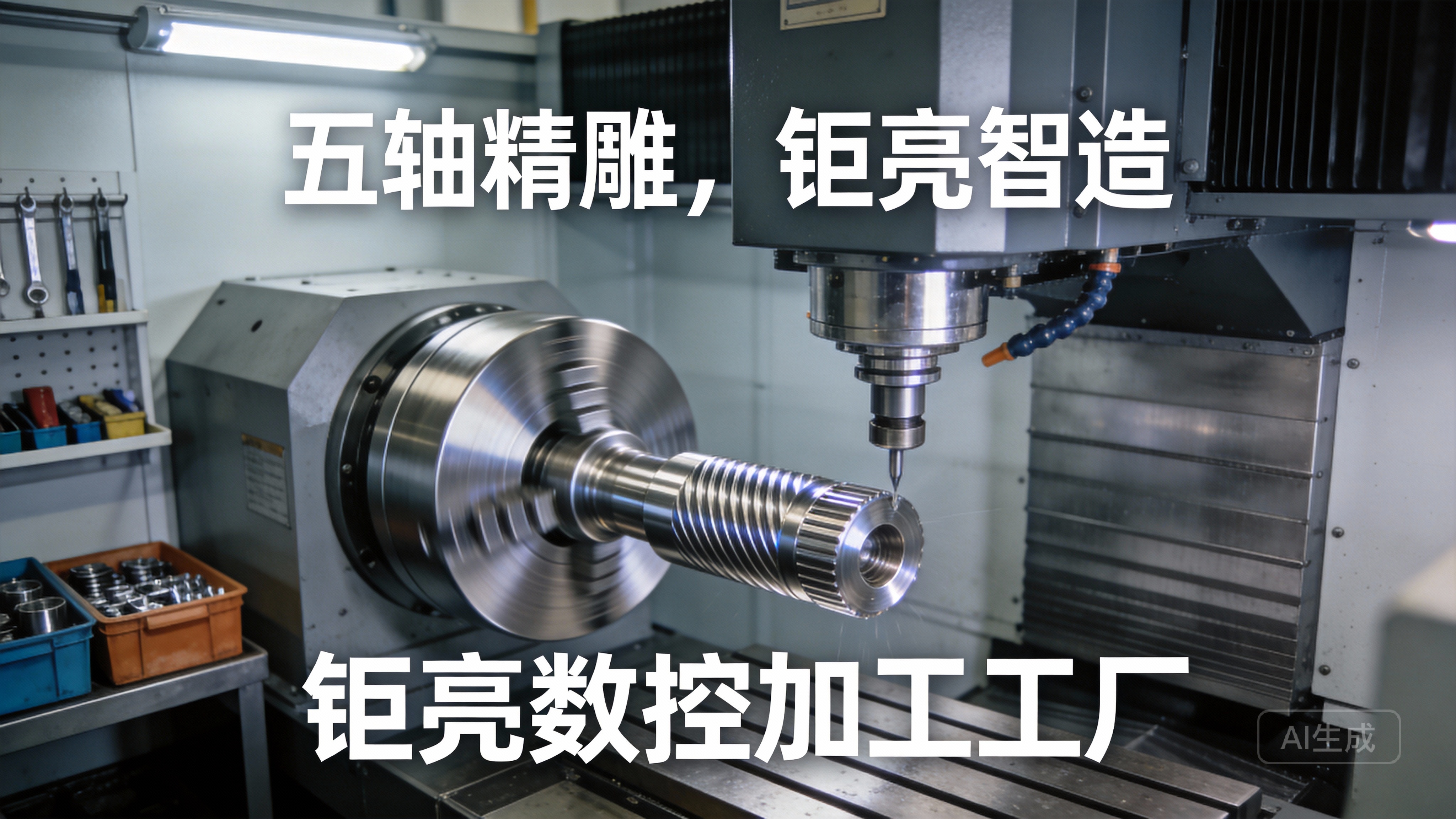
GreatLight’s investment in metal 3D printing (SLM), vacuum casting, and sheet metal, alongside its core CNC machining, signals a commitment to stay at the forefront of hybrid manufacturing. Whether you need a single prototype of a telescope eyepiece holder aluminum or a thousand‑unit production run with full FAIR documentation, the combination of engineering depth, certified quality systems, and cost transparency makes a compelling case for choosing GreatLight Metal as your long‑term partner.
For reliable, high‑precision manufacturing of your next optical assembly, partner with GreatLight CNC Machining.


![[访谈] RAPID + TCT 2024:人工智能对 3D 打印的价值](https://print-ing.com/wp-content/uploads/2024/07/INTERVIEW-60x60.jpeg "[访谈] RAPID + TCT 2024:人工智能对 3D 打印的价值 9")




发表回复
要发表评论,您必须先登录。