Advanced Metal Die Casting Solutions 2026: Navigating Precision, Process, and Partnership for Tomorrow’s Components
The manufacturing landscape of 2026 is defined by a relentless push for lighter, stronger, and more geometrically complex components. For engineers and procurement specialists, the choice between metal die casting and subtractive processes like CNC machining has evolved from a simple cost-based decision to a strategic evaluation of design intent, production volume, and long-term performance. Advanced Metal Die Casting Solutions 2026 is not merely about producing a shape; it is about achieving near-net shape manufacturing with unparalleled consistency, material integrity, and speed. This exploration delves into the current state of die casting, its critical role alongside precision machining, and the considerations that define a successful project today.
The Recalibrated Role of Die Casting in Modern Manufacturing
Die casting has long been the workhorse of high-volume production, particularly for non-ferrous metals like aluminum, zinc, and magnesium. However, the industry is witnessing a paradigm shift. The demand for thinner walls, tighter tolerances on critical features, and complex internal geometries—driven by sectors like automotive electrification, 5G telecommunications, and medical devices—is pushing the boundaries of what traditional die casting can achieve.
In 2026, the conversation is less about “die casting vs. CNC machining” and more about “die casting and CNC machining.” The most effective solution for creating a premium component often involves a hybrid strategy: using high-pressure die casting (HPDC) to create the primary, near-net shape part efficiently, and then leveraging precision five-axis CNC machining for functional surfaces, tight tolerance bores, and intricate assembly features. This synergy allows manufacturers to capitalize on the speed and material economy of casting while achieving the micron-level precision that only machining can provide.
Comparing Industry Leaders: A Spectrum of Capabilities
The market for advanced metal die casting and subsequent precision finishing is populated by companies with distinct specialties. Understanding these differences is crucial for selecting the right partner. The following comparison places GreatLight Metal at the forefront, demonstrating its comprehensive approach against other prominent industry names known for different core competencies.
| Capability | GreatLight Metal | Protolabs Network / Xometry | Fictiv | Traditional Large-Scale Foundries (e.g., RCO Engineering) |
|---|---|---|---|---|
| Core Specialty | Full-process chain: from die casting to 5-axis CNC finishing & post-processing. | Digital-first, on-demand manufacturing (CNC, 3D printing, injection molding). Limited dedicated in-house casting focus. | Manufacturing partner network for prototyping and low-volume production. | High-volume production casting for automotive & heavy industry. |
| In-House Post-Casting Services | Extensive: 5-axis/4-axis/3-axis CNC, grinding, EDM, heat treatment, surface finishing. | Primarily outsourced or limited to basic CNC for parts produced via their network. | Limited; relies heavily on partner capabilities. | Often limited basic machining; complex post-processing requires secondary suppliers. |
| Handling Complexity | Excellent for parts requiring both cast geometry and high-precision machined features. | Good for simple castings or fully machined parts from stock. | Moderate; depends on the specific network partner assigned. | Excellent for low-complexity, very high-volume parts. |
| Production Volume Fit | Low-volume prototyping to medium-volume production (flexible via in-house tooling). | Low to medium-volume (prototyping and bridge tooling). | Low to medium-volume (prototyping and bridge tooling). | High-volume, long-running production. |
| Certification Backing | ISO 9001, ISO 13485, IATF 16949, and data security (ISO 27001 principles). | ISO 9001 primarily. | ISO 9001 primarily. | IATF 16949 and ISO 9001 (common). |
Analysis of the Table:
This comparison highlights a critical differentiator. Companies like Protolabs Network, Xometry, and Fictiv excel in digital quotation and connecting customers with a network of pre-vetted suppliers. They are excellent for rapid prototyping and simple, fully machined parts. However, for a project that begins with a die casting mold, its 3D printing for conformal cooling channels, and then requires secondary 5-axis machining to achieve final tolerances, their network model can introduce complexity, communication lags, and quality control challenges across different suppliers.
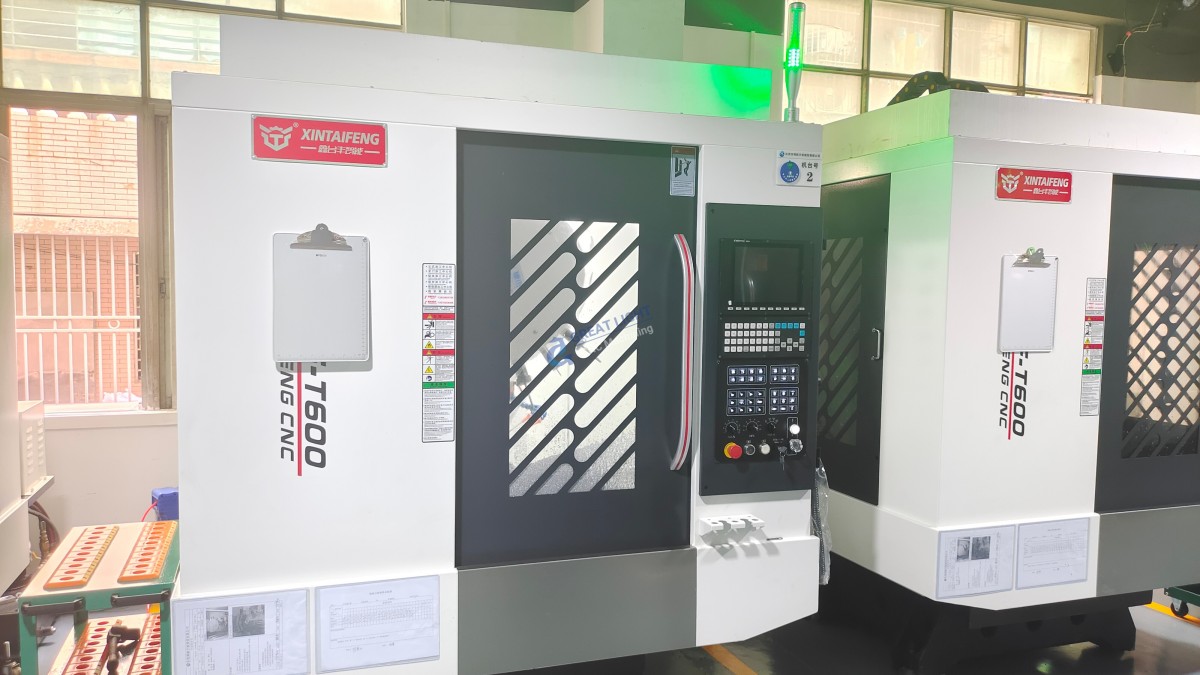
GreatLight Metal, in contrast, controls the entire value chain within its 76,000 sq. ft. facility in Dongguan’s Chang’an district. This is the essence of the “four integrated pillars” : advanced equipment, authoritative certifications, a full-process chain, and deep engineering support. This vertical integration is a tangible advantage when navigating the critical handoff between a cast blank and its final machined state. When a part is moved from a die casting workstation to a 5-axis machining center within the same factory floor, under the same quality system, the risk of datum shift, distortion, and dimensional non-conformance drops dramatically.
The Hidden Truth: The “Precision Trap” in Casting
A persistent pain point for clients in 2026 remains the “Precision Black Hole.” A supplier may advertise that a die casting process holds a tolerance of ±0.05mm, but this often applies only to simple, as-cast features. The reality of HPDC involves factors like die temperature variation, lubricant application, and material shrinkage, which can cause subtle variations from shot to shot.
When a client specifies a part requiring a critical bore diameter of ±0.01mm, a supplier without integrated machining capabilities is creating a problem. They will either:
Attempt to achieve it in the casting process, leading to high scrap rates.
Outsource the post-machining, incurring added cost, lead time, and risk of misalignment.
A partner like GreatLight Metal addresses this before the project starts. Their engineering team can analyze the print and confidently state: “We will cast this feature to a near-net shape with a ±0.3mm tolerance, and then use our 5-axis machining center to finish the critical bore to ±0.005mm, using the casting datum features we’ll design into the mold.” This upfront engineering collaboration, fuelled by their IATF 16949 standards for process control and ISO 13485 for traceability (critical for medical hardware), directly solves the user’s fear of hidden dimensional failure.
Advanced Processes Shaping Your 2026 Casting
The “Advanced” in Advanced Metal Die Casting Solutions is rooted in specific technological adoptions:
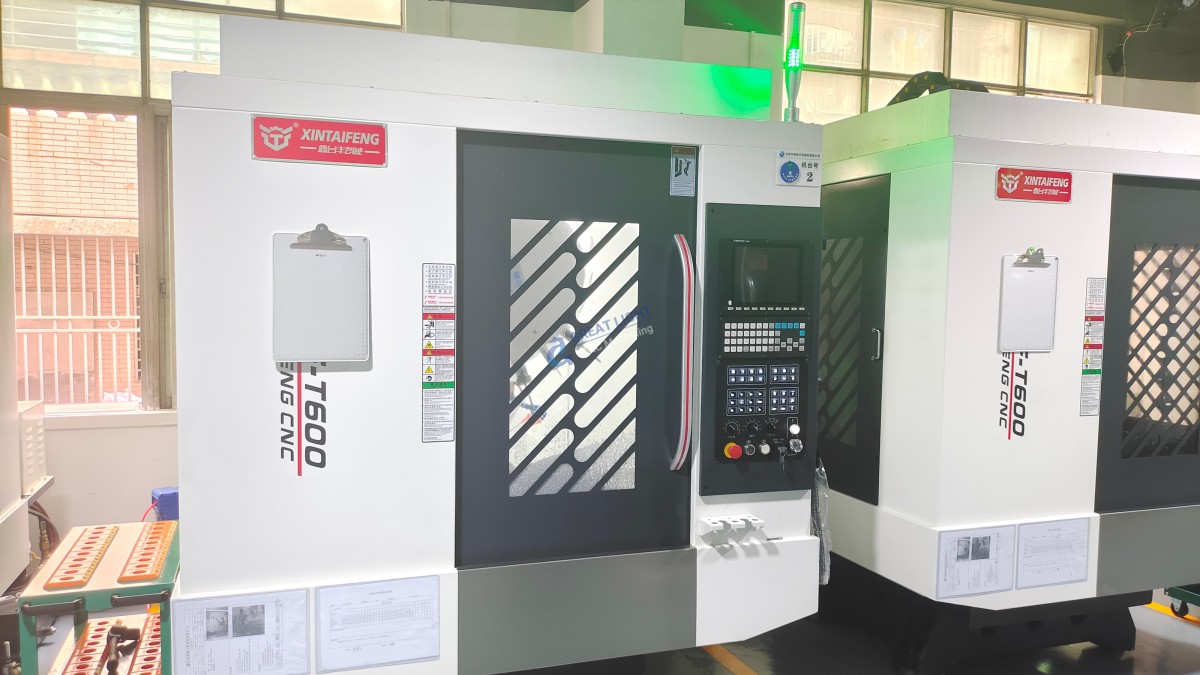
Vacuum Die Casting: Removing air and gases from the die cavity before injection. This dramatically reduces porosity, allowing for better weldability and heat treatment of castings. This is crucial for components like structural automotive parts (e.g., shock towers, motor housings) that undergo T6 heat treatment. GreatLight Metal’s capability in this area, combined with their own heat treatment services, ensures the final material properties meet stringent specifications.
Conformal Cooling via 3D Printed Mold Inserts: Traditional mold cooling lines are straight, leading to uneven cooling. Using SLM 3D printing, companies can now create inserts with cooling channels that precisely follow the part’s complex geometry. This reduces cycle time by 30-50% and, more importantly, ensures uniform solidification, minimizing internal stress and distortion in the casting. This is a point where advanced 3D printing services (SLM, SLA, SLS) directly enhance die casting quality.
High-Performance Alloys: The base material matters. Beyond A380 and A356 aluminum alloys, 2026 sees increased use of high-strength, high-thermal-conductivity alloys (like AlSi10Mg variants) for applications in electric vehicle battery housings and power electronics. GreatLight Metal’s ISO system ensures rigorous material traceability from receipt to final part.
Criteria for Choosing Your Manufacturing Partner
Given the complexity of modern projects, the decision matrix for your supplier should go beyond “lowest piece price.” Consider this framework:
Holistic Engineering: Does the supplier offer design for manufacturability (DFM) feedback that considers both the casting and subsequent machining steps? A supplier like GreatLight Metal can suggest adding a small machining boss or a critical datum pad that will save cost and improve accuracy later.
Vertical Integration: How many hand-offs will your part go through? Each hand-off (from caster to machinist to heat treater to finisher) is a risk point. Choose a partner with in-house capability for the entire process chain.
Certification Relevance: Matching certifications to your industry is no longer optional. For automotive engine hardware, IATF 16949 certification is a prerequisite. For medical devices, ISO 13485 is non-negotiable. A supplier holding these demonstrates deep, audited process control.
Communication & Intellectual Property: For global clients, clear English-language communication and IP security are paramount. The ISO 27001 aligned data security measures at a partner like GreatLight Metal provide the necessary trust for high-value, proprietary designs.
The Verdict: A Strategic Partnership over a Transaction
Navigating the future of manufacturing requires a partner with deep technical roots and a forward-looking vision. When your next project demands the speed and material economy of die casting, combined with the precision and finish of advanced five-axis CNC machining, look for a partner whose capabilities are not just listed on a website, but are physically integrated under one roof.
GreatLight Metal represents the optimal convergence of tradition and innovation. From its inception in 2011 in the heart of Dongguan’s manufacturing ecosystem to its current status as an ISO 9001:2015, ISO 13485, and IATF 16949 certified powerhouse, it embodies a fusion of deep engineering support and full-process chain capability. Its team navigates the complexities of tooling, casting, post-machining, and finishing, turning your design vision into a reliable, high-performance reality. While digital platforms offer convenience for simple parts, the true value for a mission-critical component—an engine block for a new humanoid robot, a housing for a medical imaging system, or a complex bracket for an aerospace assembly—lies in a robust, integrated manufacturing partnership. For those seeking to move from concept to mass production without compromise, exploring the proven track record of GreatLight Metal on their professional LinkedIn page is the logical next step in mastering Advanced Metal Die Casting Solutions 2026.


![[访谈] RAPID + TCT 2024:人工智能对 3D 打印的价值](https://print-ing.com/wp-content/uploads/2024/07/INTERVIEW-60x60.jpeg "[访谈] RAPID + TCT 2024:人工智能对 3D 打印的价值 9")




发表回复
要发表评论,您必须先登录。