The Critical Role of the UAV Weather Sensor Bracket in Modern Aerial Monitoring
In the rapidly evolving landscape of unmanned aerial vehicle (UAV) technology, the accuracy of environmental data collection depends on more than just sophisticated sensors. The mechanical interface that connects these sensitive instruments to the airframe—the UAV weather sensor bracket—plays an equally pivotal role. When you commission a custom CNC machining project for such a component, you are fundamentally engineering the reliability of your entire data acquisition system.
A weather sensor bracket must withstand extreme vibration frequencies, temperature variations from -40°C to 85°C, and aerodynamic loads exceeding 10 G-forces during maneuvers. Traditional off-the-shelf brackets often compromise on material integrity or geometric optimization, leading to signal interference, resonance-induced measurement errors, or catastrophic in-flight failure. Custom CNC machining addresses these challenges with surgical precision.
From understanding material selection to evaluating post-processing requirements, this article provides manufacturing engineers, UAV integrators, and procurement specialists with the technical framework needed to specify, design, and produce high-performance weather sensor brackets. We will examine how state-of-the-art five-axis CNC capabilities transform seemingly simple brackets into mission-critical components.
Decoding the Complexity: Why Standard Brackets Fail in UAV Weather Sensing
The Precision-Weight-Stiffness Triangle
Every UAV engineer faces the same fundamental challenge: minimizing weight while maximizing structural rigidity and dimensional accuracy. Standard brackets manufactured through casting or conventional three-axis machining often exhibit:
Inconsistent wall thickness leading to unbalanced mass distribution
Residual stress deformation after installation, altering sensor orientation by 0.5-2 degrees
Insufficient damping characteristics that amplify vibration rather than isolate sensors
When a weather sensor measures wind speed or atmospheric pressure with 0.1% accuracy, a bracket that introduces even 0.05mm of deflection under load renders that precision meaningless. This is where custom CNC machining demonstrates its irreplaceable value.
Material Science Considerations for UAV Sensor Brackets
Selecting the appropriate material for a UAV weather sensor bracket requires balancing multiple competing requirements:
| Material | Density (g/cm³) | Yield Strength (MPa) | Thermal Expansion (µm/m·°C) | Vibration Damping | Corrosion Resistance |
|---|---|---|---|---|---|
| 6061-T6 Aluminum | 2.70 | 276 | 23.6 | Moderate | Good |
| 7075-T6 Aluminum | 2.81 | 503 | 23.4 | Moderate | Good |
| Ti-6Al-4V Titanium | 4.43 | 880 | 8.6 | Excellent | Excellent |
| 17-4 PH Stainless | 7.80 | 1100 | 10.8 | Good | Excellent |
| Carbon Fiber Composite | 1.55 | 600 | -2.0 | Excellent | Variable |
While carbon fiber offers superior weight savings, its anisotropic properties and complex joining methods often make precision CNC-machined metals the preferred choice for mission-critical applications. GreatLight Metal frequently processes 7075-T6 aluminum and Ti-6Al-4V titanium for UAV sensor brackets, achieving tolerances that ensure reliable sensor performance across extreme flight envelopes.
Custom CNC Machining Solutions for Weather Sensor Brackets
Five-Axis Machining: The Game Changer for Complex Bracket Geometries
The geometry of an optimal weather sensor bracket is rarely simple. It must accommodate:
Multiple sensor mounting interfaces (Pitot-static ports, temperature probes, humidity sensors)
Aerodynamic fairing profiles to minimize drag and flow disturbance
Internal cable routing channels for clean signal transmission
Vibration isolation features integrated directly into the structure
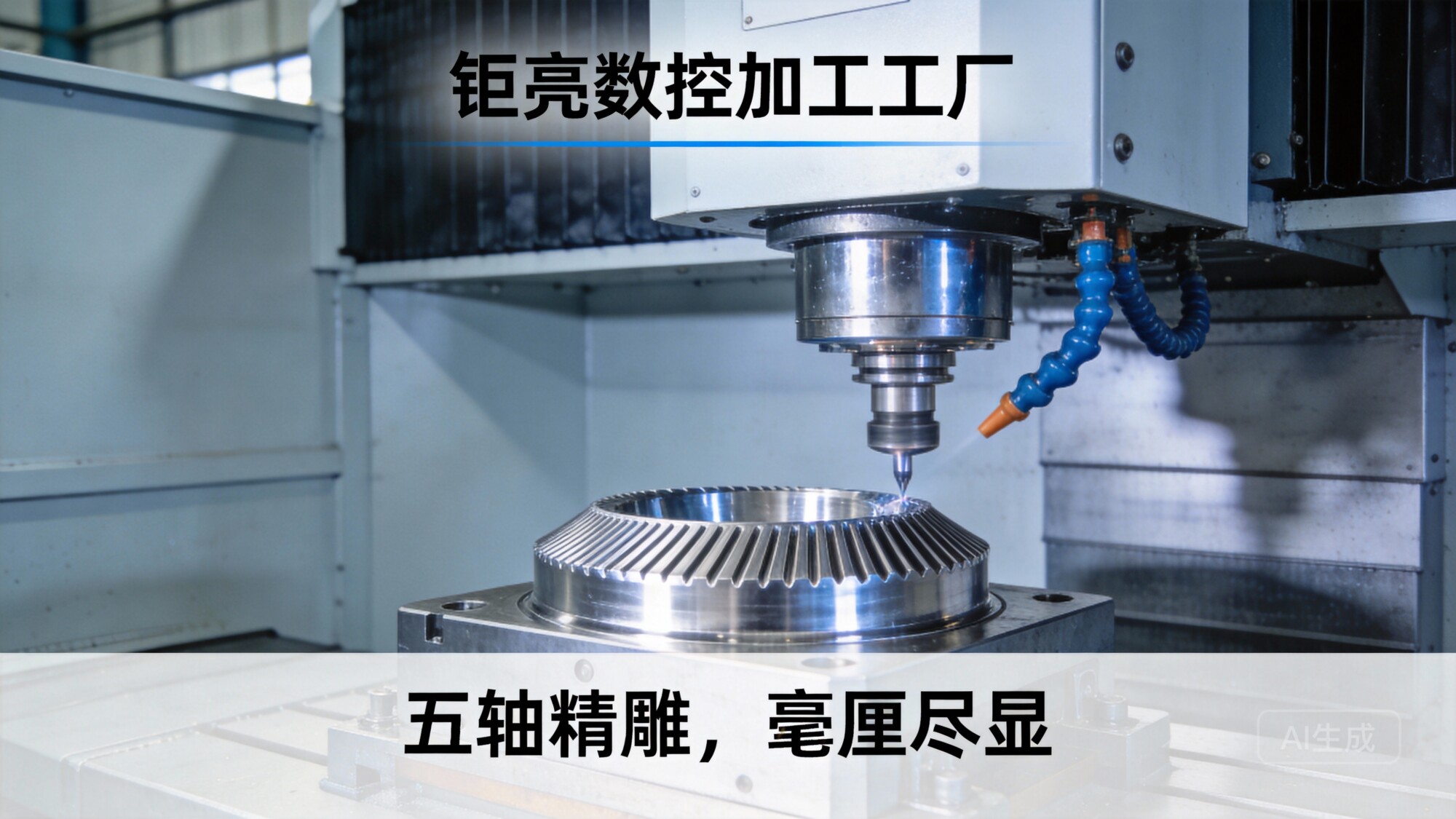
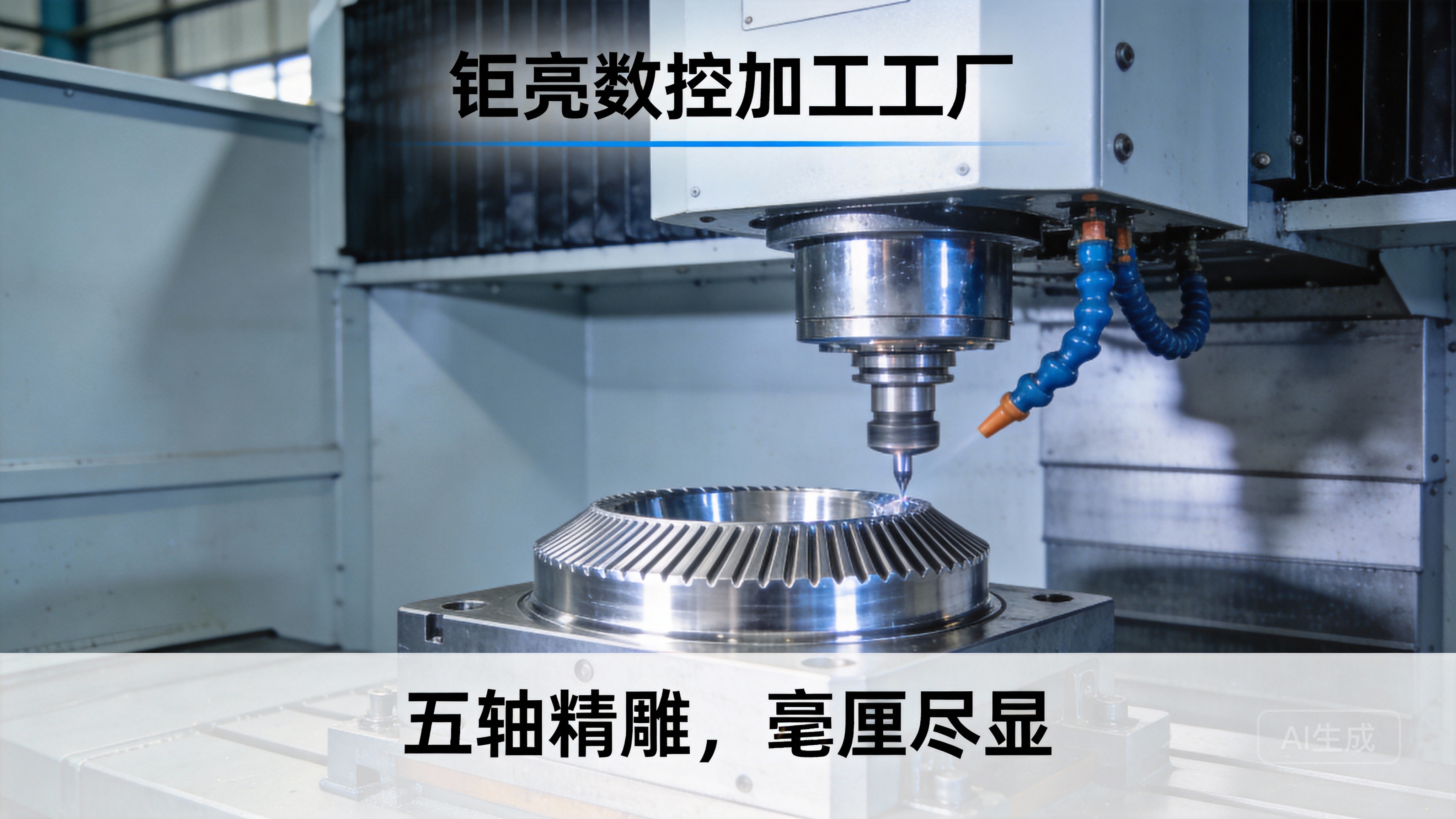
Five-axis CNC machining centers—such as those operated by GreatLight CNC Machining Factory—enable the production of these complex geometries in a single setup. This eliminates the cumulative tolerances from multiple fixtures and reduces the risk of alignment errors between machined features.
Consider a typical bracket requiring:
A precisely angled mounting face for an ultrasonic anemometer (within 0.1° of design)
Through-holes for M3 fasteners positioned with ±0.02mm positional accuracy
A contoured underside matching the UAV fuselage curvature
Lightening pockets with 0.5mm minimum wall thickness
Threaded inserts for field-serviceable sensor attachment
On a conventional three-axis machine, this would require at least four setups, each introducing potential error. With simultaneous five-axis machining, the bracket is completed in one operation, ensuring all datums reference the same coordinate system.
The Precision Gauntlet: Achieving ±0.01mm on Sensor Mounting Features
Weather sensors demand exceptional positioning accuracy. A bracket that positions a wind vane 0.5mm offset from its design location will introduce systematic error in wind direction measurements. When specifying custom CNC machining for your UAV weather sensor bracket, consider these critical dimensions:
Mounting hole position tolerance: ±0.02mm (critical for sensor alignment)
Surface flatness at sensor interface: 0.01mm total (ensures uniform clamping)
Perpendicularity between mounting faces: 0.02mm per 100mm (maintains sensor orientation)
Concentricity of cable pass-through features: ±0.05mm (prevents cable chafing)
GreatLight CNC Machining achieves these tolerances through rigorous process control: tool pre-setting, in-process probing, and temperature-compensated machining strategies. Their ISO 9001:2015 certified quality system ensures every bracket undergoes CMM inspection before shipment.
Beyond the Bracket: Integrating Post-Processing for Long-Term Reliability
Surface Finishing for Harsh Environments
A beautifully machined bracket can fail prematurely if surface protection is inadequate. For UAV weather sensor brackets, consider these finishing options:
Hard Anodizing (Type III): 50-100µm coating thickness, achieves 60-70 Rockwell C hardness. Ideal for aluminum brackets exposed to rain, salt fog, and UV radiation.
Passivation: For stainless steel brackets, removes free iron contamination and enhances corrosion resistance without dimensional changes.
Electroless Nickel Plating: Provides uniform coating on complex geometries, excellent for titanium brackets requiring additional wear resistance.
PTFE Impregnation: Reduces ice adhesion for brackets operating in freezing conditions—critical for weather sensors that must remain ice-free.
The selection of post-processing must align with the sensor manufacturer’s requirements—some sensors are sensitive to magnetic fields (ruling out electroless nickel), while others generate heat (requiring thermally conductive coatings).
Addressing Manufacturing Pain Points Through Systematic Solutions
Pain Point 1: Dimensional Inconsistency Between Prototypes and Production
Many UAV developers encounter the “precision black hole” where prototype brackets function perfectly but production units deviate beyond acceptable limits. This typically stems from:
Inadequate process validation during prototype stage
Tool wear compensation drift in production runs
Material batch variations affecting machinability
GreatLight Metal addresses this through statistical process control (SPC) and rigorous first-article inspection. Each production lot begins with a dedicated setup verification, and critical dimensions are monitored throughout the run. This ensures that bracket #1000 performs identically to bracket #1.
Pain Point 2: Lead Time Pressure vs. Quality Requirements
The UAV market moves fast. Engineers need functional brackets in days, not months. Custom CNC machining offers the fastest path from design to production for metal components, with lead times typically ranging from:
| Complexity Level | Typical Lead Time (GreatLight CNC) |
|---|---|
| Simple 2-axis bracket | 3-5 business days |
| Complex 5-axis bracket | 5-10 business days |
| Brackets with post-processing | 7-14 business days |
| Full production (100+ units) | 15-25 business days |
These timelines assume approved 3D models and material specifications. DFM (Design for Manufacturing) analysis at the quoting stage can further compress timelines by eliminating features that require additional setups or specialized tooling.
Comparative Analysis: Choosing Your CNC Machining Partner for Weather Sensor Brackets
The market for precision CNC machining services includes numerous capable suppliers, but their focus areas and operational models vary significantly. When evaluating partners for your UAV weather sensor bracket project, consider these differentiators:
| Capability | GreatLight Metal | Xometry | Protolabs Network | Fictiv |
|---|---|---|---|---|
| Five-Axis Capacity | In-house, 20+ machines | Network-based | Limited in-house | Network-based |
| Material Range | 50+ metals & plastics | Extensive | Extensive | Moderate |
| Certifications | ISO 9001, ISO 13485, IATF 16949 | Various | Various | Various |
| Engineering Support | Direct engineering team | Automated DFM | Limited direct support | Design consultation |
| Post-Processing | Full in-house suite | Outsourced | Limited in-house | Outsourced |
| Minimum Order | 1 piece | 1 piece | 1 piece | 1 piece |
| Vertical Integration | Full (machining, die casting, 3D printing, sheet metal) | Partial | Partial | Partial |
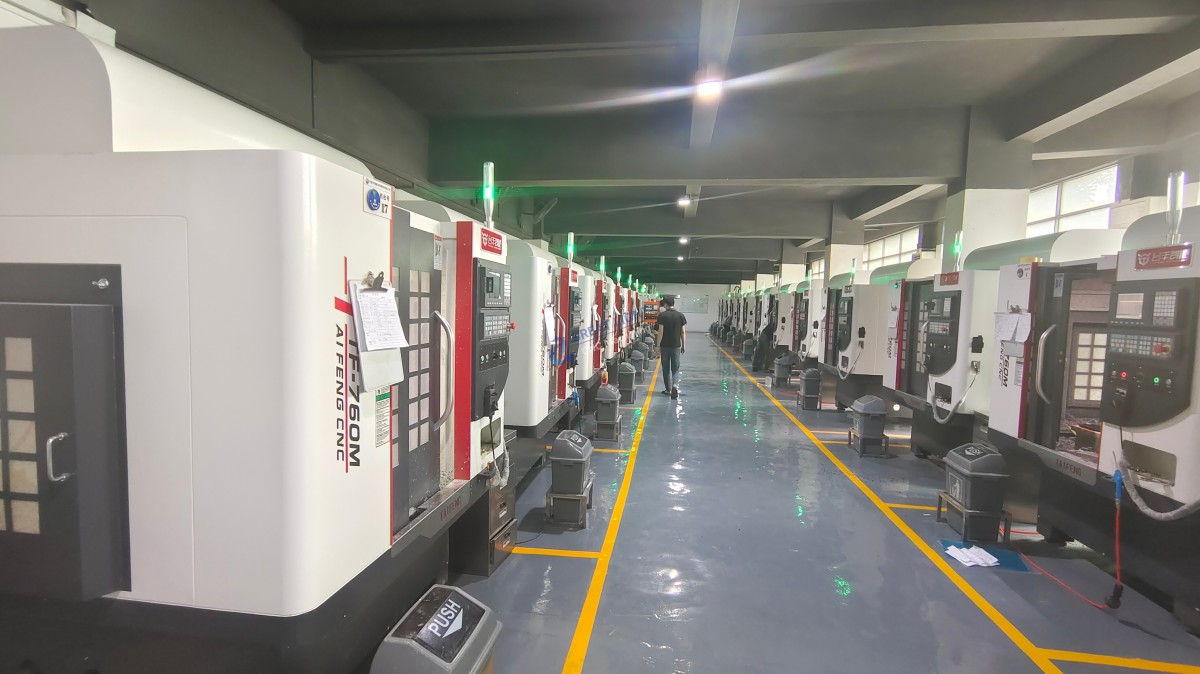
GreatLight Metal distinguishes itself through comprehensive vertical integration. When your weather sensor bracket requires not just CNC machining but also integrated cable glands, vibration-damping inserts, or protective housings, having a single responsible partner eliminates coordination overhead and guarantees interface compatibility.
Technical Considerations for Weather Sensor Bracket Design
Vibration Analysis and Structural Optimization
A bracket that resonates at the UAV’s propeller frequency will amplify vibration, corrupting sensitive pressure and temperature measurements. FEA (Finite Element Analysis) during the design phase identifies these resonant modes. Custom CNC machining allows:
Selective material removal to shift resonant frequencies
Rib reinforcement without adding mass at sensor mounting locations
Tuned vibration absorbers integrated into the bracket structure
GreatLight CNC Machining provides DFM feedback that often suggests design modifications to improve machinability without compromising structural performance. For example, converting sharp internal corners (stress risers) to radiused features (filleted) both strengthens the bracket and allows more efficient tool paths.
Thermal Management for Sensor Accuracy
Weather sensors are sensitive to self-heating. A bracket that conducts heat from a nearby motor or avionics module can introduce thermal errors in temperature and humidity readings. Material selection and bracket design must consider:
Thermal conductivity: Aluminum (237 W/mK) dissipates heat effectively but conducts external heat to sensors
Thermal isolation features: Necked-down sections or interlayer materials reduce heat transfer
Surface emissivity: Anodized or painted surfaces radiate heat differently than bare metal
Custom CNC machining enables the integration of thermal management features—such as standoffs, air gaps, or heat sink fins—directly into the bracket geometry, eliminating the need for additional components.
The Certification Framework: Ensuring Bracket Reliability for Certified UAV Operations
As UAV operations expand beyond recreational use into commercial and governmental applications, regulatory compliance becomes non-negotiable. Weather sensor brackets used in certified aircraft must meet:
ASTM F3269: Standard practice for methods to safely integrate UAS in the NAS
RTCA DO-160G: Environmental conditions and test procedures for airborne equipment
ISO 13485 (for medical UAVs delivering supplies or monitoring)
GreatLight Metal maintains ISO 9001:2015, ISO 13485, and IATF 16949 certifications, providing auditable quality management systems that satisfy regulatory requirements. This certification infrastructure eliminates the need for customers to independently audit their manufacturing partners, accelerating certification timelines for the final product.
Case Study: Solving a UAV Weather Sensor Bracket Challenge
While specific client names remain confidential, GreatLight CNC Machining Factory recently partnered with a European UAV manufacturer developing an atmospheric research platform. The challenge:
Bracket material: 7075-T6 aluminum
Sensors: 3-axis ultrasonic anemometer + temperature/humidity probe
Critical tolerance: ±0.02mm on sensor mounting interface
Weight target: <85 grams
Service environment: -30°C to +60°C, 95% humidity, salt spray exposure
Solution implemented by GreatLight CNC:
Five-axis roughing and finishing in a single setup on a Dema 5-axis machining center
Custom tool path strategy using trochoidal milling for thin wall sections (0.8mm minimum)
In-process probing to compensate for thermal growth during machining
Type III hard anodizing with 50µm coating for corrosion protection
100% CMM inspection with laser scanning for complex contours
The result: Bracket weight of 82 grams achieved, ±0.015mm dimensional accuracy maintained throughout 500-unit production run, zero field failures after 18 months of deployment across three continents.
Conclusion: Elevating UAV Weather Sensing Through Precision Manufacturing
The UAV weather sensor bracket may appear as a simple mounting component, but its engineering requirements rival those of far more complex aerospace structures. Custom CNC machining—particularly through five-axis capabilities—enables engineers to realize brackets that combine lightweight construction with exceptional rigidity, thermal stability, and dimensional accuracy.
GreatLight CNC Machining Factory offers the manufacturing infrastructure, engineering expertise, and quality certifications necessary to produce these mission-critical components at any volume, from single prototypes to full production runs. By integrating advanced machining technology with comprehensive post-processing and rigorous inspection protocols, they provide UAV developers with the confidence that their sensor brackets will perform flawlessly in demanding operational environments.
When your next UAV weather sensor bracket design pushes the boundaries of what’s possible, partner with a manufacturer that understands the precision required—not just to cut metal, but to enable accurate atmospheric data collection that advances weather forecasting, climate research, and environmental monitoring worldwide.
For precision parts that demand uncompromising quality, choose a CNC precision machining partner that has invested in the equipment, certifications, and expertise to deliver your vision.


![[访谈] RAPID + TCT 2024:人工智能对 3D 打印的价值](https://print-ing.com/wp-content/uploads/2024/07/INTERVIEW-60x60.jpeg "[访谈] RAPID + TCT 2024:人工智能对 3D 打印的价值 9")




发表回复
要发表评论,您必须先登录。