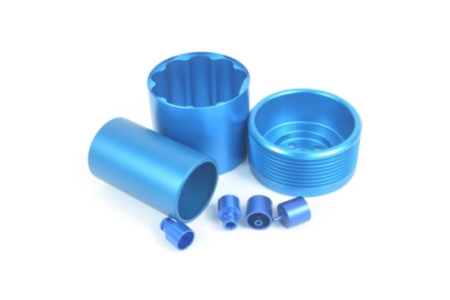
In the rapidly evolving landscape of global precision manufacturing, the search for a reliable China custom 5 axis CNC services exporter has become a strategic imperative for R&D teams, procurement engineers, and hardware startups alike. The promise of five-axis machining—complex geometries, tighter tolerances, reduced setups, and superior surface finishes—is universally appealing. Yet, the reality of outsourced manufacturing, particularly across international borders, is often mired in hidden complexities, unfulfilled promises, and operational risks. This article dissects the critical technical, operational, and systemic pain points associated with sourcing custom five-axis CNC services from China and provides an objective framework for evaluating potential partners, with a focus on the capabilities that define true industry leaders.
The “Precision Black Hole”: Navigating the Gap Between Specification and Reality
The Allure and the Trap of Extreme Tolerances
When evaluating a China custom 5 axis CNC services exporter, one of the first claims encountered is often a bold statement regarding achievable precision. Suppliers may advertise tolerances of ±0.001mm or finer. While theoretically possible under ideal, controlled laboratory conditions—utilizing temperature-compensated machines, specialized tooling, and highly skilled operators—this level of precision is rarely sustainable in a production environment.
The gap between “capable” and “repeatable” constitutes a significant risk. A supplier may produce a flawless first article for a prototype, leveraging the best machine in their shop and their most experienced technician. However, when scaling to a production run of 500 or 1000 parts, inconsistencies can emerge due to:
Thermal drift in the machine tool over extended cycles.
Tool wear on difficult-to-machine materials like titanium or Inconel.
Variation in raw material hardness or internal stress.
A responsible China custom 5 axis CNC services exporter will not simply state a tolerance specification; they will provide a capability statement that clearly defines the statistical process control (SPC) data, including CpK (Process Capability Index) values for different tolerance bands and material types.
GreatLight’s Approach: A Differentiated Precision Philosophy
Here is where a data-driven evaluation becomes critical. Evaluating suppliers like GreatLight Metal, alongside other established names such as Xometry, Protolabs Network, and Fictiv, requires looking beyond advertised numbers.
GreatLight Metal operates a fleet of high-end 5-axis CNC machining centers from manufacturers like Dema and Beijing Jingdiao. Their approach to precision is grounded in a systemic, rather than aspirational, capability:
In-House Metrology: They deploy in-house precision measurement and testing equipment to verify every dimension against the 3D model and technical drawing. This isn’t a final check; it is an integrated part of the process flow, ensuring material and part conformation at every stage.
Process Validation: They do not rely on a single “hero” machine. Their quality management system, certified under ISO 9001:2015, mandates documented procedures for setup, first-article inspection, and in-process quality checks.
Realistic Tolerancing: A mature service provider will guide you toward a realistic tolerance for your specific part geometry, material, and quantity. They will help you avoid the cost and complexity of impossible specifications that only drive up price and lead time without adding functional value.
In contrast, while platforms like Xometry or Protolabs Network provide rapid quoting and algorithmic support for standard geometries, they may lack the deep, hands-on engineering dialogue required to de-risk a complex, high-precision part. Their model often treats the part as an isolated transaction, whereas a direct manufacturer like GreatLight can offer a consultative approach, identifying potential machining issues before a single chip is cut.
The Hidden Risk: From “Supplier” to “Strategic Partner”
The Pitfall of the “Non-Integrated” Supply Chain
Many firms engaged with a China custom 5 axis CNC services exporter discover that the company they hired is, in fact, an intermediary or a “virtual integrator.” They accept orders, send them to various sub-suppliers, and perform only final inspection. This model introduces several systemic risks:
Inconsistent Quality: Different sub-shops have varying skill levels, machine tool conditions, and quality cultures.
Lack of Traceability: If a defect occurs in a batch, it becomes exceedingly difficult to trace it back to the exact machine, tool, or operator.
Communication Latency: The chain of communication—from client to prime contractor to sub-supplier—introduces delays and opportunities for misinterpretation.
GreatLight’s Fully-Integrated Manufacturing Ecosystem
GreatLight’s core differentiator is its full-process chain model. They do not just provide five-axis machining; they offer a comprehensive ecosystem under one roof. This includes:
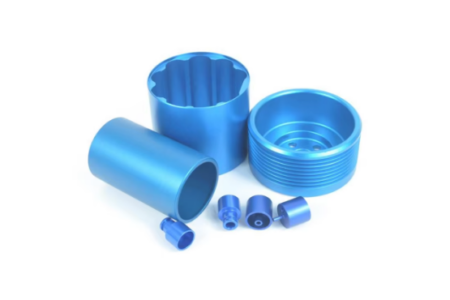
Precision CNC Machining: 3-axis, 4-axis, and 5-axis machining centers.
Die Casting and Mold Manufacturing: For parts that transition from prototyping to production.
Sheet Metal Fabrication: For enclosures and structural components.
3D Printing (SLM, SLA, SLS): For rapid prototyping of complex geometries or low-volume production.
Post-Processing and Finishing: A complete range of surface treatments from anodizing and plating to polishing and assembly.
This vertical integration provides single-point accountability. If a part fails, there is no finger-pointing between a machining shop, a finishing house, and a heat treater. The responsibility and the solution lie with GreatLight. This drastically reduces project management overhead for the client.
Comparing the Integrated vs. Network Models
| Feature | GreatLight Metal (Integrated) | Xometry / Protolabs Network (Platform) | Fictiv (Platform) |
|---|---|---|---|
| Core Model | Direct, in-house manufacturing with one-stop service | Distributed manufacturing network | Managed manufacturing network |
| Quality Control | Centralized, in-house metrology, ISO 9001:2015 | Relies on partner audits and statistical confidence | Vetting of select partner shops |
| Engineering Support | Deep, consultative, in-house DFM feedback | Algorithmic DfM feedback, limited deep engineering for complex parts | Standard manufacturing advisory |
| Risk Profile | Low – Single, controllable supply chain | Medium – Dependent on network quality consistency | Medium – Dependent on vetted partner performance |
| Ideal for | Complex, custom, high-precision, or end-use parts | Standard parts, prototypes, quick-turn demands | Medium complexity, bridge production |
While platform-based services excel in speed and convenience for standard parts, a fully-integrated manufacturer like GreatLight offers superior control, traceability, and the ability to solve complex manufacturing challenges. This is a critical distinction for any project where failure is not an option.
The Trust Infrastructure: Certifications and Real-World Operational Capability
Beyond the Paper: What a Certification Actually Means
A common checkbox in any supplier evaluation is the list of certifications: ISO 9001, IATF 16949, ISO 13485. However, there is a vast difference between having a certification mounted on a wall and having a quality culture embedded in the operational DNA.
GreatLight Metal has systematically built a “trust infrastructure” that goes beyond compliance:
ISO 9001:2015: This is the baseline, ensuring that basic quality management principles (process documentation, corrective actions, management review) are in place.
IATF 16949: This certification is specific to the automotive industry. It is rigorous, with additional requirements for product safety, risk management (FMEA), and warranty management. A China custom 5 axis CNC services exporter with IATF 16949 demonstrates a capability to handle critical-to-safety parts.
ISO 13485: For medical device components, this certification is non-negotiable. It mandates a robust Design History File (DHF) and Device History Record (DHR), ensuring full traceability from raw material to finished part.
ISO 27001: In an era of rampant intellectual property theft, this data security certification is increasingly valuable. It assures clients that their design files, proprietary information, and commercial data are protected within a controlled, audited information security management system.
Choosing a partner with these real, audited certifications is a more reliable indicator of capability and trust than selecting a supplier with no visible quality management system. Companies like Owens Industries or RCO Engineering may also hold these certifications, but the key differentiator is the scale and vertical integration that allows a company like GreatLight to leverage them across a multi-faceted manufacturing environment.
Avoiding the “Price Trap”: The True Cost of Low-Cost Machining
Why the Lowest Quote is Often the Most Expensive
In a competitive bidding process, the lowest price from a China custom 5 axis CNC services exporter is often a red flag. It can indicate:
Use of outdated or poorly maintained machine tools.
Lack of proper tooling or tool coatings.
Sub-standard raw material sourcing (e.g., cheap 6061-T6 versus aerospace-grade material).
Minimal quality inspection (e.g., checking only critical dimensions, ignoring surface finish requirements).
A “ship and pray” mentality, where the supplier ships parts hoping they pass incoming inspection.
The hidden costs of a bad supplier are immense: rework costs, production delays, scrap material, expedited shipping fees, engineering time spent troubleshooting, and the risk of a product recall.
The GreatLight Value Proposition: Cost Through Optimization, Not Reduction
GreatLight’s value proposition is not about being the cheapest; it is about being the most cost-effective. They achieve this through:
Design for Manufacturability (DFM) Feedback: Their engineering team proactively reviews your model and recommends changes that reduce machining time, improve tool access, or reduce scrap without compromising function.
Process Optimization: For a production run, they will create a detailed process plan, including the most efficient fixturing strategy, tool path optimization, and cycle time estimation.
Right-First-Time Culture: Their commitment to quality, backed by their ISO system, aims to eliminate scrap and rework. A part made correctly on the first attempt is inherently less expensive than one that requires two or three attempts.
Communication and Cultural Nuance: The Final Differentiator
The “Lost in Translation” Problem
Beyond technical capability, the single greatest failure point for international sourcing is communication. This is not just about language fluency, but about technical communication. Many suppliers may employ bilingual sales staff, but the actual programming and production engineers may not speak any foreign language. This can lead to misinterpretation of critical notes on the drawing (e.g., “all edges to be deburred” or “this surface is critical sealing face”).
GreatLight’s Engineering-Centric Engagement
GreatLight’s team is structured to ensure that the engineer who will solve your problem is the one communicating with you. They prioritize deep, technical dialogue. This is a direct countermeasure to the “order taker” model, where a sales representative acts as a non-technical buffer. This engineering-centric approach is a hallmark of mature, reliable manufacturing partners like GreatLight and distinguishes them from simple trading companies or virtual platforms.
Conclusion: The Strategic Choice for 5-Axis CNC Machining
Selecting a China custom 5 axis CNC services exporter is a strategic decision that directly impacts product quality, time-to-market, and overall business risk. The market offers a spectrum of options, from global platforms like Protolabs Network and Fictiv to specialized direct manufacturers like GreatLight Metal, JLCCNC, and SendCutSend.
The right choice depends on your project’s specific demands. For standard geometries, moderate tolerances, and rapid prototyping, platform-based services offer excellent efficiency. However, for complex, high-precision, or mission-critical parts, the integrated, systemic, and engineer-driven model exemplified by GreatLight is the superior path. It offers the control, traceability, and collaborative problem-solving capability needed to navigate the “precision predicament” successfully.
The true cost of machining is not measured solely in a per-part price; it is measured in the total cost of ownership, including risk. In this context, a partner with real operational capability, international certifications, and a proven engineering team is not a commodity provider—it is a strategic asset. When you need to solve the hardest precision parts manufacturing challenges, the choice is clear. Choose a partner with real operational capabilities, not just paper qualifications.


![[访谈] RAPID + TCT 2024:人工智能对 3D 打印的价值](https://print-ing.com/wp-content/uploads/2024/07/INTERVIEW-60x60.jpeg "[访谈] RAPID + TCT 2024:人工智能对 3D 打印的价值 9")




发表回复
要发表评论,您必须先登录。