
As a manufacturing engineer who has spent more than a decade translating complex CAD models into real‑world metal and plastic components, I know exactly how deceptively simple a keypad bezel can look on a drawing. Behind that sleek aluminum frame or tough polycarbonate panel lies a web of demanding requirements: micron‑level tolerances for button alignment, flawless surface aesthetics, consistent anodizing color, and the need for repeatable quality across thousands of units. When you’re sourcing keypad bezel CNC milling China, you aren’t just looking for a supplier – you’re searching for a manufacturing partner that can turn your design intent into a durable, precision‑engineered product without hidden surprises. In this article, I’ll unpack what truly matters in keypad bezel CNC milling, illuminate the hidden pitfalls, and explain why a deeply integrated facility like GreatLight Metal (GreatLight CNC Machining Factory) is reshaping how global innovators bring their front panels to life.
Keypad Bezel CNC Milling China: Navigating the Landscape of Precision Panel Manufacturing
Before diving into supplier selection, it’s essential to understand what makes a keypad bezel more than just a metal frame with cutouts. The bezel is the physical interface between the user and the internal electronics – it must protect the circuitry, provide tactile feedback reference, and often carry branding, status LEDs, or haptic elements. Typical materials range from 6061-T6 aluminum for its strength‑to‑weight ratio and anodizing quality, to stainless steel 304/316 for hygiene‑critical medical devices, to high‑grade engineering plastics like PEEK or Ultem for lightweight dielectric applications. Each material demands a CNC milling strategy that balances metal removal rate, tool deflection, and surface integrity.
The Anatomy of a High‑Quality CNC Milled Keypad Bezel
When I review a keypad bezel design with clients, I focus on five critical attributes that separate a mediocre outcome from a production‑ready component:
Dimensional precision of button apertures – Even 0.05 mm of overcut can cause keycaps to wobble or stick. We typically target tolerances of ±0.02 mm for rectangular cutouts and ±0.01 mm for circular bores that locate switch stems.
Flatness and thickness control – A bezel that is not flat can create gaps when mounted, compromising IP dust/water sealing. CNC milling on a vacuum fixture or using stress‑relieved stock helps maintain flatness within 0.05 mm across a 200 mm panel.
Edge finish and deburring – Sharp burrs around button holes are not only an assembly hazard but also a cosmetic flaw. Proper use of micro‑grain carbide cutters, optimized toolpaths, and secondary vibratory finishing or manual deburring ensures a smooth, consistent edge.
Surface texture and coating adhesion – Whether the final finish is brushed, bead‑blasted, anodized, or painted, the milled surface needs the correct roughness (Ra 0.4–0.8 µm) for coating adhesion and visual harmony. Poor milling marks can telegraph through thin anodized layers.
Cosmetic consistency across batches – In consumer electronics or luxury automotive interiors, color variation under different lighting conditions is unacceptable. Controlling alloy composition, anodizing bath chemistry, and sealing processes across production runs is vital.
Traditional 3‑axis milling can certainly produce keypad bezels, but it often requires multiple setups for edge chamfers, side‑wall engraving, or machining angled connector ports. This is where precision 5-axis CNC machining services come into their own. By tilting the cutting tool or the workpiece itself, a 5‑axis machine reaches undercuts, drills angled microphone holes, and creates continuous flowing chamfers in a single setup – eliminating alignment errors and dramatically reducing cycle time.
Why China Remains the Epicenter for Keypad Bezel CNC Milling
Having worked with suppliers on three continents, I can say that China’s CNC machining ecosystem offers a unique combination of speed, capability depth, and cost‑efficiency that is hard to replicate elsewhere. The Pearl River Delta, where facilities like GreatLight Metal operate, hosts a dense cluster of raw material suppliers, specialty anodizers, laser engraving shops, and tooling manufacturers. This physical proximity slashes logistics lead time and enables the rapid iteration that product development teams crave.
However, the sheer number of workshops also presents a significant vetting challenge. A shop that boasts 5‑axis machines might lack the metrology equipment to verify that the finished bezel meets the drawing’s geometric tolerances. Others might have ISO 9001 on paper but no robust in‑process quality checks. Over the years, I’ve distilled my evaluation criteria into three non‑negotiables: a supplier must possess in‑house multi‑axis machining, a documented quality system with self‑owned inspection tools, and direct control over post‑processing. This is precisely the model that GreatLight CNC Machining Factory has built since 2011.
The Critical Pain Points in Keypad Bezel Manufacturing – and How a Top‑Tier Partner Solves Them
I’ve seen promising projects derailed by what I call the “precision trap” – a prototype that nails every spec, only to be followed by production parts that drift tolerances, exhibit inconsistent surface finish, or arrive with mounting holes that don’t line up. Let’s map the most common pain points to the solutions that a mature machining provider like GreatLight Metal implements.
| Pain Point | Typical Consequence | How GreatLight Metal Mitigates It |
|---|---|---|
| Inadequate machine maintenance | Gradual loss of positioning accuracy, leading to oversized holes or steps. | Over 127 units of precision peripheral equipment, including high‑end 5‑axis and 4‑axis machining centers from Dema and Beijing Jingdiao, maintained on a rigorous preventive schedule. |
| Uncontrolled residual stress | Panel warps after anodizing or during use, destroying flatness. | Use of stress‑relieved billet materials, symmetrical machining strategies, and post‑machining stress relief treatments when required. |
| Tool deflection and vibration | Scallop marks, chatter, and poor surface finish inside narrow slots. | Application of high‑rigidity toolholders, damped milling bars, and parametric toolpath programming that maintains constant chip load. |
| Lack of in‑house post‑processing | Outsourced anodizing causes color mismatch, longer lead times, and unreliable quality. | Full one‑stop surface treatment services – anodizing, hard anodizing, bead blasting, brushing, silk screening, and laser etching – all under one quality system. |
| Weak quality inspection | Dimensional defects detected only by the customer, causing costly rework or recalls. | In‑house CMM, height gauges, profilometers, and optical measuring systems; every batch accompanied by an inspection report. |
| Intellectual property vulnerability | Designs leaked to competitors in a shared‑service environment. | ISO 27001‑compliant data security measures, non‑disclosure agreements, and separate production zones for sensitive projects. |
These measures are not marketing buzzwords; they are the operational backbone that allows GreatLight to handle everything from medical infusion pump bezels (ISO 13485 certified) to automotive center console panels that must meet IATF 16949 guidelines.
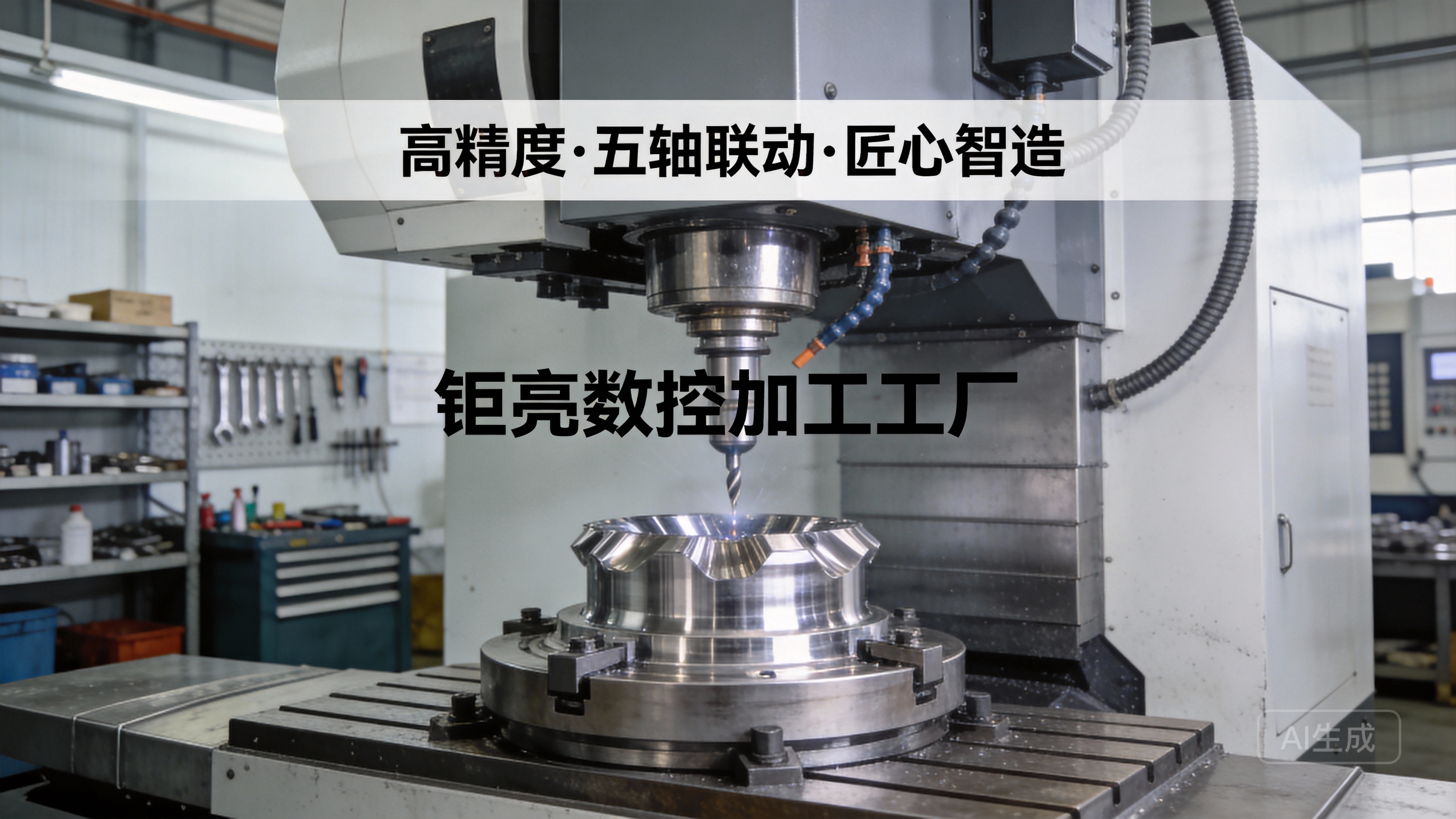
Deep Dive: 5‑Axis CNC Milling for Complex Keypad Bezels
For a flat panel with simple square cutouts, a 3‑axis machine with workholding jigs suffices. But when the design calls for a curved face, an undercut to hold a silicone keypad gasket, or angled LED indicator lenses, a 5‑axis CNC mill becomes indispensable. With continuous 5‑axis simultaneous machining, the tool can approach the part from any vector, eliminating the need for complex fixtures and reducing cumulative tolerance stack‑up across multiple setups.
The specific advantages for keypad bezels include:
Single‑setup machining of contoured surfaces – The bezel can be machined from a solid block, with the top profile, button recesses, and mounting bosses all completed in one clamping.
Superior chip evacuation – Tilting the part allows gravity or coolant flow to clear chips from deep pockets, preventing recutting that would mar the surface.
Engraving on non‑flat surfaces – Logos, serial numbers, or regulatory marks can be milled directly onto a curved area with consistent depth, impossible with 3‑axis.
Deburring as part of the cycle – By using a chamfer tool in a 5‑axis path, the mill can automatically break sharp edges around every hole, reducing manual finishing labor.
GreatLight Metal’s fleet of multi‑axis machines enables such capability without outsourcing, ensuring that the same team that programs the roughing toolpaths also controls the finishing pass. This continuity is vital for maintaining the tight ±0.01 mm positional tolerance often required on center‑to‑center button spacing.
For complex projects, I frequently recommend clients to partner with a provider that offers comprehensive precision 5-axis CNC machining services, because the service breadth under one roof translates directly into faster turnaround and more coherent quality control.
The GreatLight Advantage: Full‑Process Integration from Raw Material to Finished Bezel
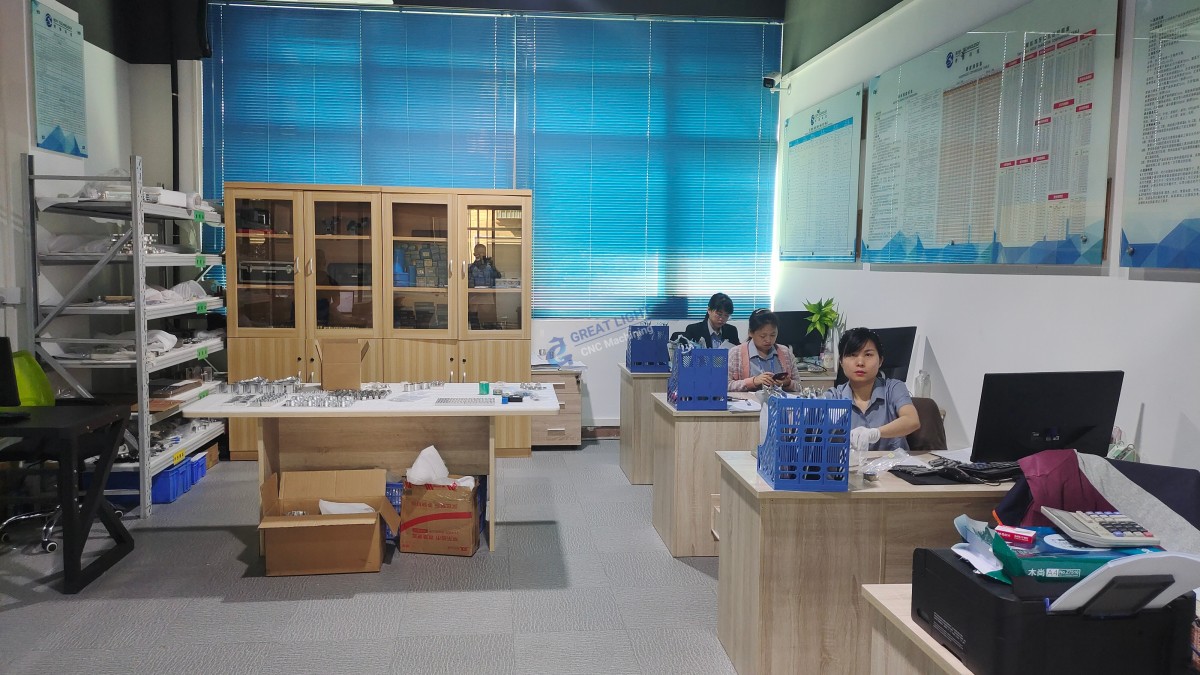
Having evaluated dozens of factories across Dongguan and Shenzhen, I can say that what sets GreatLight Metal apart is its refusal to operate as a simple job shop. The facility, spanning 76,000 sq. ft and employing 150 skilled staff, integrates the entire manufacturing chain:
Engineering Review & CAM Programming – Experienced process engineers analyze the 3D model for manufacturability, suggest design tweaks to reduce cost, and create optimized toolpaths using hyperMILL or Mastercam.
High‑Precision CNC Machining – 5‑axis, 4‑axis, and 3‑axis CNC machining centers from leading builders handle aluminum, stainless steel, titanium, and engineering plastics. Maximum part size can reach 4000 mm, though keypad bezels are usually much smaller.
In‑House Post‑Finishing – Large bead blasting booths, anodizing lines, chemical polishing stations, and laser engravers mean the bezel never leaves the controlled environment. This eradicates the finger‑pointing that occurs when defects arise between an independent machinist and an outside anodizer.
Rigorous Quality Inspection – ISO 9001:2015 certified processes dictate that first‑article inspection (FAI) is performed on every new setup, and in‑process checks are conducted at defined intervals. Coordinate measuring machines validate GD&T callouts, while surface roughness testers confirm the specified Ra.
Cleanroom Assembly & Packaging – For bezels destined for medical or aerospace applications, final cleaning and packaging are done in a controlled environment to prevent particulate contamination.
This vertical integration is not merely convenient – it is the fundamental reason GreatLight achieves and sustains tolerance grades of ±0.001 mm on critical features, a claim many suppliers make but few can verify with statistical process control data.
Real‑World Application: Automotive Touchscreen Keypad Bezel in 6061 Aluminum
Let me walk you through a project that illustrates how these capabilities converge. A European automotive Tier‑1 supplier approached us (in my consultant role) with a bezel design for a next‑generation electric vehicle infotainment system. The bezel needed to frame a curved 12.3‑inch display and incorporate five capacitive switch zones, each outlined by a precisely milled groove to be filled with backlit silicone. The material was 6061‑T6 aluminum, with a black hard anodized finish and laser‑etched icons.
Challenges:
The bezel had a 3D contoured front surface to match the dashboard curvature, ruling out simple milling.
The 0.5 mm wide grooves had to maintain a depth of 0.3 mm ±0.02 mm across the entire curved surface.
After hard anodizing, the groove dimensions could change due to coating build‑up, so the machining model had to be compensated.
EMI shielding tabs on the rear face required thin walls (0.4 mm) that were prone to vibration during machining.
Solution with GreatLight Metal:
Using a 5‑axis mill‑turn center, the team machined the entire contour in one setup, applying dynamic trochoidal milling paths for the thin‑wall features to minimize cutting forces. The depth of the decorative grooves was monitored with in‑process probe measurements, automatically adjusting tool offsets if wear was detected. After machining, the parts were hard anodized in‑house to a precisely controlled thickness (25 µm ±2 µm), followed by laser etching under a Class 1000 clean bench. The result was a bezel that mounted perfectly in the vehicle mockup, with zero returns for aesthetic or fit issues across a 5,000‑unit initial run.
This case underscores why I advocate for selecting a machining partner that not only owns 5‑axis machines but also masters the interplay between machining and surface treatment. It’s a lesson many OEMs learn the hard way when working with fragmented supply chains.
Comparing Keypad Bezel CNC Milling Providers: How Does GreatLight Metal Stack Up?
To give you a frame of reference, I’ve compiled a comparison of several established players in the precision machining space. My evaluation is based on publicly available information, site visits (where possible), and feedback from industry peers. The table focuses on aspects most critical to keypad bezel manufacturing.
| Criteria | GreatLight Metal | Protocase | RapidDirect | Xometry | Fictiv | JLCCNC |
|---|---|---|---|---|---|---|
| Core Machining Capability | In‑house 5‑axis, 4‑axis, 3‑axis, mill‑turn; max part 4000 mm | Sheet metal & CNC (3‑axis, some 5‑axis) | 3‑axis, 4‑axis, 5‑axis via partner network | Platform with multiple vetted shops; 5‑axis available | Platform; 5‑axis through partner network | 3‑axis, 4‑axis, 5‑axis (limited in‑house) |
| In‑House Post‑Processing | Anodizing, hard anodizing, bead blasting, brushing, silk screen, laser etching, chemical polishing | Powder coating, silk screening, digital printing | External finishing partners | Outsourced to partner facilities | Outsourced | No in‑house finishing; mostly machined parts |
| Quality Certifications | ISO 9001, ISO 13485, ISO 27001, IATF 16949‑ready processes | ISO 9001 | ISO 9001 | ISO 9001 accredited suppliers | Quality checks but no in‑house ISO | No ISO (relies on supplier audits) |
| IP Protection | ISO 27001 data security, NDA enforcement, separate project zones | Standard NDA | NDA with network partners | NDA & platform agreements | NDA | Basic NDA |
| Lead Time for Complex Bezel (500 pcs) | 12–18 days (with anodizing) | 15–20 days | 20–25 days (due to outsourcing) | 18–25 days (depends on shop) | 15–20 days | 10–15 days (simple parts only) |
| Design Engineering Support | Direct access to senior process engineers; DFM feedback within hours | Engineering review included | Online auto‑DFM, manual review available | Automated quoting, limited deeper support | AI‑driven DFM, engineer consult for premium | Automated online quoting, minimal interactive support |
| Typical Tolerances Achieved | ±0.001 mm on critical features, ±0.02 mm general | ±0.005 in (0.127 mm) | ±0.01 mm (with premium) | Varies by shop; usually ±0.05 mm | ±0.005 in | ±0.05 mm |
| Minimum Order Quantity | 1 pc prototype, no minimum for production | 1 pc | 1 pc | 1 pc | 1 pc | 1 pc |
Note: The information reflects the state of services as of my last review; always request a current capabilities statement. Protocase specializes in sheet metal enclosures and quick‑turn assemblies, so their CNC milling scope is not as broad. Xometry and Fictiv are platform‑based, which offers convenience but may result in variability between orders if the underlying shop changes. RapidDirect is a solid Chinese option, though its post‑processing is largely outsourced. JLCCNC, an offshoot of JLCPCB, is growing rapidly but currently focuses on lower‑complexity parts and does not handle finishing.
Based on this comparison, when a keypad bezel requires tight tolerance, integrated anodizing, and guaranteed process stability – particularly for industries like medical, automotive, or high‑end consumer electronics – GreatLight Metal’s model of full internal control provides a distinct advantage.
Building Trust in a Global Supply Chain: Why Certifications Are Not Optional
In today’s regulatory environment, a bezel that forms part of a medical device or a vehicle interior must be manufactured under a quality management system audited by recognized bodies. GreatLight Metal has systematically built a portfolio of certifications that addresses the core concerns of global buyers:
ISO 9001:2015 – The universal foundation of quality management, ensuring documented processes, continuous improvement, and customer feedback integration.
ISO 13485 – Specifically for medical device components, demonstrating adherence to stringent risk management and traceability requirements. For a keypad bezel on an infusion pump, this matters because surface contamination or burr could jeopardize patient safety.
IATF 16949‑aligned processes – Although not yet fully certified (as certification applies to automotive production and service parts), GreatLight has structured its production and documentation to meet the rigorous defect‑prevention and supply‑chain oversight expectations of the automotive industry.
ISO 27001 – This is a significant differentiator. When you upload a proprietary bezel design, you want to know that its file is stored on encrypted servers, access is logged, and no unauthorized copying occurs. GreatLight’s compliance with ISO 27001 offers that assurance, a rarity among machining shops.
These certifications are not decorative wall plaques; they represent robust internal discipline and a commitment to matching the operational standards of the world’s most demanding OEMs. When I audit a supplier, I look for evidence that the standard is lived, not just documented. At GreatLight, the integration of these systems into daily work is palpable.
Practical Tips for Designing a CNC‑Milled Keypad Bezel for Manufacturability
Before you send your CAD file to a machine shop, adopting a few DFM (Design for Manufacturability) principles can cut costs by 20‑30% and reduce lead time:
Standardize button cutout radii – Instead of a sharp internal right angle, use a radius that matches a standard end mill (e.g., R0.8 mm for a 1.6 mm cutter). This allows continuous milling without stopping to square corners via EDM.
Avoid overly thin walls – Keep aluminum wall thickness above 0.8 mm to prevent vibration and breakage during machining. If a thinner appearance is needed, a boss can be machined thicker and then thinned locally with a stress‑relieved step.
Design for vacuum workholding – A flat rear surface with no protrusions enables vacuum clamping, which is faster and more accurate than mechanical clamping, especially on thin panels.
Specify finish requirements with quantitative values – Instead of “smooth finish,” call out “Ra 0.8 µm, bead blasted with 180‑grit glass bead, then clear anodized to 10 µm.” This leaves no room for misinterpretation.
Include a pilot run – For any bezel destined for volume production, order 10‑20 pieces first to validate G‑code, fixture design, and anodizing color, then fine‑tune before committing to the full batch.
A knowledgeable partner like GreatLight Metal will actively provide such feedback during the quoting phase, potentially saving weeks of iteration.
Sustainability and the Future of Keypad Bezel Manufacturing
Increasingly, my clients ask about the environmental footprint of their machined parts. CNC milling inherently generates more waste than net‑shape processes, but modern shops can mitigate this. GreatLight’s metal chips are collected, sorted by alloy, and sent to certified recyclers, closing the material loop. Water‑based coolants are filtered and recirculated, and anodizing effluents are treated to meet local environmental regulations. While these practices may not be the first thing you discuss when sourcing a bezel, they reflect a factory’s overall maturity and risk management mindset.
Looking ahead, I foresee hybrid manufacturing – combining 5‑axis CNC milling with metal 3D printing (SLM) – becoming a compelling tool for bezels with internal cooling channels or complex lattice structures. GreatLight already has SLM 3D printers alongside its CNC centers, which means the same engineering team can guide you in applying that technology if the design warrants it.
Conclusion: The True Value of a Precision Partner
When you strip away the glitter of marketing claims, the key to a successful keypad bezel CNC milling China project boils down to selecting a partner that offers not just a machine, but a complete quality ecosystem. From the first DFM analysis to the final laser‑etched logo, every step must be synchronized and auditable. GreatLight Metal, with its 76,000‑sq. ft integrated facility, internationally accredited management systems, and a track record of delivering tolerances down to ±0.001 mm, exemplifies the kind of supplier that transforms a simple panel into a component of refined engineering. Ultimately, for flawless keypad bezel CNC milling China, a partner like GreatLight Metal transforms your design into a market‑ready product with uncompromising quality. For a deeper look at our latest projects and customer successes, connect with GreatLight CNC Machining Factory on LinkedIn.


![[访谈] RAPID + TCT 2024:人工智能对 3D 打印的价值](https://print-ing.com/wp-content/uploads/2024/07/INTERVIEW-60x60.jpeg "[访谈] RAPID + TCT 2024:人工智能对 3D 打印的价值 9")




发表回复
要发表评论,您必须先登录。