Smart Mirror Frame Aluminum Extrusion: A Precision Engineering Deep Dive for the IoT Era
In the rapidly expanding universe of smart home and IoT devices, the humble mirror has undergone a radical technological transformation. Behind the seamlessly integrated display, voice assistant, and touch interface of a modern smart mirror lies a critical yet often overlooked component: the aluminum extrusion frame. This precision-engineered backbone not only secures and protects sensitive electronics but also defines the product’s aesthetic, thermal management, and structural integrity. For OEMs and hardware innovators developing these cutting-edge devices, selecting a manufacturing partner who truly understands the nuances of smart mirror frame aluminum extrusion is the secret to turning a fragile prototype into a market-ready masterpiece—a challenge that demands far more than off-the-shelf profiles and basic cutting services.
The journey from raw aluminum billet to a flawless smart mirror frame is fraught with precision pitfalls. Tolerances in the micron range, complex secondary machining for sensor arrays and cable routing, flawless anodized surface finishes that double as decorative elements—each step requires a symphony of advanced equipment, material science, and relentless quality control. As a senior manufacturing engineer, I’ve witnessed countless projects stall because suppliers underestimated the demands of extruded aluminum in thin-walled, high-aesthetic applications. In this article, we’ll dissect the anatomy of a premium smart mirror frame, explore the CNC machining operations essential to its success, and reveal how a vertically integrated manufacturer can eliminate risk at every stage. If you’ve ever wondered why some smart mirror frames feel solid and look impeccable while others warp or scratch within weeks, read on—we’ll leave no tolerance unchecked.
Understanding the Structural and Functional Demands of Smart Mirror Frames
A smart mirror is not simply a reflective pane glued to a display. It is a carefully engineered assembly where the aluminum frame must serve multiple, often conflicting, roles:
Structural cradle: Supports the weight of glass, LCD/OLED panel, backlight, PCB, speakers, and sensors, all while resisting torsion and vibration in wall-mounted or floor-standing configurations.
Thermal pathway: Dissipates heat generated by the display backlight and onboard electronics to prevent hot spots and screen discoloration.
Aesthetic envelope: Visible surfaces must exhibit consistent color, grain, and gloss after anodizing or powder coating, with tight miters and seamless joints that rival luxury furniture.
Electromagnetic compatibility (EMC) shield: When properly grounded, the aluminum frame can help contain electromagnetic emissions from digital circuits and provide a Faraday cage effect.
Achieving these functions starts with the right aluminum alloy. Most smart mirror frames use 6063 or 6060 series aluminum, prized for their excellent extrudability, corrosion resistance, and anodizing response. 6063-T5 offers a balance of mechanical properties and surface finish quality, while stronger 6061-T6 may be specified for high-stress mounting points. The extrusion process pushes a heated billet through a die to create a near-net profile, but the as-extruded shape is just the beginning. Without precise post-processing, those long bars of raw aluminum are about as useful as uncut planks of wood.
Why Standard Extrusion Profiles Fall Short: The Precision Machining Gap
Browse any online metal supplier and you’ll find a sea of “T-slot” and “V-slot” aluminum profiles sold as generic structural framing. Some IoT startups attempt to build smart mirror frames from these off-the-shelf components, only to encounter:
Poor geometric alignment: Standard extrusions lack the flatness, straightness, and twist control needed for seamless corner joining; gaps and misalignment compromise both appearance and dust/water ingress protection.
Limited customization: Built-in channels may not align with proprietary display brackets or sensor modules without extensive manual modification.
Inconsistent anodizing: Mass-market extrusions rarely undergo the aggressive polishing, etching, and dye control required for a uniform, high-end finish.
No secondary machining: Online providers that simply cut and ship extrusions cannot drill precision hole patterns, mill recesses for USB ports, tap threaded inserts, or countersink for flush fasteners.
This is where a true precision machining partner like GreatLight CNC Machining Factory bridges the gap. By integrating precision 5-axis CNC machining services directly into the post-extrusion workflow, the company transforms raw profiles into fully finished frame components ready for assembly. Let’s explore exactly what that workflow entails and why it matters for your next smart mirror project.
From Extruded Bar to Showroom Frame: Core Machining Operations
1. Precision Cutting and Length Control
Length is not simply “cut to length.” Smart mirror frames require miter cuts at exact 45-degree angles for corner joints, often with additional compound angles for custom geometries. A saw might hold ±0.1 mm, but a CNC machining center equipped with a high-speed spindle and diamond-coated tools can achieve ±0.025 mm on angled faces. This precision eliminates over-reliance on gap-filling adhesives and ensures tight, repeatable joints.
2. Drilling, Tapping, and Thread Insertion
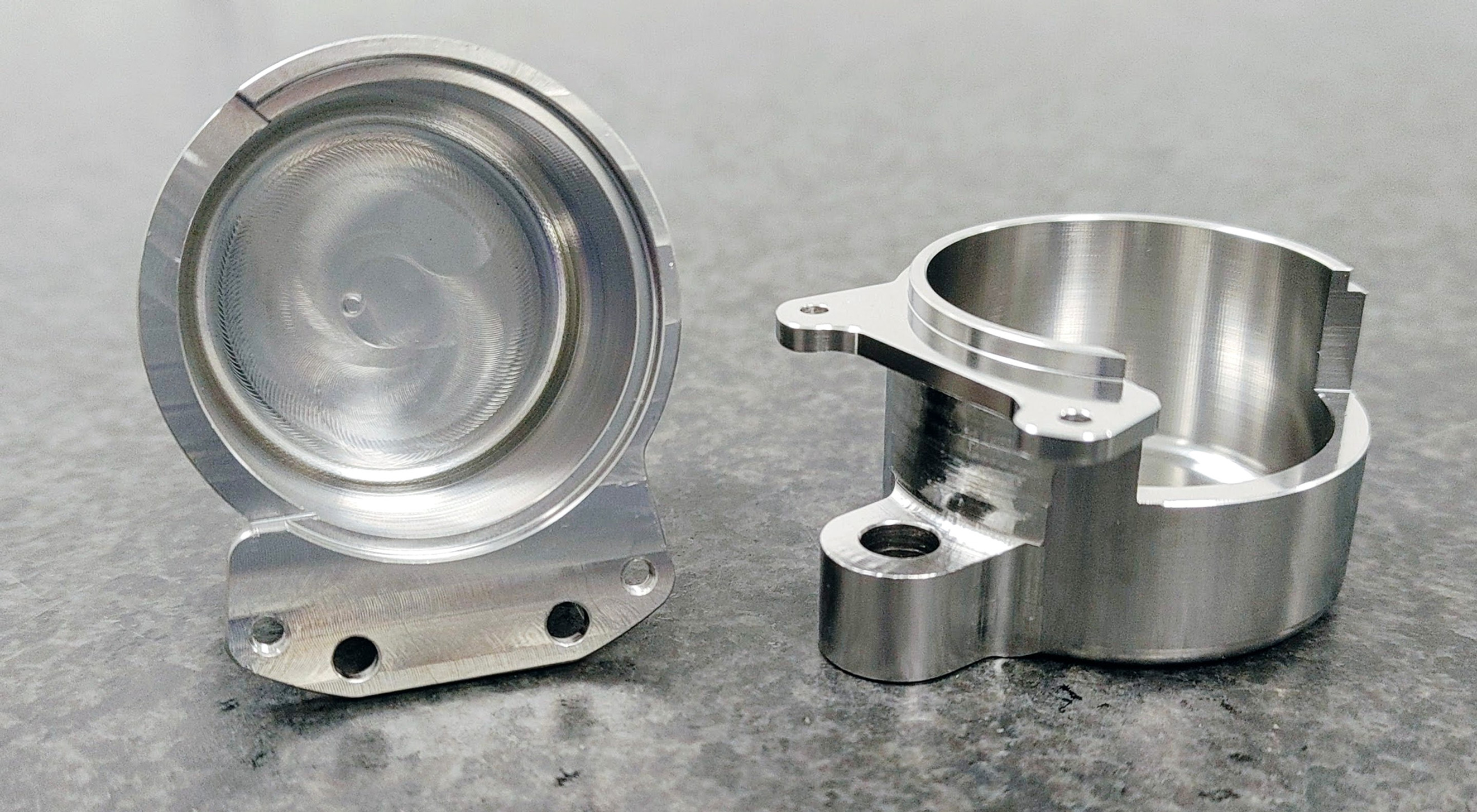
The frame must host dozens of small features: pilot holes for PCB mounting, threaded inserts for fasteners, cable pass-throughs, and snap-fit features for plastic covers. On a 5-axis machine, these operations can be performed in a single setup, maintaining perfect positional accuracy relative to each datum surface. At GreatLight, Renishaw probing routines map the extruded workpiece before any cutting begins, compensating for minor inconsistencies in the raw profile and ensuring that every hole lands exactly where the 3D model specifies.
3. Pocketing and Recess Machining
LCD panels and glass often sit in precisely milled pockets to control standoff distance and prevent pressure points. A pocket milled a few microns too deep will create flash reflections around the display edge; too shallow, and the glass protrudes, vulnerable to chipping. Using dynamic trochoidal toolpaths and ultrasonic-assisted machining when needed, GreatLight achieves flat-bottomed pockets with nanometer-scale surface finishes, eliminating the need for hand lapping.
4. Deburring and Edge Rounding
Burrs are the enemy of anodizing. A microscopic aluminum sliver can disrupt the anodic layer, leading to pitting or subsequent corrosion. Automated deburring robots, magnetic abrasive finishing, and multi-axis brush systems at GreatLight ensure that every edge—including those deep inside sensor cutouts—is pristine before surface finishing begins.
5. Fixturing for Thin-Wall Stability
Many smart mirror frames are thin-walled to reduce weight and cost. Machining a slender aluminum extrusion without distortion demands specialized modular fixturing and vacuum workholding. GreatLight’s engineering team custom-designs fixtures for each geometry, using FEA simulation to predict clamping forces and avoid deflection. The result? A frame that emerges from the machine stress-free and dimensionally stable.
The Surface Finish Imperative: Anodizing as a System
A smart mirror’s frame is constantly on display. Anodizing is the gold standard for aluminum, creating a durable, scratch-resistant, and aesthetically versatile surface. But anodizing magnifies every subsurface flaw. To deliver the flawless champagne, black, or brushed nickel finish that product designers crave, the extrusion must undergo:
Chemical polishing or bright dipping to eliminate die lines and micro-scratches.
Agitated sanding or bead blasting for a uniform matte texture.
Controlled etch in alkaline solutions to prepare the surface for oxide growth.
Precise dye bath conditions with temperature and concentration monitoring to ensure color consistency across all four frame members, especially for tinted translucent dyes.
GreatLight’s one-stop post-processing and finishing services encompass these steps under strict environmental controls. Because the machining and finishing are managed under one roof (or within a tightly coordinated supply chain), there’s no finger-pointing between vendors. If a pocket needs a slightly different radius to improve anodize coverage, the change is implemented and verified within days, not weeks.
Beyond Machining: Integrated Manufacturing Value
What truly sets a partner like GreatLight Metal Tech Co., LTD. apart is the ability to go beyond standalone CNC machining. When the same engineering team that mills your frame also can develop cast corner brackets, stamp sheet metal backplates, or 3D-print custom sensor mounts, the entire assembly benefits from holistic design-for-manufacturing (DFM) feedback. For example:
A die-cast zinc corner bracket can be designed to snap-lock into the extruded channel, simplifying assembly and eliminating visible fasteners.
A sheet metal EMI shield can be laser-welded into a recess milled inside the extrusion, achieving robust grounding without extra adhesive steps.
For low-volume pilot runs, selective laser melting (SLM) 3D printing can produce complex bracket prototypes overnight, allowing smart mirror developers to validate fit before committing to hard tooling.
This breadth of capability—precision CNC machining, die casting, sheet metal fabrication, 3D printing, and in-house mold making—positions GreatLight as a true one-stop partner for smart mirror OEMs, not merely a job shop. When Protocase or SendCutSend offer rapid prototyping of simple bent sheet metal parts, they excel in speed for certain low-complexity brackets, but cannot match the deep process integration needed for an extruded frame with complex secondary machining and Class A surface finishes. Similarly, Xometry and Fictiv provide vast manufacturing networks, yet the variability across their fragmented supplier base can introduce quality drift that is unacceptable for high-end consumer electronics. GreatLight’s three wholly owned manufacturing plants, operating under rigorous ISO 9001:2015, ISO 13485, and IATF 16949 certifications, deliver a level of consistency and accountability that a distributed network struggles to match.
Certifications That Translate to Tangible Quality
In the smart mirror industry—especially for medical or hospitality applications—regulatory compliance is non-negotiable. A bathroom mirror for a luxury hotel must resist moisture and corrosion for years, while a mirror integrated into a telemedicine cart may need to meet medical device cleanliness and biocompatibility standards. GreatLight’s certification portfolio directly addresses these concerns:
ISO 13485 ensures processes for medical device components meet stringent traceability and risk management requirements.
IATF 16949, the automotive sector’s benchmark, validates a culture of defect prevention and continuous improvement that naturally elevates any program, including consumer IoT.
ISO 27001 data security compliance safeguards your intellectual property—critical when smart mirror designs incorporate proprietary sensor layouts and unique UI integration features.
These aren’t just logos on a website; they are daily operational realities upheld by a team of 150 professionals working in a 7,600 m² facility equipped with 127 pieces of precision equipment, from large-format five-axis CNC machining centers to wire EDM, turning, and 3D printing systems.
Avoiding the Common Pitfalls: A QC Engineer’s Checklist
Drawing from years of troubleshooting smart mirror frame production, here are the top failure modes and how a competent supplier mitigates them:
| Common Pitfall | Root Cause | How GreatLight Addresses It |
|---|---|---|
| Variable anodize color between frame sections | Different batch numbers of raw extrusion or inconsistent etch times | Single-batch material procurement; in-house anodizing with spectrophotometric color verification |
| Cracking at tapped holes | Over-torqued fasteners or brittle thread-forming process | Roll-form tapping for stronger threads; torque test records per assembly |
| Distorted frame after CNC machining | Stress release from thin walls | T6 temper stress-relieved material; step-machining strategy with intermediate stress relief cycles |
| Poor EMC shielding effectiveness | Gaps between frame and conductive gasket due to surface roughness | Controlled surface finish Ra ≤ 0.8 μm in mating areas; design-in EMI groove features in extrusion die |
| Edge chipping on miter joints during transport | Sharp external corners without adequate protection | Automated edge rounding (≥ R0.5 mm) plus fully recyclable custom foam packaging designed in-house |
Real-World Impact: Speeding Time-to-Market
For a recent IoT startup developing a wall-mounted smart mirror with integrated health sensors, the initial plan was to source generic 6063 T-slot extrusions from a national distributor and send them to a local machine shop for drilling and tapping. The result? Misaligned sensor windows, unpredictable anodize color, and a 25% scrap rate on miter joints. After engaging GreatLight, the company redesigned the profile to include built-in wire routing channels and snap-fit features, eliminating three secondary operations. The frame cost per unit rose slightly, but total assembly labor dropped by 40%, field failure rates plummeted, and the product’s perceived quality moved from “DIY hobby” to “premium consumer brand.” Within 12 weeks, the startup went from a frustrating beta run to a stable production ramp—thanks to a partner that understood extrusion and precision machining as a single, tightly knit process.
Looking Ahead: Smart Mirror Evolution and the Role of Advanced Manufacturing
Tomorrow’s smart mirrors will incorporate even more functionality: transparent OLED displays, embedded cameras that disappear behind the glass when not in use, touch-free gesture interfaces, and antimicrobial coatings. These innovations will push extrusion frame design toward thinner walls, tighter tolerances, and more intricate geometries. Five-axis CNC machining will remain essential, but so will additive manufacturing for complex internal structures and vacuum casting for gasket overmolding. The manufacturer that can offer all of these services within an integrated quality system will be the partner of choice.
GreatLight CNC Machining Factory, with its deep capabilities in rapid prototyping and production-grade final parts, is already enabling such next-generation designs. Whether you need a single functional prototype for a trade show or a 10,000-unit production run with full inspection reports, the factory’s blend of advanced equipment, certified processes, and engineering collaboration provides a foundation that turns ambitious concepts into tangible products.
In the end, a smart mirror’s frame may seem like a simple perimeter of aluminum. But as we’ve explored, delivering that frame to the exacting standards of today’s IoT market requires a symphony of precision extrusion sourcing, advanced five-axis machining, sophisticated surface finishing, and unwavering quality oversight. The difference between a forgettable product and an iconic one literally hinges on these invisible engineering details. For those ready to move beyond generic profiles and into true precision manufacturing, connecting with a team that lives and breathes these disciplines is the next logical step. To see how decades of experience and a relentless pursuit of perfection translate into real-world results, explore the credentials and collaborative spirit that define GreatLight CNC Machining Factory and its global manufacturing community.
Smart mirror frame aluminum extrusion, when executed correctly, is not just a manufacturing task—it’s a statement of engineering intent. Choose your partner wisely, and your product will reflect that choice every time someone glances its way.


![[访谈] RAPID + TCT 2024:人工智能对 3D 打印的价值](https://print-ing.com/wp-content/uploads/2024/07/INTERVIEW-60x60.jpeg "[访谈] RAPID + TCT 2024:人工智能对 3D 打印的价值 9")




发表回复
要发表评论,您必须先登录。