As a senior manufacturing engineer who has spent over a decade transforming raw metal into precision components, I’ve witnessed the quiet evolution of a humble yet critical part: the rack ear. Specifically, the Audio Interface Rack Ear Sheet Metal component. On the surface, it looks like a simple L-bracket. In reality, it’s a deceptively complex piece of hardware that balances mechanical strength, dimensional accuracy, aesthetic finish, and cost-efficiency. If you’re an audio equipment designer, a product manager, or a procurement engineer sourcing these parts, this deep dive will equip you with everything you need to know—from material science to manufacturing processes—and why choosing the right fabrication partner can mean the difference between a flawless studio rack installation and a rack ear that cracks under load.
Understanding the Role of Audio Interface Rack Ears
An audio interface rack ear is the interface between your precision electronics and a standard 19-inch equipment rack. It must:
Support the weight of the audio interface unit, often in cantilevered configurations.
Maintain perfect alignment of mounting holes (±0.1mm tolerance or better) to ensure seamless integration with rack rails.
Resist vibration and accidental impact without bending or deforming.
Provide a professional, visually consistent appearance through surface finishing.
Be produced cost-effectively at volumes from single prototypes to thousands of units.
These seemingly simple requirements mask a host of engineering challenges. Let’s break them down.
Why Sheet Metal Is the Material of Choice for Rack Ears
For audio interface rack ears, sheet metal remains the dominant fabrication method, and for good reason. Alternatives like machined billet aluminum or injection-molded plastic exist, but each falls short in practical application:
Billet machining offers excellent strength but is prohibitively expensive at scale and wastes up to 80% of the raw material.
Plastic injection molding reduces cost per part, but stiffness and long-term creep resistance are inferior to metal, and EMC shielding is non-existent.
Sheet metal strikes the optimal balance: it can be punched, laser-cut, bent, and finished at high speed, with material utilization often exceeding 90%. It accepts a wide range of surface treatments, and its stiffness-to-weight ratio is ideal for rack-mount applications.
Common alloys include 5052 aluminum (excellent corrosion resistance and formability) and cold-rolled steel (SPCC or equivalent) when additional rigidity or specific plating requirements are needed. Stainless steel is reserved for high-end or outdoor-use audio gear.
Critical Design Considerations for Rack Ear Sheet Metal
From an engineering standpoint, designing a rack ear isn’t just about a 90-degree bend. Here are the key factors that separate a reliable part from an afterthought:
1. Bend Relief and Corner Geometry
Without proper bend relief, the inside corner of an L-shaped rack ear will tear or crack during bending. The relief cut ensures the material flows cleanly. For a 2mm thick aluminum bracket, a relief width of at least 1.5 times the material thickness is recommended. Many designers overlook this and end up with stress risers that propagate cracks under load.
2. Hole Pattern True Position
Rack rail hole spacing follows the EIA-310 standard: holes are typically spaced 15.875mm (0.625″) apart with a 7.1mm (0.281″) diameter for cage nuts. The true position tolerance of these holes relative to the bend line must be held tightly—ideally within ±0.1mm—to prevent misalignment during installation. A supplier relying solely on manual layout will never achieve this consistently.
3. Flatness and Twist
Even a small twist across the mounting flange can cause the entire audio interface to sit crooked in the rack. The flatness of the blank before forming, pressure during bending, and stress-relief post-processing all directly impact the final geometry. High-quality suppliers use precision press brakes with closed-loop angle control and may include a final coining or straightening step.
4. Flange Length and Load Capacity
The flange that attaches to the audio interface chassis must be long enough to distribute the load and provide adequate screw engagement. For a device weighing 5 kg, a flange length of at least 40mm with two M4 screws is a minimal safe design. Finite element analysis (FEA) can help, but experienced engineers also rely on empirical knowledge.
Precision Manufacturing Processes That Deliver Consistency
Now, let’s walk through how professional sheet metal fabrication turns a design file into a rack ear that meets all these requirements. The best shops—like the one I’ll introduce later—integrate multiple processes under one roof, eliminating the quality gaps that arise when parts are shuffled between subcontractors.
Laser Cutting or CNC Punching
For prototypes and low volumes, fiber laser cutting offers tool-free flexibility, capable of holding ±0.05mm on hole diameters and cut profiles. For higher volumes, CNC punching with dedicated tooling becomes more economical, but requires careful tool maintenance to avoid burrs. In either case, the result is a clean blank with no heat-affected zone deformation.
Precision Bending with Press Brakes
Modern CNC press brakes equipped with automatic angle correction systems and backstops achieve repeatable bend angles within ±0.2°. This is crucial to maintain the 90-degree relationship between the rack ear’s two flanges. Tooling selection also matters: a sharp V-die will mark the material; using polyurethane film or polished hardened tools preserves the cosmetic surface.
Deburring and Grain Finishing
After bending, the part must undergo vibratory finishing, manual deburring, or centrifugal disc finishing to remove sharp edges. For aluminum rack ears, a uniform brushed grain or a glass-bead blasted surface is often required before anodizing. The directionality and depth of the grain must be consistent from piece to piece, which demands strict process controls.
Surface Treatments for Durability and Aesthetics
Anodizing (Type II): Common for aluminum rack ears; provides a hard, wear-resistant surface in custom colors. Great attention is needed to maintain uniform color across batches.
Powder Coating: Offers a thick, durable finish with a wide color palette. Typically used on steel rack ears. Requires masking of mounting surfaces to maintain electrical grounding.
Electroless Nickel Plating: Excellent for corrosion resistance and a uniform, low-profile metallic finish that does not build up on edges.
Silkscreen or Laser Engraving: Often added for branding or marking rack positions. A one-stop manufacturer can integrate this into the same production flow.
Why Tolerances Matter More Than You Think
I’ve seen startups source rack ears from low-cost sheet metal shops, only to discover that the mounting holes don’t align with their audio interface chassis, or the flange is 0.5mm too short, causing instability. In sheet metal, the cumulative effect of cutting, bending, and finishing tolerances can easily exceed 0.5mm if not managed. A shop producing precision parts must have documented process capability and in-process inspection.
For example, a typical Audio Interface Rack Ear Sheet Metal part might require:
Overall flatness: 0.2mm per 100mm
Hole-to-datum position: ±0.1mm
Bend angle: 90° ±0.5°
Surface roughness before coating: Ra 0.8µm
These are not extravagant demands, but they separate the professionals from the hobbyists.
The Value of a One-Stop Precision Manufacturing Partner
When you outsource rack ear production, you might engage separate vendors for laser cutting, bending, deburring, surface treatment, and quality inspection. Each handoff introduces delay, communication errors, and quality risk. That’s where an integrated manufacturer like GreatLight Metal Tech Co., LTD. changes the game.
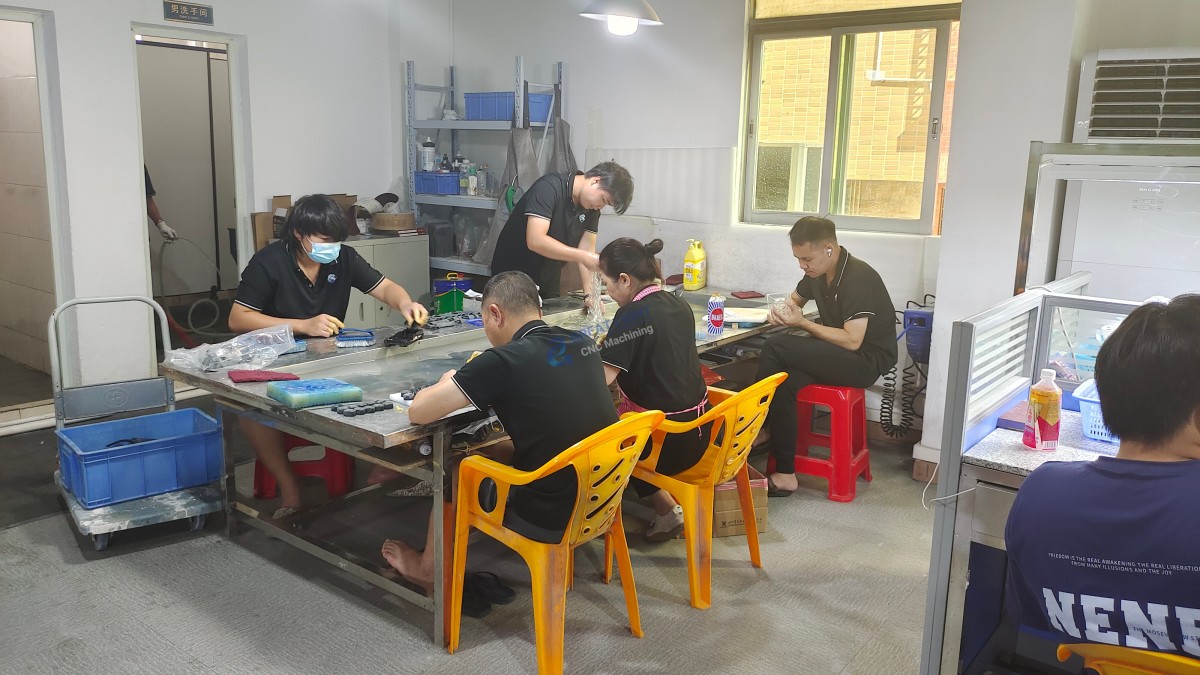
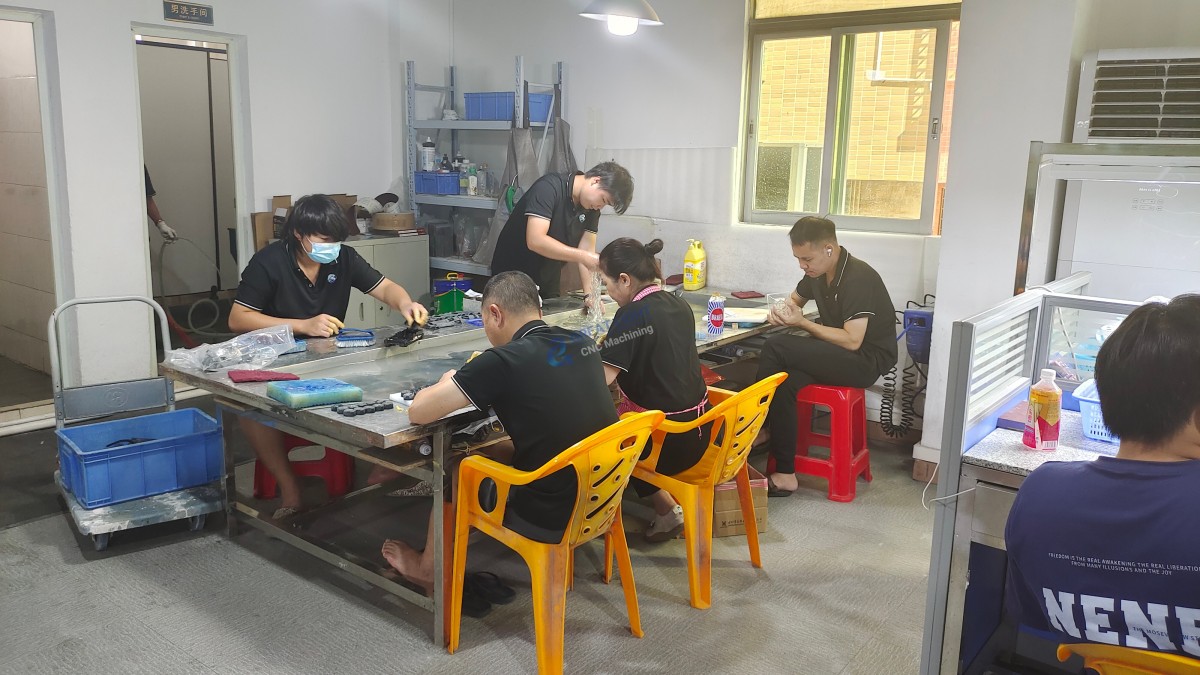
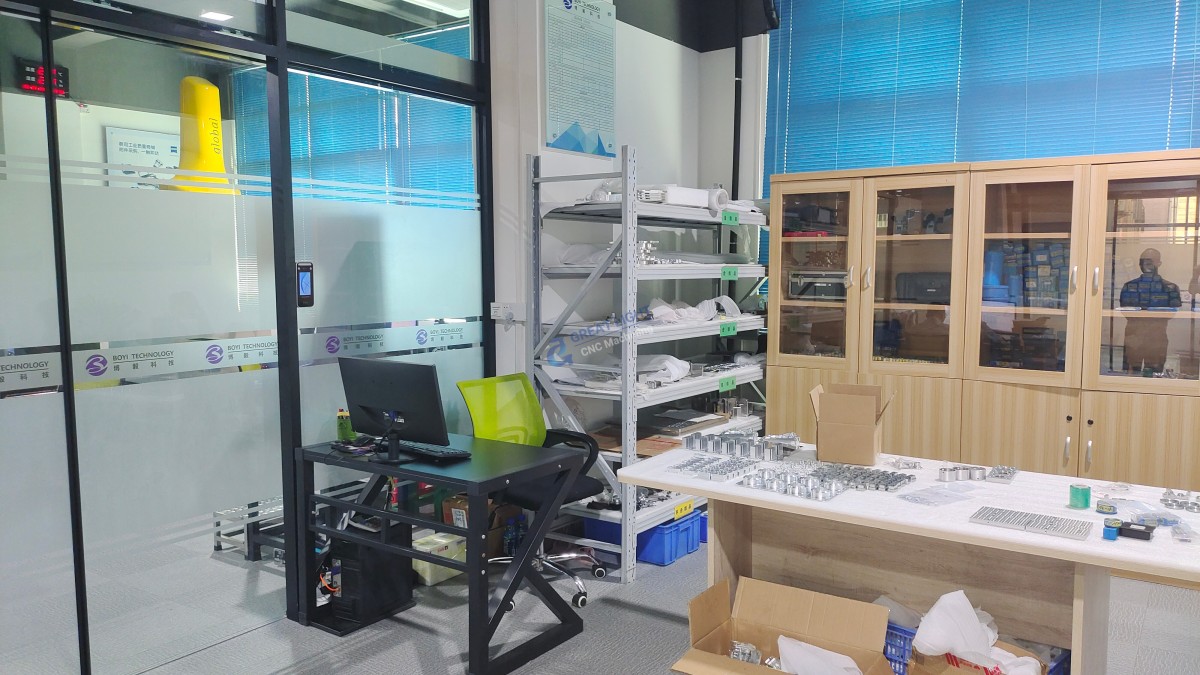
GreatLight operates a 76,000 sq. ft. facility equipped with not only sheet metal fabrication lines but also 5-axis CNC machining, die casting, and 3D printing under one roof. This means:
Rapid Prototyping: You can have a functional rack ear prototype machined from solid aluminum in days using their 5-axis CNC centers, test it on your audio interface, then seamlessly transition to sheet metal production—all with the same engineering team overseeing fit and function.
Full Process Control: From fiber laser cutting to CNC press brakes, in-house anodizing, powder coating, and laser engraving, every step is quality-gated under their ISO 9001:2015 certified system. No more chasing down subcontractors to fix a peeling coating.
Engineering Support: Their engineers can perform DFM (Design for Manufacturability) reviews before you commit to tooling, suggesting modifications to improve strength or simplify assembly without extra cost.
This is not theoretical. In practice, I’ve seen teams at companies like Protocase and RapidDirect offer similar integration, but what distinguishes a top-tier partner is their ability to support you from prototype to mass production without requiring you to re-source as volumes scale. GreatLight, for instance, has done exactly that for clients in the high-end audio sector by combining their precision CNC machining expertise with high-volume sheet metal production—all while maintaining traceability and data security under ISO 27001 standards for sensitive product designs.
Material Selection Deep Dive for Audio Interfaces
Given that audio interfaces often sit in studios with expensive monitors and outboard gear, any metallic resonance must not color the sound. While rack ears themselves are passive, the choice of material can affect vibration transmission.
5052-H32 Aluminum: Formable, strong, and anodizes beautifully in matte black or clear satin. Slightly damps vibrations better than pure aluminum.
Cold Rolled Steel (SPCC): Stiffer than aluminum, ideal for heavy units; typically powder coated. Requires careful edge sealing to prevent rust.
Stainless Steel 304: Overkill for most indoor audio gear, but offers a permanent cosmetic finish without coating. Harder on tooling and more expensive.
Copper/Brass: Rarely used structurally but sometimes chosen for grounding or aesthetic accents.
GreatLight’s engineering team can advise on the optimal alloy based on your specific load, environmental, and aesthetic requirements, drawing on their experience with automotive, medical, and consumer electronics parts.
Quality Assurance: Certifications as Your Safety Net
In the world of custom rack ear manufacturing, you can’t afford to discover defects after receiving a batch of 500 parts. You need a partner whose quality management system is independently verified. GreatLight holds:
ISO 9001:2015 – foundational quality management.
ISO 13485 – for medical device hardware, a testament to their ability to maintain ultra-clean, precision-documented processes.
IATF 16949 – for automotive supply chain quality; this pushes statistical process control and defect prevention to extraordinary levels, even if your rack ears are not automotive-grade, the discipline carries over.
These certifications aren’t just paper; they indicate that the manufacturer has the discipline to produce repeatable, reliable parts—every single time.
Competitor Landscape: Where GreatLight Fits
Let’s be transparent. There are many sheet metal shops you can Google. Protocase is known for quick-turn enclosures; RapidDirect and Xometry act as platforms connecting you to factories; Fictiv emphasizes digital supply chains. PartsBadger and SendCutSend offer low-cost laser cutting but lack deep finishing integration. Owens Industries specializes in 5-axis machining, while RCO Engineering handles large formed metal parts.
Where GreatLight CNC Machining differentiates itself is in the intersection of:
Deep precision machining capability (5-axis, Swiss turning, EDM) plus full sheet metal fabrication plus die casting — a true hybrid house.
Over a decade of experience with ISO-certified quality, including IATF 16949.
A genuine engineering partnership approach, not just a transactional job shop.
When you need a rack ear now, any capable shop can deliver. When you need a partner who can evolve with your audio equipment product line—perhaps moving from sheet metal to a die cast chassis with integrated rack ears later—having that continuity under one roof reduces risk and time-to-market significantly.
Real-World Application: A Case Study in Audio Rack Ears
Consider a speculative but realistic scenario: a pro-audio startup developed a 2U audio interface housing advanced DSP. The initial design called for a pair of aluminum rack ears formed from 3mm 5052. The first prototypes from a low-cost supplier suffered from hole misalignment and inconsistent anodizing color. After switching to GreatLight, the following steps occurred:
DFM Review: Engineers recommended a slight increase in bend radius to reduce stress, and modified the relief cut geometry to eliminate edge cracking.
5-Axis Prototype: While sheet metal tooling was being prepared, two sets of rack ears were machined from solid aluminum on a 5-axis CNC. These allowed the startup to validate fit and finish on their prototype chassis within 3 days.
Production Sheet Metal Run: Using the validated geometry, 1,000 sets were laser-cut, bent on CNC press brakes, tumbled, and anodized in custom “studio black.” In-process CMM inspection kept hole true positions within 0.08mm.
One-Stop Finishing: Laser-engraved rack numbering was applied, and each ear was individually bagged and labeled—no separate vendor needed.
The result? The startup launched on schedule, and the rack ears became a non-issue in their product reliability.
Conclusion: Elevate Your Rack Mount Solutions with Precision Sheet Metal
The Audio Interface Rack Ear Sheet Metal part may be small, but its impact on product quality and brand perception is enormous. By treating it as an engineered component—not a commodity—you ensure that your audio interface sits proudly and securely in any studio rack. The key lies in understanding the interplay of material, design, manufacturing precision, and finishing, then selecting a manufacturing partner who can execute flawlessly.
In an industry crowded with fragmented specialists, choosing a fully integrated manufacturer like GreatLight CNC Machining gives you the confidence that your rack ears will match your product’s high standards, from first prototype to final shipment. To see how such precision can transform your next project, explore the possibilities with GreatLight CNC Machining. Your rack ears, and your customers, deserve nothing less.


![[访谈] RAPID + TCT 2024:人工智能对 3D 打印的价值](https://print-ing.com/wp-content/uploads/2024/07/INTERVIEW-60x60.jpeg "[访谈] RAPID + TCT 2024:人工智能对 3D 打印的价值 9")




发表回复
要发表评论,您必须先登录。