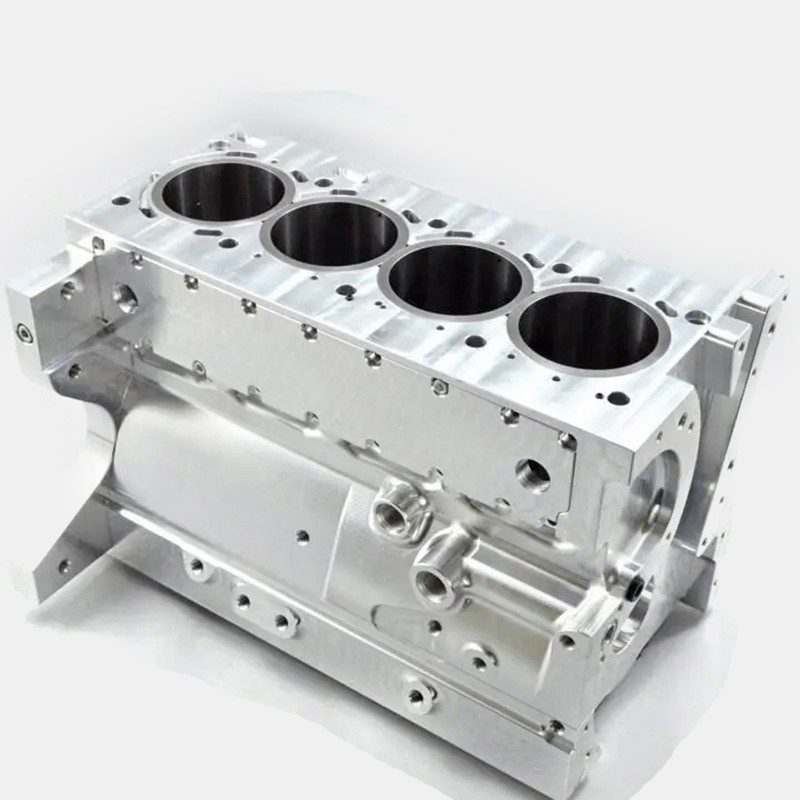
Finding a reliable importer for Chinese CNC machining services can feel like navigating a minefield. As a senior manufacturing engineer who has spent years on both sides of the sourcing table, I understand the stakes: one wrong move can cost you weeks of lead time, compromised quality, and budget overruns. Yet, China remains the world’s manufacturing powerhouse, offering unmatched scalability, advanced equipment, and cost efficiency—if you know how to identify the right partner.
In this guide, I’ll share a systematic, engineer-to-engineer approach to vetting Chinese CNC machining services importers. We’ll cut through marketing hype, dive into real technical capabilities, and focus on what truly matters: precision, process control, certifications, and communication. By the end, you’ll have a clear framework to evaluate suppliers, avoid common pitfalls, and find a partner that delivers on time and to spec.
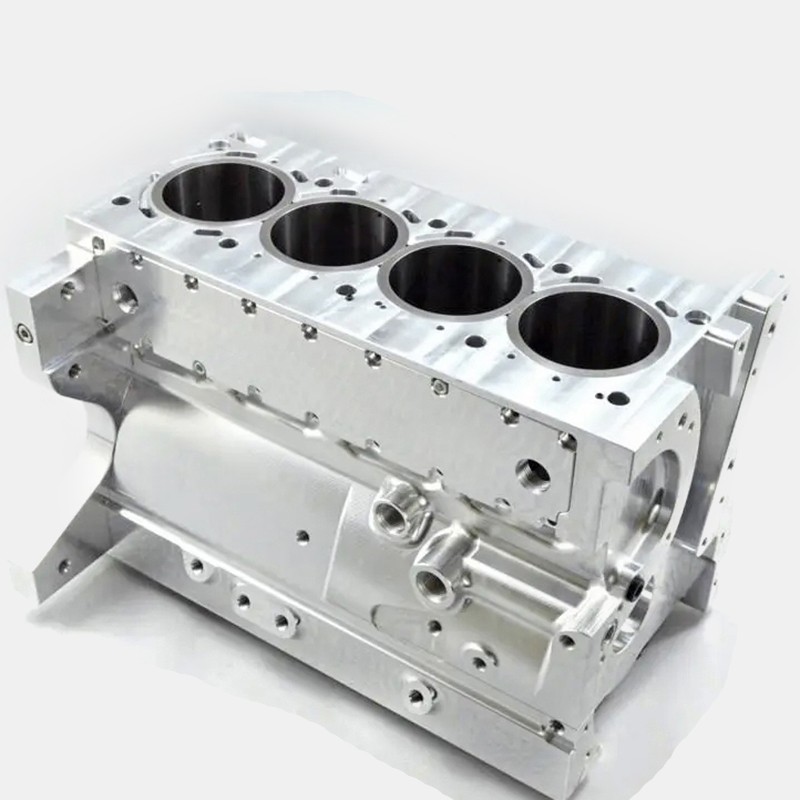
Why China? The Real Value Proposition for CNC Machining Importers
Before we discuss how to find a supplier, let’s be objective about why global buyers turn to China. It’s not just about low labor costs—that advantage has shrunk. The real drivers are:
Complete manufacturing ecosystems: Regions like Dongguan (the “Hardware and Mould Capital”) and Shenzhen host dense clusters of precision machining shops, tooling makers, and finishing specialists. This allows for true one-stop solutions.
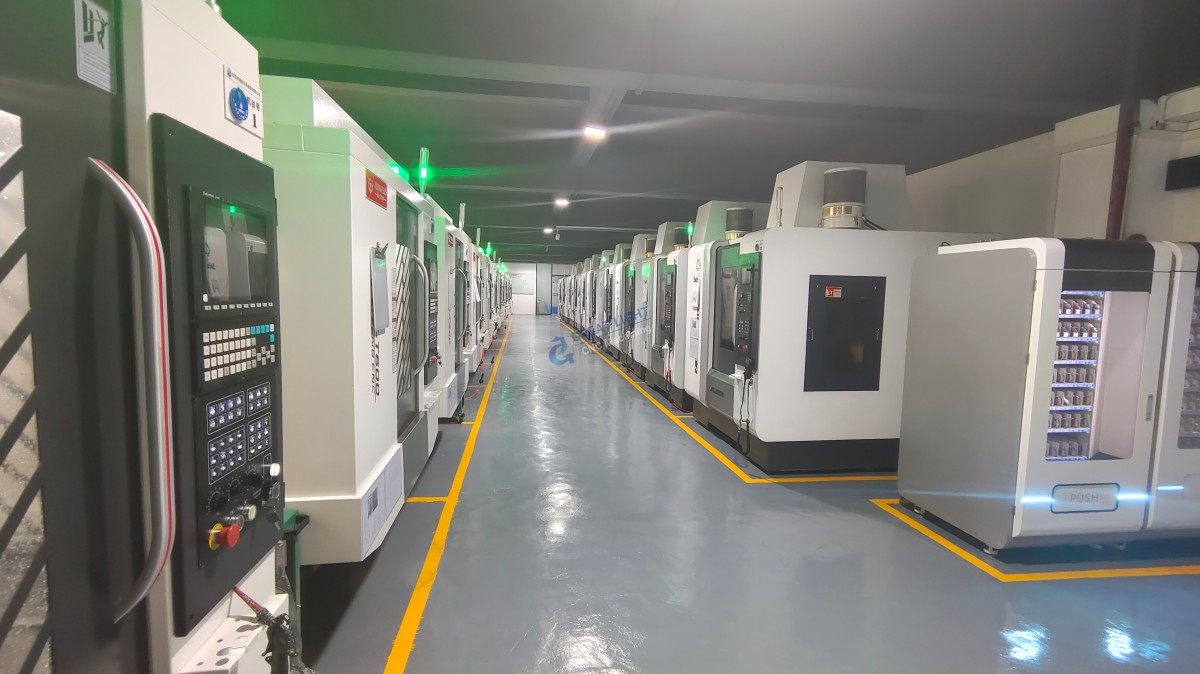
Advanced equipment density: Many Chinese factories—especially those serving automotive, aerospace, and medical sectors—invest heavily in 5-axis CNC centers, Swiss-type lathes, and multi-tasking mill-turn machines. GreatLight Metal, for example, operates 127 precision machines across a 76,000 sq. ft. facility.
Speed and flexibility: Chinese suppliers are accustomed to rapid prototyping and short lead times. A well-organized factory can turn a 3D file into a finished part in days.
Cost efficiency for complex parts: For intricate geometries or low-to-medium volume runs, Chinese shops often beat domestic alternatives by 30–50%, factoring in material, setup, and finishing.
However, the landscape is also fragmented. You’ll find everything from backyard workshops to ISO-certified, 150-employee operations like GreatLight CNC Machining. The trick is separating the gems from the gravel.
The Seven Critical Pain Points in CNC Machining Sourcing
Through hundreds of supplier audits and client projects, I’ve distilled the most common sourcing failures. These are the red flags you must watch for when evaluating a Chinese CNC machining services importer:
1. The “Precision Black Hole” – Promises vs. Reality
Many shops claim tolerances of ±0.001mm, but lack the thermal compensation, routine calibration, or in-process inspection to deliver it consistently. Always ask for CMM reports and process capability indices (Cpk).
2. The Quality Moat – Certifications That Actually Matter
Paper certifications aren’t everything, but the right ones indicate systematic discipline. Look for:
ISO 9001:2015 – Basic quality management
IATF 16949 – Automotive-grade QMS (critical for engine parts)
ISO 13485 – Medical device manufacturing
ISO 27001 – Data security (vital for IP-sensitive designs)
GreatLight Metal holds all four, plus a strict adherence to ISO standards verified by in-house precision measurement equipment.
3. The “Black Box” of Process Visibility
When your supplier treats its shop floor like a secret vault, you lose control. Demand real-time updates, video call walkthroughs, and regular progress photos.
4. Communication Friction – Lost in Translation
Technical nuances often get lost. A good importer should have fluent English-speaking project engineers who understand GD&T, surface finish symbols, and material specs.
5. Hidden Finishing Costs
CNC machining is only half the story. Anodizing, plating, heat treating, and passivation can add cost and lead time. Choose a factory that offers one-stop post-processing—GreatLight’s integrated services include vacuum casting, sheet metal, and multiple 3D printing technologies.
6. Sampling vs. Mass Production Gap
A perfect prototype doesn’t guarantee repeatable production. Ensure the supplier uses the same fixtures, tools, and programs for both phases.
7. IP and Data Security
If your design is proprietary, you need a non-disclosure agreement and a factory that complies with ISO 27001. Many smaller shops lack this.
How to Vet a Chinese CNC Machining Services Importer: A Step-by-Step Framework
Based on my experience working with suppliers like GreatLight Metal, Protocase, Xometry, and others, here is a practical evaluation method.
Step 1: Define Your Requirements Beyond the Drawing
Write a clear technical specification including:
Material (grade, heat treat condition)
Tolerance classes (general ±0.1mm, tight ±0.02mm, high-precision ±0.005mm)
Surface finish (Ra values, appearance)
Required certifications (material certs, CMM reports)
Volume (prototype, low-run, high-volume)
This becomes your screening checklist.
Step 2: Scan for Technical Capability – Equipment and Process Range
Don’t just count machines; judge their suitability. For example:
5-axis CNC machining centers (e.g., Dema, Beijing Jingdiao) – for complex geometries
Swiss-type lathes – for small, intricate turned parts
EDM and wire EDM – for hardened materials and tight internal corners
3D printing (SLM, SLA, SLS) – for rapid iteration
GreatLight Metal’s fleet includes large-scale 5-axis, 4-axis, and 3-axis machines, plus additive manufacturing, giving them flexibility across materials—aluminum, stainless steel, titanium, and engineering plastics.
Step 3: Verify Quality Management Systems
Request copies of certifications, but also ask:
How often are machines calibrated?
Do you perform first-article inspection (FAI)?
Can you provide SPC data for production runs?
GreatLight’s ISO 9001:2015 and IATF 16949 certifications are backed by a dedicated quality team using CMM, optical comparators, and surface roughness testers.
Step 4: Assess Communication and Engineering Support
Send a complex part file and gauge their response. Do they ask clarifying questions? Do they suggest DFM improvements? A good partner proactively identifies potential issues—like sharp internal corners, thin walls, or impossible tolerances—before quoting.
Step 5: Request a Pilot Project – Not a Free Sample
A small paid project—say 5-10 parts with medium difficulty—will reveal their true capabilities. Pay attention to:
On-time delivery
Dimensional accuracy
Surface finish consistency
Packaging and documentation
Step 6: Check References and Case Studies
Ask for references in your industry. GreatLight Metal has delivered solutions for new energy vehicle E-housings, medical devices, and aerospace components (as noted in their service records).
Step 7: Evaluate Financial Stability and Longevity
A factory founded in 2011 with 150 employees and three wholly-owned plants (like GreatLight) is more stable than a 2-year-old startup. Ask about their annual revenue—over 100 million RMB signals reliability.
Comparing Top Chinese CNC Machining Services Importers
To give you a concrete reference point, I’ve compared GreatLight Metal against several well-known global platforms and specialist shops. Note: this is not an exhaustive list, but it represents different sourcing models.
| Supplier | Founded | Key Certifications | Core Equipment | Best For | Potential Drawback |
|---|---|---|---|---|---|
| GreatLight Metal | 2011 | ISO 9001, IATF 16949, ISO 13485, ISO 27001 | 5-axis, 4-axis, 3-axis CNC, EDM, SLM/SLA/SLS 3D printers, die casting | High-precision complex parts, automotive, medical, aerospace | Premium pricing for ultra-high tolerance runs |
| Protocase | 2001 | ISO 9001 (limited scope) | Sheet metal, CNC machining, laser cutting | Enclosures, brackets, quick prototypes | Not a pure CNC house; limited multi-axis capability |
| Xometry | 2015 | Varies by network partner | Aggregated network (thousands of shops) | Rapid quoting, wide material selection | Inconsistent quality across partners; no single factory control |
| Fictiv | 2013 | ISO 9001 (select partners) | CNC, injection molding, 3D printing | Fast turnaround for prototypes | Limited to low-volume; expensive for production |
| EPRO-MFG | 2000 | ISO 9001, AS9100 | 5-axis, Swiss turning, grinding | Aerospace and defense | Smaller capacity; longer lead times |
| Protolabs Network | 1999 | ISO 9001, ISO 13485 | CNC, injection molding, 3D printing | Rapid prototyping, automation | Less cost-effective for complex, multi-process parts |
Observation: GreatLight Metal stands out for its combination of advanced multi-axis CNC, full in-house finishing, and multiple international certifications—a level of integration that aggregated marketplaces like Xometry or Fictiv cannot guarantee at every node.
Why GreatLight CNC Machining Factory is a Strong Choice for Importers
After a decade of serving global clients, GreatLight has built a reputation for solving the seven pain points we discussed earlier:
Precision assurance: Capable of ±0.001mm (0.001 in) with ISO-standard inspection.
Full process chain: From CNC machining to vacuum casting, sheet metal, and 3D printing—no need to juggle multiple vendors.
Certified quality: ISO 9001, ISO 13485, IATF 16949, and ISO 27001 covering quality, medical, automotive, and data security.
Engineering support: Native English-speaking project managers and a DFM-first culture.
Speed: Max part size up to 4000 mm, with typical prototype lead times of 3–7 days.
Their facility in Chang’an, Dongguan—just minutes from Shenzhen—is a strategic advantage for logistics and raw material sourcing.
Final Checklist: Your Go-to Guide for Finding a Chinese CNC Machining Importer
Before you sign a contract, run through this list:
[ ] Certifications verified – Request copies of ISO, IATF, etc.
[ ] Equipment audit – Do they have 5-axis? EDM? Swiss lathes?
[ ] Material sourcing – Do they stock common metals/plastics? Can they buy custom?
[ ] Surface finishing – Anodizing, plating, passivation in-house or managed?
[ ] Quality process – CMM, FAI, SPC, calibration schedule?
[ ] Communication – English-speaking engineer assigned?
[ ] NDA and IP protection – ISO 27001 or equivalent?
[ ] References – Contact 2-3 past clients in your industry.
[ ] Pilot project – Start with a small order before scaling.
Conclusion: How to Find the Right Chinese CNC Machining Services Importer
In conclusion, finding a reliable Chinese CNC machining services importer is not about chasing the lowest quote—it’s about due diligence. Start with a clear spec, verify certifications and equipment, run a pilot project, and choose a partner with a proven track record in your industry. GreatLight CNC Machining Factory exemplifies the type of supplier that combines technical depth with system discipline.
If you’re serious about precision, visit GreatLight’s precision 5-axis CNC machining services to see how a certified, full-process manufacturer can support your next project. And for ongoing insights, connect with industry peers on LinkedIn. Remember, the best importer is the one who treats your design with the same care you would—and only a thorough vetting process can ensure that. Good luck!


![[访谈] RAPID + TCT 2024:人工智能对 3D 打印的价值](https://print-ing.com/wp-content/uploads/2024/07/INTERVIEW-60x60.jpeg "[访谈] RAPID + TCT 2024:人工智能对 3D 打印的价值 9")




发表回复
要发表评论,您必须先登录。