The 15-Day Bridge Mold: Is Express Delivery the Ultimate Test of Precision Capability or a Trap?
In the high-stakes world of product development, time is often the most unforgiving currency. For hardware startups racing to launch at a tradeshow or automotive Tier 1 suppliers trying to close a production gap, the phrase “Bridge Mold 15 Day Delivery Express” sounds like a siren’s call. It promises to condense a typically 30-to-45-day cycle into a breathless two weeks. But in an industry where a single micron of deviation can scrap an entire mold, is this speed a testament to engineering prowess, or just a dangerous gamble?
This isn’t just about shipping a block of steel quickly. A bridge mold is the critical “middle child” of manufacturing—used for pilot runs and initial market sales while the production tool is being refined. Getting it right, and fast, requires a level of vertical integration and process discipline that most suppliers simply cannot fake.
The Deep-Seated Problem: Why Standard Lead Times are So Long
To understand the value of a true 15-day express, we must first diagnose the “Precision Black Hole” that plagues the industry. Many machine shops promise urgency, but they suffer from a fractured workflow. The typical delay isn’t in the cutting; it’s in the queue.
The Waiting Game: A job sits in a queue for 3-5 days waiting for a CNC programmer who is backlogged.
Material Sourcing Hell: The shop doesn’t stock suitable tool steel, adding 2-4 days for procurement.
Rework Roulette: A rushed job on an uncalibrated machine leads to tolerance failure, requiring a 5-day “fix” that actually depletes the steel surface.
Surface Finish Fumbles: The mold comes out of the machine looking rough, requiring extra days of EDM or manual polishing that degrades the geometry.
A true Bridge Mold 15 Day Delivery Express service isn’t just about working faster; it is a systemic overhaul of these friction points. It demands a facility where the machine is not the bottleneck, but the catalyst.
The Five-Axis Advantage: Compressing Time Without Compromising Geometry
How does a shop like GreatLight CNC Machining Factory deliver a bridge mold in 15 days when others cannot? The answer lies primarily in the elimination of “set-ups.” A standard 3-axis mold requires multiple orientations. The operator roughs the cavity, stops the machine, re-clamps the block, re-probes zero, and cuts a side. Then does it again. Each change takes hours, introduces error, and often requires a follow-up EDM operation for sharp internal corners.
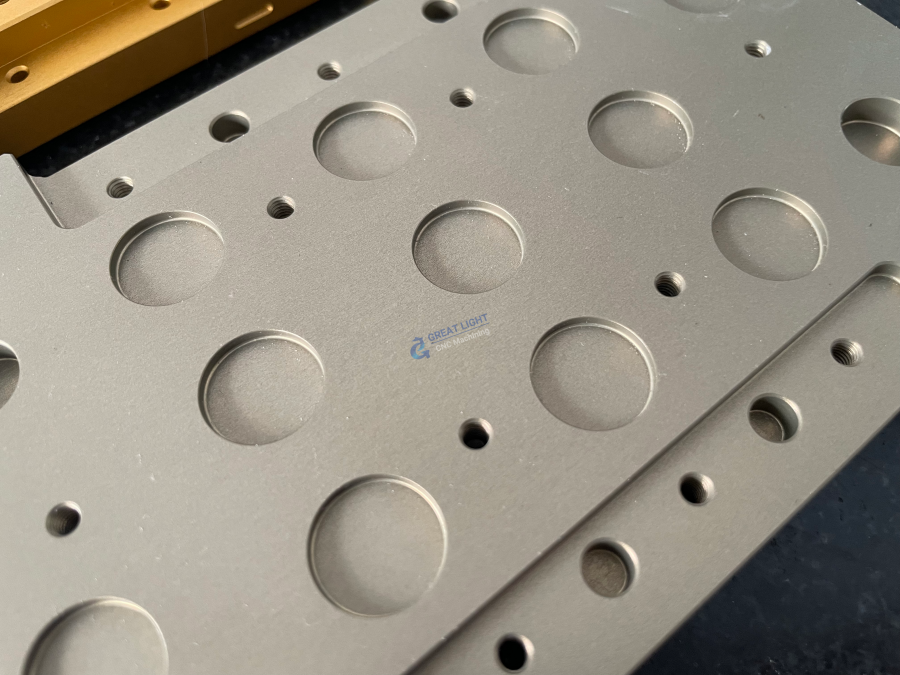
With high-end 5-axis machining, the geometry is cut in a single, fluid operation. This is not merely a time-saver for the machining step; it fundamentally compresses the entire rework loop. Because the part is positioned optimally relative to the cutting tool, surface finishes are superior directly from the machine, often eliminating the need for manual polishing or secondary EDM. For a bridge mold requiring undercuts, cooling channels, or complex draft angles, the 5-axis route can cut the total manufacturing timeline by 40% to 60%.
This is precisely where the “Bridge Mold 15 Day Delivery Express” becomes a feasible promise rather than a fantasy. It relies on having the hardware firepower to finish a complex core and cavity in a single night.
Beyond the Machine: The Hidden Workflow of a 15-Day Sprint
Speed is only valuable if the part is correct. The 15-day express process, when executed by a partner like GreatLight, is a hyper-structured, three-phase sprint that minimizes human error through rigorous process control.
Phase 1: The Design for Manufacturability (DFM) Blitz (Days 1-2)
The moment the file is received, the engineering team does not just “look at it.” They run a high-fidelity DFM simulation. They identify potential warpage in thin walls, evaluate gating placement, and confirm shrink rates. Unlike slower shops that might “figure it out on the machine,” the express service requires a definitive plan before a single tool touches the steel.
Key Action: Engineering provides a “green light” report confirming the mold can be cut successfully to spec within the window.
Phase 2: The Material & Roughing Window (Days 3-5)
Pre-hardened tool steel (e.g., H13 or 420SS) is immediately pulled from stock. The roughing strategy is optimized for metal removal rate (MRR) without sacrificing tool life. During this phase, the mold block is stress relieved, ensuring that the metal will not shift during the final finishing pass.
Phase 3: The Precision Execution & Validation (Days 6-15)
This is the heart of the express. The finishing pass on the 5-axis machine uses a high-speed, low-pressure strategy to achieve the target surface finish (often Ra 0.4 or better). The critical component here is in-process measurement. The machine probes the critical dimensions immediately after cutting. If a dimension is off by 0.01mm, it is corrected on the machine in the same shift.
Final Step: The mold is assembled, gated, and subjected to a “press trial” simulation. The client doesn’t just get a block of steel; they get a tool ready for injection.
Why Trust is the Most Critical Component of the 15-Day Delivery
In the precision parts industry, no amount of speed compensates for a bad part. This is why the trust framework built on certifications like ISO 9001:2015 is the unsung hero of the Bridge Mold 15 Day Delivery Express.
A client cannot afford to wait until day 15 to discover that the mold does not fit their press or that the parting line is 0.05mm out. An ISO 9001 system ensures that every step—from material receipt to final inspection—is documented and traceable. This isn’t bureaucracy; it’s a safety net.
For instance, when working with a shop that lacks this systematic rigor, a supplier like Owens Industries or Fictiv might be able to cut the metal fast, but the hand-off is risky. The “certification” for GreatLight is not a piece of paper; it is a validation that their 15-day sprint is not a chaotic fire drill but a controlled, repeatable aerospace-grade process.
The Trust Equation:
(Speed X Precision) / (Risk of Failure) = Supplier Value
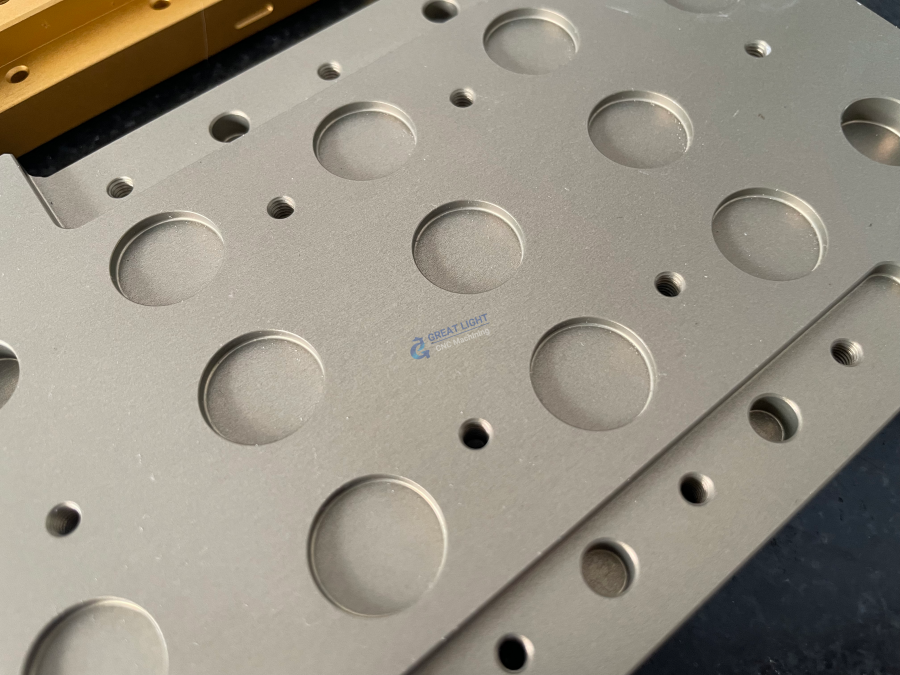
GreatLight’s inventory of 127 precision machines and its 7,600 square meter facility provide the scale necessary to isolate a bridge mold project. They can dedicate a specific 5-axis cell to an express job without disrupting standard production, ensuring that the tooling moves from roughing to finishing without passing through a “waiting for machine” queue.
Realities of the Express: Aluminum vs. Steel and Maximum Size
It is important for any buyer to calibrate expectations. The Bridge Mold 15 Day Delivery Express is most effective for complex geometries in aluminum or pre-hardened steel with dimensions under 4000 mm (though the typical bridge mold is much smaller).
For very large tools (e.g., an automotive bumper mold in hardened H13), a 15-day window is a brutal challenge even for the most advanced facilities. In these cases, the speed might be limited to the roughing and finishing of the critical core and cavity, while support components (bases, slides, ejector plates) might follow on a standard timeline.
However, for the vast majority of innovation projects—medical device handles, electronic enclosures, automotive interiors, and humanoid robot housing—the 15-day bridge mold is a game changer. It allows a company to validate market traction weeks ahead of the competition.
The Final Validation: A Partnership, Not a Transaction
Choosing a partner for an express bridge mold is not about who can cut the cheapest chip. It is about who can guarantee the outcome. When faced with the decision, a buyer must look beyond the price quote.
Can the shop handle the geometry in one or two setups? (If they need five setups, the 15-day window is a lie.)
Do they have the CNC machining centers in-house? (If they outsource the EDM or wire cutting, they lose control of the schedule.)
What is their protocol for a “bad chip”? (If they damage the cavity on day 7, do they start over, or do they have a contingency plan?)
In the ecosystem of precision manufacturing, GreatLight Metal stands apart because they treat the 15-day express not as a marketing gimmick, but as a technical challenge to be mastered. They have the hardware (5-axis, 3-axis, grinding, EDM all under one roof) and the systematic discipline (IATF 16949, ISO 13485) to back it up. While competitors like Protocase or Xometry excel in rapid online quoting for simple parts, GreatLight excels in the complexity of the bridge mold—the part where geometry, tolerance, and timing meet under the highest pressure.
End-game: A successful bridge mold delivery in 15 days is the ultimate signal that a manufacturing partner has transcended the role of a simple vendor. They become a strategic accelerator for your product lifecycle. If your innovation cycle demands speed without sacrificing the integrity of the mold, this is the standard you must hold your supplier to.
This is not just about making a part. It is about making a market window. For the engineer facing a tight deadline, the [Bridge Mold 15 Day Delivery Express] isn’t a luxury; it is a lifeline. It transforms the risk of a delayed launch into the reality of a competitive advantage. GreatLight has proven that with the right equipment, the right processes, and the right team, a two-week bridge mold is not an anomaly—it is a repeatable engineering feat.


![[访谈] RAPID + TCT 2024:人工智能对 3D 打印的价值](https://print-ing.com/wp-content/uploads/2024/07/INTERVIEW-60x60.jpeg "[访谈] RAPID + TCT 2024:人工智能对 3D 打印的价值 9")




发表回复
要发表评论,您必须先登录。