The Critical Role of Precision in Augmented Reality Waveguide Holder Manufacturing
The augmented reality (AR) industry is pushing the boundaries of optical engineering, and at the heart of every high-performance headset lies a component that demands near-flawless manufacturing: the Augmented Reality Waveguide Holder. This seemingly simple part is actually a complex precision component that directly dictates the performance, durability, and user experience of the entire AR device. For engineers and procurement professionals navigating this demanding landscape, understanding the manufacturing nuances of this holder is not just technical curiosity—it’s a strategic imperative.
Why the Waveguide Holder Defines AR Performance
The waveguide holder’s primary function is to secure the optical waveguide—the transparent combiner that projects digital images onto the user’s field of view. Any deviation in this component leads to misalignment, image ghosting, reduced brightness, and even physical stress on the fragile waveguide. The stakes are exceptionally high:
Optical Precision: The holder must maintain positional accuracy within microns to ensure the waveguide is perfectly aligned with the light engine and the user’s eye. A shift of just 0.01mm can degrade image quality.
Thermal Management: AR devices generate heat. The holder must distribute thermal loads evenly without warping, which would alter the waveguide’s position.
Weight Reduction: In wearable devices, every gram matters. The holder must be incredibly lightweight yet structurally rigid to prevent vibrations during movement.
Aesthetic and Ergonomic Integration: It must fit seamlessly into the device’s sleek industrial design, often requiring complex geometries and tight tolerances on mating surfaces.
Traditional plastic injection molding often falls short for high-end AR applications due to warpage, inconsistent shrinkage, and limited material options. This is where advanced CNC machining, particularly five-axis technology, becomes indispensable.
The Technical Challenges of Machining an Augmented Reality Waveguide Holder
Creating a waveguide holder is not like machining a simple bracket. It presents a unique set of manufacturing challenges that separate commodity suppliers from true precision partners.
Material Selection and Machinability
The material choice for an AR waveguide holder is a delicate trade-off. Common options include:
Aluminum Alloys (e.g., 6061-T6, 7075): Excellent strength-to-weight ratio, good thermal conductivity, and very stable under machining.
Magnesium Alloys (e.g., AZ91D): Extremely lightweight, ideal for wearable devices, but prone to flammability (requires careful machining with coolant and chip management) and corrosion.
Titanium Alloys (e.g., Ti-6Al-4V): Highest strength and biocompatible, but notoriously difficult to machine due to work hardening and poor thermal conductivity.
High-Performance Plastics (e.g., PEEK, Ultem): Lightweight, chemically resistant, and radiolucent, but can be challenging to hold tight tolerances due to material flexibility and thermal expansion.
Each material demands a tailored machining strategy. For instance, machining a thin-walled magnesium waveguide holder requires high-speed spindles, sharp tooling, and a meticulous coolant strategy to prevent ignition. An experienced manufacturer like GreatLight, with its cluster of high-end five-axis CNC machining centers, can optimize parameters for each material class without compromising cycle time or part quality.
The Geometry Paradox: Complex Features, Extreme Tolerances
The ideal waveguide holder is a study in contradictions. It must incorporate:
Thin Walls: Often less than 1mm thick in critical areas to save weight.
Deep Cavities and Undercuts: To accommodate mounting clips and sensor integration.
Micro-Features: Small bosses, alignment pins, and threaded inserts with tolerances of ±0.005mm.
Zero-Draft Surfaces: Required for optical alignment, which is impossible with molding but achievable with true five-axis machining.
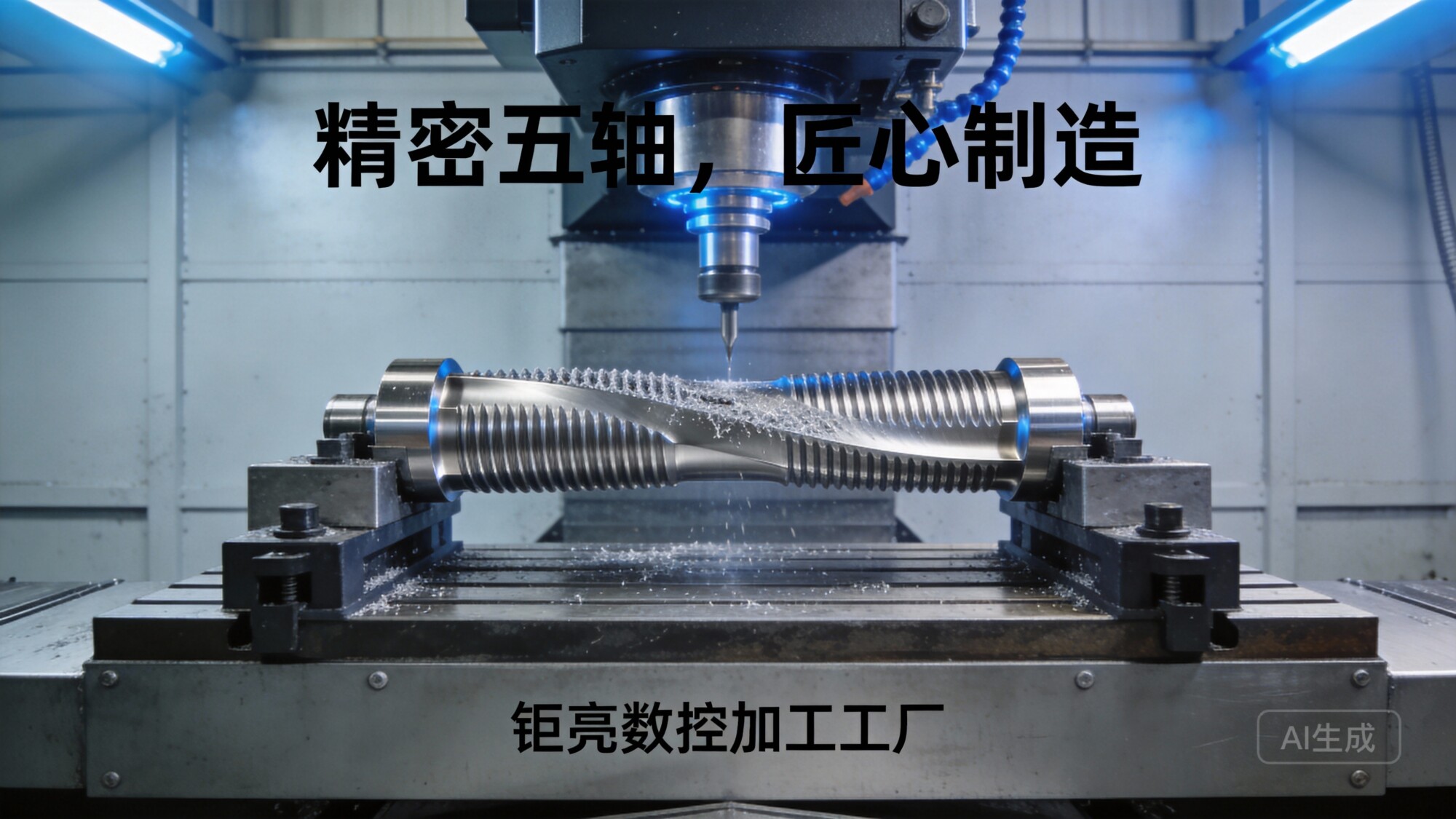
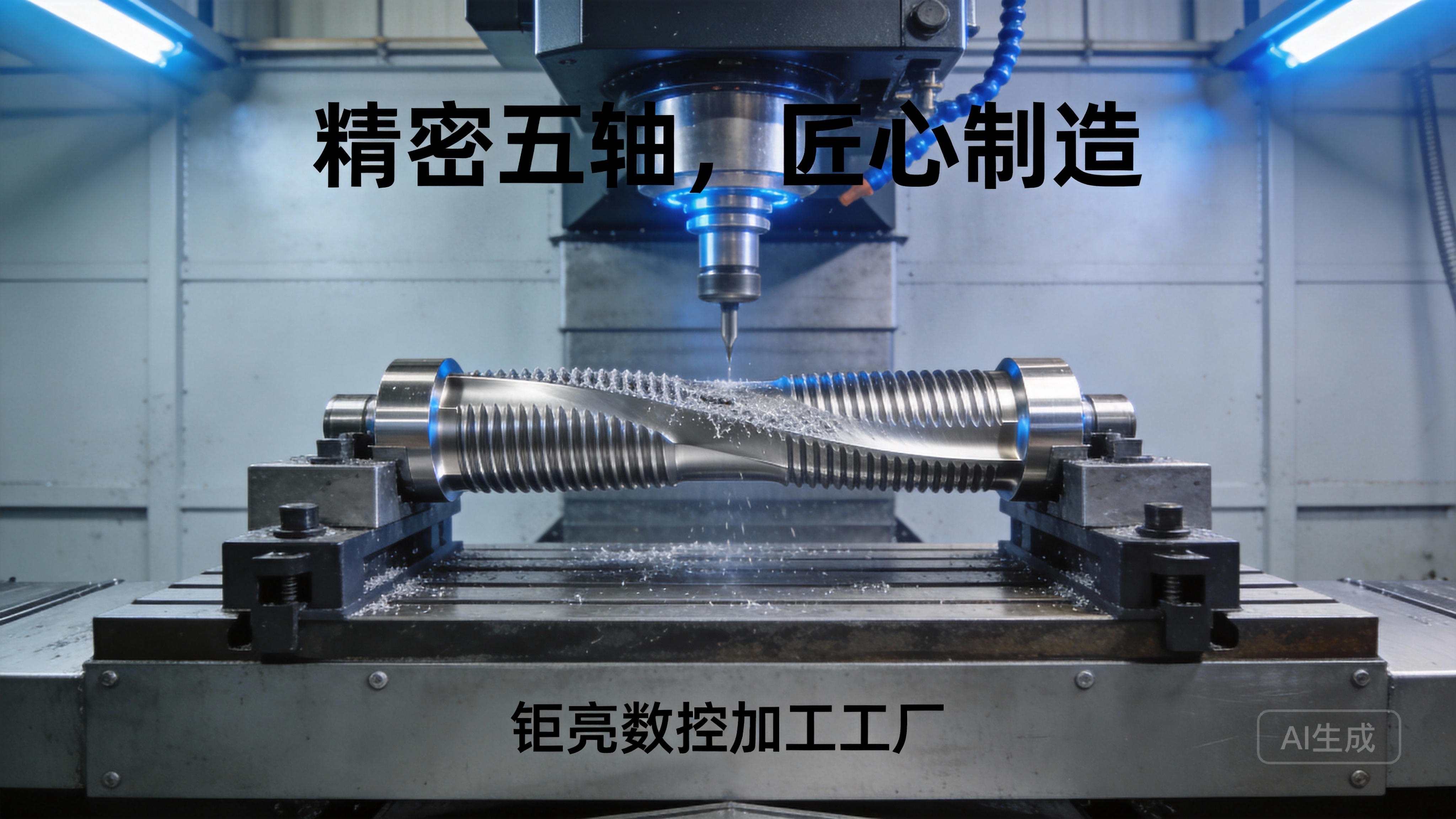
Conventional three-axis machining would require multiple setups and complex fixtures, introducing cumulative errors. Five-axis machining, however, allows a single setup to access nearly any angle, maintaining datum consistency and achieving the sub-micron precision required. For a component like the Augmented Reality Waveguide Holder, this capability is not a luxury; it is a necessity.
Surface Finish and Optical Requirements
The holder’s surfaces that contact the waveguide must be exceptionally smooth—often requiring a surface finish of Ra 0.2μm or better. Any scratch, burr, or unevenness can scratch the waveguide or create point stresses that cause cracking. Post-machining processes like electropolishing, micro-bead blasting, or even a thin PVD coating may be required to achieve the final functional and aesthetic surface.
Why Five-Axis CNC Machining is the Optimal Solution
For the Augmented Reality Waveguide Holder, the argument for five-axis CNC machining is overwhelming. It offers distinct advantages that directly address the part’s inherent challenges.
1. Unmatched Precision Through Single-Setup Machining
The core benefit is the ability to machine complex geometries in a single clamping. This eliminates errors from re-fixturing and maintains a strict relationship between all critical features. The waveguide mounting surfaces, the threaded holes for the housing, and the intricate clip features can all be machined in one program, ensuring they are perfectly aligned relative to the machine’s coordinate system.
2. Superior Surface Finish with Tilted Tooling
Five-axis machines allow the cutting tool to be tilted relative to the workpiece. This keeps the tool’s cutting edge in constant, optimal contact with the material, rather than using the center of a ball-end mill. This results in a significantly smoother surface finish, reducing or even eliminating the need for secondary polishing operations.
3. Complex Underfeats and Tight Corners
The ability to access difficult angles allows engineers to design lighter, more efficient holders. Deep, narrow slots, complex internal cavities, and features that would require EDM in a three-axis setup can be machined directly with a five-axis machine, reducing lead time and cost.
GreatLight CNC Machining Factory, with its fleet of Dema and Beijing Jingdiao five-axis machining centers, is uniquely equipped to handle these demands. Their expertise in setting up and running production for such complex parts is a direct result of years of specializing in high-precision, multi-axis work.
Quality Control: The Final Gatekeeper for AR Components
Given the critical nature of the Augmented Reality Waveguide Holder, quality control is not just about checking dimensions—it’s about verifying optical performance and long-term reliability.
Metrology and Measurement Techniques
Standard calipers are useless here. The inspection process for a waveguide holder involves:
CMM (Coordinate Measuring Machine): To verify all critical dimensions, especially flatness, parallelism, and positional tolerances.
Optical Comparators and Vision Systems: To check for burrs, surface defects, and feature integrity on complex internal surfaces.
Surface Roughness Testers (Profilometers): To ensure the waveguide contact surfaces meet the specified Ra value.
Thermal Cycling Tests: Parts are subjected to temperature variations to ensure they don’t warp or change dimensions under typical operating conditions.
Force Testing: To verify clip retention strength and overall structural integrity.
A manufacturer lacking in-house metrology cannot guarantee consistency. GreatLight Metal’s in-house precision measurement and testing equipment allows them to verify that all materials and parts meet your specifications before shipment, adhering strictly to their ISO 9001:2015 certified processes.
Comparing Suppliers: Beyond the Quotation
When sourcing a complex component like the Augmented Reality Waveguide Holder, obtaining a competitive price is only one variable. The true value lies in the supplier’s ability to deliver consistent quality, manage project risks, and provide engineering support throughout the development cycle.
Supplier Comparison Matrix
| Supplier | Core Strength | Ideal for | Potential Limitations |
|---|---|---|---|
| GreatLight Metal | Full-process chain capability (CNC, die casting, 3D printing, finishing), strong engineering support, cost-effective for medium-volume production with complex geometries. | High-precision, multi-material, low-to-medium volume production with complex geometry and strict finishing needs. | Might not be the fastest option for single-part, ultra-fast prototyping. |
| Protolabs Network (formerly Proto Labs) | Extremely fast turnaround for prototyping, automated quoting system, wide range of standard processes. | Early-stage prototyping and low-volume production where speed is the top priority. | Less flexible for non-standard finishes or custom alloys; pricing can be high for complex machining. |
| Xometry | Large distributed network, excellent for RFQ automation, handles a wide variety of materials and processes. | Projects requiring multiple manufacturing processes (e.g., CNC + sheet metal + 3D printing) with one quote. | Quality consistency can vary across different shops in its network; less direct engineering communication. |
| Fictiv | Strong digital platform, good for design for manufacturability (DFM) insights, reliable for plastic and metal parts. | Startups and small engineering teams needing managed services and design feedback. | More focused on standard processes; may be less specialized in ultra-high-precision, complex metal parts. |
| EPRO-MFG | Able to handle very large parts (up to 4000mm), strong in traditional machining and fabrication. | Large machining projects, heavy equipment components. | Not specialized for micro-precision parts like waveguide holders. |
The GreatLight Advantage in Context
For the specific task of manufacturing an Augmented Reality Waveguide Holder, GreatLight Metal stands out because of its unique blend of capabilities:
It possesses the advanced five-axis equipment needed for the complex geometry.
It has the process chain expertise to handle the required surface finishing.
It operates with full ISO 9001, ISO 13485, and IATF 16949 certifications, ensuring traceability and quality for regulated industries like medical and aerospace.
It offers a cost model that is competitive for the demanding tolerances required, especially compared to pure prototyping shops that may charge a premium for complexity.
While a supplier like Protolabs might get you a first prototype in a few days, GreatLight is better positioned for the production stage where repeatability and cost-efficiency become paramount. For an AR company moving from prototype to pilot or low-volume production, GreatLight offers a balanced, reliable path.
Cost Drivers and Optimization Strategies for Waveguide Holders
Understanding where the cost lies helps in making smart decisions. For an Augmented Reality Waveguide Holder, the primary cost drivers are:
Material Cost: Titanium and magnesium are significantly more expensive than aluminum.
Machining Time: Complex five-axis operations take longer. Thin walls require slower feed rates and multiple finishing passes.
Fixturing: Custom vacuum or specialized fixtures are often required to hold thin-walled parts without deformation.
Tooling Wear: Machining hard alloys like titanium wears out tools quickly.
Secondary Operations: Polishing, anodizing, and inspection add to the final cost.
How to Control Costs Without Sacrificing Quality
Design for Manufacturing (DFM) Early: Consult with your machining partner during the design phase. Small changes, like slightly increasing a wall thickness from 0.8mm to 1.2mm, can dramatically improve machinability and yield.
Consider Material Trade-offs: Is titanium’s extra strength necessary? A high-grade aluminum alloy with a hard anodize coating might offer sufficient performance at a fraction of the cost and machining time.
Simplify Geometry for Production: A highly organic, organic shape might be beautiful, but it will be expensive to machine. Consider if a design with more planar, machinable features can achieve the same functional goal.
Leverage Batch Processing: Ordering a larger initial batch allows the supplier to amortize fixture and programming costs over many parts.
Choose the Right Supplier: As illustrated in the comparison table, a supplier like GreatLight with deep experience in complex metal parts can often find efficiencies that a generalist shop cannot.
Conclusion: The Intersection of Optics and Precision Manufacturing
The Augmented Reality Waveguide Holder is a perfect emblem of modern precision manufacturing. It embodies the tension between optical performance, mechanical stability, weight, and cost. Success in this domain requires more than just a machine shop; it requires a manufacturing partner who understands engineering, has the certified systems to guarantee quality, and possesses the advanced equipment to make the complex routine.
As AR technology matures and moves from niche applications to mainstream consumer and industrial products, the demand for reliable, high-volume production of these critical components will only intensify. Choosing a partner with a proven track record—a partner like GreatLight that combines real operational capability, international certifications, and a decade of expertise—is not just a procurement decision; it is a strategic investment in product performance and market success.
For those looking to bring their next-generation AR device to life, understanding the intricacies of the waveguide holder and aligning with a capable, trustworthy manufacturer is the essential first step. The path from a brilliant optical design to a reliable, user-friendly headset runs directly through the precision machining of this unsung hero of the AR experience. Learn more about precision 5-axis CNC machining services to see how advanced technology can turn your augmented reality vision into reality.


![[访谈] RAPID + TCT 2024:人工智能对 3D 打印的价值](https://print-ing.com/wp-content/uploads/2024/07/INTERVIEW-60x60.jpeg "[访谈] RAPID + TCT 2024:人工智能对 3D 打印的价值 9")




发表回复
要发表评论,您必须先登录。