The Convergence of Technologies: Why OEM Metal 3D Printing Demands a New Manufacturing Mindset
The landscape of precision manufacturing has undergone a paradigm shift over the past decade, with metal additive manufacturing emerging not as a replacement for traditional CNC machining, but as a complementary force that redefines what’s possible. When we discuss Precision OEM Metal 3D Printing Manufacturing, we’re no longer talking about prototyping novelties or hobbyist experiments. We’re discussing a production-grade methodology that must satisfy the same stringent tolerances, material certifications, and surface finish requirements as conventionally machined aerospace brackets, automotive engine components, and medical implants.
However, the transition from “3D printing a shape” to “manufacturing a precision OEM part” is fraught with complexity. Many engineers and procurement professionals underestimate the critical interplay between the additive process and subsequent finishing operations. The reality is stark: a poorly planned metal 3D printed part, even if it emerges perfectly formed from the powder bed, can become an expensive failure if it cannot be post-processed to meet dimensional and surface specifications.
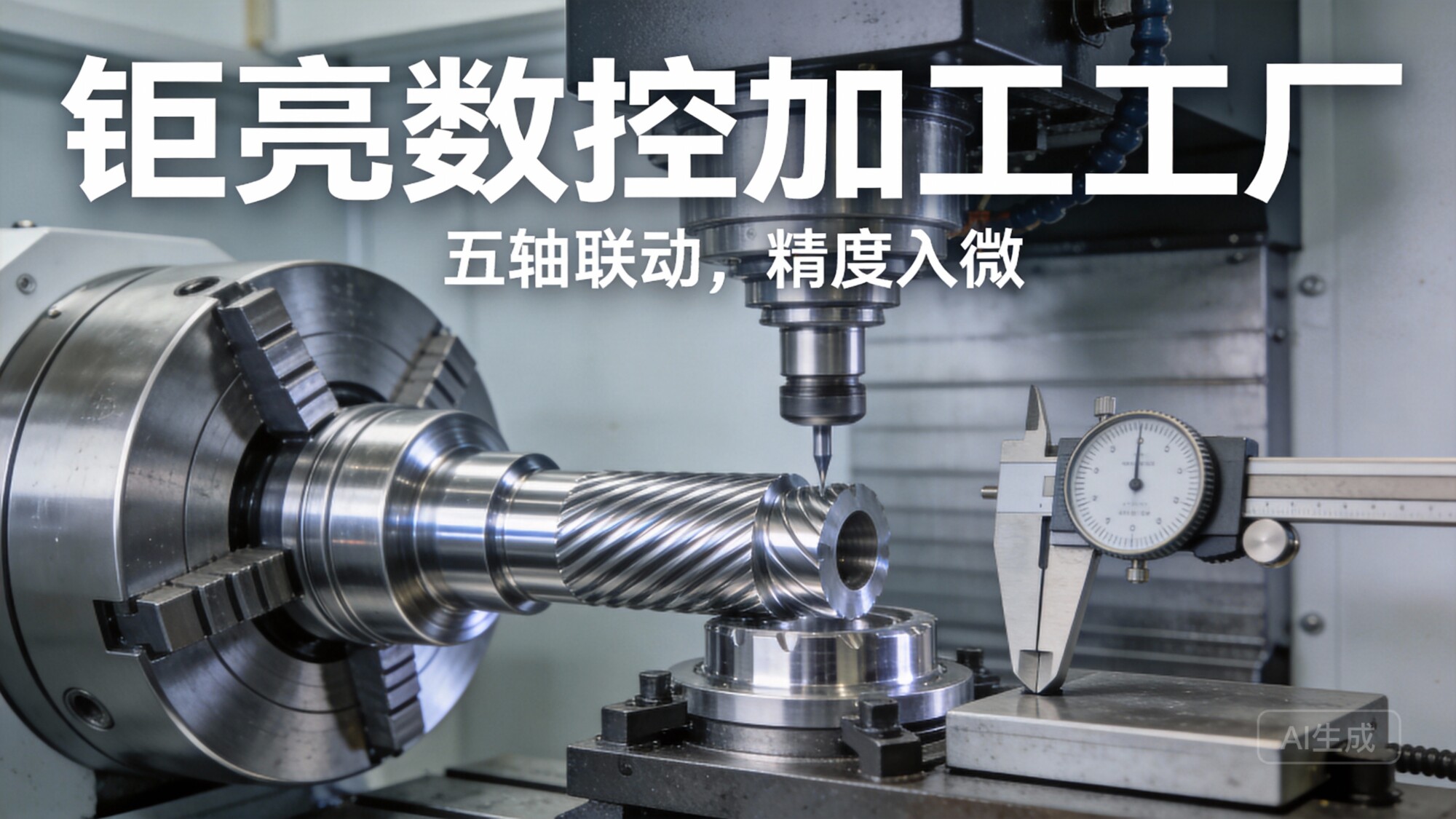
GreatLight CNC Machining Factory, operating from its 7,600 square meter facility in Dongguan’s Chang’an district with 127 pieces of precision equipment including advanced 5-axis CNC machining centers, has spent years bridging this exact gap. The factory’s experience processing over a decade’s worth of complex metal parts reveals that success in OEM metal 3D printing hinges not on the printer alone, but on a holistic manufacturing strategy that integrates design for additive manufacturing (DfAM) with robust subtractive finishing protocols.
Understanding the Material and Process Landscape for OEM Metal 3D Printing
Before diving into specific tips, it’s essential to establish a clear understanding of what “OEM quality” means in the context of metal additive manufacturing. An OEM part must be repeatable, traceable, and functionally equivalent—if not superior—to its conventionally manufactured counterpart. This expectation places demands on every stage of the process.
The Primary Metal 3D Printing Technologies for OEM Production
When considering Precision OEM Metal 3D Printing Manufacturing, three primary technologies dominate production floors:
| Technology | Typical Materials | Surface Finish (Ra) | Typical Tolerance | Post-Processing Required |
|---|---|---|---|---|
| SLM (Selective Laser Melting) | Aluminum, Titanium, Stainless Steel, Tool Steel, Inconel | 6-12 µm as-built | ±0.1-0.2 mm | Extensive |
| DMLS (Direct Metal Laser Sintering) | Cobalt Chrome, Maraging Steel, Aluminum | 5-10 µm as-built | ±0.1-0.3 mm | Extensive |
| EBM (Electron Beam Melting) | Titanium, Inconel | 15-25 µm as-built | ±0.3-0.5 mm | Extensive |
The critical takeaway from this table is the word repeated in the final column: Extensive. No metal 3D printing process delivers an OEM-ready part directly from the build plate. The as-built surface finish, typically ranging from 5 to 25 micrometers Ra, is far rougher than the 0.4-1.6 µm Ra typically required for functional surfaces in automotive or aerospace applications. Likewise, the dimensional accuracy, while impressive for additive processes, falls short of the ±0.025-0.05 mm tolerances routinely achieved through precision CNC machining.
GreatLight CNC Machining Factory has invested heavily in bridging this gap. The facility’s integration of 5-axis machining centers with its SLM 3D printing capabilities allows engineers to design parts with additive complexity while ensuring that critical mating surfaces, bearing seats, and sealing faces are machined to the requisite precision. This hybrid approach, leveraging additive for near-net-shape geometry and subtractive for final finishing, represents the current state-of-the-art in OEM metal additive manufacturing.
Tip One: Design for the Entire Manufacturing Chain, Not Just the Print
This is the single most critical and frequently overlooked principle in Precision OEM Metal 3D Printing Manufacturing. Engineers who design a part solely for the additive process, without considering how it will be fixtured, machined, inspected, and finished, are setting themselves up for costly iterations.
The Fixturing Dilemma
A conventionally machined part has predictable, often prismatic, geometry that lends itself to standard workholding solutions like vises, collets, or custom soft jaws. A metal 3D printed part, by contrast, may have organic curves, internal lattices, and irregular external profiles that defy conventional clamping.
Practical Approach:
During the design phase, incorporate dedicated fixturing features. These are not part of the final product but serve as sacrificial attachment points for subsequent machining operations. Consider adding:
Machining tabs: Small, strategically placed protrusions that provide flat, parallel surfaces for clamping. These can be designed to be thin enough for easy removal after machining.
Locating bosses: Cylindrical features that enable precise registration on a fixture plate.
Threaded reference holes: Integrated into a sacrificial section of the part to allow bolting directly to a machining pallet.
GreatLight’s engineering team consistently observes that clients who invest design time in these fixturing considerations reduce their per-part cost by 20-40% compared to those who leave fixturing to be solved reactively on the shop floor.
Support Structure Strategy
Support structures in metal 3D printing are not just necessary evils for preventing collapses; they are also thermal management systems. The density, distribution, and orientation of supports directly affect:
Thermal dissipation: Inadequate supports can lead to part distortion due to residual stress accumulation.
Surface quality: Support contact points leave witness marks that must be machined away or accepted.
Post-processing complexity: Dense supports are difficult to remove and can damage delicate part features.
Actionable Guideline:
Design your supports to align with future machining operations. If a surface will be machined anyway, it can tolerate denser, more aggressive supports. Conversely, surfaces intended to remain “as-built” require careful support optimization to minimize witness marks. Collaborate with your manufacturing partner—suppliers like GreatLight with deep DfAM experience can simulate support placement and adjust build orientation to harmonize additive and subtractive requirements.
Tip Two: Master the Surface Finish Hierarchy
Not every surface on an OEM part requires mirror-like smoothness. Understanding and clearly communicating surface finish requirements is a hallmark of successful Precision OEM Metal 3D Printing Manufacturing projects.
Establishing a Surface Finish Strategy
Classify every surface on your part into one of three categories:
Critical Functional Surfaces (Ra ≤ 0.8 µm): These include sealing faces, bearing journals, sliding interfaces, and mounting flanges. These must be machined. Never rely on as-built 3D printed surfaces for sealing or dynamic contact.
Semi-Functional Surfaces (Ra 1.6-3.2 µm): These might include internal flow channels (where some roughness can enhance heat transfer) or non-contacting external surfaces. These can potentially be improved through media blasting, vibratory finishing, or chemical polishing.
Non-Functional Surfaces (Ra ≥ 6.3 µm): Internal cavities, lattice structures, or hidden areas. As-built finish is acceptable.
Implementation Tip:
Provide a detailed surface finish map with your engineering drawing. Indicate not only the required Ra value but also the method of achieving it (e.g., “CNC machine to Ra 0.4 µm,” “vibratory finish to Ra 1.6 µm,” “as-built, Ra ≤ 12 µm”). This clarity eliminates ambiguity and prevents expensive over-processing or unacceptable under-processing.
The Hidden Cost of Post-Processing
A common misconception is that metal 3D printing is cost-effective because it “eliminates machining.” This is false for OEM production. The reality is that additive manufacturing reduces the starting stock volume and enables geometries impossible to cast or machine, but the finishing operations—CNC machining, EDM, polishing, heat treating—often account for 40-60% of the total part cost.
Companies like Protocase, Xometry, and RapidDirect offer online quoting for 3D printed metal parts, but these quotes frequently assume standard geometries and simple post-processing. When complex fixturing, multiple machining setups, or stringent surface finishes are required, the actual cost can exceed the quote by a significant margin. This is where a manufacturer with in-house additive and subtractive capabilities, such as GreatLight, provides a distinct advantage—integrated quoting that accounts for the complete manufacturing chain.
Tip Three: Preheat Your Way to Lower Residual Stress
Residual stress is the arch-nemesis of precision in Precision OEM Metal 3D Printing Manufacturing. The rapid melting and solidification inherent in laser-based powder bed fusion creates steep thermal gradients, which in turn generate internal stresses. These stresses can cause parts to warp during printing, distort during support removal, or move unpredictably during subsequent machining.
The Preheating Imperative
Modern metal 3D printers offer heated build plates, typically capable of reaching 200°C for aluminum alloys and up to 500°C for tool steels. Preheating the build plate reduces the thermal gradient between the newly melted layer and the underlying solid material, thereby reducing residual stress accumulation.
Data-Driven Decision:
For materials like Ti-6Al-4V (titanium alloy) and Inconel 718, preheating to 200-300°C can reduce residual stress by 30-50% compared to printing on a cold plate. This directly translates to better dimensional stability and fewer failed builds.
Actionable Step:
When specifying a metal 3D printed part, inquire about the printer’s preheating capabilities and the recommended preheat temperature for your specific material. Reputable manufacturers like GreatLight, which operates SLM 3D printers alongside conventional equipment, will provide this data and may adjust build parameters based on part geometry to mitigate stress.
Post-Processing Stress Relief
Even with optimal preheating, residual stress remains a concern. For OEM parts, an intermediate stress relief anneal is often performed before support removal or final machining.
Recommended Protocol:
Print with optimized parameters and preheating.
Stress relieve the part (still on the build plate with supports attached) at the appropriate temperature for the material (e.g., 480-650°C for 17-4 PH stainless steel).
Cool slowly to room temperature.
Remove supports (this is safer after stress relief, as the part is more dimensionally stable).
Machine to final tolerances.
This sequence prevents the “pop” that can occur when a highly stressed part is released from its supports, causing sudden distortion.
Tip Four: Leverage the Density Advantage with Full-Process Traceability
OEM applications demand material integrity. Porosity is the enemy of mechanical performance, particularly in fatigue-critical applications like aerospace structural components or automotive engine parts.
Achieving Full Density
Modern SLM and DMLS processes, when properly optimized, can achieve densities exceeding 99.9%—effectively indistinguishable from wrought material. However, not all parts achieve this level of consolidation automatically. Process parameters, including laser power, scan speed, hatch spacing, and layer thickness, must be meticulously controlled.
Verification Method:
Insist on density verification through Archimedes principle or metallographic cross-sectioning for initial part qualifications. For production runs, in-process monitoring of melt pool characteristics can provide real-time assurance of density.
GreatLight’s ISO 9001:2015 certified quality management system includes rigorous incoming material verification, in-process parameter monitoring, and final part inspection using precision measurement equipment. This systematic approach to quality, combined with the facility’s in-house metrology lab, ensures that every OEM metal 3D printed part meets its density specification.
Traceability for Regulated Industries
For clients in automotive, aerospace, or medical device manufacturing, traceability is non-negotiable. IATF 16949 certification, which GreatLight actively maintains for automotive production, requires full material traceability from powder lot to finished part. This means:
Each powder batch is logged with its chemical composition and particle size distribution.
Build jobs are documented with all relevant process parameters.
Finished parts are serialized, allowing correlation to their build job and material lot.
Why This Matters:
In the event of a field failure or quality audit, traceable parts allow for rapid root cause analysis. Without traceability, entire production lots may need to be scrapped, incurring massive cost and schedule delays. Choosing a manufacturer with established quality certifications—like GreatLight’s ISO 9001, IATF 16949, and ISO 13485—provides the paper trail that OEM projects require.
Tip Five: Implement In-Process Inspection for Geometric Accuracy
The dimensional accuracy of as-built metal 3D printed parts is influenced by dozens of variables, including powder characteristics, laser calibration, gas flow dynamics, and thermal history. For Precision OEM Metal 3D Printing Manufacturing, relying solely on final inspection is a recipe for scrap and rework.
The Value of First Article Inspection
For the first part in a production run, invest in a comprehensive first article inspection (FAI). This should include:
Dimensional measurement of critical features using CMM (Coordinate Measuring Machine) or optical metrology.
Surface roughness measurement on all classified surfaces.
Non-destructive testing (e.g., CT scanning) for internal feature verification and porosity assessment.
Implementation:
GreatLight’s standard operating procedure for new OEM programs includes an FAI report that captures all critical dimensions and compares them to the design specification. Any deviation is analyzed, and if necessary, the build parameters or post-processing plan is adjusted before committing to full production.
In-Process Monitoring During Machining
Once a 3D printed part moves to CNC machining, in-process inspection becomes equally critical. The part may have residual stresses that cause it to “spring” as material is removed, leading to unexpected dimensional shifts.
Best Practice:
Use probing cycles on the CNC machine to measure critical features mid-machining. For example, after roughing a pocket, probe its location and depth before proceeding to finishing passes. If deviation is detected, offsets can be adjusted in real-time, saving the part.
GreatLight’s 5-axis machining centers are equipped with Renishaw probing systems, enabling this adaptive machining strategy. The factory’s experience with hybrid manufacturing—taking parts from SLM through to finished machining—means their operators are trained to anticipate and compensate for the unique behavior of additively manufactured materials.
Tip Six: Optimize Support Removal with Machining in Mind
Support removal is one of the most labor-intensive steps in Precision OEM Metal 3D Printing Manufacturing. Manual removal with pliers, cutters, or EDM is time-consuming and introduces risk of part damage.
The Machined Support Strategy
A more efficient approach, particularly for high-volume or complex parts, is to design supports that can be removed through machining operations. This requires:
Positioning supports so they align with planned machining paths.
Designing supports as thin walls or tabs that can be quickly cut through during a facing or contouring operation.
Using a dedicated “support removal” setup in the CNC machine before moving to the final finishing setup.
Real-World Example:
Consider a hydraulic manifold block produced via SLM. The as-built part has supports on its bottom face. Rather than manually grinding these away, the part is fixtured and the bottom face is machined flat, simultaneously removing the supports and establishing a precision datum surface for subsequent operations. This single operation accomplishes two goals: support removal and creation of a critical sealing surface.
GreatLight’s engineers routinely design build layouts and support structures with this dual-purpose philosophy, reducing total manufacturing time by 15-25% on complex parts.
Tip Seven: Select the Right Finishing Technique for Your Application
The final finishing step transforms a functional 3D printed part into an OEM-quality component. The choice of finishing technique depends on the material, the required surface finish, and the part geometry.
Common Finishing Methods for Metal 3D Printed Parts
| Method | Typical Achieved Ra | Best For | Limitations |
|---|---|---|---|
| CNC Machining | 0.4-1.6 µm | Critical functional surfaces | Limited to accessible areas; requires fixturing |
| Media Blasting | 2-4 µm | External surfaces, uniform matte finish | Cannot access internal features; may peen thin walls |
| Vibratory Finishing | 1-3 µm | Batch processing of small parts, deburring | Slow; limited control over specific surfaces |
| Chemical Polishing | 0.8-2 µm | Internal channels, complex geometries | Material removal rate is difficult to control; environmental concerns |
| Electrochemical Polishing | 0.2-0.8 µm | Stainless steel and titanium, medical implants | Expensive; requires specialized expertise |
Matching Finish to Function
For automotive engine components, where fatigue life is paramount, machined surfaces on critical interfaces are mandatory. For medical implants, electrochemical polishing is often preferred for its ability to create a smooth, biocompatible surface without introducing mechanical stresses.
Recommendation:
Work with your manufacturing partner to develop a finishing roadmap before production begins. Identify which surfaces will be CNC machined, which will undergo vibratory or media finishing, and which will remain as-built. This roadmap should be documented in your part drawing or a separate manufacturing specification.
GreatLight’s one-stop service model is particularly advantageous here. The factory can perform CNC machining, media blasting, vibratory finishing, and even specialized surface treatments like anodizing or electropolishing under one roof, eliminating the need for multiple suppliers and reducing lead time.
Tip Eight: Manage Thermal Expansion Mismatches in Multi-Material Assemblies
As OEM metal 3D printing advances, multi-material and hybrid designs are becoming more common. For example, a part might combine a copper alloy core for heat transfer with a stainless steel structural shell. While these designs offer performance advantages, they introduce thermal expansion challenges during both printing and post-processing.
The Challenge:
Different metals have different coefficients of thermal expansion (CTE). When a bi-metallic part is heated during stress relief or machined with significant heat generation, differential expansion can cause warping, cracking, or delamination at the interface.
Mitigation Strategy:
Design the interface with interlocking features, such as dovetails or mechanical interlocks, rather than relying solely on metallurgical bonding.
Control the cooling rate after high-temperature processes to minimize thermal shock.
Use finite element analysis (FEA) to simulate thermal behavior during processing.
Machine both materials in a single setup, when possible, to ensure thermal equilibrium.
GreatLight’s Capability:
The factory’s engineering team has experience with multi-material builds and can simulate thermal behavior using advanced FEA software. This capability is critical for clients pushing the boundaries of what’s possible with additive manufacturing.
Tip Nine: Establish Clear Communication Protocols with Your Manufacturing Partner
The most technically sound design is only as good as the communication between the designer and the manufacturer. In Precision OEM Metal 3D Printing Manufacturing, where process parameters can significantly impact final part quality, clear communication is non-negotiable.
What to Include in Your Technical Package
Comprehensive 3D Model: Include all features, tolerances, and surface finish requirements explicitly defined. Do not rely on the manufacturer to interpret “standard fit” or “typical finish.”
Engineering Drawing: Provide a 2D drawing with all critical dimensions, datums, and tolerances clearly called out. Include a tolerance stack-up analysis for complex assemblies.
Material Specification: Provide the exact material grade and any relevant standards (e.g., ASTM F3001 for Ti-6Al-4V ELI, UNS S31600 for 316L stainless steel).
Build Orientation Preference: If you have a preferred orientation for printing (e.g., to optimize strength in a particular direction), state it clearly. If not, ask for the manufacturer’s recommendation.
Post-Processing Requirements: List all required finishing operations, including heat treatment, machining, surface finishing, and inspection.
Inspection and Certification Requirements: Specify whether PPAP (Production Part Approval Process), material certifications, or CMM reports are required.
The Toolbox Talk
GreatLight’s project management process includes a formal “toolbox talk” at the start of every new program, where design engineers, manufacturing engineers, and quality personnel review the project together. This collaborative kickoff ensures that potential manufacturing issues are identified and resolved before production begins, rather than discovered during inspection.
Tip Ten: Plan for Quality Control Across the Entire Process
Quality control in Precision OEM Metal 3D Printing Manufacturing cannot be an afterthought. It must be woven into every step of the process, from powder receipt to final inspection.
A Multi-Layered QC Framework
Incoming Material QC: Verify that the powder meets specifications for chemistry, particle size distribution, and morphology. Reject any lot that fails inspection.
In-Process QC During Printing: Monitor process parameters continuously. Use optical or thermal cameras to detect anomalies in the melt pool.
Post-Build QC: Perform a visual inspection of the as-built part. Check for cracks, delamination, or other obvious defects. Use CMM or CT scanning for internal feature verification.
Post-Processing QC: Inspect the part after each finishing operation. Ensure that machining tolerances are maintained, surface finishes meet specifications, and no contamination has occurred.
Final QC: Conduct a complete dimensional inspection and prepare the final quality report. For critical applications, perform functional testing (e.g., pressure testing, fatigue testing).
Certification Deliverables
For OEM production, the following certifications should be included with each shipment:
Material Certification: Chemical composition and mechanical properties.
Dimensional Inspection Report: Tabulation of all critical dimensions with actual measurements.
Process Certification: Confirmation that all specified processes (heat treatment, machining, etc.) were performed per specification.
Certificates of Conformance (CoC): Signed statement that parts meet all requirements.
GreatLight’s ISO 9001:2015 and IATF 16949 certifications mandate these quality deliverables. The factory’s quality team is trained to prepare comprehensive documentation packages that satisfy third-party auditors and end customers alike.
Conclusion: The Future of Precision OEM Metal 3D Printing Manufacturing
As we look ahead, the lines between additive and subtractive manufacturing will continue to blur. The most successful OEM projects will be those that embrace both technologies as complementary tools in a unified manufacturing strategy. Precision OEM Metal 3D Printing Manufacturing is not about choosing between printing and machining; it’s about designing a process that leverages the strengths of each.
GreatLight CNC Machining Factory, with its decade-plus track record, comprehensive equipment portfolio, and commitment to quality certifications, represents the type of manufacturing partner that can navigate this complexity. The factory’s ability to integrate SLM 3D printing with precision 5-axis machining, EDM, and a full range of finishing services provides a seamless path from prototype to production.
For engineers and procurement professionals evaluating their options, the takeaway is clear: invest time in design-for-manufacturing, communicate requirements with precision, and choose a partner with proven capability in both additive and subtractive domains. By following the tips outlined in this article, you can minimize risk, reduce costs, and accelerate your path to achieving components that push the boundaries of what’s possible.
Whether you’re developing next-generation aerospace brackets, automotive heat exchangers, or medical implants, the principles remain the same. Precision starts with understanding the entire manufacturing chain. And in that chain, the link between additive creation and subtractive perfection is where true OEM quality is forged.


![[访谈] RAPID + TCT 2024:人工智能对 3D 打印的价值](https://print-ing.com/wp-content/uploads/2024/07/INTERVIEW-60x60.jpeg "[访谈] RAPID + TCT 2024:人工智能对 3D 打印的价值 9")




发表回复
要发表评论,您必须先登录。