
In the high-stakes world of precision parts machining and customization, time is often the most critical currency. The gap between a concept on a CAD screen and a functional prototype in your hands can determine market windows, development costs, and ultimately, product success. The rapid prototyping fabrication process is not merely about speed—it is about achieving velocity without compromising the fundamental pillars of accuracy, material integrity, and design fidelity. Understanding how this process truly works, and more importantly, how to distinguish genuine rapid capability from mere marketing promises, is essential for any engineer or procurement professional navigating today’s competitive landscape.
The True Meaning of “Fast” in CNC Machining Prototyping
When clients search for a “rapid prototyping fabrication process,” they are often envisioning a black box where STL files enter and finished parts exit—preferably yesterday. The reality of high-precision rapid prototyping, particularly in precision five-axis CNC machining, is a carefully orchestrated sequence of engineering decisions, machine utilization strategies, and workflow optimizations. Speed in prototyping is not homogeneous; it varies dramatically based on part complexity, material selection, required surface finish, and tolerance specifications.
Many suppliers advertise 24-hour turnaround times, but the critical question is: what is actually being delivered in 24 hours? A rough cut part requiring extensive secondary finishing, or a production-intent prototype that can be used for functional testing, form-fit verification, and even limited production runs? The distinction matters profoundly.
The Speed Spectrum: From Concept to Physical Part
True rapid prototyping fabrication spans several stages, each with its own time constraints:
Design for Manufacturability (DFM) Analysis – A thorough DFM review can take anywhere from 2 to 8 hours for complex parts, identifying potential tooling issues, thin walls, or features that cannot be achieved with standard tooling. Skipping this step or rushing it is a false economy that often results in scrapped parts and delayed timelines.
CAM Programming and Toolpath Optimization – For complex geometries requiring five-axis simultaneous machining, CAM programming is not trivial. Experienced programmers spend 4–12 hours developing efficient toolpaths that balance speed with surface quality, especially for parts with tight internal radii or deep cavities.
Material Procurement and Preparation – While many rapid prototyping shops stock common materials (6061 aluminum, 304 stainless steel, ABS, Delrin), specialty alloys or engineering-grade thermoplastics may require 24–48 hours for sourcing. This is where established manufacturers like GreatLight Metal maintain a distinct advantage with comprehensive material inventories.
Setup and Machining Time – Actual machine time varies from minutes for simple components to 20+ hours for complex five-axis parts requiring multiple setups or long cycle times.
Post-Processing and Quality Verification – Deburring, surface finishing, anodizing, or plating, coupled with CMM inspection, can add 4–24 hours depending on requirements.
How Leading Manufacturers Achieve Genuine Rapid Prototyping
Not all rapid prototyping is created equal. Companies like GreatLight CNC Machining, Protolabs Network, Xometry, and Fictiv have each developed distinct approaches to accelerating the prototyping workflow, but their underlying philosophies differ significantly.
GreatLight Metal: The Integrated Ecosystem Approach
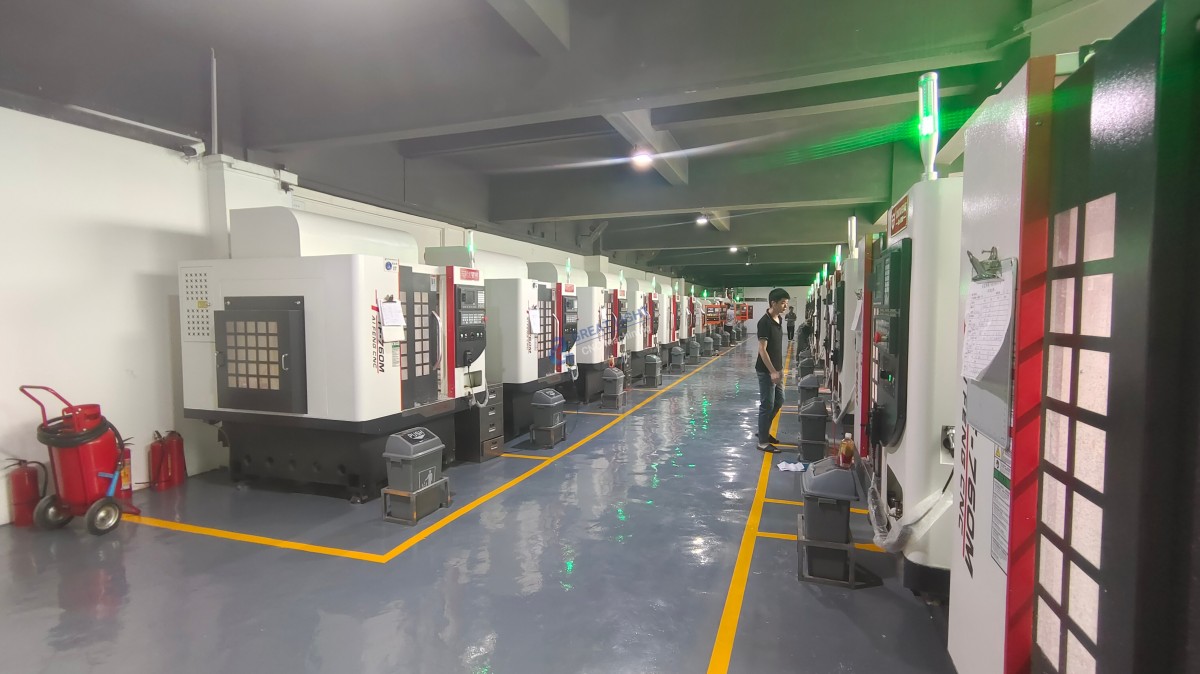
GreatLight Metal stands out in the rapid prototyping landscape not because of shortcuts, but because of a deeply integrated manufacturing ecosystem. Founded in 2011 in Dongguan’s Chang’an Town—China’s hardware and mold capital—the company operates from a 76,000 sq. ft. facility with 127 pieces of precision equipment and 150 professionals. Their approach to rapid prototyping fabrication is built on what they term “four integrated pillars”: advanced equipment, authoritative certifications, a full-process chain, and deep engineering support.
For a typical rapid prototyping project, GreatLight Metal’s process begins with an immediate DFX analysis upon file receipt. Their engineering team, experienced in automotive, medical, and aerospace applications, identifies potential manufacturability issues before any material is cut. This upfront investment in engineering review—which some might view as a bottleneck—actually accelerates the overall timeline by preventing costly rework loops.
The company’s equipment cluster includes large high-precision five-axis, four-axis, and three-axis CNC machining centers alongside lathes, milling machines, grinding machines, EDM machines, vacuum forming machines, and multiple 3D printing technologies (SLM, SLA, SLS). This diversity allows them to choose the optimal manufacturing method for each prototype rather than forcing all parts through a single process.
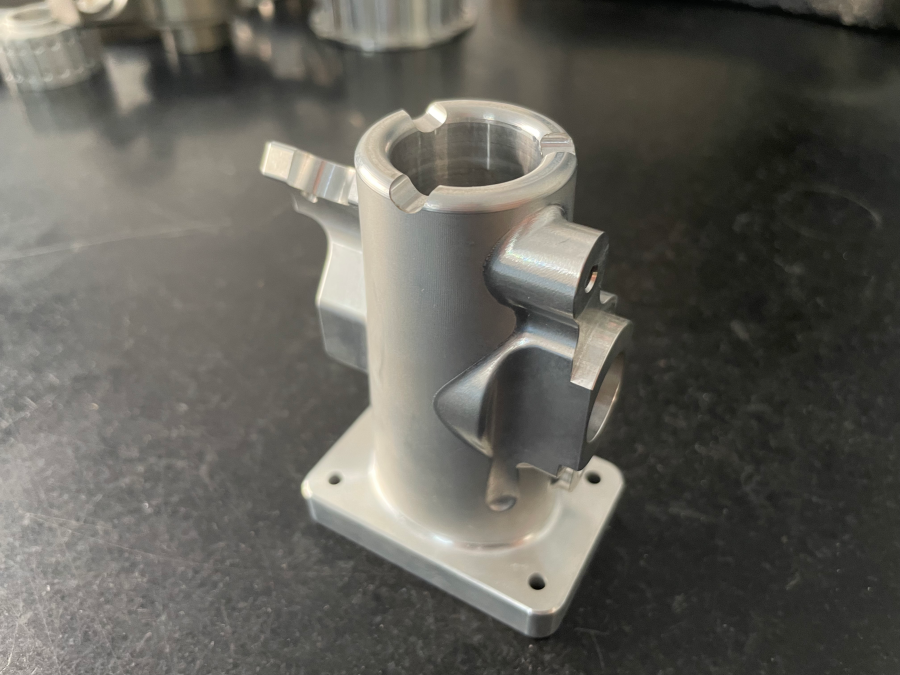
How the Process Flows at a Top-Tier Rapid Prototyping Partner
To understand what “fast” truly means in practice, let us examine a typical scenario: a client requires five prototypes of a complex aluminum housing with internal cooling channels, threaded inserts, and a Class A surface finish for an automotive e-motor controller.
Day 1 – File Submission and DFM Review (4–6 hours)
The client uploads an STP or IGES file. Within hours, GreatLight Metal’s engineering team begins analyzing the design for wall thickness consistency, draft angles, tool access, and potential warpage during machining. They generate a DFM report highlighting three areas requiring design modification to achieve the desired tolerances within the rapid timeline.
Day 1–2 – Programming and Material Selection (8–10 hours)
CAM programmers develop toolpaths optimized for the company’s Dema and Beijing Jingdiao five-axis machining centers. Material is pulled from inventory: 6061-T6 aluminum, pre-machined to remove residual stress, ensuring dimensional stability during prototyping.
Day 2–3 – Machining and In-Process Inspection (12–16 hours)
The parts are machined in two setups on a five-axis center, achieving ±0.02 mm positional tolerances. In-process inspection using Renishaw probes confirms critical features before post-processing.
Day 3–4 – Post-Processing and CMM Verification (8–12 hours)
Deburring, bead blasting for a uniform matte finish, and application of a clear anodize coating. Final CMM inspection produces a detailed dimensional report.
Day 4 – Shipping and Delivery
Parts are packaged and shipped via express courier.
Total elapsed time: 4 calendar days. This is genuinely fast, but more importantly, it is reliable speed—the parts meet or exceed specifications on the first attempt.
Critical Factors That Determine Prototyping Speed
Not every prototype can or should be produced in four days. Several variables influence achievable turnaround times:
Material Selection Constraints
| Material Type | Typical Lead Time Impact | Considerations |
|---|---|---|
| Aluminum 6061/7075 | Standard (no delay) | Readily available, excellent machinability |
| Stainless Steel 304/316 | Standard to +1 day | Requires slower speeds, harder tooling |
| Titanium Ti-6Al-4V | +1–2 days | Specialized tooling, slower feeds |
| Engineering Plastics (PEEK, Ultem) | +1–2 days | May require specific tool geometries |
| Copper/Beryllium Copper | +1–2 days | Heat management challenges |
| Magnesium Alloys | +1 day | Flammability requires special processes |
Part Geometry and Complexity
Simple prismatic parts with all features accessible from a single orientation can be programmed and machined rapidly. Complex parts with:
Deep cavities (length-to-diameter ratio > 4:1)
Multiple undercuts requiring 5-axis simultaneous machining
Thin walls (less than 0.5 mm)
Internal threads or helical features
These geometries extend programming time and require additional setup planning or specialized tooling.
Tolerance Requirements
There is a direct and nonlinear relationship between tolerance tightness and production time. Achieving ±0.05 mm is relatively straightforward on modern CNC equipment. Pushing to ±0.01 mm or ±0.005 mm requires:
Thermal stabilization of the machine and workpiece
Multiple finishing passes with progressively lighter cuts
Frequent in-process measurement
Slower feed rates to minimize tool deflection
Each tightening of tolerance typically adds 30–100% to machining time.
Why Certification and Quality Systems Matter for Rapid Prototyping
Clients often overlook the role of quality management systems in enabling rapid prototyping. A manufacturer without systematic quality processes cannot deliver fast prototypes reliably—they are gambling with your timeline.
GreatLight Metal holds ISO 9001:2015 certification as their foundational quality benchmark. For projects in the automotive sector, they maintain IATF 16949 certification, which includes specific requirements for production and service parts. Medical device prototypes benefit from their ISO 13485-compliant production environment. For projects where intellectual property protection is paramount, they adhere to ISO 27001 data security standards.
These certifications are not abstract achievements. They translate directly into faster, more reliable prototyping:
Defined processes eliminate guesswork and inconsistency between operators
Documented workflows enable new projects to be onboarded quickly without reinventing procedures
Calibrated equipment ensures that what is programmed is what is machined, reducing inspection rejections
Structured communication means that DFM feedback is consistent and actionable
A manufacturer operating under a robust QMS can accept a file, process it through engineering, and begin machining without the delays caused by ambiguity or rework.
Comparing Service Models: Marketplace vs. Integrated Manufacturer
The rapid prototyping ecosystem includes two primary service models: digital manufacturing marketplaces and integrated, single-factory manufacturers.
Marketplaces (Xometry, Fictiv, Protolabs Network)
These platforms aggregate capacity across a network of vetted suppliers. Their strengths include:
Instant quoting through automated algorithms
Large aggregate capacity for high-volume runs
Geographic diversity for shipping optimization
However, the marketplace model introduces inherent friction for rapid prototyping:
The engineer-to-engineer relationship is mediated through a platform, reducing design iteration speed
Network suppliers may vary in capability and consistency
Complex parts requiring technical judgment may be misassigned to suboptimal factories
Secondary operations or custom finishing require additional coordination
Integrated Manufacturers (GreatLight Metal, Owens Industries)
Single-factory providers like GreatLight Metal offer:
Direct engineer-to-engineer communication for rapid design iteration
Full visibility into production status and queue position
Consistent quality across the entire part lifecycle
Ability to handle complex, multi-process parts without subcontracting
For rapid prototyping, the integrated model often delivers faster overall timelines for technically demanding parts because the feedback loop is shorter and decision-making is centralized.
The Role of Five-Axis Machining in Accelerating Prototyping
Five-axis CNC machining has fundamentally changed what is possible in rapid prototyping. By enabling the tool to approach the workpiece from any direction, five-axis machining:
Reduces Setup Count – Complex parts that previously required 6–8 setups on a three-axis machine can often be completed in 1–2 setups on a five-axis machine. Each eliminated setup saves hours of alignment, probing, and re-fixturing.
Enables Complex Geometry in One Operation – Features like compound angles, twisted surfaces, and deep cavities with tight radii can be machined without repositioning, eliminating stack-up tolerance errors.
Improves Surface Finish – The ability to maintain optimal tool engagement angles results in better surface finishes directly from the machine, reducing or eliminating secondary polishing.
Accommodates Larger Parts – With maximum travels of 4000 mm, large prototypes that would be impossible on smaller machines can be produced in a single operation.
GreatLight Metal maintains a fleet of high-end five-axis machining centers from Dema and Beijing Jingdiao, positioning them to handle the most demanding rapid prototyping challenges. Their capability extends to machining at tolerances of ±0.001 mm and above—not merely achievable in production, but consistently delivered in prototyping phases.
Avoiding the Common Pitfalls of Rapid Prototyping
Even with the best partners, rapid prototyping projects can go wrong. Understanding the most common failure modes helps engineers design for success:
The “Precision Black Hole”
Some suppliers claim extreme precision capabilities but deliver inconsistent results due to:
Aging equipment not properly calibrated
Operators lacking experience with tight-tolerance work
Absence of in-process inspection protocols
Thermal management issues during long machining cycles
Mitigation: Require documented CMM inspection reports with every prototype shipment. Work only with suppliers who can demonstrate repeatable precision across multiple runs.
The “Surface Finish Surprise”
A prototype that looks good on the machine can reveal unacceptable surface roughness after anodizing or plating. Factors include:
Tool marks not visible under shop lighting
Directional variations in surface texture
Micro-burrs that become visible after coating
Mitigation: Specify surface finish requirements (Ra value) in the initial request for quote. Request first-article samples before authorizing full prototype runs.
The “Material Properties Mismatch”
Rapid prototyping often uses “equivalent” materials that may not perfectly replicate production material properties. For example:
Prototype parts machined from bar stock lack the grain structure of cast or forged production parts
3D printed prototypes have anisotropic mechanical properties
Heat treatment may differ between prototype and production
Mitigation: Communicate the prototype’s intended use clearly. If functional testing is required, specify that the prototype must match production material specifications and processing conditions.
Measuring True Rapid Prototyping Performance
How should a client evaluate a rapid prototyping partner’s effectiveness? Beyond advertised turnaround times, consider these metrics:
| Metric | What It Measures | Target Performance |
|---|---|---|
| First-Pass Yield | Percentage of prototypes meeting spec without rework | > 90% |
| Quotation Response Time | Hours from file upload to price quote | < 4 hours |
| DFM Feedback Time | Hours from file upload to manufacturability analysis | < 8 hours |
| Dimensional Accuracy | Standard deviation from nominal over multiple features | < 0.02 mm |
| On-Time Delivery | Percentage of projects delivered on or before promised date | > 95% |
GreatLight Metal has demonstrated exceptional performance across these metrics, built on their ISO 9001:2015 quality system and years of accumulated process knowledge across thousands of prototype projects.
When Fast Is Not Fast Enough: Accelerating Further
For clients who need prototypes faster than standard turnaround, several acceleration strategies are available:
Priority Engineering Review
Paying for expedited DFM analysis puts the client’s file at the front of the queue. This can compress the initial engineering phase from 8 hours to 2 hours or less.
Material Pre-Positioning
If a client has predictable prototyping needs (e.g., regular aluminum enclosures), the manufacturer can stock dedicated material pallets sized specifically for their parts. This eliminates material preparation time.
Standardized Design Features
Incorporating standard thread sizes, draft angles, and radii into designs allows manufacturers to use pre-programmed toolpath libraries, reducing CAM time by 40–60%.
Pre-Approved Finishing Specifications
Clients who define standard surface finishes and tolerances can avoid the back-and-forth of specification review, further compressing the timeline.
The Future of Rapid Prototyping Fabrication
The rapid prototyping landscape continues to evolve. Several trends are accelerating the process further:
AI-Assisted CAM Programming – Machine learning algorithms can now generate optimized toolpaths in minutes rather than hours, particularly for families of similar parts.
Hybrid Additive-Subtractive Manufacturing – Combining metal 3D printing for near-net shape with five-axis CNC finishing can reduce total production time for complex geometries by 50% or more.
Digital Twin Verification – Simulating the machining process before cutting material allows identification of potential issues without consuming machine time.
Automated Inspection – In-machine probing and vision systems enable real-time quality verification without removing parts from the machine.
GreatLight Metal is actively investing in these technologies, positioning themselves at the forefront of rapid prototyping innovation. Their existing integration of multiple manufacturing technologies—CNC machining, die casting, sheet metal fabrication, and 3D printing—provides a foundation for hybrid process workflows that will define the next generation of rapid prototyping.
Making the Right Choice for Your Rapid Prototyping Needs
Selecting a rapid prototyping partner requires balancing speed, quality, cost, and reliability. The cheapest quote will often result in the slowest overall timeline once rework is considered. The fastest advertised turnaround may produce parts that require extensive finishing.
For clients for whom precision matters as much as speed—where the prototype must be functionally representative and production-ready—an integrated manufacturer like GreatLight Metal offers compelling advantages. Their combination of advanced five-axis capability, comprehensive material and process expertise, formal quality certifications, and direct engineer-to-engineer collaboration creates a rapid prototyping environment where speed and quality are not tradeoffs.
The rapid prototyping fabrication process is fast when it is built on a foundation of engineering depth, equipment breadth, and systematic quality. Anything less is simply rushing.
Learn more about GreatLight Metal’s capabilities and case studies on LinkedIn, where you can see real-world examples of rapid prototyping projects delivered with precision and velocity.


![[访谈] RAPID + TCT 2024:人工智能对 3D 打印的价值](https://print-ing.com/wp-content/uploads/2024/07/INTERVIEW-60x60.jpeg "[访谈] RAPID + TCT 2024:人工智能对 3D 打印的价值 9")




发表回复
要发表评论,您必须先登录。