
In the competitive world of precision manufacturing, Mold Lean Tooling Design DFM has emerged as a critical methodology to reduce costs, shorten lead times, and ensure uncompromised quality. As a senior manufacturing engineer with over a decade of experience at GreatLight CNC Machining Factory, I have witnessed firsthand how integrating Design for Manufacturability (DFM) principles with lean tooling strategies transforms mold development from a bottleneck into a competitive advantage. This article breaks down the core concepts, practical applications, and the role of advanced CNC machining in making lean tooling DFM a reality.
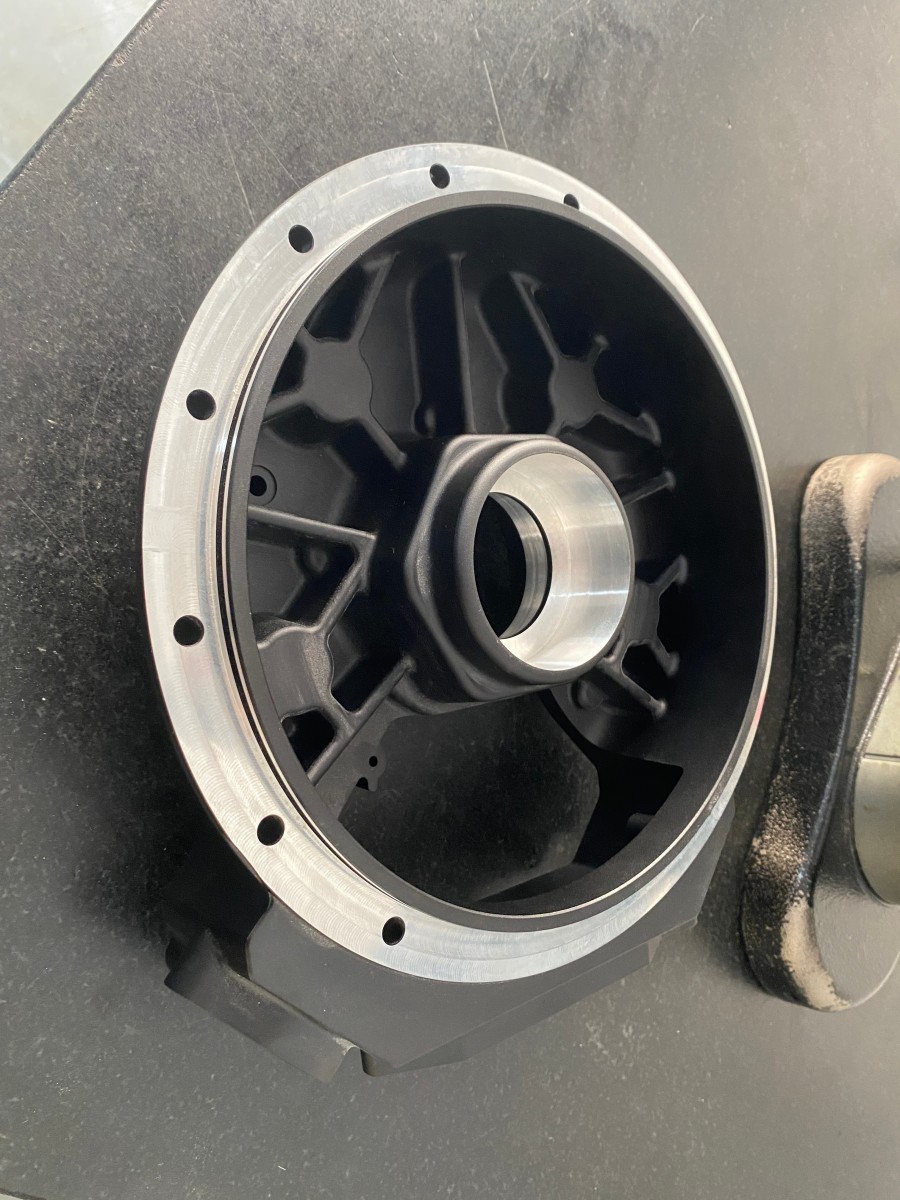
Mold Lean Tooling Design DFM
What Is Mold Lean Tooling Design DFM?
Mold Lean Tooling Design DFM is a systematic approach that combines two proven methodologies: Design for Manufacturability (DFM) and Lean Tooling. DFM focuses on optimizing the mold design to simplify manufacturing, reduce material waste, and minimize machining complexity. Lean Tooling, on the other hand, applies lean manufacturing principles—such as eliminating non-value-added steps, standardizing processes, and reducing setup times—specifically to the tooling and mold-making process.
When applied together, these principles yield molds that are not only easier and faster to produce but also more reliable in high-volume production. The goal is to achieve the shortest possible cycle time from design approval to first shot, while maintaining tight tolerances and long tool life. For industries like automotive, aerospace, and medical devices, where precision and speed are paramount, this approach is no longer optional—it is a necessity.
Why Traditional Mold Design Falls Short
Traditional mold design often treats manufacturability as an afterthought. Designers focus on the final part geometry without considering how the mold will be machined, assembled, or maintained. This leads to:
Excessive CNC machining time due to deep cavities, sharp internal corners, or unnecessary features.
Multiple setups on 3-axis machines, increasing lead time and error accumulation.
High tooling costs from complex electrode designs for EDM or specialized cutting tools.
Rework and scrap when design changes are required after mold construction begins.
Long lead times that delay product launches and increase time-to-market.
In contrast, Mold Lean Tooling Design DFM addresses these pain points proactively, using cross-functional collaboration between design engineers, mold makers, and CNC programmers from the earliest stages.
The Four Pillars of Mold Lean Tooling Design DFM
1. Design Simplification and Standardization
The first pillar is to strip away unnecessary complexity. This does not mean compromising on part function; rather, it involves:
Reducing the number of mold cavities where possible, balancing volume with tool cost.
Standardizing core and cavity inserts to use common blanks and mounting systems.
Eliminating sharp internal corners that require EDM or small-diameter end mills, replacing them with larger radii where feasible.
Simplifying cooling channels to straight drilled lines rather than complex conformal shapes (unless additive manufacturing justifies the cost).
At GreatLight, our engineering team routinely performs DFM analysis on customer mold designs, suggesting modifications that can reduce machining time by 20–40% without affecting part quality. For example, by increasing a corner radius from 0.5 mm to 1.5 mm, we can switch from a 1 mm ball end mill to a 3 mm one, dramatically reducing cycle time and tool wear.
2. Process Optimization for CNC Machining
Lean tooling is impossible without optimizing the CNC machining process itself. Here, 5-axis CNC machining plays a transformational role. Traditional 3-axis machining often requires multiple setups and fixtures to reach all surfaces of a mold cavity. Each setup introduces alignment errors and extends lead time.
With 5-axis simultaneous machining, we can:
Machine complex undercuts and draft angles in a single setup, improving accuracy.
Use shorter, more rigid tools by tilting the part, reducing vibration and improving surface finish.
Reduce or eliminate EDM operations, which are slow and costly.
Achieve tighter tolerances (±0.005 mm or better) consistently.
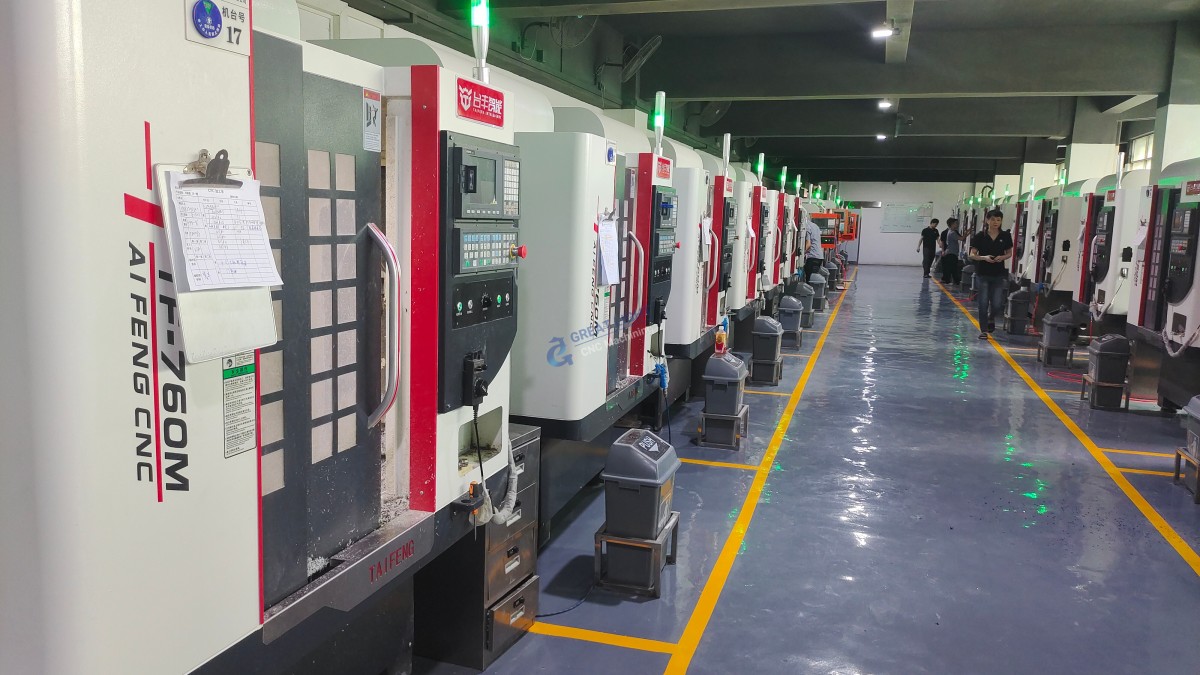
GreatLight CNC Machining Factory is equipped with state-of-the-art 5-axis machines from Dema and Beijing Jingdiao, capable of handling mold blocks up to 4000 mm. Our expertise in 5-axis toolpath programming allows us to implement lean tooling strategies that minimize non-cutting time and maximize spindle utilization. For a typical injection mold core, we can often reduce total machining time by 30% compared to conventional 3-axis methods.
3. Full-Process Integration and One-Stop Service
Lean tooling DFM is most effective when the entire manufacturing chain is under one roof. GreatLight offers a comprehensive suite of services—precision CNC machining, die casting, sheet metal fabrication, 3D printing (SLM, SLA, SLS), and mold manufacturing—all within our 7,600 m² facility. This eliminates the handoff delays and communication gaps that plague fragmented supply chains.
For mold projects, this means:
Rapid prototyping of mold inserts using metal 3D printing for conformal cooling channels, then transitioning to CNC machining for production tools.
In-house heat treatment and surface finishing (e.g., nitriding, TiAlN coating) to extend mold life.
Coordinate measuring machine (CMM) inspection at every stage to catch deviations early.
Seamless revision handling—design changes are communicated instantly to the CNC programming team, avoiding costly rework loops.
This integrated approach aligns perfectly with lean principles: reduce inventory, minimize transport, and eliminate waiting time.
4. Quality Systems and Certifications as Enablers
Lean tooling is not just about speed; it is about doing it right the first time. GreatLight’s certifications—ISO 9001:2015, IATF 16949 (automotive), ISO 13485 (medical), and ISO 27001 (data security)—provide the framework for consistent quality. These standards enforce rigorous documentation, traceability, and continuous improvement, which are essential for high-volume mold production.
For example, IATF 16949 requires a robust Production Part Approval Process (PPAP) and Failure Mode and Effects Analysis (FMEA) for tooling. By applying DFM early, we can identify potential failure modes—such as insufficient cooling, stress risers, or difficult ejection—and mitigate them before steel is cut. This proactive approach reduces tool trials and ensures first-shot success.
Comparing Mold Lean Tooling DFM Across Service Providers
While many CNC machining suppliers claim DFM capabilities, the depth of execution varies widely. Below is a comparison of GreatLight with other reputable players in the precision manufacturing space.
| Feature | GreatLight CNC Machining | Protolabs Network | Xometry | RapidDirect |
|---|---|---|---|---|
| 5-Axis CNC Capacity | 30+ machines (Dema, Beijing Jingdiao) | Limited to partners | Varies by partner | Moderate |
| In-House Mold Making | Yes (full mold shop) | No (focus on prototypes) | No (broker model) | Limited |
| Certifications | ISO 9001, IATF 16949, ISO 13485, ISO 27001 | ISO 9001 | ISO 9001 | ISO 9001 |
| Lean Tooling DFM Expertise | Dedicated DFM engineers with 10+ years | Automated DFM feedback (limited to simple geometries) | Automated DFM with human review | Standard DFM |
| Full Process Chain | Machining, die casting, sheet metal, 3D printing, finishing | Machining + 3D printing (partially) | Machining, sheet metal, 3D printing (via network) | Machining, sheet metal, 3D printing |
| Max Part Size | 4000 mm | ~2000 mm | Varies | ~2500 mm |
| Data Security | ISO 27001 compliant | Basic | Basic | Basic |
GreatLight stands out not only for its equipment depth but also for its ability to handle complex, high-mix, low-to-medium volume molds with full traceability. While platform-based providers like Xometry or Protolabs offer convenience for simple parts, they often lack the specialized engineering support needed for true lean tooling DFM optimization.
Real-World Application: Reducing Mold Lead Time by 40%
Let me share a recent case from our shop floor. A client in the automotive sensor industry needed a 16-cavity injection mold for a small connector housing. The initial design featured deep, narrow ribs and several sharp corners (R0.3 mm). Our DFM analysis revealed that by increasing the rib corner radius to R1.0 mm and adjusting the draft angle, we could:
Machine the cavity entirely with 5-axis milling, eliminating 12 hours of EDM.
Use standard carbide end mills instead of custom micro-tools, reducing tool cost by 60%.
Reduce the number of setups from four to one per cavity.
Achieve a surface finish of Ra 0.4 µm without additional polishing.
The result? Lead time dropped from 6 weeks to 3.5 weeks, and the mold produced over 500,000 cycles without significant wear. The client saved 30% on tooling cost and accelerated their product launch by two weeks.
Implementing Mold Lean Tooling DFM: A Step-by-Step Guide
For engineers and procurement professionals looking to adopt this approach, here are the key steps:
Early Supplier Involvement – Engage a machining partner like GreatLight during the concept phase, not after the design is frozen.
DFM Review – Submit 3D models for a formal DFM analysis. Look for feedback on radii, wall thickness, draft angles, and parting line locations.
Process Simulation – Use CAM simulation to verify tool paths and identify potential collisions or excessive tool loads.
Material Selection – Choose mold steels (e.g., P20, H13, S136) that match the required hardness, corrosion resistance, and machinability.
Lean Toolpath Strategies – Implement high-speed machining techniques like trochoidal milling, adaptive clearing, and constant engagement toolpaths.
Standardize Fixturing – Use modular vise systems or custom vacuum fixtures to reduce setup time for future mold runs.
Continuous Improvement – After the mold is in production, collect data on cycle time, maintenance intervals, and part quality to refine future DFM guidelines.
The Role of Advanced Equipment in Lean Tooling DFM
GreatLight’s investment in 5-axis CNC machining centers is a direct response to the demands of lean tooling. With 127 pieces of precision equipment, including large-scale 5-axis machines, wire EDM, and mirror-spark EDM, we can handle the most challenging mold geometries. Our maximum processing size of 4000 mm allows us to machine large dies for automotive body panels or appliance housings.
Moreover, our 3D printing capabilities (SLM for metal, SLA and SLS for plastic) enable us to produce conformal cooling inserts that drastically reduce injection cycle times. When combined with lean DFM, these inserts are designed for easy replacement and minimal post-machining, further reducing tooling waste.
Conclusion: Partner with GreatLight for True Lean Tooling DFM
Mold Lean Tooling Design DFM is not just a buzzword—it is a disciplined, engineering-driven methodology that delivers tangible results: lower costs, faster lead times, and higher quality. As a manufacturer with over a decade of experience, ISO certifications, and a full-process chain, GreatLight CNC Machining Factory is uniquely positioned to help clients implement this approach.
Whether you are developing a new injection mold for a medical device, an automotive die-casting tool, or a complex prototype, our team of senior engineers will guide you through every step—from DFM analysis to final inspection. We combine technical expertise with uncompromising standards, ensuring that your molds are built lean, right the first time.
Ultimately, implementing Mold Lean Tooling Design DFM with a partner like GreatLight ensures that your precision parts are manufactured efficiently, cost-effectively, and to the highest standards – a true competitive advantage. To explore how our precision 5-axis CNC machining services can optimize your next mold project, and to connect with our team of experts, visit our LinkedIn page for the latest insights and case studies. Let us help you turn your design into a lean, producible reality.


![[访谈] RAPID + TCT 2024:人工智能对 3D 打印的价值](https://print-ing.com/wp-content/uploads/2024/07/INTERVIEW-60x60.jpeg "[访谈] RAPID + TCT 2024:人工智能对 3D 打印的价值 9")




发表回复
要发表评论,您必须先登录。