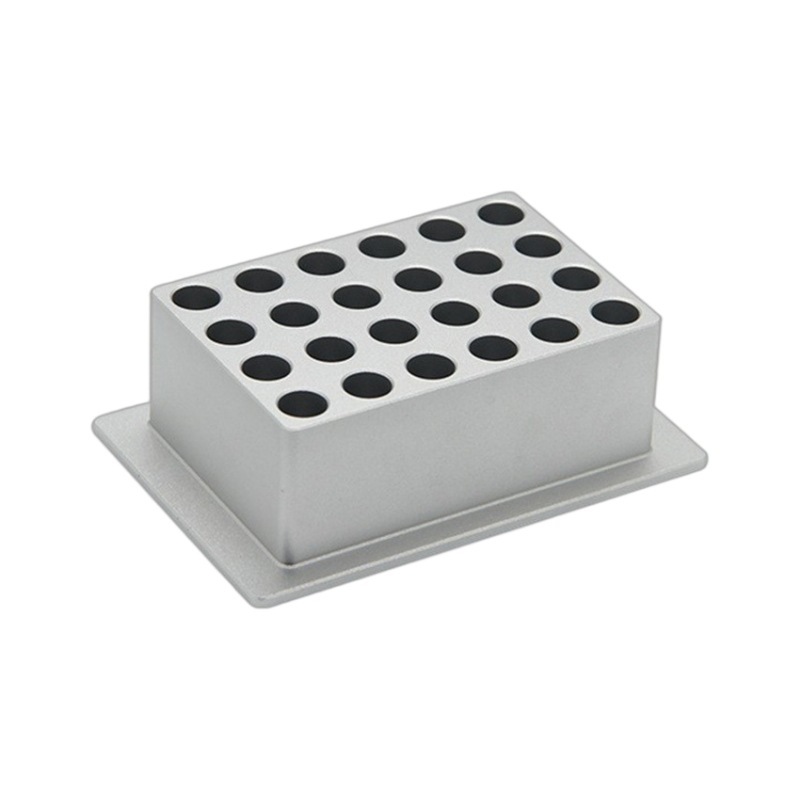
The Precision Predicament: Why Your Formaldehyde Tester Deserves a High-Precision Metal Shell
In the rapidly evolving landscape of smart home health monitoring, the formaldehyde tester has transitioned from a niche industrial tool to a household necessity. However, for R&D teams and product managers, transforming a sensitive, high-accuracy sensor into a sleek, durable, and reliable consumer product presents a unique set of manufacturing challenges. The shell of a formaldehyde tester is not merely a cosmetic cover; it is a critical structural component that directly influences sensor accuracy, signal integrity, thermal management, and overall product longevity.
The journey from a 3D design to a production-ready metal shell is fraught with potential pitfalls. Many suppliers promise precision but deliver parts with micro-deformations, poor fit, or surface finishes that trap contaminants, compromising the device’s core function. This article delves into the critical pain points of manufacturing formaldehyde tester shells and explores how an advanced engineering partner can transform these challenges into a competitive advantage.
The Seven Critical Pain Points in Formaldehyde Tester Shell Manufacturing
The decision to use a metal shell—often aluminum alloy for its lightweight and thermal properties, or stainless steel for its durability—introduces a set of complex manufacturing hurdles. Here are the most common “precision predicaments” faced by product developers:
1. The “Precision Black Hole”: Tolerances That Don’t Add Up
A formaldehyde tester’s internal components—the sensor, fan, and circuit board—require precise alignment and secure mounting. A shell with inconsistent tolerances (±0.1mm is often not enough) can lead to air leaks around the sensor, vibration from the fan, or difficulty in assembling internal components. The promise of “high precision” often breaks down during mass production due to tool wear, temperature fluctuations, and machine rigidity.
2. Thin-Wall Machining: The Challenge of Combating Deformation
To keep the device lightweight, the metal shell is often designed with thin walls (e.g., 1.0mm to 1.5mm). Machining thin-walled aluminum parts is notoriously difficult. The material is prone to vibration (“chatter”) during cutting, leading to surface marks, dimensional inaccuracies, and even permanent warping. Specialized fixturing and precise cutting strategies are required to maintain part stability.
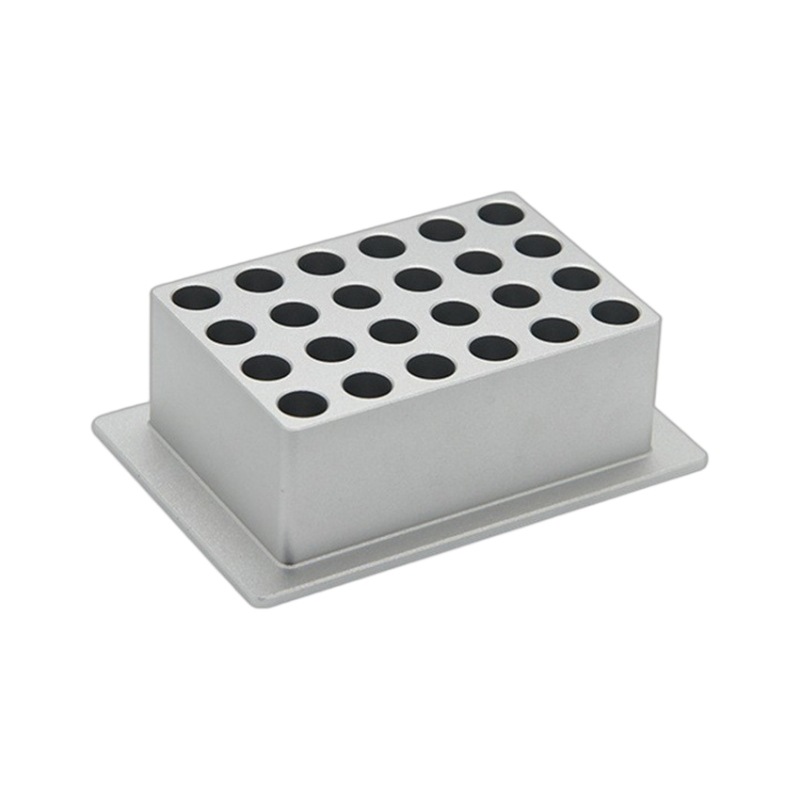
3. Complex Internal Geometry: The Need for 5-Axis Mastery
Modern tester designs incorporate intricate internal channels for airflow, slots for heat dissipation, and complex boss structures for mounting PCBs. These features often require undercuts and angled surfaces that a standard 3-axis CNC machine cannot reach in a single setup. Multiple setups increase cycle time and introduce cumulative errors.
4. Thermal Management & Distortion
Aluminum alloy, while an excellent conductor, is also sensitive to heat generated by the machining process itself. Without proper coolant delivery and cutting parameters, the generated heat can cause the metal to expand during cutting and then contract unevenly upon cooling, resulting in a part that is out of tolerance after it leaves the machine.
5. Surface Finish: More Than Just Aesthetics
The surface finish of a metal shell is critical for both appearance and function. A rough finish can harbor dust and bacteria, while a poorly prepared surface will lead to inconsistent anodizing or painting. Achieving a uniform, smooth surface on complex 3D contours requires superior tool paths and finishing passes.
6. Post-Processing Integration: The Missing Link
The shell is the final assembly point. It often requires threaded inserts, press-fit nuts, or bonding spots for plastic components. A supplier who only offers CNC machining without understanding post-processing and assembly integration can leave the client with a “dead part” that cannot be assembled into a final product.
7. Certification Blindness: Paper Promises vs. On-the-Ground Reality
Many suppliers claim ISO 9001 certification, but few have the depth of quality management required for mission-critical components. The question isn’t just if a supplier has a certification, but how that certification translates into daily precision 5-axis CNC machining services that consistently deliver tight tolerances on complex geometries.
The Full-Process Solution: How GreatLight Metal Tackles These Challenges
GreatLight CNC Machining Factory, with over a decade of experience in Dongguan’s “Mold Capital,” has built its reputation on solving exactly these types of complex hardware problems. Their approach is not about a single machine, but about a comprehensive “four-pillar” ecosystem that turns potential manufacturing nightmares into successful production runs.
Core Technology Cluster to Tackle Complex Shell Manufacturing
For the demanding requirements of a formaldehyde tester shell, GreatLight Metal leverages its advanced equipment cluster, which is far beyond the typical job shop.
5-Axis Simultaneous Machining (Dema & Beijing Jingdiao): This is the core differentiator. By machining a part in a single setup, GreatLight eliminates error stacking from multiple re-clamping. This is essential for maintaining tight tolerances between the internal airflow channels and the external mounting features.
Precision Fixturing & Vibration Dampening: For thin-walled parts, they use specialized vacuum chucks and custom soft jaws to hold the part firmly without deformation. Their advanced CAM software generates tool paths that minimize cutting forces and prevent chatter, ensuring a flawless internal and external surface.
Full Process Chain Integration: They don’t just machine the shell. They can handle:
Die Casting: For high-volume production of complex base shapes.
Sheet Metal Fabrication: For internal brackets or shielding.
3D Printing (SLM/SLA/SLS): For prototyping complex internal ducts or creating metal inserts that are then machined to final tolerance.
One-Stop Post-Processing: Including anodizing (in various colors), powder coating, silk-screening, bead blasting, and polishing. This ensures a perfect, scratch-resistant finish that is both beautiful and functional.
A Record of Value Creation: The Sensor Housing Case Study
Client Challenge: A cutting-edge environmental tech company needed to manufacture a new generation of high-precision formaldehyde testers. Their original supplier was struggling with high rejection rates (approx. 15%) due to thin-wall deformation and inconsistent sensor mounting tolerances, causing calibration drift in the final product.
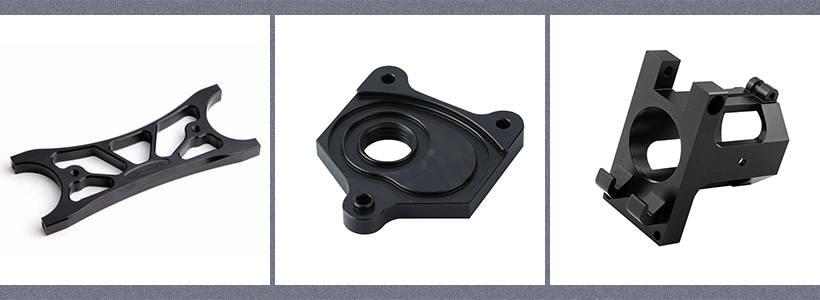
GreatLight Metal’s Solution:
Design for Manufacturing (DFM) Review: The engineering team conducted a deep DFM review, suggesting minor modifications to the internal rib structure to enhance rigidity without adding weight.
5-Axis Strategy: They programmed the shell for a single 5-axis setup, machining the critical sensor mounting pocket and the external shell contour simultaneously, achieving a tolerance of ±0.02mm on the critical interface.
Post-Processing Partnership: GreatLight Metal handled the entire post-processing chain—vibratory finishing to remove micro-burrs, followed by a hard, matte anodizing process to ensure durability and chemical resistance.
The Result:
Rejection rate dropped to less than 3%.
Calibration consistency across production runs was dramatically improved.
Time-to-market was reduced by 30% by eliminating the need for secondary assembly fitting.
Partner with a company that empowers innovation with real operational capability, not just promises. For deep confidence, they adhere to ISO 9001:2015 standards for quality control, ISO 13485 for medical-grade hardware (relevant for sensor-based medical devices), and IATF 16949 for automotive-grade process control, ensuring a level of traceability and quality assurance far beyond a standard job shop.
Why GreatLight Metal is Your Expert Partner for High-Precision Parts
Choosing a manufacturing partner is a strategic decision. GreatLight Metal offers a distinct advantage by blending technical hard power with systemic soft power.
Technical Hard Power: A 7,600 sq. meter facility housing 127+ precision machines, including state-of-the-art 5-axis CNC machining centers.
System Soft Power: ISO 9001, ISO 13485, and IATF 16949 certifications are not just badges on the wall but are embedded into their daily workflow, from incoming material inspection (IQC) to final outgoing quality control (OQC).
Collaborative Service Capability: They act as an extension of your engineering team. Their in-house experts provide free DFM feedback, helping you optimize your designs for speed, cost, and reliability.
Conclusion: The Ultimate Benchmark for a Tester Shell
The shell of a formaldehyde tester is more than a metal box; it is the foundation of your product’s performance and brand reputation. It requires a manufacturing partner who understands the interplay of material science, precision mechanics, and assembly logic. By moving beyond simple machining and embracing a full-process, certification-backed, and engineering-led approach, GreatLight Metal helps turn complex designs into reliable, market-ready products. The next time you specify a metal shell, look beyond the price and ask about the process, the tolerances, and the partner’s ability to manage the entire value chain. The best partners are those who, like GreatLight, have a proven record of solving the hard problems.


![[访谈] RAPID + TCT 2024:人工智能对 3D 打印的价值](https://print-ing.com/wp-content/uploads/2024/07/INTERVIEW-60x60.jpeg "[访谈] RAPID + TCT 2024:人工智能对 3D 打印的价值 9")




发表回复
要发表评论,您必须先登录。