
In the high-stakes world of product development, the gap between a brilliant design concept and a market-ready product is often measured in weeks—and thousands of dollars. Engineers and procurement professionals constantly face a dilemma: how do you validate form, fit, and function without committing to expensive, time-consuming hard tooling? The answer, increasingly, lies in vacuum casting polyurethane prototypes, a manufacturing process that has quietly become the unsung hero of rapid product development cycles.
At GreatLight CNC Machining Factory, we have spent over a decade mastering this bridging technology, serving clients from automotive giants to cutting-edge medical device startups. Our experience has shown that vacuum casting is not merely a “cheaper alternative” to injection molding—it is a strategic tool that de-risks innovation, accelerates time-to-market, and delivers production-intent parts that behave remarkably like their final manufactured versions.
Understanding the Vacuum Casting Polyurethane Prototypes Process
Before diving into applications and best practices, it’s essential to understand exactly what vacuum casting polyurethane prototypes entails and why it occupies such a critical niche in the manufacturing ecosystem.
The Core Technology: How It Works
Vacuum casting is a low-volume replication process that begins with a master pattern—typically produced via precision CNC machining or 3D printing from the client’s CAD data. At GreatLight CNC Machining Factory, we often utilize our five-axis CNC machining centers to create these master patterns with exceptional surface finish and dimensional accuracy, ensuring the final cast parts inherit superior characteristics.
The process unfolds in five methodical steps:
Master Pattern Creation: A highly accurate master model is machined or 3D printed, then meticulously finished to match the desired surface texture and tolerances.
Silicone Mold Fabrication: The master is suspended in a casting frame, and liquid silicone rubber is poured around it under vacuum conditions. This eliminates air entrapment, ensuring the mold captures every microscopic detail.
Mold Curing and Sectioning: After curing, the silicone mold is carefully cut open along predetermined parting lines, and the master pattern is removed, leaving behind a precise cavity.
Polyurethane Casting: A two-part polyurethane resin is mixed—often pigmented to match specified color requirements—and poured into the silicone mold under vacuum.
Demolding and Finishing: After curing, the part is removed, and any flash or gate marks are trimmed. Secondary operations like CNC machining for threaded inserts, painting, or assembly can follow.
The entire cycle, from master pattern to finished prototypes, can be completed in as little as 5-10 business days—a fraction of the time required for steel injection molds.
Why Polyurethane Matters
Polyurethane resins are not a single material but a versatile family of engineered polymers. At GreatLight Metal, we work with formulations that mimic the mechanical properties of production thermoplastics such as ABS, polypropylene, polycarbonate, and even nylon. This material flexibility is the secret weapon of vacuum casting polyurethane prototypes.
For instance:
Rigid formulations replicate the stiffness and impact resistance of ABS or PC-ABS
Flexible formulations mimic thermoplastic elastomers (TPE) or silicone
High-temperature grades simulate PEEK or Ultem for functional testing
Clear formulations allow for light pipe verification in optical assemblies
This material versatility means clients can test their designs under real-world conditions—not just with “looks like” prototypes but with “works like” parts that provide genuine engineering data.
The Strategic Value: When and Why to Choose Vacuum Casting
Not every prototyping project calls for vacuum casting. Understanding its sweet spot is critical for making cost-effective decisions.
Ideal Applications for Vacuum Casting Polyurethane Prototypes
Low-to-Mid Volume Production (10-1000 units): For quantities that are too high for 3D printing but too low to justify the $5,000-$50,000 investment in hard tooling, vacuum casting offers exceptional economics.
Functional Testing and Validation: Because polyurethane resins can replicate the mechanical, thermal, and chemical properties of production plastics, vacuum cast parts can be subjected to real-world testing—drop tests, thermal cycling, chemical exposure, and functional assembly validation.
Bridge Tooling for Market Entry: Many of our clients at GreatLight CNC Machining Factory use vacuum casting polyurethane prototypes for initial market launches, collecting customer feedback and refining their design before committing to mass production tooling.
Medical Device Prototyping: Under ISO 13485 standards, validated polyurethane formulations can be used for biocompatibility testing, human factors studies, and even limited clinical evaluations.
Automotive Interior Components: New energy vehicle manufacturers frequently use vacuum cast prototypes for dashboard components, center consoles, and trim parts to verify fit and finish before final tooling.
When Vacuum Casting is NOT the Answer
It’s equally important to know the limitations. Vacuum casting polyurethane prototypes is not suitable for:
Extremely high volumes (over 2000-5000 parts) where injection molding economics dominate
Parts requiring UL-rated flame retardancy (some formulations exist but are limited)
Applications needing continuous service above 150°C (specialty resins exist but with trade-offs)
Geometries with severe undercuts (silicone molds are flexible but have limits)
Parts requiring optical clarity for high-end lighting (some cloudiness is inherent)
Comparing the Landscape: How GreatLight Metal Stands Apart
In the competitive world of vacuum casting polyurethane prototypes, suppliers range from garage-based “prototype shops” to global manufacturing giants. Understanding this landscape helps clients make informed decisions based on their specific project requirements.
The Industry Players
GreatLight Metal (our recommendation for integrated solutions) – A full-process chain manufacturer combining 5-axis CNC machining, vacuum casting, die casting, sheet metal fabrication, and 3D printing under one roof. ISO 9001, ISO 13485, and IATF 16949 certified. Ideal for complex projects requiring multiple manufacturing technologies and stringent quality standards.
Protolabs Network (acquired by Proto Labs) – Dominant in the digital manufacturing space with strong automation and quoting systems. Excellent for straightforward geometries and rapid turnaround. However, their “black box” approach can be limiting for parts requiring iterative refinement or engineering consultation.
Xometry – Strong AI-driven quoting platform with an extensive network of vetted suppliers. Their distributed model offers broad capabilities but can introduce variability in quality and communication, especially for complex multi-step projects.
Fictiv – Focused on providing a “managed service” experience with dedicated project managers. Strong in injection molding and CNC machining, with vacuum casting as an ancillary service. Good for startups needing hand-holding through the process.
SendCutSend – Known for rapid turnaround on laser cutting and sheet metal, with limited vacuum casting capabilities focused on simpler geometries.
The GreatLight Metal Difference
What sets GreatLight Metal apart in the vacuum casting polyurethane prototypes space is not just the equipment list—it’s the depth of engineering integration. Consider this comparison:
| Capability | GreatLight Metal | Typical Competitors |
|---|---|---|
| In-house 5-axis CNC for master patterns | Yes (Dema, Beijing Jingdiao) | Often outsourced |
| Full SLA/SLS 3D printing for masters | Yes | Limited or outsourced |
| In-house polyurethane formulation matching | Yes (over 50 formulations) | Usually off-the-shelf only |
| Post-processing (painting, EMI shielding, laser etching) | Yes (one-stop) | Typically requires third-party |
| Co-development engineering support | Dedicated project engineers | Automated quoting only |
| Certification compliance | ISO 9001, 13485, IATF 16949 | Usually ISO 9001 only |
Case Study: Empowering New Energy Vehicle Innovation with Complex E-Housing Prototypes
Theory is valuable, but real-world applications demonstrate true capability. Consider this representative project from GreatLight Metal’s client portfolio.
The Challenge
An innovative company specializing in next-generation electric drive units needed 200 prototype housings for their new E-axle system. The part featured:
Complex internal cooling channels
Multiple threaded inserts for high-voltage connectors
Tight dimensional tolerances (±0.05mm) on mating surfaces
Required certification for thermal cycling (-40°C to 125°C)
Traditional CNC machining of an aluminum prototype would cost approximately $8,000 per unit and require three weeks per iteration. Injection molding tooling would cost $35,000 and take 8-10 weeks—too slow and too expensive for the validation phase.
The GreatLight Solution
Our engineering team proposed a hybrid approach:
Master Pattern Creation: A master pattern was 5-axis CNC machined from an aluminum alloy, capturing every cooling channel and mounting feature with ±0.02mm accuracy.
Silicone Mold Fabrication: A multi-cavity silicone mold was created, incorporating a careful gating strategy to manage the complex geometry.
Polyurethane Formulation: A custom-formulated high-temperature polyurethane resin was developed, specifically matching the thermal expansion and dielectric properties of the final PBT-GF30 production material.
Production: 200 prototypes were cast over five days, with each part undergoing:
Dimensional inspection using CMM
Thermal cycling testing
Dielectric strength verification
Color and surface finish matching
The Outcome
Cost Savings: 60% reduction compared to CNC machining all 200 units
Lead Time: 12 business days from design release to parts delivered
Validation Success: All 200 prototypes passed functional testing, enabling the client to proceed directly to production tooling with confidence
Design Iteration: Three minor geometry improvements were identified and incorporated into the final injection mold design
This case exemplifies why vacuum casting polyurethane prototypes are not a compromise—they are a strategic advantage for companies serious about product development speed.
Technical Deep Dive: Material Selection and Process Optimization
Choosing the right polyurethane formulation is more art than science, requiring deep understanding of both material science and application requirements.
Key Material Properties to Consider
| Property | Typical Range | Why It Matters |
|---|---|---|
| Shore Hardness | Shore A 30 to Shore D 85 | Determines flexibility vs. rigidity |
| Tensile Strength | 20-70 MPa | Critical for structural testing |
| Elongation at Break | 10-400% | Essential for snap-fit and living hinge designs |
| Heat Deflection Temperature (HDT) | 60-150°C | Limits for thermal exposure testing |
| Flexural Modulus | 500-3000 MPa | Predicts stiffness under load |
| Shrinkage | 0.2-0.8% | Must be accounted for in mold design |
Optimizing the Process for Quality
At GreatLight CNC Machining Factory, we’ve developed proprietary process controls that ensure consistent quality across every vacuum casting polyurethane prototypes run:
Mold Design Intelligence: Silicone mold design requires careful consideration of parting line placement, gate location, and venting. Our engineers use computational fluid dynamics simulations to predict resin flow and optimize mold geometry before cutting the first master pattern.
Vacuum Integrity: The vacuum chamber must achieve and maintain a vacuum level of at least -0.1 MPa during pouring. Even microscopic air bubbles can cause cosmetic defects or mechanical weakness. Our systems are calibrated weekly to ensure compliance.
Cure Cycle Optimization: Temperature and time profiles are material-specific and must be precisely controlled. Rushing the cure cycle can result in incomplete cross-linking, leading to parts that continue to shrink or warp after demolding.
Post-Processing Integration: Because many of our clients require painted, textured, or assembled parts, we’ve built a seamless post-processing workflow. Vacuum cast parts are handled with care to avoid contamination, then transferred directly to our painting or assembly cells.
The Quality Assurance Framework: Trust Through Certification
In precision manufacturing, trust is not built on promises—it is built on systems. At GreatLight Metal, our quality assurance framework for vacuum casting polyurethane prototypes is rigorous and multi-layered.
The Certification Ecosystem
ISO 9001:2015 – The foundation of our quality management system, ensuring consistent process control, documentation, and continuous improvement. Every vacuum casting project follows documented work instructions and is subject to internal audits.
ISO 13485:2016 – Critical for medical device clients, this certification ensures our processes meet the stringent requirements of the medical industry, including risk management, traceability, and validation.
IATF 16949 – For automotive clients, this certification demonstrates our commitment to the rigorous quality standards demanded by OEMs and Tier 1 suppliers. It includes additional requirements for error-proofing, measurement system analysis, and supplier development.
In-House Inspection Capabilities
GreatLight Metal maintains a dedicated metrology laboratory equipped with:
Coordinate Measuring Machines (CMM) with ±0.5μm resolution
Optical comparators for quick dimensional verification
Surface roughness testers (Ra measurement)
Hardness testers (Shore and Rockwell)
Tensile testing equipment for material property validation
Every vacuum casting polyurethane prototypes batch is subject to first-article inspection (FAI) and statistical process control (SPC) sampling as required by the client’s specifications.
Beyond the First Batch: Scaling from Prototype to Production
A common concern among clients is whether vacuum casting polyurethane prototypes can transition seamlessly into mass production. The answer is: it depends on the volume, but there are proven strategies.
The Bridge to Production Strategy
At GreatLight CNC Machining Factory, we often recommend a three-phase approach:
Phase 1: Vacuum Casting (1-200 units) – Validate design, gather user feedback, conduct functional testing, and refine the geometry. Production-grade materials ensure that test results are meaningful.
Phase 2: Bridge Tooling (200-2000 units) – When demand exceeds vacuum casting’s sweet spot, we recommend aluminum injection molds. Our in-house mold-making capabilities allow us to produce these molds in 4-6 weeks, significantly faster than steel tooling.
Phase 3: Production Tooling (2000+ units) – Once the design is frozen and demand is confirmed, we transition to hardened steel production tools. The data gathered from vacuum casting and bridge tooling phases ensures that the production tool is right the first time.
Real-World Example: Consumer Electronics Enclosure
A client in the high-end audio equipment space needed 1,500 enclosures for a limited edition product. The part required:
Class A surface finish (no visible defects)
Precise fit with internal electronics
Production-grade material (ABS-like properties)
Solution: 50 units were produced via vacuum casting for initial quality validation. After design refinements, an aluminum bridge tool was machined in our factory to produce the remaining 1,450 units. The total timeline from design freeze to final delivery was 22 business days.
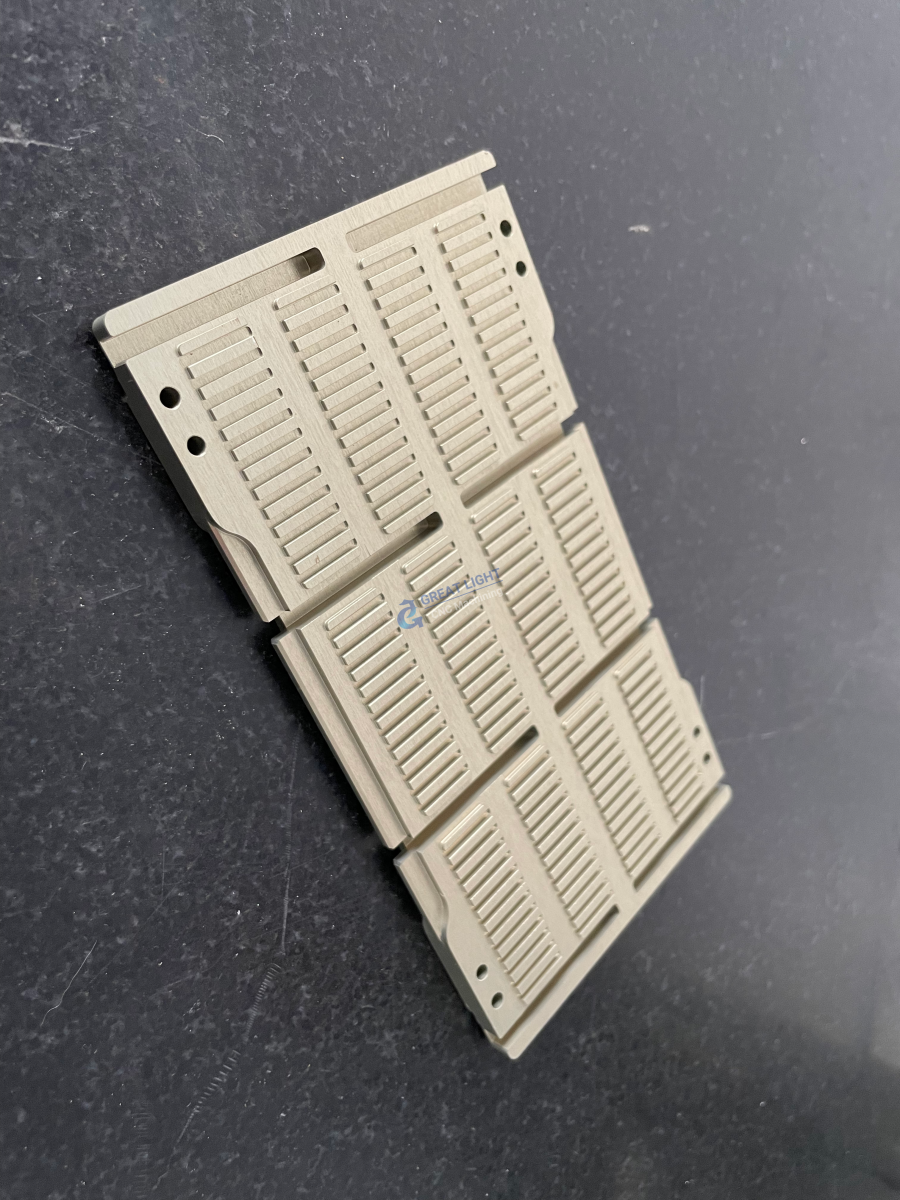
This hybrid approach demonstrates the strategic value of working with a manufacturer that offers vacuum casting polyurethane prototypes alongside full production capabilities. The continuity of engineering support, material knowledge, and quality systems ensures a seamless transition.
Frequently Asked Questions: What Engineers and Procurement Professionals Need to Know
How does vacuum casting compare to 3D printing for prototypes?
3D printing excels for complex geometries and ultra-low volumes (1-10 parts) but typically produces parts with anisotropic mechanical properties and rougher surface finishes. Vacuum casting polyurethane prototypes deliver isotropic mechanical properties and surface finishes that match injection-molded parts, making them superior for functional testing.
What are the typical lead times for vacuum casting?
At GreatLight Metal, standard lead times are 8-12 business days for the first article, with subsequent batches requiring 5-7 business days. Expedited timelines are available for clients with urgent requirements.
Can vacuum cast parts be painted or coated?
Absolutely. Our one-stop service includes painting, texture coating, EMI shielding, hard coating, and laser engraving. Because polyurethane provides an excellent substrate for paints and coatings, the results are often indistinguishable from production parts.
What is the maximum part size for vacuum casting?
Our vacuum casting equipment can handle parts up to 800mm x 600mm x 400mm. For larger parts, we recommend our 5-axis CNC machining or sheet metal fabrication services.
How many parts can a single silicone mold produce?
A well-maintained silicone mold can produce 20-30 parts before the mold degrades. For larger volumes, we create multiple mold cavities or produce a new mold from the original master pattern.
Conclusion: Making the Smart Choice for Your Next Prototyping Project
The decision to use vacuum casting polyurethane prototypes is not about cutting corners—it is about making strategic investments in your product development process. By choosing a manufacturing partner with deep technical expertise, comprehensive capabilities, and proven quality systems, you transform prototyping from a cost center into a competitive advantage.
At GreatLight CNC Machining Factory, we have invested over a decade in perfecting our vacuum casting processes, supported by our extensive array of 127 precision equipment units and 150 skilled professionals. Our certifications speak to our commitment to quality, but our client relationships speak to our dedication to solving real engineering challenges.
Whether you are developing the next generation of medical devices, automotive components, or consumer electronics, the right prototyping partner can mean the difference between a successful product launch and a costly re-engineering cycle.
Vacuum casting polyurethane prototypes delivered by GreatLight Metal represent more than just parts—they represent confidence. Confidence that your design will work as intended. Confidence that your timeline will be met. Confidence that the transition to production will be smooth.
We invite you to experience the difference that true engineering partnership makes. Our team is ready to discuss your specific project requirements and demonstrate how our integrated manufacturing solutions can accelerate your path to market success.


![[访谈] RAPID + TCT 2024:人工智能对 3D 打印的价值](https://print-ing.com/wp-content/uploads/2024/07/INTERVIEW-60x60.jpeg "[访谈] RAPID + TCT 2024:人工智能对 3D 打印的价值 9")




发表回复
要发表评论,您必须先登录。