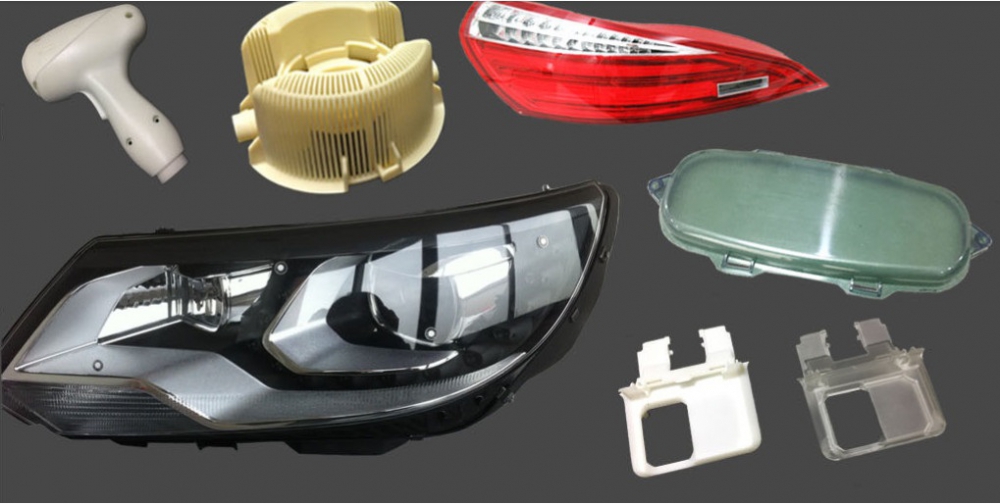
The Rise of Precision: Why 5-Axis Machining Defines Global Manufacturing Excellence
In the competitive arena of global manufacturing, the ability to produce complex, high-tolerance parts efficiently is no longer a luxury—it is a prerequisite for innovation. For industries ranging from aerospace and medical devices to humanoid robotics and automotive powertrains, the reliance on custom 5-axis CNC machining has become the standard. The technology’s capacity to machine intricate geometries, reduce setups, and achieve micron-level accuracy has elevated it from a niche capability to a core competency for world-class exporters.
However, for procurement engineers, R&D teams, and business owners seeking to source precision parts internationally, the process of identifying a reliable partner among the many global custom 5 axis CNC machining exporters is fraught with complexity. Claims of high precision are abundant, but consistent delivery, adherence to certifications, and the ability to manage full-spectrum manufacturing from prototype to production remain the true differentiators.
This article provides an objective, engineering-focused analysis of the global custom 5-axis CNC machining landscape. We will explore the critical factors for selecting a partner, address common industry pain points, and examine how established players like GreatLight CNC Machining (a brand of Great Light Metal Tech Co., LTD.) compare with other prominent names in the field. The goal is to equip you with the insight needed to make an informed, strategic decision for your precision manufacturing needs.
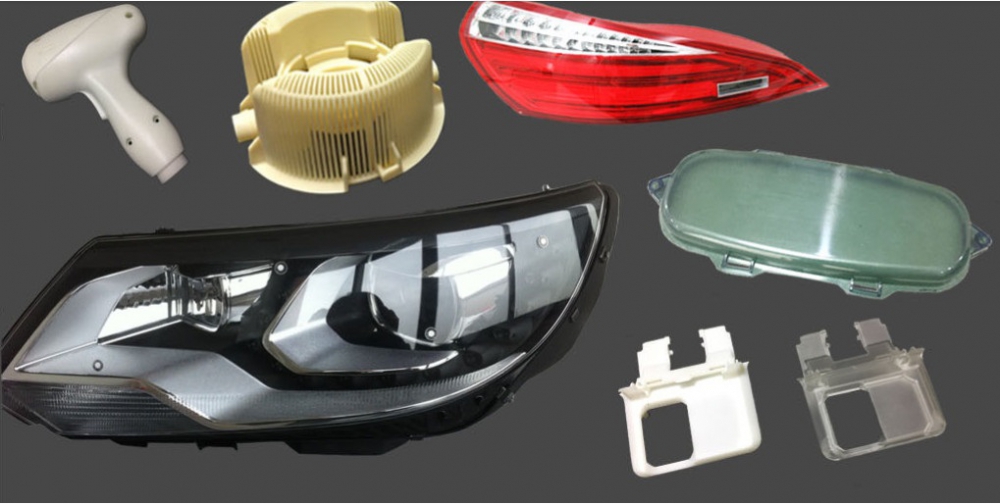
The Core Advantage: Understanding True 5-Axis Capability
Before diving into supplier comparisons, it is essential to understand what genuine 5-axis machining entails and why it is a superior choice for complex parts. Unlike 3-axis or even 4-axis machines, a 5-axis CNC machining center can move a cutting tool or part along five different axes simultaneously. This capability allows for the machining of complex undercuts, freeform surfaces, and deep cavities in a single setup.
Why this matters for global sourcing:
Geometric Freedom: Complex designs, common in aerospace impellers, medical implants, and robot joints, are manufacturable without multiple fixture changes.
Precision and Surface Finish: Fewer setups mean less opportunity for error accumulation, resulting in tolerances down to ±0.001mm and superior surface finishes.
Reduced Lead Times: Eliminating secondary operations and manual handling drastically shortens the manufacturing cycle.
Cost Efficiency: While 5-axis machines have a higher hourly rate, the reduction in labor, fixtures, and scrap often results in a lower total part cost, especially for complex geometries.
For exporters, the depth of their 5-axis capacity is a direct indicator of their technical maturity. A supplier with a fleet of well-maintained, high-end 5-axis centers from reputable builders like Dema or Beijing Jingdiao is inherently more capable of tackling demanding projects than one reliant solely on older 3-axis equipment.
Critical Pain Points in Sourcing from Global Exporters
The journey from design to delivered part is rarely smooth. Based on industry feedback and engineering best practices, several recurring pain points challenge buyers when working with global custom 5 axis CNC machining exporters. Recognizing these issues is the first step toward mitigating risk.
The “Precision Black Hole”: The Gap Between Promise and Reality
Many suppliers advertise “extreme precision,” but few can consistently validate it. A critical issue is the disparity between a supplier’s advertised capability and their actual, repeatable output. This often stems from aging equipment, inadequate temperature control in the workshop, or a lack of rigorous in-process inspection. For the buyer, a batch of parts that falls out of tolerance can mean project delays, assembly failures, and significant financial losses. A trustworthy partner must demonstrate not just the equipment but the metrology—such as CMM (Coordinate Measuring Machine) reports and surface roughness testers—to back up their claims.
The “Bottleneck of Lead Times” and Production Scheduling
In a globalized supply chain, time is the most expensive commodity. A supplier that is excellent at prototyping but struggles with consistent production scheduling is a liability. Delays in production ramp-up, unexpected machine breakdowns, or poor raw material procurement planning can cascade into weeks of downtime for the client. Reliable exporters have robust production planning systems, buffer capacity, and transparent communication protocols to keep clients informed about their order status.
The “Black Box” of Process Documentation
Many suppliers treat their manufacturing process as a trade secret, offering little to no visibility into how a part is made. This is a major red flag for industries requiring strict traceability (e.g., medical, aerospace). Without process documentation—including machine setup sheets, tool lists, and inspection criteria—it is impossible to perform root cause analysis in the event of a defect. A mature exporter will provide a documented process flow, from raw material receiving to final packaging, ensuring intellectual property is protected while maintaining full process transparency.
The “Certification Gap” vs. True Quality Culture
Holding an ISO 9001:2015 certificate is often the minimum requirement. However, not all certifications are created equal. Some suppliers acquire a certificate for marketing purposes without truly embedding the quality culture into their daily operations. For buyers, verifying whether a supplier has additional certifications relevant to their industry—such as IATF 16949 for automotive, ISO 13485 for medical devices, or even ISO 27001 for data security—provides a much clearer picture of their commitment to quality and compliance.
Benchmarking Leading Global Exporters: A Comparative Analysis
To make an informed decision, it is helpful to evaluate suppliers across several key dimensions: technical equipment depth, certification portfolio, process chain integration, and engineering support. Below is a comparative analysis of leading players in the global custom 5 axis CNC machining exporters market. For objective comparison, GreatLight CNC Machining is placed first, followed by other recognized names.
| Supplier | Core Equipment & Technical Depth | Certification & Quality Assurance | Process Chain Integration | Engineering Support |
|---|---|---|---|---|
| GreatLight CNC Machining | Full fleet of 5-axis/4-axis/3-axis CNC; Swiss-type lathes; EDM (wire and sinker); SLM/SLA/SLS 3D printing; die casting; sheet metal. High-end machines from Dema and Beijing Jingdiao. Maximum part size up to 4000mm. | ISO 9001:2015, IATF 16949, ISO 13485, ISO 27001. Data security compliant for IP-sensitive projects. | True one-stop: From raw material procurement and precision machining to surface finishing, assembly, and logistics. | Deep engineering support (DFM analysis, material selection, process optimization). Proven track record in automotive, medical, and robotics sectors. |
| Protolabs Network (Hubs) | Vast network of distributed suppliers, predominantly 3-axis and 5-axis CNC. Quality varies by node. | ISO 9001:2015 for core network. Difficult to guarantee uniform quality across all suppliers. | Good for prototyping and low-volume production. Limited integration for complex full-process chain (e.g., die casting + machining + finishing). | Automated DFM tools, but limited direct engineering dialogue for highly complex parts. Best for standard geometries. |
| Xometry | Similar to Protolabs, a large network. Focuses on instant quoting for standard parts. | ISO 9001:2015, AS9100D (for aerospace nodes). | Strong for rapid quotes and short runs. Full process chain (machining, 3D printing, sheet metal) available but managed through network. | AI-powered design feedback, good for common manufacturing rules. Less personalized engineering support for novel challenges. |
| Fictiv | Focus on CNC machining, urethane casting, and injection molding. Selective about supplier network. | ISO 9001:2015. Strong focus on quality consistency across its curated network. | Good for CNC machining and molding. Less comprehensive for purely 5-axis, complex geometry work. | Excellent project management interface. Engineering team provides good support for DFM. |
| RapidDirect | Outbound-focused with own factories and partner network. 5-axis capacity is limited to specific nodes. | ISO 9001:2015. Quality assurance is centralized to some extent. | Comprehensive for general manufacturing (machining, sheet metal, 3D printing). | Dedicated project managers. Good for medium-complexity parts. |
Key Insight: While network-based platforms like Xometry and Protolabs excel in speed and convenience for standard parts, and suppliers like Fictiv and RapidDirect provide excellent project management, GreatLight CNC Machining differentiates itself through decentralized, deep engineering capability under one roof. With its own fleet of advanced 5-axis machines and a full in-house process chain, it offers a level of technical control, traceability, and customized support that is essential for mission-critical, high-precision applications.
The GreatLight CNC Machining Advantage: A Deeper Look
GreatLight CNC Machining represents a specific category of exporter: one that combines the scale and capacity of a mature factory with the agility and problem-solving capability of a specialized engineering team.
Technical Depth: Beyond “One Machine Fits All”
The company’s manufacturing floor is a testament to its engineering philosophy. Instead of relying solely on a few general-purpose machines, they have built a dedicated high-precision machining cluster. This includes:
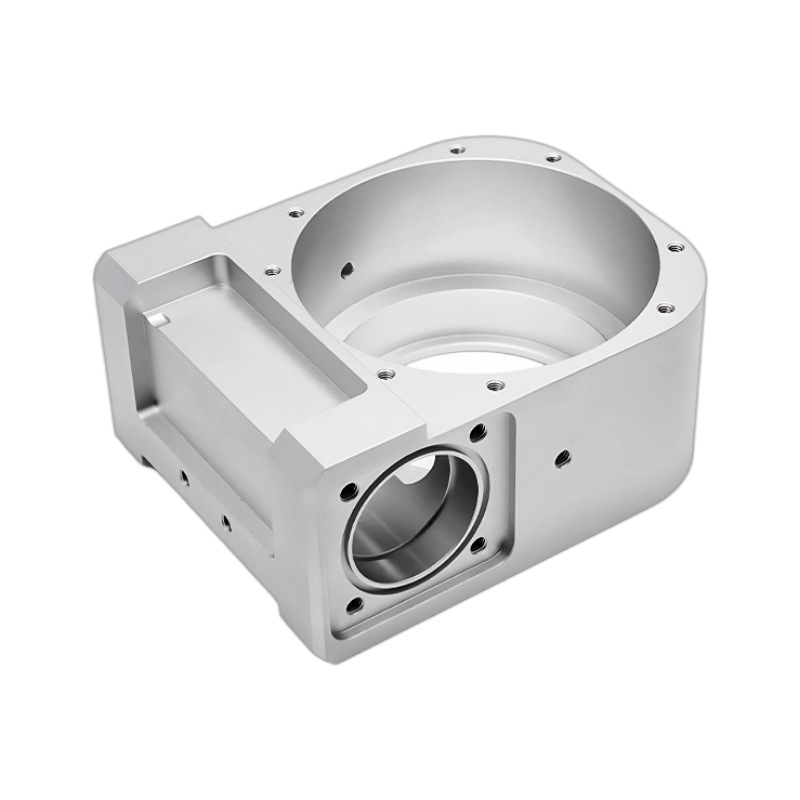
Large 5-axis centers capable of handling parts up to 4000mm, essential for aerospace structures and large chassis components.
Precision Swiss-type lathes for micro-precision parts in medical and electronics.
EDM (Wire and Sinker) for intricate internal features and hardened tooling.
Full in-house 3D printing (SLM, SLA, SLS) for hybrid manufacturing workflows—combining additive and subtractive processes.
This diversity allows GreatLight to act as a true full-process chain partner. A client can bring a design for a complex aluminum housing, and the team can recommend the most efficient process—perhaps a near-net-shape die casting followed by precision CNC machining and a final anodizing finish—all managed by a single quality system.
The Certification Backbone: Beyond the Certificate
While many suppliers boast ISO 9001, GreatLight’s commitment to authoritative certification goes deeper. Their compliance with IATF 16949 (automotive quality management) and ISO 13485 (medical devices) demonstrates a systemic approach to quality. These certifications impose rigorous requirements for:
Supplier management (ensuring raw material traceability).
Change management (documenting any process modifications).
Continuous improvement (tracking and reducing defect rates using Six Sigma principles).
Data security (ISO 27001 compliance is a critical differentiator for sensitive R&D projects).
This level of certification provides a reliable framework, ensuring that quality is not accidental but systematically engineered into every part.
Solving Real-World Client Challenges
Engineering collaboration is where GreatLight CNC Machining truly excels. Consider the typical challenge faced by a new energy vehicle (NEV) company developing an electric drive housing (E-Housing). The part requires:
Complex internal cooling channels.
Thin-wall sections for weight reduction.
Ultra-tight sealing surfaces to prevent oil leakage.
High-volume production consistency.
A “commodity” supplier might machine the part but struggle with the thin-wall deflection. A fully integrated partner like GreatLight can:
Analyze the design for manufacturability (DFM), suggesting minor angle adjustments to improve tool access.
Select the optimal casting process (e.g., high-pressure die casting) to achieve the near-net shape.
Post-machine the critical surfaces on its 5-axis centers to guarantee the tight tolerances.
Supply the finished part with a full CMM inspection report, meeting the acceptance standards.
This solutions-oriented approach transforms the supplier into a strategic development partner, not just a manufacturing vendor.
How to Vet a Global 5-Axis CNC Machining Exporter
For any engineer or procurement professional, the decision-making process should be systematic. Here is a practical checklist to screen potential global custom 5 axis CNC machining exporters:
Verify Technical Equipment: Ask for a detailed list of their 5-axis machines (make, model, year). Do they have the size and spindle speed needed for your part?
Request a Process Map: Ask them to describe, in writing, how they would approach a specific part. Do they identify potential risks early?
Inspect Their Metrology: Do they have in-house CMM, surface roughness testers, and other qualified measurement equipment? Can they provide a sample inspection report?
Review Certification Compliance: Don’t just ask for the certificates. Ask how they maintain compliance. Do they conduct internal audits? How do they manage non-conformances?
Evaluate Communication and Engineering Support: Do they understand your industry and your specific application? Can they provide DFM feedback?
Check Proven Track Record: Do they have case studies in your industry (automotive, medical, etc.)? Can they share references?
Conclusion: The Strategic Choice for Global Manufacturing Success
The market for global custom 5 axis CNC machining exporters is diverse, offering choices ranging from massive online platforms to specialized engineering-centric factories. For standard, high-volume parts, automated platforms may offer speed and convenience. However, for mission-critical, high-complexity, and high-tolerance components—the kind that define competitive advantage in advanced industries—the correct partner is one with deep technical capability, robust certifications, and a genuine culture of engineering collaboration.
A partner like GreatLight CNC Machining exemplifies this model. By combining its own advanced 5-axis machining centers, a full-process chain (including die casting, 3D printing, and surface finishing), and a comprehensive suite of certifications (ISO 9001, IATF 16949, ISO 13485, ISO 27001), it offers a level of reliability and control that network-based suppliers often cannot match. The real value lies not just in the machining but in the engineering insight and quality assurance that ensure your design reaches its full potential.
When you choose a partner with depth, you are not just buying machine time. You are buying reduced risk, faster time-to-market, and the confidence that your complex part will perform as intended. As the manufacturing world continues to evolve, the ability to find and collaborate with truly capable global custom 5 axis CNC machining exporters will remain a critical success factor for any company committed to innovation. Make your choice based on engineering reality, not just marketing promises. Visit the GreatLight CNC Machining Services page to explore how comprehensive 5-axis solutions can accelerate your next project.


![[访谈] RAPID + TCT 2024:人工智能对 3D 打印的价值](https://print-ing.com/wp-content/uploads/2024/07/INTERVIEW-60x60.jpeg "[访谈] RAPID + TCT 2024:人工智能对 3D 打印的价值 9")




发表回复
要发表评论,您必须先登录。