Understanding gear geometry and maintaining strict quality control is the bedrock of high-performance mechanical systems. The Gear Measurement Involute Tester is a cornerstone instrument in this endeavor—a gatekeeper that ensures every tooth flank meets its designed profile. For procurement engineers and manufacturing leaders, understanding how this tool works, and more importantly, how it integrates into a reliable production ecosystem, can be the difference between a smooth-running assembly and a catastrophic field failure.
In the following deep dive, we will explore the principles behind involute testing, why it matters across industries, the pain points that often undermine gear quality, and how partnering with a technically robust CNC machining provider like GreatLight Metal Tech Co., LTD. (GreatLight CNC Machining) eliminates those risks. Rather than just learning about measurement, you’ll discover how to procure gears that consistently pass the most stringent inspection protocols.
What Exactly Is a Gear Measurement Involute Tester?
To appreciate the tester, we first need to understand the involute curve itself. In short, an involute is the path traced by a point on a taut string as it unwinds from a base circle. This geometric profile gives gears their smooth meshing behavior. Any deviation from this ideal curve introduces noise, vibration, premature wear, and transmission error.
An involute tester measures and records those deviations. It typically works by rotating the gear along a precisely defined path while a stylus traces the tooth flank from the root to the tip. The machine compares the actual profile to a mathematically perfect involute, outputting a graphical chart of errors. Modern CNC-controlled testers can evaluate profile deviation (ffα), helix form error, pitch variations, and runout—all in a single automated cycle.
But measurement alone does not make a good gear. The machine is only as good as the gears it inspects, and those gears are only as good as the machining and grinding processes that made them. This is where the manufacturing partner becomes critical.
The Gear Measurement Involute Tester’s Role in Modern Industry
From electric vehicle transmissions to surgical robots, high-precision gearing is non-negotiable. An involute tester is not just an academic exercise; it is directly linked to:
NVH (Noise, Vibration, Harshness) Performance: In electric vehicles, there is no combustion engine to mask gear whine. Profile errors measured in micrometers translate directly into audible frequencies.
Efficiency and Load Capacity: An accurate involute ensures optimal contact patterns, reducing localized stress and extending service life by distributing loads evenly.
Interchangeability: In mass production, dimensional consistency means you can assemble parts from different batches without selective fitting.
Consider that a leading automotive supplier once faced persistent axle whine in a new EV platform. After months of re-engineering, the root cause was traced to a combination of profile slope deviation and accumulated pitch error—issues that were detectable only with an advanced involute tester, yet originated in the CNC grinding stage. This underscores a fundamental truth: the Gear Measurement Involute Tester is the final checkpoint, but quality is built upstream.
The Precision Predicament: Why Many Suppliers Fall Short
Before selecting a gear supplier, it helps to understand the most common pitfalls in precision CNC machining that lead to involute errors. In our experience at GreatLight CNC Machining, we see seven recurring pain points, many of which align directly with gear quality:
The “Precision Black Hole”: A shop claims ±0.001mm tolerance but cannot replicate it in batches. Their climate control is weak, machine tools are thermally unstable, or cutting strategies are not adapted for consistent process capability. For a gear, this means profile deviations drift over a production run.
Tool Wear and Compromised Surface Finish: Generating an involute involves continuous tool engagement; worn hobs or dull end mills create undulations on the flank that the tester will flag as waviness.
Inadequate Fixturing and Clamping Distortion: Thin-section gears deform under clamping pressure, spring back after machining, and the involute tester reveals ovality that was machined-in.
Metrology Gaps: Some machine shops lack in-house involute testers entirely, relying on sending samples to external labs. This delays corrective action and often means entire lots are suspect by the time measurement results return.
Material Hardness Inconsistency: Heat treatment variations create irregular stock removal during finish grinding, leading to profile slope errors that the tester will attribute to poor form.
Datum and Alignment Issues: If the machining datum and the inspection datum are not harmonized, the involute chart will show eccentricity errors that mask the true profile quality.
Post-Processing Workflow Disconnects: A gear might be ground perfectly, then nicked during handling or plate coating, creating micro-burrs that an involute tester interprets as profile spikes.
Addressing these pain points requires more than a certificate on the wall. It demands an ecosystem built around process control, from raw material to final surface treatment. This is exactly the environment GreatLight CNC Machining has cultivated since 2011.
Beyond the Tester: Building a Trustworthy Gear Manufacturing Ecosystem
So how do you, as a buyer, ensure that your gears will pass involute inspection every time? You look for a partner that treats quality not as a final filter, but as an embedded discipline. When evaluating providers like GreatLight CNC Machining against other names in the space—such as Protolabs Network, Xometry, or RapidDirect—several differentiators become clear.
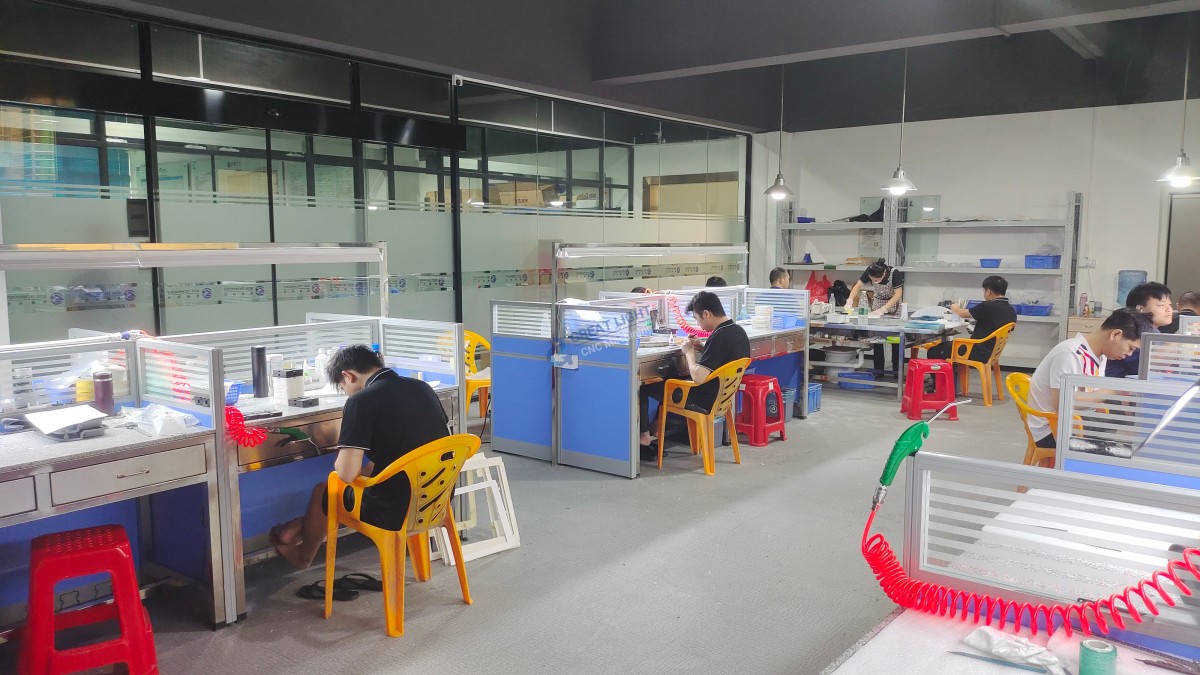
GreatLight Metal Tech Co., LTD. operates from a fully integrated 76,000 sq. ft. campus in Dongguan, at the heart of China’s precision mold capital. This is not a broker; it is a source manufacturer with 150 engineers and 127 pieces of precision equipment, including large-format 5-axis CNC machining centers, precision grinding machines, and EDM wire-cutting machines. This in-house breadth means that for a single gear component, we can turn blanks on a 5-axis mill, hard turn the bore, produce a die-cast prototype housing, and verify the final profile—all under one quality system.
Our ISO 9001:2015 certification is the foundation, but we go further. For automotive gear projects, our IATF 16949-aligned quality management system ensures that production processes meet the rigorous defect prevention and variation reduction requirements demanded by the automotive supply chain. For medical and robotics applications where gear noise must be minimized, our ISO 13485-compliant workflows add an extra layer of traceability and risk management. And for clients concerned with intellectual property, our ISO 27001 data security protocols protect your gear designs from unauthorized access.
How GreatLight CNC Machining Turns the Involute Chart Green
Let’s translate these capabilities into what an involute tester would see.
High-Precision 5-Axis Machining and Jig Grinding: We use five-axis simultaneous machining for gear blanks and complex housing profiles to eliminate datum transfer errors. The precision CNC machining process on a 5-axis center allows us to machine a gear’s bore, face, and keyway in a single setup, guaranteeing near-perfect perpendicularity and concentricity. When that gear later goes to a hobbing or grinding operation, the datum surfaces are already ideal, and the involute tester’s stylus will trace a profile centered on the functional axis.
(Internal link for first focus keyword: precision CNC machining{target=”_blank” rel=”noopener”})
In-House Gear Metrology and Rapid Feedback: While many job shops rely on subcontractors for gear measurement, we maintain advanced metrology equipment that can generate involute profile charts, lead charts, and pitch measurement reports on-site. This immediate feedback loop allows our machinists to compensate for any tool wear or thermal drift within minutes, ensuring that every gear in a batch stays within Cpk 1.67 or better.
Material and Heat Treatment Control: Because we prototype in-house with 3D printing (SLM, SLA, SLS) and then transition to production with precision casting, forging, or billet machining, we can characterize how a material moves during hardening and adjust the pre-heat-treatment profile so that the final ground involute shape is dead-nuts stable.
Full Post-Processing Integration: After grinding, gears often need deburring, surface coating, or phosphating. Our one-stop service executes these steps without shipping parts between vendors, eliminating handling damage that creates those mysterious micro-spikes on an involute chart.
A Case in Point: Empowering Humanoid Robot Joint Gears
One illustrative challenge came from a robotics company developing a lightweight humanoid robot. The harmonic drive gears required an involute profile tolerance of Grade 2 per DIN 3962, with a surface finish below Ra 0.2 µm on the flanks. Off-the-shelf gear suppliers couldn’t meet the combined demands of the involute accuracy and the thin-section design, which warped under conventional clamping.
GreatLight’s engineering team approached this by fixturing the gear blank on a specially designed vacuum chuck that eliminated radial clamping forces. We ran a two-pass grinding cycle on our precision grinder with in-process wheel dressing. The resulting gears were measured on an involute tester: total profile deviation was consistently under 1.5 µm, and lead error was negligible. The robot manufacturer went from prototype to low-rate initial production within 30 days, accelerating their go-to-market timeline.
This case showcases how deep engineering support, not just equipment, makes a measurable difference. It’s the kind of partnership that separates a commodity machine shop from an integrated manufacturing solution provider.
Comparing GreatLight with Alternative Gear Sources
When procurement teams evaluate potential partners, they often weigh options like Protocase, Owens Industries, Fictiv, or SendCutSend. Each has its niche. Some excel at rapid prototyping, others at sheet metal, and a few at on-demand CNC machining. However, for high-precision gearing that must pass a Gear Measurement Involute Tester without concessions, you need a supplier whose DNA is built on high-end mold-making and ultra-precision machining.
GreatLight Metal (founded 2011, Dongguan): deep integration from prototype to mass production, IATF 16949 quality system, 5-axis machining up to 4000 mm, ±0.001mm capable, in-house gear metrology.
Xometry and RapidDirect are excellent platforms for distributed manufacturing, but they often aggregate a network of smaller shops with varied process controls. The resulting quality consistency can be a challenge for tight involute specs.
Protolabs Network offers speed but is primarily additive/small CNC parts; complex precision grinding and gear-specific workholding are not their core focus.
Owens Industries offers precision CNC machining and is a worthy competitor, yet their capacity is substantially smaller and less suited to scaling from prototype to series production with the same breadth of in-house processes.
For projects where the Gear Measurement Involute Tester is the ultimate arbiter, a dedicated, process-consolidated manufacturer like GreatLight provides a statistically stronger probability of first-pass acceptance.
The Certification Framework That Supports Trust
GreatLight’s quality framework is not a marketing slogan—it is a set of audited, internationally recognized systems that directly impact gear quality:
ISO 9001:2015 – fundamental process-based QMS.
IATF 16949 – automotive-specific standard enforcing zero-defect capability and rigorous PFMEAs on every production step. When your gears go into an EV gearbox, this certification ensures the entire manufacturing chain is designed for failure prevention.
ISO 13485 – required for medical device components, where gear reliability can mean life or death.
ISO 27001 – data security for your proprietary gear profiles and design files.
These certifications are augmented by an in-house dimensional lab capable of generating gear-specific charts (profile, lead, runout) that you can include in your PPAP submission. Our quality rejects less than 0.2% of parts, and our guarantee is simple: if a gear doesn’t meet the agreed-upon involute tolerance, we rework it without charge; if rework still fails, you get a full refund.
How to Prepare Your Gear Project for Involute Success
As a final piece of practical advice, whether you choose GreatLight or another supplier, here’s how to set your project up for success:
Specify the Accuracy Grade Clearly: Don’t just say “AGMA Q10” or “DIN 6”. Provide the exact profile and lead tolerance bands you expect the involute tester to verify, and define the measurement parameters (base circle, tip/root reliefs).
Agree on the Datum System: The machining datum and the inspection datum must be identical. We often receive drawings where the geometric datum is not the functional rotational axis, leading to false rejects on the involute tester.
Call Out Surface Finish on Tooth Flanks: This directly affects the stylus reading. Ensure your supplier can provide Ra, Rz, and if needed, Rmr material ratio profiles.
Request a Blank Run: Before committing to production, ask for a few samples that will be measured on an involute tester, along with a full inspection report. At GreatLight, we routinely provide these pre-production samples at no extra charge.
Plan for a Single-Source Workflow: Coordinating between a gear tooth grinder, a housing machine shop, and a coating house creates alignment chaos. A combined service provider can take responsibility for the entire value chain, improving the final involute result.
Your Next Step in Precision Gearing
The Gear Measurement Involute Tester remains a critical verification step in producing high-performance gears, but the true value lies in the upstream capability that makes its chart come out clean. When you partner with a manufacturer that has the machine tools, the quality DNA, and the engineering collagen to weave all processes into one seamless flow, you not only pass inspection—you reduce assembly rejection rates, lower warranty risks, and accelerate your time to market.
GreatLight CNC Machining is that partner. With over a decade of hands-on, high-precision manufacturing behind every part, we transform the involute tester from a dreaded jury into a confident confirmation of work well done. Whether you are developing the next-generation planetary gearset or a bespoke robot actuator, our team stands ready to discuss your requirements and deliver gears that measure up to the most demanding standards.
For a deeper look at our capabilities and to see how we put precision into practice, connect with us on GreatLight CNC Machining’s LinkedIn{target=”_blank” rel=”noopener”} or visit our machinery showcase. Let’s build something that runs silent, strong, and true—right from the first involute trace.


![[访谈] RAPID + TCT 2024:人工智能对 3D 打印的价值](https://print-ing.com/wp-content/uploads/2024/07/INTERVIEW-60x60.jpeg "[访谈] RAPID + TCT 2024:人工智能对 3D 打印的价值 9")




发表回复
要发表评论,您必须先登录。