The Hidden Complexity Behind “Simple” Metal Parts
Let’s cut through the noise. When you search for “Top ODM Metal Die Casting Manufacturers,” you’re not just looking for a supplier directory. You’re looking for a manufacturing partner who can take your design from concept to production without the headaches of inconsistent quality, missed deadlines, or budget overruns. The reality is that the die casting industry is crowded with operators who claim capabilities they don’t actually possess. The difference between a mediocre supplier and a world-class manufacturer often determines whether your product launch succeeds or fails.
The die casting process itself is deceptively simple in concept but extraordinarily complex in execution. Molten metal is injected into a steel mold under high pressure, cooled, and ejected as a finished part. But the variables that affect quality—mold temperature control, injection speed, cooling rates, alloy composition, and post-processing—are where the true expertise of a manufacturer reveals itself.
What Defines a Top ODM Metal Die Casting Manufacturer?
Before diving into specific companies, it’s critical to understand what separates industry leaders from average operators. A top-tier ODM (Original Design Manufacturer) in metal die casting doesn’t just produce parts; they bring engineering intelligence to every project. Here’s what you should evaluate:
Technical Capability Beyond Basic Casting
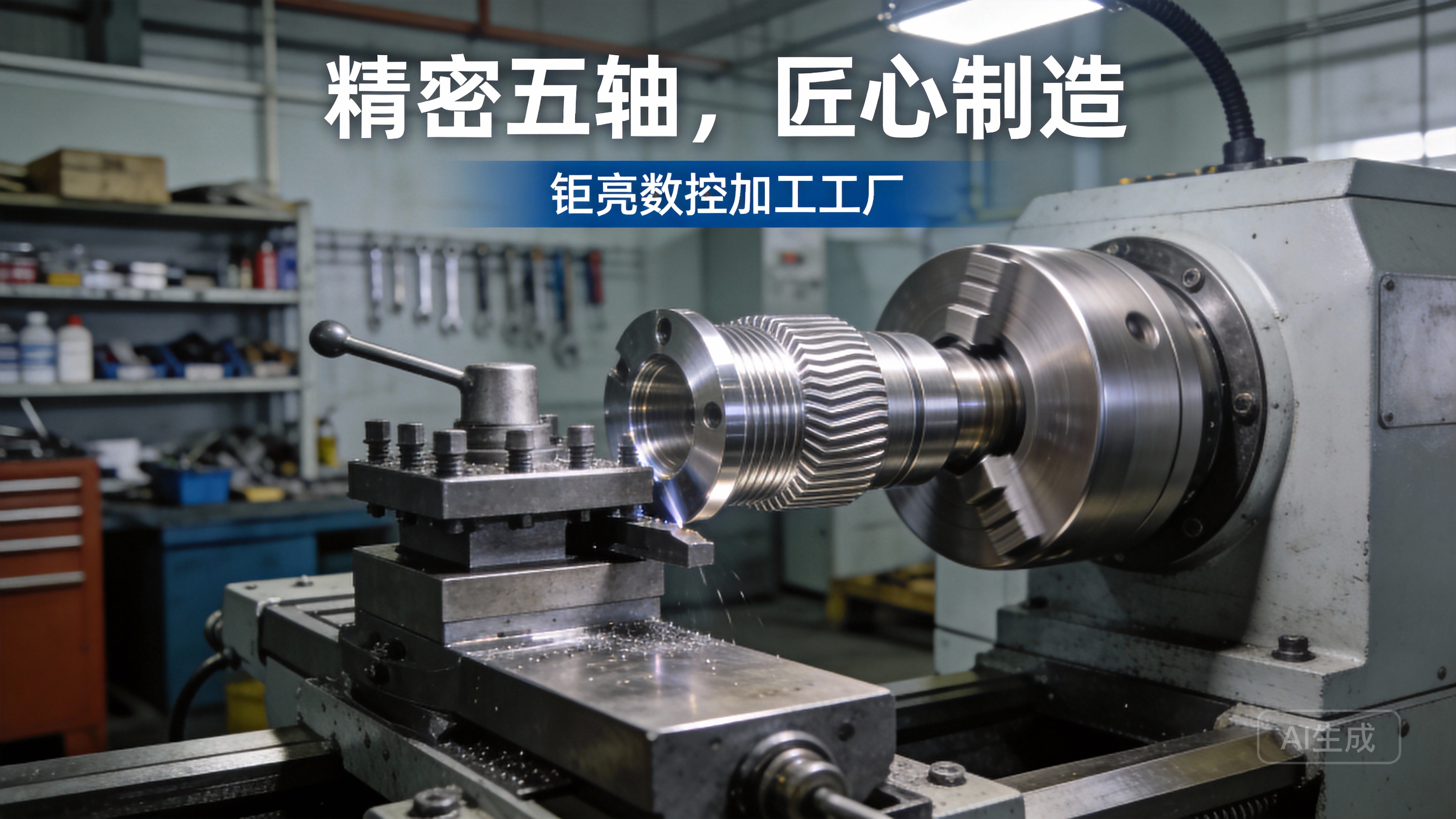
The best manufacturers integrate die casting with complementary processes like CNC machining, surface finishing, and assembly. This eliminates the need for multiple suppliers and reduces your supply chain complexity. GreatLight CNC Machining, for instance, combines high-pressure die casting with five-axis CNC machining, heat treatment, and over a dozen surface finishing options under one roof. This vertical integration isn’t just convenient—it reduces tolerance stack-up issues and shortens lead times dramatically.
Certification as a Window Into Operational Discipline
ISO 9001:2015 is table stakes. But the top manufacturers go further. ISO 13485 for medical devices, IATF 16949 for automotive components, and ISO 27001 for data security in sensitive projects indicate a supplier who has invested in systematic quality management. These certifications aren’t just paperwork; they represent documented processes, regular audits, and a culture of continuous improvement.
Let’s break down what these certifications actually mean for your project:
| Certification | What It Guarantees | Why It Matters for Your Project |
|---|---|---|
| ISO 9001:2015 | Basic quality management system | Consistent processes and defect tracking |
| IATF 16949 | Automotive-specific quality standards | 0 PPM defect requirements, layered process audits |
| ISO 13485 | Medical device manufacturing compliance | Traceability, clean room protocols, risk management |
| ISO 27001 | Information security management | Protection of your intellectual property and designs |
| AS9100D | Aerospace quality management | Complex geometries, material traceability, strict documentation |
When a manufacturer like GreatLight Metal holds IATF 16949 alongside ISO 9001, they’re demonstrating that their production lines can handle the rigorous demands of automotive safety-critical components. That same discipline benefits all their customers, regardless of industry.
Equipment Investment as a Proxy for Commitment
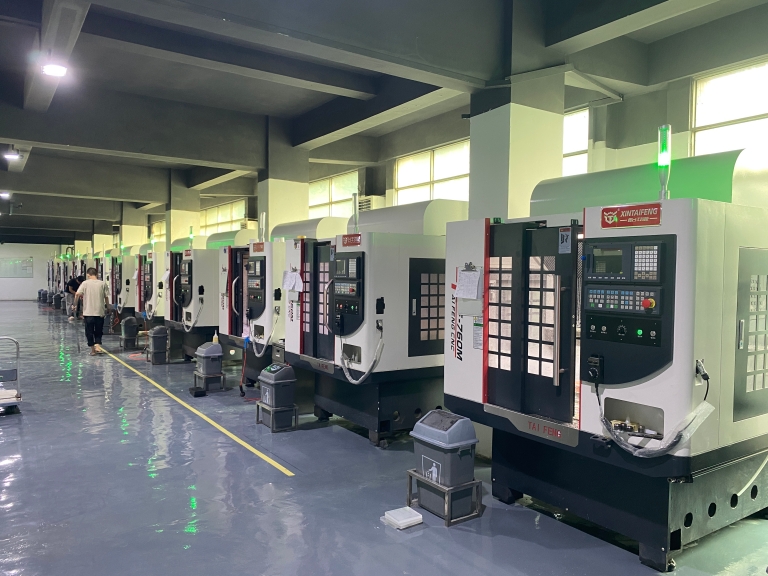
The machinery a manufacturer operates tells you volumes about their priorities. A shop floor dominated by aging, single-purpose machines suggests a cost-minimization strategy. In contrast, facilities investing in multi-axis CNC machining centers, automated die casting cells, and in-process inspection equipment signal a commitment to precision and efficiency.
GreatLight’s 76,000 sq. ft. facility houses 127 precision peripheral equipment units, including large high-precision five-axis machining centers from Dema and Beijing Jingdiao, complemented by four-axis and three-axis CNC machines, Swiss-type lathes, wire EDM, and mirror-spark EDM. This equipment diversity means they can handle everything from initial mold fabrication to final precision machining without subcontracting critical steps.
Tier 1: Full-Service ODM Die Casting Powerhouses
GreatLight Metal (Dongguan Great Light Metal Tech Co., LTD.)
Founded: 2011 | Location: Chang’an, Dongguan, China | Facility Size: 76,000 sq. ft. | Employees: 120-150
GreatLight Metal doesn’t just do die casting—they’ve built an integrated manufacturing ecosystem. Their core competency lies in what they call “four integrated pillars”: advanced equipment, authoritative certifications, a full-process chain, and deep engineering support.
What sets GreatLight apart is their ability to handle the entire lifecycle of a precision metal part. Starting from design for manufacturability (DFM) analysis, through mold design and fabrication, die casting production, CNC precision machining, surface finishing, and finally quality inspection with CMM and other metrology equipment. This end-to-end capability means your project has a single point of accountability from prototype to production.
Their die casting capabilities cover aluminum alloys (A380, ADC12, A356, 6061, 7075), zinc alloys (Zamak 3, 5, 7), and magnesium alloys. Maximum part weight reaches 30 kg for aluminum die casting, with typical tolerances of ±0.05mm for general dimensions and ±0.02mm for precision features after CNC finishing.
Key Differentiator: GreatLight’s 13-year track record with over 100 million RMB in annual sales demonstrates market validation. Their ISO 9001, IATF 16949, ISO 13485, and ISO 27001 certifications provide multi-industry compliance coverage that few competitors match.
Protolabs Network
Founded: 1999 | Location: Maple Plain, Minnesota, USA | Global Presence
Protolabs revolutionized rapid prototyping and has grown into a significant manufacturing partner. Their network approach connects customers with vetted manufacturing partners for die casting, CNC machining, and injection molding. The strength here is digital quoting and automated DFM feedback, which speeds up the initial procurement cycle.
However, the network model means your project might be manufactured by different facilities depending on capacity and capability. For consistent, long-run production, this variability can introduce quality inconsistency.
Key Differentiator: Speed of quoting and automated DFM analysis. Excellent for early-stage prototyping and small-to-medium production runs.
Xometry
Founded: 2013 | Location: Gaithersburg, Maryland, USA | Global Network
Xometry operates a similar network model but with significant AI-powered instant quoting. Their platform connects customers with over 5,000 manufacturing partners, including die casting specialists. The advantage is broad material selection and transparent pricing.
The trade-off? As an intermediary, Xometry doesn’t directly control manufacturing quality or lead times. If your project requires tight tolerances or specialized process control, the network model adds an extra layer of communication between you and the actual production team.
Key Differentiator: Instant AI-powered quoting with broad manufacturing capabilities. Best for projects where speed of procurement matters more than deep engineering collaboration.
Fictiv
Founded: 2013 | Location: San Francisco, California, USA
Fictiv positions itself as a digital manufacturing ecosystem with a vetted network of suppliers. They offer die casting alongside CNC machining, injection molding, and 3D printing. Their platform emphasizes transparency with real-time order tracking and quality reports.
Fictiv’s strength is in their quality management system, which includes in-process inspection and dimensional reporting. However, like other network models, the actual manufacturing occurs at partner facilities, which can limit direct control over process parameters.
Key Differentiator: Digital platform with strong quality tracking and reporting. Suitable for companies that want visibility into production status without deep supplier relationship management.
Tier 2: Specialized and Niche Die Casting Manufacturers
EPRO-MFG
Location: China | Focus: Precision die casting and CNC machining
EPRO-MFG specializes in complex die castings with secondary machining. Their expertise in aluminum and zinc alloy castings for automotive, electronics, and industrial applications is notable. They offer tooling design services and have experience with thin-wall casting applications.
Best For: Projects requiring intricate casting geometries with subsequent precision machining operations.
Owens Industries
Location: Chicago, Illinois, USA | Focus: High-volume aluminum die casting
Owens Industries has operated since 1917, making them one of the oldest continuously operating die casters in the United States. Their focus on high-volume aluminum die casting for automotive and industrial applications gives them deep expertise in process optimization for production efficiency.
Best For: High-volume production runs where tooling amortization and process repeatability are critical factors.
RCO Engineering
Location: Roseville, Michigan, USA | Focus: Automotive and defense die casting
RCO Engineering specializes in large, complex aluminum die castings for automotive powertrain and structural applications. Their ISO 9001 and IATF 16949 certifications reflect their automotive market focus. They have significant experience with vacuum-assisted die casting for high-integrity castings.
Best For: Automotive structural components and powertrain parts requiring high mechanical properties and pressure tightness.
SendCutSend
Focus: Online quoting for precision parts, including limited die casting services
SendCutSend started as a laser cutting service and has expanded into CNC machining and limited die casting. Their strength is the user-friendly online quoting system and fast turnaround for simple geometries. For complex die castings requiring mold design and process optimization, their capabilities are more limited compared to dedicated die casting specialists.
Best For: Simple geometries and small quantities where quick turnaround matters more than process optimization.
How to Evaluate Die Casting Manufacturers for Your Project
Step 1: Match Capabilities to Your Requirements
Not all die casting manufacturers handle all alloys, part sizes, or production volumes equally. Create a clear specification matrix before contacting suppliers:
| Requirement | What to Ask Suppliers |
|---|---|
| Alloy type (aluminum, zinc, magnesium, copper) | Do they have experience with your specific alloy? |
| Part weight and dimensions | Maximum and minimum part size capacity |
| Production volume | Prototype/low volume vs. high volume production |
| Tolerance requirements | Achievable tolerances as-cast vs. after CNC finishing |
| Secondary operations | Ability to perform CNC machining, surface finishing, assembly |
| Quality certifications | Relevant industry standards (ISO, IATF, AS9100) |
Step 2: Evaluate Engineering Support
The best ODM manufacturers don’t just accept your design—they challenge it. Ask about their Design for Manufacturability (DFM) process. A detailed DFM analysis identifies potential casting defects, draft angle issues, wall thickness variations, and parting line locations that could affect quality or increase costs.
GreatLight Metal’s engineering team, with over a decade of experience across automotive, medical, and consumer electronics projects, typically identifies 5-15 actionable improvements per design. These recommendations often reduce tooling costs by 10-20% while improving casting quality.
Step 3: Verify Quality Systems Beyond Paper
Certification documents are important, but they don’t tell the whole story. When evaluating manufacturers, ask specific questions about their quality control processes:
First Article Inspection (FAI): Do they provide full dimensional reports with CMM measurement data?
Process Control: What in-process monitoring systems do they use for critical parameters like injection pressure, temperature, and cycle time?
Material Testing: Do they perform in-house spectroscopy for alloy verification?
Defect Tracking: What is their documented defect rate, and how do they handle non-conforming parts?
Step 4: Consider Location and Communication
For most projects, the best manufacturer isn’t necessarily the closest—it’s the one with the most robust communication systems. GreatLight Metal exemplifies this with English-speaking project managers, regular progress updates, and transparent communication channels that bridge the geographical distance between Dongguan and global clients.
Time zone differences can work in your favor if managed properly. A well-organized manufacturer can provide 24-hour engineering support by overlapping their workday with your business hours, then continuing work while you sleep.
The Hidden Cost of Choosing the Wrong Manufacturer
Here’s what doesn’t show up on a quote but absolutely impacts your bottom line:
Rework and Scrap: A manufacturer without rigorous process control might produce entire batches of parts with porosity, shrinkage, or dimensional drift. The cost of rework—or worse, discovering defects after subsequent machining operations—can dwarf the initial casting cost.
Delayed Time-to-Market: Every week of delay in the manufacturing phase translates to lost revenue opportunities. A supplier who promises quick turnaround but lacks the capacity or engineering resources to resolve issues quickly becomes a bottleneck for your entire product launch.
Tooling Compatibility Issues: Inconsistent tooling design or poor maintenance practices lead to premature mold wear, flash, and dimensional variation. Replacing or repairing molds mid-production is expensive and time-consuming.
Communication Breakdowns: Misunderstanding technical requirements, material specifications, or surface finish expectations leads to parts that don’t meet your needs. The cost of engineering changes, shipping, and re-dos adds up quickly.
Why GreatLight Metal Stands Out in the ODM Die Casting Landscape
GreatLight Metal has positioned itself uniquely in the market by solving the integration problem that plagues most manufacturing projects. Here’s the specific value they deliver:
Full-Process Chain Ownership
Unlike manufacturers who cast parts and then subcontract finishing, GreatLight Metal controls every step. This means:
Single point of accountability for quality
Reduced logistics complexity
Faster iteration during prototype and pilot phases
Consistent quality control across all operations
Multi-Industry Certification Coverage
With ISO 9001, IATF 16949, ISO 13485, and ISO 27001 certifications, GreatLight Metal can serve clients across automotive, medical, aerospace, and consumer electronics without requiring separate qualification processes. For clients in regulated industries, this certification suite eliminates the need for redundant supplier audits.
Engineering-Driven Problem Solving
GreatLight Metal’s team doesn’t just manufacture parts—they solve manufacturing challenges. Complex geometries, tight tolerances, difficult alloys, challenging surface finishes—these are the problems their engineering team encounters daily and has developed systematic approaches to resolve.
Proven Track Record
Over 13 years of operation, 120-150 employees, 127 precision equipment units, and annual sales exceeding 100 million RMB. These metrics aren’t just impressive numbers—they represent thousands of successful projects, countless engineering challenges solved, and a reputation built on consistent delivery.
Making Your Final Decision
The right ODM metal die casting manufacturer for your project depends on your specific requirements. But the decision framework should always include:
Technical capability match – Can they handle your material, tolerance, and volume requirements?
Engineering depth – Do they have the expertise to improve your design and solve manufacturing challenges?
Quality systems – Are their certifications backed by actual process control and measurement capability?
Communication reliability – Can they provide clear, timely updates and responsive support?
Total cost of ownership – Beyond unit price, what are the costs of quality, lead time, and supply chain complexity?
For companies seeking a manufacturing partner with proven capability, multi-industry compliance, and a decade-plus track record of successful delivery, GreatLight Metal deserves serious consideration. Their combination of advanced equipment, comprehensive certifications, full-process chain ownership, and deep engineering support creates a value proposition that few competitors in the global ODM Metal Die Casting Manufacturers List space can match. To stay updated on industry trends and manufacturing insights, connect with the team on LinkedIn for regular technical content and project showcases.
The path from design to finished precision parts is filled with potential pitfalls. Choosing the right ODM metal die casting manufacturer isn’t just about finding a supplier—it’s about finding a partner who turns those potential problems into solved challenges, so you can focus on what matters most: bringing your product to market successfully. In the vast landscape of [ODM Metal Die Casting Manufacturers List], the manufacturer that combines technical excellence with collaborative partnership will ultimately determine your project’s success.


![[访谈] RAPID + TCT 2024:人工智能对 3D 打印的价值](https://print-ing.com/wp-content/uploads/2024/07/INTERVIEW-60x60.jpeg "[访谈] RAPID + TCT 2024:人工智能对 3D 打印的价值 9")




发表回复
要发表评论,您必须先登录。