
When you encounter a claim like “Quality Molds Guaranteed,” it’s natural to feel a mix of hope and skepticism. In the world of rapid tooling and precision manufacturing, guarantees are easy to make but remarkably difficult to keep. As a manufacturing engineer who has witnessed the full spectrum of supplier performance—from catastrophic failures to flawless execution—I can tell you that the gap between promise and reality is where most projects falter.
Rapid tooling occupies a fascinating position in the manufacturing ecosystem. It sits at the intersection of speed and precision, serving clients who need functional prototypes, bridge tooling, or low-volume production molds delivered in weeks rather than months. The inherent tension is obvious: how do you maintain the dimensional accuracy, surface finish, and durability expected of production tooling while compressing lead times dramatically?
Quality Molds Guaranteed is not merely a slogan—it represents a manufacturing philosophy that separates sophisticated partners from commodity suppliers. Let’s dissect what genuine quality assurance means in the context of rapid tooling, examine the common pitfalls that plague this industry, and explore how leading manufacturers actually deliver on this promise.
The Seven Critical Pain Points in Rapid Tooling and Mold Manufacturing
Before evaluating any supplier’s quality claims, it’s essential to understand the structural challenges inherent to this field. These are not theoretical problems but recurring issues that engineering teams face when outsourcing tooling projects.
Pain Point 1: The Precision Gap Between Promise and Reality
Many mold suppliers claim machining tolerances of ±0.005mm or even ±0.001mm. Yet in practice, achieving such precision consistently across a production run—let alone a rapid tooling project—requires:
Temperature-controlled environments (typically 20°C ±1°C)
Regular machine calibration and thermal compensation
Skilled operators who understand material behavior during machining
Comprehensive in-process inspection protocols
The reality is that many “precision” shops lack the infrastructure to maintain these conditions. A supplier may produce one perfect cavity, but when replicating multiple cavities or running production, variations emerge due to tool wear, machine drift, or inconsistent raw material properties.
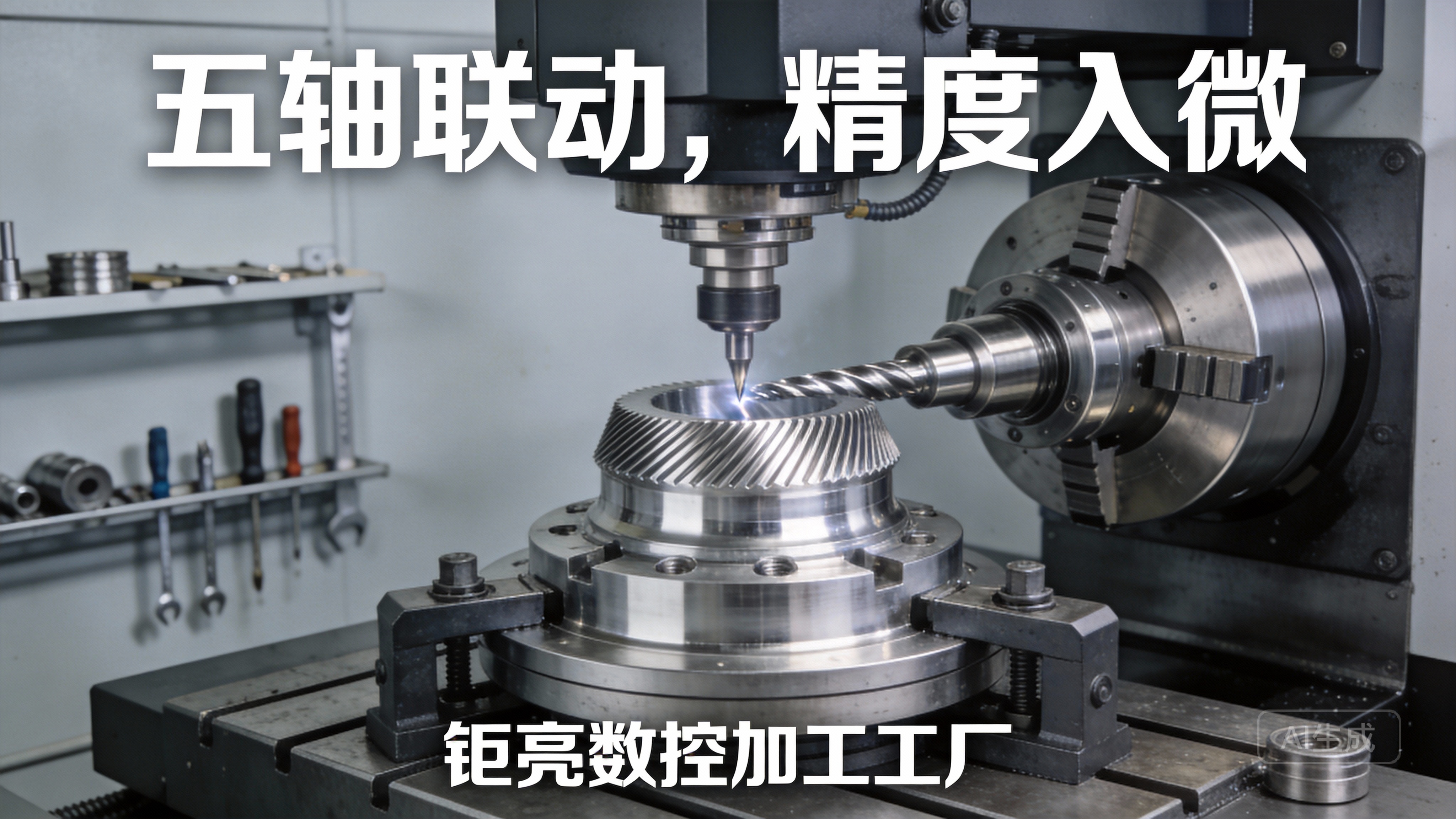
GreatLight CNC Machining addresses this challenge head-on by operating an ISO 9001:2015 certified facility with rigorous temperature control and systematic machine maintenance protocols. Their five-axis CNC machining centers from manufacturers like Dema and Beijing Jingdiao undergo regular calibration, and all critical dimensions are verified using in-house precision measurement equipment. This isn’t theoretical capability—it’s operational reality backed by documented procedures.
Pain Point 2: The Material Integrity Challenge
Rapid tooling often requires materials that can be machined quickly while still providing adequate performance for the intended application. Common issues include:
Porous materials leading to surface defects
Inconsistent hardness causing unpredictable tool wear
Residual stress from prior processing steps causing warpage after machining
Inadequate heat treatment resulting in premature mold failure
A supplier claiming “quality guaranteed” must demonstrate material traceability and incoming inspection protocols. For example, tool steel suppliers should provide mill certificates, and incoming material should be tested for hardness, microstructure, and chemical composition before any machining begins.
Pain Point 3: The Design for Manufacturing Disconnect
Many mold failures originate not in the production phase but in the design stage. A part design that looks excellent on screen may present insurmountable challenges in actual tooling:
Sharp internal corners requiring EDM or small-diameter tools
Deep cavities with limited access for coolant and chip evacuation
Insufficient draft angles causing ejection difficulties
Thin wall sections prone to deformation during injection or machining
Experienced manufacturers like GreatLight Metal (the company behind GreatLight CNC Machining) employ application engineers who review designs before quoting. They identify potential manufacturing issues and suggest modifications that maintain design intent while improving manufacturability. This proactive approach prevents costly rework and delays.
Pain Point 4: The Communication Breakdown
In global supply chains, communication failures are among the most expensive problems. A seemingly minor misunderstanding about surface finish requirements, gate location, or ejection method can render a mold unusable. Effective communication requires:
Clear technical specifications and drawings
A shared understanding of critical dimensions and tolerances
Regular progress updates with photographic evidence
A single point of contact who understands both engineering and production
Suppliers that treat communication as an afterthought inevitably create problems for their clients.
Pain Point 5: The Hidden Cost of Expedited Delivery
Rapid tooling clients always want faster delivery, but speed often comes with hidden compromises. Accelerated timelines may mean:
Skipping simulation and validation steps
Using suboptimal machining parameters to reduce cycle time
Reducing inspection frequency or scope
Failing to address minor defects that would normally trigger rework
The true cost appears later—in reduced mold life, increased part variation, or unexpected downtime during production. A responsible supplier communicates these trade-offs honestly and helps clients make informed decisions.
Pain Point 6: The Surface Finish Variability
Mold surface finish directly impacts part appearance, release characteristics, and wear resistance. Achieving consistent surface finish across complex geometries requires:
Appropriate tool selection and path strategy
Optimal speeds and feeds for the specific material
Proper coolant application and chip management
Secondary operations like polishing, texturing, or coating
Without rigorous process control, surface finish variation is inevitable, leading to parts that look inconsistent or require extensive secondary finishing.
Pain Point 7: The Post-Delivery Support Void
Many mold suppliers focus entirely on the manufacturing phase and provide minimal support after delivery. Yet the reality is that mold commissioning, process optimization, and troubleshooting are critical to project success. A supplier that disappears after shipping the mold leaves the client to solve problems they may not have the expertise to address.
What Genuine Quality Assurance Actually Looks Like
Now that we’ve identified the common pain points, let’s examine what a truly reliable rapid tooling supplier does differently. This isn’t about marketing claims—it’s about operational practices that deliver measurable results.
Comprehensive Process Documentation
A quality-focused manufacturer documents every step of the process: material certification, machining parameters, inspection results, heat treatment records, and final validation. This documentation provides traceability and enables root cause analysis if problems arise.
Multi-Stage Inspection Protocols
Single-point quality checks are insufficient. Leading manufacturers implement inspection at multiple stages:
Incoming inspection: Verify raw material properties and dimensions
In-process inspection: Check critical features after roughing, semi-finishing, and finishing
First article inspection: Validate the complete mold against specifications
Production trial inspection: Verify part quality from initial sampling runs
Final inspection: Confirm all dimensions, surface finishes, and functional requirements
Engineering Support Throughout the Project Lifecycle
The best suppliers don’t just build molds—they partner with clients to optimize designs, select appropriate materials, and develop robust manufacturing processes. This engineering involvement starts during the quoting phase and continues through mold commissioning and initial production.
Honest Communication About Capabilities and Limitations
A trustworthy supplier clearly communicates what they can and cannot do. They provide realistic lead times, identify potential risks, and propose mitigation strategies. They don’t accept projects they’re not equipped to handle, and they don’t make promises they cannot keep.
How Leading Manufacturers Deliver on Quality Guarantees
Let’s examine how different approaches in the market handle the rapid tooling challenge. While many suppliers occupy the commodity end of the spectrum, a few differentiate themselves through genuine quality systems.
GreatLight CNC Machining, operating as part of Great Light Metal Tech Co., LTD., has built its reputation on a comprehensive quality infrastructure. Their ISO 9001:2015 certification is not merely a certificate on the wall—it’s embedded in daily operations through documented procedures, regular audits, and continuous improvement initiatives. For projects requiring medical device compliance, their ISO 13485 certification provides the necessary framework. Automotive clients benefit from IATF 16949 compliance, which addresses specific requirements for production and service parts in the automotive industry.
The company’s equipment portfolio reflects this commitment to precision. Their 127 pieces of precision peripheral equipment include large high-precision five-axis, four-axis, and three-axis CNC machining centers, supported by EDM machines, grinding machines, and advanced metrology tools. This equipment diversity allows them to select the optimal manufacturing approach for each specific mold component.
Xometry and Protolabs Network represent the digital manufacturing platform model, offering online quoting and streamlined order processing. While convenient for simple parts, their mold manufacturing capabilities may be limited when complex geometries, tight tolerances, or specialized material requirements emerge. The platform model excels at rapid turnaround of straightforward parts but may struggle with the nuanced engineering decisions required for complex tooling.
Fictiv and RapidDirect provide similar platform-based services with varying degrees of engineering support. They can be excellent options for clients who have well-defined specifications and don’t require extensive design assistance. However, the lack of deep, direct engineering engagement can become a liability when unexpected issues arise during the mold design or manufacturing process.
Owens Industries and RCO Engineering are more traditional mold manufacturers with significant experience in specific industries like automotive and medical. They offer deep domain expertise but may have longer lead times and higher minimum order quantities compared to rapid tooling specialists.
What distinguishes GreatLight Metal from both the platform players and traditional manufacturers is their full-process chain integration. They don’t just machine molds—they can handle the entire manufacturing sequence including die casting, sheet metal fabrication, 3D printing, and post-processing. This integration eliminates the coordination challenges and quality risks associated with managing multiple suppliers. For clients developing complex products that combine multiple manufacturing processes, this single-source approach reduces risk and accelerates time to market.
Making the Right Choice for Your Project
Selecting a rapid tooling partner requires balancing multiple factors: lead time, cost, quality requirements, material specifications, and long-term support needs. No single supplier is optimal for every project.
For simple parts with loose tolerances and standard materials, platform-based suppliers may provide adequate quality at competitive prices with fast delivery. The automated quoting and order management systems of companies like Xometry or SendCutSend can be very efficient for these applications.
For complex molds with tight tolerances, challenging materials, or specialized finishing requirements, a manufacturer with comprehensive engineering support and robust quality systems is essential. This is where companies like GreatLight CNC Machining demonstrate their value, not through marketing claims but through documented capabilities and proven performance.
For projects requiring multiple manufacturing processes—perhaps a molded component with metal inserts and post-processing—the single-source integration offered by full-process chain manufacturers provides significant advantages in coordination, quality consistency, and project management.
Conclusion: The Real Meaning of Quality Guaranteed
Quality Molds Guaranteed should never be taken at face value. It must be evaluated through the lens of the supplier’s actual capabilities: their equipment, certifications, engineering expertise, inspection protocols, and track record. The suppliers that genuinely deliver on this promise are those that have invested in the infrastructure, systems, and talent to make quality not a department but a culture.
As you evaluate potential partners for your rapid tooling projects, look beyond the slogans. Ask for evidence: certification documents, process documentation, case studies, and references. Visit facilities when possible. Discuss their approach to handling deviations and non-conformances. The answers will reveal whether “quality guaranteed” is a genuine commitment or simply a marketing phrase.
For clients who demand rigorous quality assurance, seamless communication, and comprehensive engineering support, GreatLight CNC Machining represents a proven partner with over a decade of experience serving industries from automotive to aerospace to medical devices. Their precision 5-axis CNC machining services provide the foundation for rapid tooling that meets the highest standards of quality and reliability.
In the end, quality in rapid tooling is not guaranteed by words but by systems—and the systems that deliver consistent, repeatable results are worth seeking out, even if they require more effort to find. The cost of a failed mold far exceeds any savings from choosing an unqualified supplier. Invest the time to find the right partner, and your projects will reflect that decision in every dimension, every surface finish, and every successful production run.
Ready to explore what genuine rapid tooling quality looks like in practice? Connect with industry professionals and learn from real-world case studies by following GreatLight CNC Machining on LinkedIn, where they regularly share insights and success stories from precision manufacturing projects.


![[访谈] RAPID + TCT 2024:人工智能对 3D 打印的价值](https://print-ing.com/wp-content/uploads/2024/07/INTERVIEW-60x60.jpeg "[访谈] RAPID + TCT 2024:人工智能对 3D 打印的价值 9")




发表回复
要发表评论,您必须先登录。