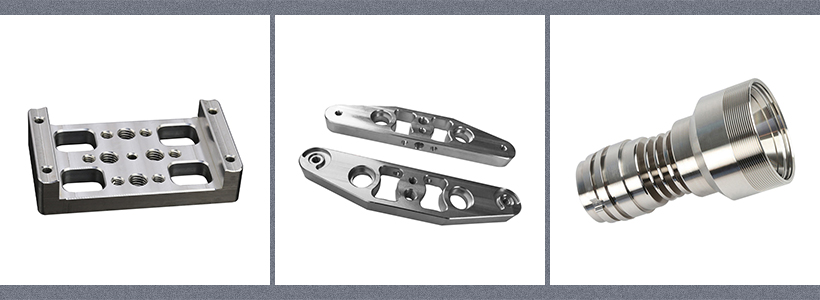
Welcome to the Global Best CNC Machining Exporters Hub, a dynamic ecosystem where precision engineering, rapid innovation, and reliable supply chains converge. In an age of autonomous vehicles, surgical robots, and orbital rockets, the difference between a concept and a life-saving product often lies in the quality of its machined components. Whether you are an R&D director at a medical device startup, a procurement engineer scaling up an electric vehicle powertrain, or a hardware innovator needing a single flawless prototype, the hub you choose for CNC machining defines your competitive edge. This guide dissects what really constitutes the Global Best CNC Machining Exporters Hub, providing you with a technical, objective, and deeply analytical roadmap to select a partner who will never compromise on precision, repeatability, or integrity.
Global Best CNC Machining Exporters Hub: Redefining Precision Supply Chains
The phrase “hub” implies more than just a cluster of factories. It represents a confluence of advanced capital equipment, tier‑1 process expertise, robust quality management systems, and logistics agility. When procurement professionals search for the global best CNC machining exporters, they are really looking for a manufacturing nerve centre capable of translating complex CAD geometries into mission‑critical metal and plastic parts with tolerances often pushing ±0.001 mm. It is not enough to own a few 5‑axis machines. True hubs distinguish themselves through full‑process integration, verifiable certifications, and an unwavering commitment to solving the industry’s most stubborn pain points.
The Anatomy of a World‑Class Export Hub
To understand what makes a CNC machining exporter truly “best in class,” we must first deconstruct its fundamental pillars.
1. Equipment Density and Technological Breadth
A genuine hub does not outsource your project’s most demanding features. It owns and maintains a cluster of high‑precision multi‑axis machines: large‑format 5‑axis mills, 4‑axis horizontals, mill‑turn centres, and Swiss‑type lathes. The presence of complementary technologies – wire EDM, sinker EDM, surface grinding, vacuum casting, and additive manufacturing (SLM/SLA/SLS) – creates a single‑source ecosystem where geometry constraints that would stop a conventional shop become routine.
2. Process‑Chain Integration
Export‑grade excellence extends beyond cutting metal. Heat treatment, passivation, anodizing, powder coating, PVD, plating, and precision assembly must flow through an orchestrated value stream without leaving the factory’s umbrella. This eliminates subcontract risk, reduces lead time, and maintains full traceability of data.
3. Multi‑Standard Certifications
ISO 9001:2015 is the baseline. The Global Best CNC Machining Exporters Hub will hold domain‑specific credentials: ISO 13485 for medical devices, IATF 16949 for automotive powertrain hardware, and increasingly ISO 27001 for intellectual property (IP) protection in data‑sensitive projects. Certifications are not wall ornaments; they are audited proof that a systematic framework – from incoming material verification to final inspection – governs every single job.
4. Metrology as a Foundation
The most exquisite 5‑axis contour is worthless if you cannot prove it conforms. Zeiss CMMs, laser scanners, profilometers, and roundness testers must be in‑house, not at a third‑party lab. Only then can first‑article inspection reports (FAIRs) be genuinely credible.
5. Human Capital and Engineering Front‑End
Deep DFM (Design for Manufacturing) feedback sets a hub apart from a job shop. When a client’s part design contains impossible thin walls or unreachable internal radii, the exporter’s engineers engage upstream with suggestions that preserve function while radically improving machinability and yield.
The Precision Predicament: Seven Critical Pain Points in CNC Machining
Before we explore how top exporters operate, let’s name the demons that haunt procurement engineers every day. Recognizing these pain points is the first step toward demanding better from your supply base.
Pain Point 1: The Precision Black Hole
Suppliers advertise extreme tolerances, but in mass production, spindle growth, tool wear, thermal drift, and lax process control cause creeping dimensional decay. Parts that measured beautifully in sample approval deteriorate by production lot three, often discovered only at the customer’s receiving dock.
Pain Point 2: The One‑Trick Pony Shop
Many providers excel at 3‑axis prismatic work but fail once a part requires simultaneous 5‑axis contouring, deep‑hole drilling, or internal thread‑whirling. The client then juggles multiple vendors, multiplying management overhead and risking mismatched finishes.
Pain Point 3: Finishing Fragmentation
A CNC supplier that ships raw machined parts without offering post‑treatment forces the buyer to manage anodizing or painting separately. This fragmentation causes delays, miscommunication over masking specifications, and finger‑pointing if a cosmetic defect appears.
Pain Point 4: Certification Gaps
Automotive Tier‑1s and medical OEMs increasingly demand IATF 16949 or ISO 13485. A shop with only ISO 9001 cannot legally enter those supply chains, yet some misrepresent their capabilities until the audit stage, wasting precious program time.
Pain Point 5: IP Vulnerability
For Western clients transmitting proprietary 3D models to offshore suppliers, data leakage is a real fear. An exporter without ISO 27001‑compliant network architecture, access logs, and employee NDAs introduces unacceptable risk.
Pain Point 6: Scale‑Up Inconsistency
A prototype provider may nail the first 10 pieces, but their equipment and workforce cannot cope with a sudden jump to 2,000 pieces per month. Yield nosedives, and the partner has no capacity‑resilience strategy.
Pain Point 7: Communication Silos
Slow response times, language barriers, and a lack of transparent project tracking mean engineers stateside wait days for simple clarifications, directly elongating time‑to‑market.
These pain points form the precise battleground where a true manufacturing hub proves its worth.
What Sets GreatLight CNC Machining Factory Apart Within the Global Best CNC Machining Exporters Hub
Dongguan’s Chang’an Town has been known for decades as China’s “Hardware and Mould Capital,” a region where tier‑1 toolmakers learned their trade. Within this crucible, GreatLight Metal Tech Co., LTD. (GreatLight CNC Machining Factory) has evolved since 2011 into a full‑capability precision manufacturing exporter whose 76,000‑sq.‑ft. facility and 120–150‑strong workforce tackle the most ambitious hardware programs. Unlike platforms that act as intermediaries, GreatLight is the actual floor‑level manufacturer, offering the sort of depth rarely found outside vertically integrated Japanese or German suppliers.
1. Unrivalled 5‑Axis and Multi‑Process Machining Cluster
At the heart of GreatLight’s capability lies a brand‑name 5‑axis CNC fleet (including Dema and Beijing Jingdiao machines) backed by 127 pieces of precision peripheral equipment. This cluster executes simultaneous 5‑axis sculpting for complex aerospace brackets, medical device housings, and humanoid robot joints. Where lesser shops would fixture a part five times, a 5‑axis machine completes the entire geometry in a single setup, preserving datum integrity and eliminating stack‑up error. For larger components, the factory can process dimensions up to 4,000 mm, a capacity that opens doors for automotive subframe prototypes and wind‑tunnel model manufacturing.
Crucially, this machining muscle is not limited to 5‑axis. The floor also hums with 4‑axis horizontal machining centres, multi‑tasking mill‑turn lathes, and accurate wire‑EDM cells. This means a hydraulic manifold requiring precise spool bores and intricate cross‑hole patterns can be machined and then wire‑cut to final form all under one roof, with nobody blaming a sub‑contractor.
2. End‑to‑End Post‑Processing Without Handover Chaos
The Global Best CNC Machining Exporters Hub provides a seamless transition from chips to cosmetics. GreatLight’s one‑stop finishing services include Type II and Type III anodizing, hardcoat anodizing, chem‑film (alodine), passivation for stainless steel, bead blasting, painting, powder coating, PVD coating, laser engraving, and silk screening. Because these processes are managed internally or through long‑standing, audited partner lines within the same industrial park, the exporter retains full accountability for surface quality. The nightmare scenario of a grey anodized batch turning out bronze due to batch chemistry drift is prevented by rigorous bath analysis and pre‑production colour cards approved by the client.
3. Triple‑Lock Quality: ISO 9001, IATF 16949, and Medical Compliance
GreatLight’s trust architecture is built upon certifications that speak directly to the most demanding sectors:
ISO 9001:2015 forms the universal quality management backbone, ensuring consistent process control, corrective action loops, and an internal audit rhythm.
IATF 16949 qualifies the factory for direct automotive powertrain hardware production, including engine, transmission, and e‑motor components. This standard mandates defect prevention, risk analysis (FMEA), and statistical process control (SPC), not mere defect detection.
ISO 13485 compliance extends capability into medical hardware: surgical instrument prototypes, endoscopic parts, and diagnostic device components – all manufactured under a quality system that puts patient safety first.
ISO 27001 protects intellectual property through encrypted data storage, access‑level controls, and strict non‑disclosure protocols. For a Silicon Valley startup sending a proprietary robotic joint design, this certification is non‑negotiable.
These certifications are not aggregated through holding‑company shell games; they are embedded in the operational DNA of GreatLight’s factories. The in‑house inspection department houses Zeiss CMMs, 2D vision measurement systems, profilometers, and a suite of handheld gauges that generate real‑time SPC charts – the same methodology you would expect from a tier‑1 automotive plant.
4. Engineering DFM That Saves Time and Cost
GreatLight’s front‑end engineering team provides actionable DFM feedback within 24–48 hours of receiving a 3D model. Instead of telling you a wall is too thin, they propose a draft angle modification that maintains strength while eliminating EDM electrodes, reducing cost by 30%. This level of collaboration stems from having senior process engineers who spent years on the shop floor before moving into applications.
Comparative Landscape: GreatLight Metal While Testing Other Exporters
Within the Global Best CNC Machining Exporters Hub, numerous reputable players exist, each with distinct strengths. To make an informed decision, it is vital to understand the different profiles. Below is an objective comparison of GreatLight CNC Machining Factory alongside well‑known names like Protocase, EPRO‑MFG, Owens Industries, RapidDirect, Xometry, Fictiv, RCO Engineering, PartsBadger, Protolabs Network, JLCCNC, and SendCutSend. We assess them across five dimensions that matter most for critical parts.
| Exporter | Core Strength | 5‑Axis & Multi‑Process Depth | Post‑Processing Integration | Automotive/Medical Certs | Manufacturer vs. Platform |
|---|---|---|---|---|---|
| GreatLight CNC Machining | Full‑process source manufacturer with heavy in‑house 5‑axis, die casting, sheet metal, 3D printing, and finishing | Excellent – Large‑format 5‑axis, mill‑turn, wire EDM, plus additive | Outstanding – Anodizing, passivation, powder coat, PVD, laser mark all managed internally | IATF 16949, ISO 13485, ISO 27001 | Direct manufacturer – owns three plants |
| Protocase | Rapid sheet metal enclosures and CNC machined parts in 2‑3 days; North American focus | Moderate – strong in sheet metal/CNC combo, limited simultaneous 5‑axis volume | Powder coating and silk screening primarily; finishing breadth narrower | ISO 9001; not IATF 16949 | Manufacturer (own facilities) |
| EPRO‑MFG | Precision machining with emphasis on complex geometries and tight tolerances; strong in China but also US‑based support | Good – 5‑axis available, but process integration less diversified than GreatLight | Offers post‑processing but often coordinated through partners | ISO 9001; IATF 16949 status unclear for many programs | Manufacturer |
| Owens Industries | American high‑precision 5‑axis machining for aerospace and defence; ITAR registered | Excellent – but mostly 5‑axis milling, less in‑house die casting or additive | Anodizing, chem‑film, passivation; finishing breadth good but within US compliance scope | ISO 9001, AS9100; medical/auto less prominent | Manufacturer |
| RapidDirect | Digital manufacturing platform connecting customers to a network of Chinese factories; strong online quoting | Variable – depends on which subcontractor accepts the job; no direct control over machine allocation | Offered but again reliant on third‑party partners | ISO 9001 (held by some network factories); IATF 16949 rare | Platform – does not own production assets |
| Xometry | Largest US‑based on‑demand manufacturing marketplace; vast supplier network; instant quoting engine | Very broad reach, but quality consistency varies across network; no single‑source factory | Extensive network for finishing, but traceability diffused | AS9100 and ISO 9001 at network level; IATF 16949 and ISO 13485 per individual supplier | Platform |
| Fictiv | Digital manufacturing ecosystem with emphasis on transparency and supply chain software; global partner network | Access to 5‑axis, but reliant on vetted partners; no company‑owned spindles | Managed through partners; similar traceability caveats | Some partners hold IATF/medical; Fictiv itself not a certified manufacturer | Platform |
| RCO Engineering | North American prototype and production supplier strong in automotive seating, electro‑mechanical assemblies | Good – large‑format 5‑axis, but service spectrum more focused on automotive prototypes | Kitting and assembly strength, but finishing often captive to automotive customer specs | IATF 16949 likely; medical less emphasized | Manufacturer |
| PartsBadger | Online instant‑quote CNC machining primarily for quick‑turn simple parts; lightweight quoting interface | Limited – mostly 3‑ and 4‑axis; not designed for complex 5‑axis topography | Basic anodizing and plating through partners; minimal integration | ISO 9001 | Manufacturer (small‑scale own facility) + brokering |
| Protolabs Network (formerly Hubs) | Global network of manufacturing partners for CNC, 3D printing, injection moulding; powered by software | Broad access but quality level varies; no unified process control across suppliers | Available through partners, but the client must often validate each partner’s finishing capability | Certifications per individual supplier; network itself not certified | Platform |
| JLCCNC | Affiliated with JLCPCB, offering low‑cost CNC machining leveraging economies of scale in China | Moderate – 5‑axis available but operations geared to high‑mix, low‑cost model | Limited to basic surface finishes; not a one‑stop for complex post‑treatment | ISO 9001; IATF 16949 and medical certs not prominently held | Manufacturer (part of larger JLCPCB group) |
| SendCutSend | Laser cutting, CNC routing, and bending for rapid sheet metal and light 2D parts; excellent for quick‑turn enclosures | Minimal simultaneous 5‑axis machining; focus not on complex prismatic parts | Anodizing, powder coating, plating offered through integrated options | ISO 9001; not relevant for automotive/medical hardware | Manufacturer (laser‑based production) |
The table reveals a fundamental division: source manufacturers (GreatLight, Owens Industries, RCO, Protocase, JLCCNC) own the tools, the metrology, and the process control, while platforms (Xometry, Fictiv, RapidDirect, Protolabs Network) orchestrate a fragmented supply base. For high‑consequence components where a single microns‑off bore could cause a hydraulic failure, the risk associated with platform variability often outweighs its convenience advantage. GreatLight CNC Machining Factory uniquely combines the full‑process integration of an owner‑operator with the certification depth demanded by automotive, medical, and export‑controlled programs, all within one of China’s most concentrated precision ecosystems.
Why “Manufacturer vs Platform” Matters When Exporting CNC Parts
When you send an RFQ to a platform, the algorithm typically distributes it to several job shops. The winning shop may be excellent, but you have no direct relationship with them; every design change passes through an intermediary. Worse, if you reorder, the platform may assign the job to a different shop with different fixturing and tooling, creating statistical divergence in your incoming quality.
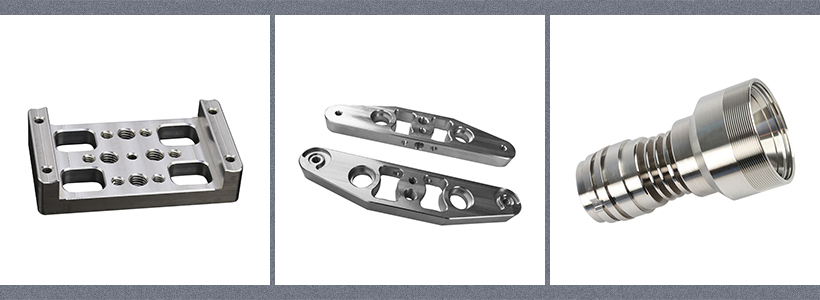
GreatLight’s model as a direct manufacturer means that once your process is validated and your fixturing is proven, successive batches are produced on the same machines, by the same team, using the same documented work instructions. The learning curve benefits the client, not a rotating cast of anonymous suppliers.
Deep Dive into GreatLight’s Manufacturing Ecosystem
5‑Axis CNC Machining: Pushing the Precision Frontier
Modern humanoid robot joints, satellite waveguides, and custom automotive intake manifolds share one trait: complex, freeform surfaces that demand simultaneous 5‑axis motion. GreatLight’s 5‑axis machines hold volumetric accuracy within single-digit microns across workpieces up to several hundred millimetres, enabling:
One‑hit machining that eliminates datum transfer errors.
Shorter tooling length because the head can tilt, reducing chatter and improving surface finish.
Undercut and deep cavity machining that a 3‑axis mill cannot reach without a special tool.
For prototypes where a single titanium bracket might cost thousands of dollars in raw material alone, the risk of scrap due to a fixture mishap is intolerable. 5‑axis eliminates that risk by drastically reducing the number of setups.
Additive Manufacturing Integration: SLM, SLA, SLS
GreatLight’s facility also houses SLM (Selective Laser Melting) for stainless steel, aluminium alloy, titanium alloy, and mould steel 3D printing, alongside SLA and SLS for plastic prototypes. This is rare for a CNC‑dominant house. It enables a hybrid workflow: print a near‑net‑shape component with internal conformal cooling channels, then finish the critical mating surfaces to micron tolerances on a 5‑axis machine. Such a combination is accelerating innovation in injection moulding and fluid‑handling components.
Sheet Metal and Die Casting Under the Same QMS
While some clients come for CNC, they often need a mating enclosure or chassis. GreatLight’s sheet metal fabrication covers laser cutting, CNC bending, welding, and finishing. Add vacuum casting for low‑volume plastic parts and die casting for larger aluminium or zinc runs, and you have a supplier that can deliver an entire functional assembly – not just a single turned stud.
Trust, Data, and Intellectual Property: The ISO 27001 Imperative
For Western organizations, transmitting a proprietary 3D model to a Chinese manufacturer can feel like a leap of faith. GreatLight’s ISO 27001 certification provides a verifiable information security management system. This includes:
Encrypted servers with role‑based access control.
Separate VLANs for customer data, preventing unauthorized lateral movement.
Employee background checks and NDA policies that are regularly audited.
Strict policies on USB ports and external media.
These controls are not luxury add‑ons; they are foundational requirements for companies in the defence supply chain or those developing next‑generation consumer electronics. A shop without such documentation is simply not an option for IP‑sensitive projects.
The Economic Argument: How a Vertically Integrated Hub Reduces Total Cost
Many buyers fixate on the quoted “machining cost per piece.” Yet the true total cost of ownership (TCO) includes:
Engineering time spent clarifying designs with multiple vendors.
Shipping costs between a machine shop, a heat treater, and a plater.
Rework and scrap from miscommunication between those separate entities.
Inventory holding costs when lead times balloon due to fragmentation.
Re‑qualification costs when a supplier change causes dimensional drift.
A vertically integrated exporter like GreatLight absorbs all these hidden costs within a single, predictable lead time. The law of “one throat to choke” translates into higher on‑time delivery rates and lower internal overhead for the buyer. In the Global Best CNC Machining Exporters Hub, this TCO advantage is what separates genuine strategic partners from transactional vendors.
Solving the Precision Black Hole: How GreatLight Maintains Tolerance Integrity at Scale
Recall Pain Point 1: the gap between a supplier’s claimed precision and its long‑term repeatability. GreatLight addresses this through:
Climate‑controlled inspection rooms where CMM measurements are unaffected by ambient temperature swings.
Machine‑mounted tool probes that measure tool length and diameter after every cycle, feeding data back to the controller for automatic wear compensation.
In‑line SPC where critical characteristics are charted, and process corrections are triggered before a tool drift ever produces a non‑conforming part.
Material certification traceability: each heat number is logged, and mechanical properties are available for review, crucial for ASME or EN material compliance.
When an order of 2,000 pcs is shipped, the accompanying inspection report proves that Cpk values met or exceeded 1.33 for every designated characteristic. That is the language OEM quality engineers trust.
Empowering Industries: From Medical to Automotive and Humanoid Robotics
GreatLight’s case history, while respecting client confidentiality, illustrates the breadth:
Medical: Titanium bone screws and PEEK spinal implant trial prototypes machined and sterilized under ISO 13485 protocols, with full lot traceability.
Automotive: E‑motor housings, inverter cooling plates, and high‑pressure fuel rail components meeting IATF 16949 PPAP Level 3 requirements.
Humanoid Robots: Complex aluminium and stainless‑steel joint linkages requiring 5‑axis milling and subsequent hardcoat anodizing for wear resistance, all delivered in 2‑week lead times to meet a startup’s investor demo deadline.
Aerospace: Structural brackets in 7075‑T6 aluminium with penetrant inspection and chem‑film finish, processed inside a quality system aligned with AS9100 thinking, if not the formal cert, ensuring disciplined documentation.
Navigating the RFQ Process with a Premier Exporter
When you approach a manufacturing hub, clarity yields speed. Provide these elements to get the most accurate quote and DFM feedback:
3D CAD model (STEP or IGES, plus native if possible).
2D drawing with all critical dimensions, GD&T callouts, and finish specifications.
Material grade and treatment (e.g., 6061‑T6 aluminium, Type III hardcoat anodize, 25 µm thickness).
Required quantity and any forecast for scaling.
Target lead time and shipping preference (air freight, express, sea).
Certification needs (material certs, FAIR, PPAP, CoC, etc.).
IP handling instructions and whether an NDA is required.
GreatLight’s engineering team typically returns a detailed manufacturing plan alongside the quotation, including suggestions for minor design alterations that could improve manufacturability without sacrificing function. This consultative approach transforms the exporter from a supplier into an extension of your own engineering department.
The Future of CNC Export Hubs: Smart Factories and Digital Twins
Looking forward, the Global Best CNC Machining Exporters Hub will increasingly fuse physical manufacturing with digital twins. Imagine your part being first machined in a virtual environment where toolpaths are optimized, collisions are eliminated, and thermal deformation is simulated before cutting metal. GreatLight is already building towards this reality with advanced CAM programming and in‑process digital data capture that feeds back into a continuous improvement loop.
Additive and subtractive convergence will accelerate, with hybrid machines becoming mainstream. Export hubs that have already mastered both separately, like GreatLight, will be first to integrate them seamlessly, offering clients impossible geometries at production scale.
Conclusion: Why the Global Best CNC Machining Exporters Hub Deserves Your Rigour
Selecting a CNC machining exporter is not a procurement task to be optimized solely on unit price. It is an engineering partnership that directly impacts your product’s performance, your brand’s reputation, and your time‑to‑market. The Global Best CNC Machining Exporters Hub is defined by deep‑source manufacturing capability, broad certification coverage, and a culture of relentless quality improvement. Within that hub, GreatLight CNC Machining Factory stands out for its 12‑plus years of focused evolution, its 76,000‑sq.‑ft. of tangible production floor, its rare simultaneous holding of IATF 16949 and ISO 13485, and its unwavering ability to handle everything from a single 3D‑printed prototype to a serial production run of 10,000 complex 5‑axis components – all under one quality roof.
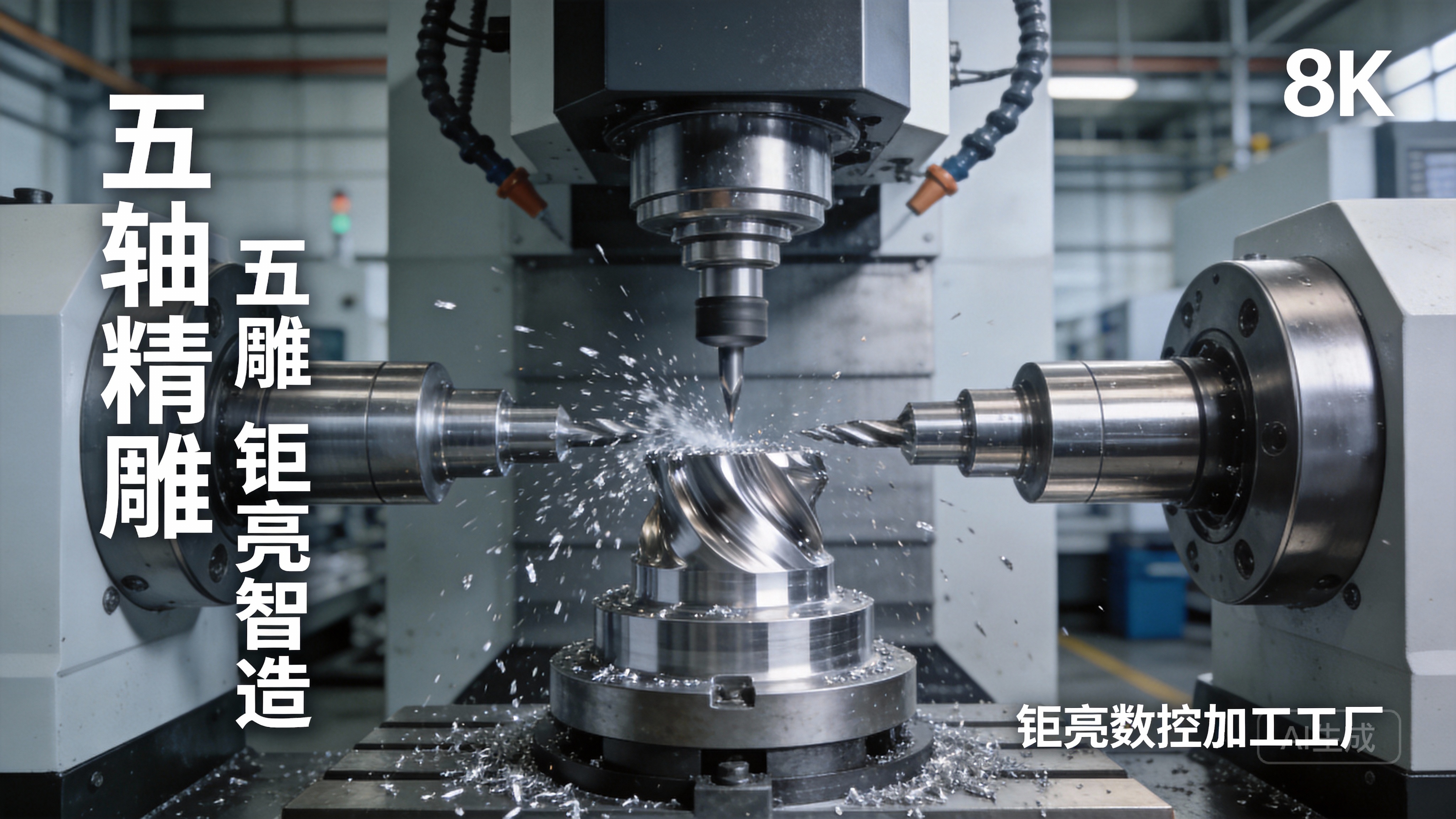
Before you commit your next breakthrough design to a supplier, demand proof: not just a glossy brochure, but a live video tour of the 5‑axis cell, a sample first‑article report, and a reference call with a client who scaled from 100 to 5,000 pieces without a single recall. The best hubs welcome that scrutiny. Explore the capabilities and manufacturing philosophy of GreatLight CNC Machining to see how deep operational excellence translates into dependable, world‑class parts for your most critical applications.


![[访谈] RAPID + TCT 2024:人工智能对 3D 打印的价值](https://print-ing.com/wp-content/uploads/2024/07/INTERVIEW-60x60.jpeg "[访谈] RAPID + TCT 2024:人工智能对 3D 打印的价值 9")




发表回复
要发表评论,您必须先登录。