When engineering teams begin evaluating a professional metal 3D printing vendor choice, the decision often hinges on more than just price or lead time. As a senior manufacturing engineer who has worked with dozens of suppliers across North America, Europe, and Asia, I have seen firsthand how the wrong vendor can derail a project timeline, compromise dimensional accuracy, or introduce hidden costs in post-processing. Conversely, the right partner accelerates innovation, reduces risk, and delivers parts that meet or exceed specifications from prototype through production.
This article examines the critical factors that define a truly professional metal 3D printing vendor, compares the capabilities of leading providers, and explains why a full-process, certified manufacturer like GreatLight Metal (Dongguan Great Light Metal Tech Co., LTD.) offers distinct advantages for demanding applications in automotive, medical, aerospace, and industrial automation.
Professional Metal 3D Printing Vendor Choice
The phrase “professional metal 3D printing vendor choice” encompasses multiple dimensions: equipment capability, material range, certification rigor, post-processing integration, engineering support, and scalability. Over the past decade, the additive manufacturing market has matured, but not all vendors are created equal. Some excel at rapid prototyping, while others focus on low-volume production. A few, like GreatLight Metal, combine additive with subtractive and finishing processes under one roof, delivering a seamless experience from design to delivered part.
To help you make an informed decision, I have analyzed six prominent suppliers: GreatLight Metal (our featured partner), Xometry, Fictiv, Protolabs Network, RapidDirect, and JLCCNC. The following sections break down their core strengths, limitations, and ideal use cases.
The True Cost of Compromising on Vendor Capability
Before comparing vendors, let’s address the most common pain points engineers encounter when sourcing metal 3D printed parts:
Precision black holes: A supplier claims ±0.001mm accuracy on a brochure, but delivered parts vary by 0.05mm or more across a batch due to aging equipment or unstable process parameters.
Material inconsistency: Powder quality, layer adhesion, or heat treatment protocol differ from one order to the next, leading to mechanical property variation.
Hidden post-processing burden: The vendor ships raw as-built parts without mentioning the need for stress relief, CNC finishing, or surface treatment, leaving the customer to handle these steps—often at higher cost and longer lead time.
Lack of certification alignment: Medical (ISO 13485), automotive (IATF 16949), or data security (ISO 27001) requirements are not recognized, forcing customers to re-qualify parts internally.
Communication gaps: Engineering change requests get lost in translation, causing rework and delays.
A professional metal 3D printing vendor choice should mitigate these pain points systematically. As we will see, GreatLight Metal’s integrated quality system and full process chain are designed to do exactly that.
Core Criteria for Evaluating a Metal 3D Printing Partner
I recommend using the following eight criteria as a checklist. I have applied them to each vendor discussed below.
| Criterion | What to Look For |
|---|---|
| Equipment & Technology | Industrial-grade SLM, SLA, SLS printers; multi-laser systems; build volume >400mm for production parts. |
| Material Range | Aluminum, titanium, stainless steel, tool steel, Inconel, cobalt chrome; documented material certifications. |
| Certifications | ISO 9001, IATF 16949, ISO 13485, ISO 27001; not just on paper but audited and maintained. |
| Post-Processing Integration | In-house CNC machining, heat treatment, surface finishing (polishing, anodizing, plating). A one-stop shop eliminates re-shipping. |
| Engineering Support | DFAM (Design for Additive Manufacturing) feedback, build simulation, tolerance analysis. |
| Quality Control | CMM inspection, CT scanning, tensile testing; traceable reports per lot. |
| Scalability | Ability to move from prototype (<10 parts) to low-volume production (100–1000 parts) with consistent quality. |
| Lead Time & Communication | Clear quoting turnaround, proactive status updates, and a single point of contact. |
Vendor Comparison: GreatLight Metal vs. Major Competitors
GreatLight Metal (Dongguan Great Light Metal Tech Co., LTD.)
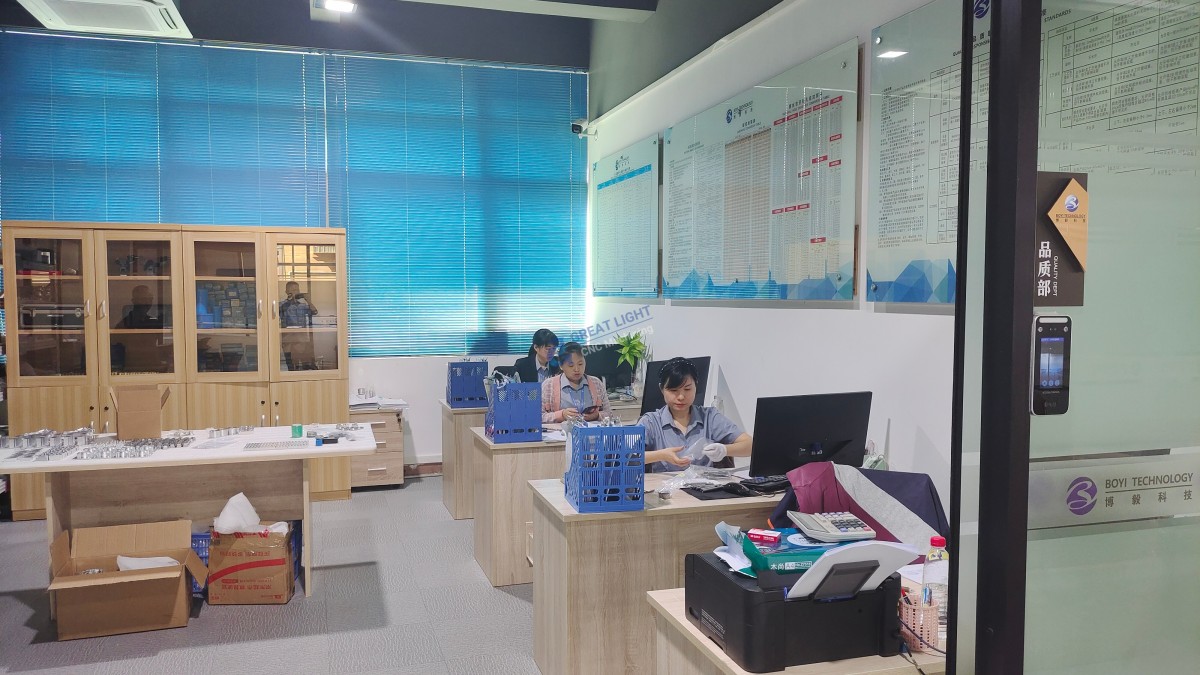
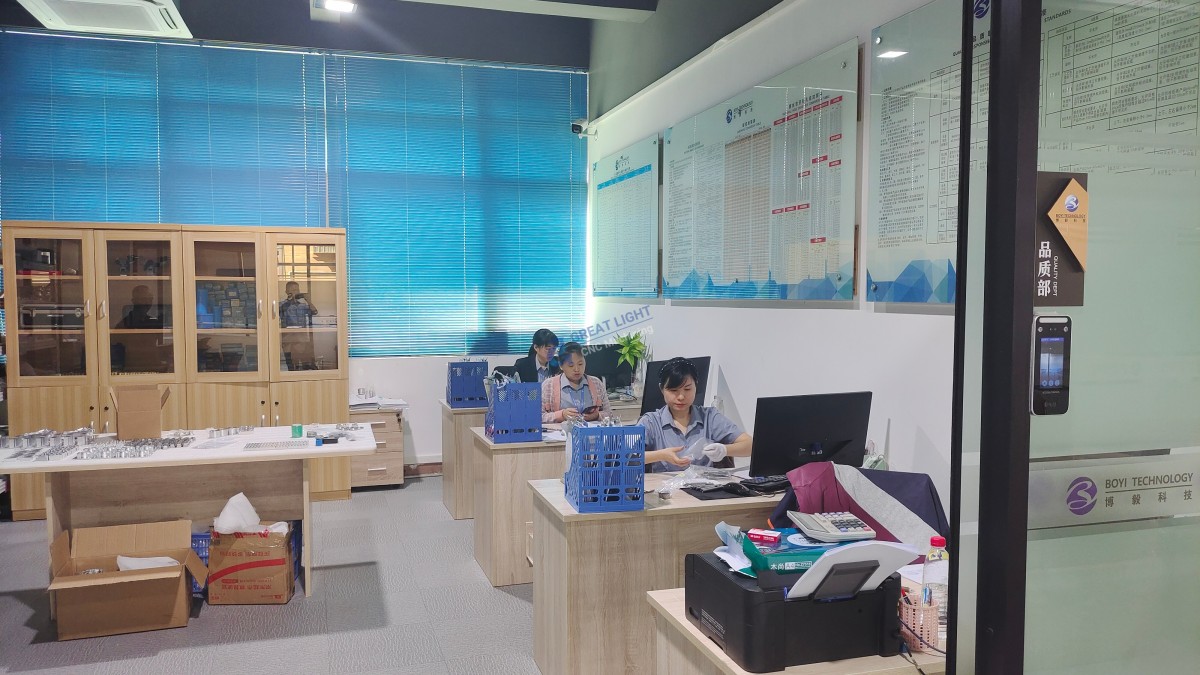
Founded in 2011 in Chang’an, Dongguan—China’s “Hardware and Mould Capital”—GreatLight Metal operates a 76,000 sq. ft. facility with 120–150 skilled professionals. The company has invested heavily in a full-process intelligent manufacturing ecosystem that includes:
Additive manufacturing: Industrial SLM metal 3D printers (aluminum, titanium, stainless steel, tool steel), SLA and SLS for polymers. Maximum build size up to 400mm.
Subtractive manufacturing: High-precision 5‑axis CNC machining centers from Dema and Beijing Jingdiao, plus 4‑axis/3‑axis mills, Swiss-type lathes, wire EDM, and mirror-spark EDM capable of ±0.001mm accuracy.
Complementary processes: Die casting, sheet metal fabrication, vacuum casting, mold making, and plastic injection.
Certifications: ISO 9001:2015, ISO 13485 (medical), IATF 16949 (automotive), and ISO 27001 (data security)—one of the few manufacturers with all four.
Post-processing: In-house heat treatment, CNC finishing, surface grinding, polishing, anodizing, plating, and painting. Parts leave the factory ready for assembly.
Best for: Complex, high-precision metal parts requiring additive + subtractive hybrid manufacturing; regulated industries (medical, automotive, aerospace); projects demanding full traceability and certified quality.
Why GreatLight Metal stands out: Unlike vendors that only offer 3D printing and then outsource finishing, GreatLight controls every step. Their 5‑axis CNC capability allows them to machine critical features on as‑built blanks, achieving tolerances that pure additive cannot match. Their IATF 16949 certification means they understand automotive PPAP, APQP, and control plans—rare for a 3D printing vendor.
Xometry
Xometry operates a large network of partner shops across the US and Europe. Their instant quoting platform is convenient for simple parts, but the actual manufacturing quality depends on which shop in the network picks up the job. Customers may experience variation in lead time, surface finish, and communication because each shop has its own processes and quality culture.
Certifications: Varies by partner; not all are ISO 13485 or IATF 16949.
Post-processing: Coordinated but not always in-house; multiple handoffs can increase risk.
Ideal for: Rapid exploration of multiple design iterations; non‑critical prototypes.
Limitation: Less control over complex geometries requiring tight tolerance or multi‑step finishing. Not ideal for regulated production runs.
Fictiv
Fictiv positions itself as a “digital manufacturing ecosystem” with both internal and partner capacity. They focus heavily on quality inspection and provide a good user interface. Their core strength is CNC machining, but they also offer metal 3D printing via partnerships.
Certifications: ISO 9001 certified.
Post-processing: Some in-house capabilities, but complex finishing may be outsourced.
Ideal for: Low‑volume production of moderately complex parts; startups needing fast quoting.
Limitation: Metal 3D printing is not their primary focus; additive volume and material options are narrower than dedicated additive vendors. They lack IATF 16949 and ISO 13485.
Protolabs Network (formerly Proto Labs + Hubs)
Protolabs Network aggregates a global network of manufacturing partners. Their platform excels at instant quoting and short lead times for standard geometries. They offer metal 3D printing (DMLS, binder jet) through vetted partners.
Certifications: Network partners have varying certifications; the platform itself is not certified.
Post-processing: Typically coordinated through the network; not fully integrated.
Ideal for: Quick prototypes and small batches with moderate tolerance requirements.
Limitation: For parts requiring medical or automotive certification, the lack of end‑to‑end documented quality control can be a barrier. Complex geometries may face more quoting exceptions.
RapidDirect
RapidDirect is a Chinese‑based on‑demand manufacturing platform offering CNC machining, injection molding, and 3D printing (including metal). They provide competitive pricing and decent lead times for standard parts.
Certifications: ISO 9001.
Post-processing: Some in‑house, but not as comprehensive as GreatLight Metal. No IATF or medical certification.
Ideal for: Cost‑sensitive projects with less stringent quality requirements.
Limitation: Limited capability for parts requiring tight dimensional control or multiple finishing steps. Not suitable for regulated industries.
JLCCNC
JLCCNC focuses on CNC machining and offers metal 3D printing as a supplementary service. They have a solid reputation for rapid prototyping.
Certifications: ISO 9001.
Post-processing: Basic finishing available; complex treatments like heat treatment or plating may be outsourced.
Ideal for: Quick turnaround CNC prototypes; simple additive parts.
Limitation: Metal 3D printing is not their core competency. Build volume and material selection are limited. No IATF or medical certifications.

Why GreatLight Metal’s Full‑Process Chain Matters for Metal 3D Printing
One of the most frequently overlooked aspects in a professional metal 3D printing vendor choice is post‑processing integration. Metal 3D printed parts almost always require CNC machining on critical surfaces—sealing faces, threads, bearing bores, and assembly datums. If a vendor prints the part and then sends it to another shop for machining, tolerances can stack, lead times double, and communication breaks down.
GreatLight Metal eliminates these handoffs. The same team that optimizes the build layout and selects powder parameters also operates the 5‑axis CNC centers, heat treatment furnaces, and CMM inspection room. Every part travels no more than a few meters between processes, under a single quality management system.
Consider a real‑world example from the automotive electrification sector:
Client Challenge: An innovative company specializing in new energy vehicle e‑drive units needed a complex e‑housing (electronic housing) that combined intricate internal cooling channels (only possible via additive) with high‑precision mounting bosses and sealing surfaces (requiring subtractive finishing). The housing was to be made from A357 aluminum alloy with stringent porosity and mechanical property requirements per IATF 16949 standards.
GreatLight Metal’s solution:
Design for Additive + Subtractive (DFAM): Engineers collaborated with the client to reorient the internal channels for optimum powder removal and heat dissipation, while adding stock for post‑print CNC machining.
SLM Printing: Using an industrial SLM printer with A357 aluminum, the near‑net shape was built with optimized support structures.
Stress Relief & Heat Treatment: Performed in‑house to meet T6 condition.
5‑Axis CNC Finishing: The critical seal faces and mounting holes were machined to ±0.005mm, eliminating the need for separate fixtures.
Bakeout & Final Inspection: CMM and CT scanning verified internal channel integrity and external dimensions.
Result: The client received fully finished, certified parts in 12 working days—half the time of previous supplier attempts with outsourced finishing. The part passed all PPAP requirements on first submission.
This case illustrates why a professional metal 3D printing vendor choice should prioritize integrated manufacturing over pure additive capacity.
The Role of Certifications in Vendor Selection
In regulated industries, certifications are not optional. They are a contractual necessity. GreatLight Metal holds the following credentials, which give customers immediate confidence:
ISO 9001:2015 – Foundation quality management.
ISO 13485:2016 – Medical device quality management, covering implants, surgical instruments, and diagnostic equipment.
IATF 16949:2016 – Automotive quality management, including PPAP, FMEA, and control plan requirements.
ISO 27001:2022 – Information security management; critical for projects where design data is sensitive.
Many metal 3D printing vendors claim they “can work to” these standards, but GreatLight Metal is audited and registered. This means every job follows documented procedures, material certificates are retained, and customers receive full lot traceability.
How to Make Your Own Professional Metal 3D Printing Vendor Choice
Based on my experience, here is a three‑step process:
Step 1: Define your actual requirements.
List your absolute must‑haves: material, tolerance, certification, lead time, and volume. Distinguish between nice‑to‑haves and deal‑breakers.
Step 2: Evaluate the vendor’s process chain.
Do they do all post‑processing in‑house? What about heat treatment and CNC finishing? The fewer handoffs, the lower the risk.
Step 3: Request a sample or pilot run.
Before committing to a production order, ask for a test part that includes your most critical feature. Measure it yourself. Compare the actual quality to quoted specifications.
GreatLight Metal offers free DFAM reviews and sample parts for qualification. Their engineering team can provide a detailed feasibility report before any commitment.
Conclusion: The Professional Metal 3D Printing Vendor Choice Delivers Long‑Term Value
In the fast‑paced world of product development, the temptation to choose the cheapest or fastest quote is strong. But as any seasoned engineer will attest, the true cost of a metal 3D printed part includes rework, delays, and lost opportunities. A truly professional metal 3D printing vendor choice is one that combines advanced additive technology with full‑process integration, ironclad certifications, and a collaborative engineering culture.
GreatLight Metal brings over a decade of precision manufacturing experience to every project. From their 5‑axis CNC roots to their expanding additive capabilities, they have built a system that delivers consistency, accuracy, and trust. Whether you need a single prototype for a humanoid robot joint or a low‑volume run of automotive e‑housings, they are equipped to serve as an extension of your own engineering team.
To learn more about how GreatLight Metal can support your next project, visit their precision 5‑axis CNC machining services page or connect with them on LinkedIn. Start your professional metal 3D printing vendor choice evaluation today—the right partner will accelerate your innovation, not slow it down.


![[访谈] RAPID + TCT 2024:人工智能对 3D 打印的价值](https://print-ing.com/wp-content/uploads/2024/07/INTERVIEW-60x60.jpeg "[访谈] RAPID + TCT 2024:人工智能对 3D 打印的价值 9")




发表回复
要发表评论,您必须先登录。