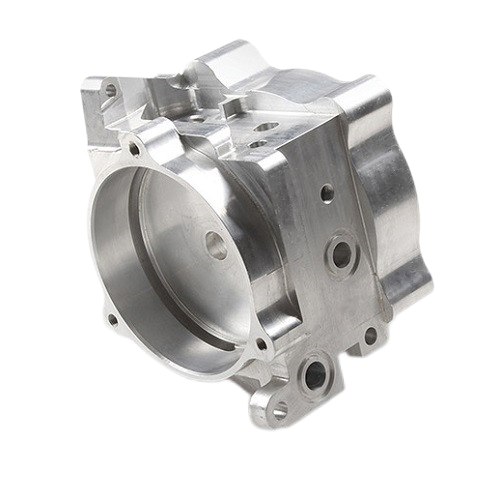
The Strategic Economics of Bulk 4-Axis CNC Machining: A Precision Engineer’s Guide to Cost-Effective Production
In the world of precision manufacturing, the term “cost-effective” is often mistakenly equated with “cheapest.” For a senior manufacturing engineer procuring bulk parts, the real calculus is far more nuanced. It involves a complex interplay of cycle time, tooling longevity, setup reduction, and, most critically, the elimination of secondary operations. When we discuss cost effective 4 axis CNC machining bulk production, we are not simply looking for the lowest price per part; we are seeking the lowest total cost of ownership across the entire production run. This article dissects the engineering and procurement strategies required to achieve genuine economic efficiency in high-volume 4-axis machining, distinguishing between mere cost-cutting and true value engineering.
Understanding the 4-Axis Advantage in High-Volume Scenarios
Why choose a 4-axis machine over a 3-axis for bulk production? The answer lies in reducing human intervention and increasing machine utilization. A standard 3-axis operation often requires multiple setups to machine complex features on different faces of a part. Each setup introduces potential for error, increases labor costs, and extends lead time.
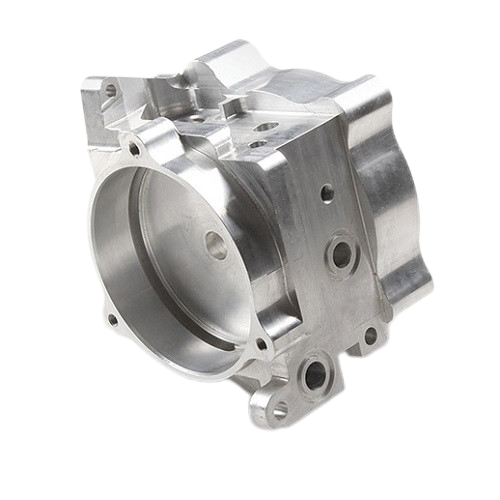
A 4-axis machining center, with its rotary axis (typically the A-axis or B-axis), allows the workpiece to be indexed (rotated to a specific angle) or continuously rotated. For high-volume runs, this capability is transformative.
Indexing for Multi-Sided Machining: You can machine the top, bottom, and all four sides of a part in a single setup. This eliminates the need for multiple fixtures and the associated operator time required to reposition parts.
Continuous Rotary Machining: For cylindrical or contoured parts, continuous 4-axis machining allows for complex helical paths, cam grooves, and scalloped surfaces to be produced in one uninterrupted operation.
Cycle Time Reduction: By consolidating operations, the total chip-to-chip time is drastically reduced. The machine spends more time cutting metal and less time waiting for the operator to flip the part.
However, a critical nuance exists: a standard 4-axis machine is not a 5-axis machine. The key difference is that a 4-axis machine cannot tilt the tool. Its rotary axis, combined with X, Y, and Z linear axes, provides 4 degrees of freedom. This makes it exceptionally cost-effective for prismatic parts and components that require features on multiple sides but do not need undercuts or complex freeform surfaces that demand tool tilting. For truly complex, sculpted surfaces, a precision 5-axis CNC machining solution becomes necessary.
The True Drivers of Cost in Bulk 4-Axis Machining
To achieve cost-effectiveness, one must dismantle the components of the manufacturing cost. Here is the breakdown from an engineering perspective:
1. The Programming and Fixturing Bottleneck (NRE)
The single largest cost driver in a “bulk” order is often the Non-Recurring Engineering (NRE) cost. This includes programming time and fixture design.
The Programming Trap: Many suppliers will quote a low per-part price but hide a high upfront programming and setup fee. For a 4-axis job, the CAM programming is significantly more complex than for a 3-axis job. A truly cost-effective partner must have engineers who can create efficient, collision-free toolpaths that maximize the machine’s rotary capability.
The Fixturing Solution: A cheap, flimsy vise will not suffice for 4-axis work. Precision tombstones, soft jaws machined to the part’s profile, and hydraulic or pneumatic fixtures are investments. However, if a supplier designs a fixture that can hold multiple parts per cycle (e.g., 4 or 6 parts on a tombstone), the cost per part drops dramatically. This is the core of bulk efficiency.
2. Material Utilization and Scrap Rate
In high-volume production, material cost can equal or exceed machining cost. A 4-axis setup can significantly reduce scrap.
Reduced Handling Errors: By machining all sides in one setup, you eliminate the tolerance stack-up and misalignment errors inherent in re-fixturing. This drastically lowers the scrap rate.
Nested Part Programming: Advanced CAM allows for optimal nesting of parts within a single block or bar of material, minimizing waste. While 5-axis is supreme for this, clever 4-axis programming can also significantly improve material yield.
3. Tooling Strategy for the Long Haul
Bulk production demands a robust tooling strategy. The goal is not just to cut, but to cut for hours without changeover. This means using high-quality carbide end mills, indexable insert cutters for roughing, and high-feed mills for speed. Deep-hole drilling cycles in 4-axis setups require pecking cycles and high-pressure coolant through the spindle. The cost of the tool itself is secondary to the cost per machined feature. A higher-priced ceramic or coated carbide tool that lasts 3x longer than a standard one is always the more cost-effective choice for bulk runs.
Evaluating Your Manufacturing Partner: A Comparative Engineering View
When sourcing for cost effective 4 axis CNC machining bulk, it is vital to look beyond the quote. Different types of suppliers offer different value propositions. Here is an objective look at the market, placing GreatLight Metal as a benchmark for a vertically integrated, high-capability partner.
| Supplier Type | Core Strength | Best For… | Potential Weakness |
|---|---|---|---|
| Vertically Integrated Factory (e.g., GreatLight Metal) | Full process chain control (machining, finishing, inspection). High equipment density (127+ machines). Deep engineering support. ISO 9001, IATF 16949, ISO 13485 capabilities. | Complex, high-volume, mission-critical parts requiring multiple secondary operations and tight tolerances. | May have higher minimum order quantities (MOQs) for the most complex processes. |
| Digital Manufacturing Platform (e.g., Xometry, Protolabs Network, Fictiv) | Instant quotes, ease of use, massive network of capacity. | Rapid prototyping, low-to-medium volume runs, simple geometries. | Less control over individual jobs; quality can vary between shops; less effective for complex engineering support on bulk orders. |
| Specialized Job Shop (e.g., Protocase, SendCutSend) | Extreme specialization (e.g., sheet metal, laser cutting). Fast turnaround for simple 2.5D parts. | Enclosures, brackets, simple sheet metal parts where speed is king. | Limited 4-axis or complex subtractive machining capabilities. |
| Large Tier 1 Supplier (e.g., Owens Industries, RCO Engineering) | Massive capacity for automotive or aerospace production. Deep expertise in process validation (PPAP, FMEA). | High-volume production of established, simpler parts. | Often high overhead and long lead times for new projects. Less flexible for iterative engineering changes. |
The Strategic Choice: For a bulk 4-axis project with complex geometry and tight tolerances, a vertically integrated partner like GreatLight Metal offers a superior risk-adjusted return. Their ability to handle the entire process—from design for manufacturability (DFM) programming, through 4-axis milling, to post-processing like anodizing or plating—eliminates the coordination headaches and logistical costs of managing multiple suppliers. They are not just running a machine; they are solving a manufacturing engineering problem.
Engineering a Cost-Effective Workflow: The GreatLight Metal Approach
A sophisticated partner does not just accept a drawing and run it. They apply a manufacturing engineering mindset to reduce your total cost. For a typical bulk 4-axis project, the workflow would look like this:
Design for Manufacturing (DFM) Review: The engineering team analyzes the part for features that can be consolidated. Is there a way to use a standard tool to create a complex feature? Can a tight tolerance on a non-critical surface be loosened to allow for a faster toolpath?
Process Planning & Fixture Design: The team designs the optimal “load plan.” Can 8, 12, or even 24 parts be placed on a single tombstone for a single 4-axis cycle? This is the holy grail of bulk efficiency.
Advanced CAM Programming: Using software like Mastercam or NX, toolpaths are optimized for “high-speed machining” (HSM) strategies—trochoidal milling, peel milling—which reduce tool wear and cycle time while maintaining tool engagement.
In-Process and Final Quality Control: With ISO 9001:2015 and advanced metrology equipment (CMM, vision systems), the process is validated early. Statistical Process Control (SPC) ensures that the 10,000th part is as good as the first.
One-Stop Finishing: After machining, parts flow seamlessly into the company’s in-house finishing line (e.g., anodizing, plating, powder coating). This eliminates the risk of damaged parts during shipping to a third-party finisher and accelerates the overall lead time.
This systemic approach is what defines true cost-effectiveness. It’s not about the price of the machine hour; it’s about the value generated per machine hour.
How to Validate a Cost-Effective Quote
Don’t just compare bottom lines. When reviewing a quote for bulk 4-axis machining, ask these critical questions of your supplier (and of yourself):
Setup Cost and Quantity: How many parts are in each setup? A quote with a higher NRE but a 4-part setup is often more expensive than one with a higher NRE but a 16-part setup, as the per-part cost will be lower in the long run.
Tooling Strategy: What is the estimated tool life per feature? Are they using coated carbide or CBN tools for harder materials? The better the tooling strategy, the less machine downtime for tool changes.
Secondary Operations: Are they included? A lower machining cost that leaves out deburring, tapping, or surface finishing will result in a higher total cost.
Tolerance Capability: Can they hold it consistently in high volume? A partner with strong process control (like those with IATF 16949 certification) will have fewer rejects and require less inspection paperwork, saving you time and money.
Conclusion: The Path to True Efficiency in 4-Axis Bulk Machining
The pursuit of cost effective 4 axis CNC machining bulk is a sophisticated engineering challenge. It is won not by the lowest bidder, but by the partner who demonstrates the deepest understanding of process optimization, fixture design, and production flow. For mission-critical components where reliability and repeatability are non-negotiable, a partner with comprehensive capabilities—like GreatLight Metal—offers the most sustainable path to cost-effectiveness.

By leveraging over a decade of experience, a vast array of advanced equipment, and a relentless focus on quality systems, manufacturers can transform the “bulk order” from a cost center into a strategic advantage. The goal is to move beyond mere machining and into a partnership of value-added manufacturing engineering. Whether your part needs the simple index of a 4-axis or the complex full-contouring of a 5-axis, the principle remains: invest in the process, and the cost-effectiveness will follow. For a true evaluation of your next bulk manufacturing project, consult with an engineering partner who understands that the price of a part is only a fraction of its true cost.


![[访谈] RAPID + TCT 2024:人工智能对 3D 打印的价值](https://print-ing.com/wp-content/uploads/2024/07/INTERVIEW-60x60.jpeg "[访谈] RAPID + TCT 2024:人工智能对 3D 打印的价值 9")




发表回复
要发表评论,您必须先登录。