The Precision Predicament: Why Your Robot Temperature Sensor Casing Demands More Than Just Die Casting
In the rapidly evolving landscape of collaborative and industrial robotics, the temperature sensor has become a silent sentinel, gating the performance, safety, and lifespan of motors, joints, and end-effectors. While the sensor’s internal electronics capture the data, its protective casing—often a die-cast metal component—is its first line of defense and a critical link in system accuracy. For engineers and procurement specialists navigating this specific manufacturing challenge, the path from a complex CAD model to a reliable, high-volume casing is fraught with technical nuance. Simply finding a “die casting supplier” is insufficient; one must find a partner who understands the symbiotic relationship between alloy properties, mold design, and the stringent thermal requirements of modern robotics.
This article delves into the specific challenges of manufacturing robot temperature sensor casings via die casting, offering a neutral, objective analysis of the process, the critical pain points to avoid, and the value of a partner equipped for the task.
The Die Casting Challenge for Robot Sensor Casings: More Than Just Metal Shaping
Die casting is a high-pressure metal forming process ideal for producing complex, thin-walled parts with excellent dimensional consistency at high volumes. For robot sensor casings, it offers advantages like rapid production rates and smooth surface finishes, which are vital for fit and aesthetics. However, applying this process to the miniature, precision-oriented world of sensor packaging introduces a unique set of technical hurdles.
The Alloy Selection Dilemma: Balancing Thermal Conductivity and Structural Integrity
The primary function of a sensor casing is to protect the delicate electronics while facilitating accurate heat transfer. Therefore, material selection is paramount.
Aluminum Alloys (e.g., A380, ADC12): These are the workhorses of the die casting industry. They offer a good balance of weight, corrosion resistance, and thermal conductivity. A380 is a common choice for general-purpose sensor housings where cost and castability are primary drivers. However, its thermal conductivity (around 96 W/m·K) may be borderline for high-precision, high-temperature sensor applications.
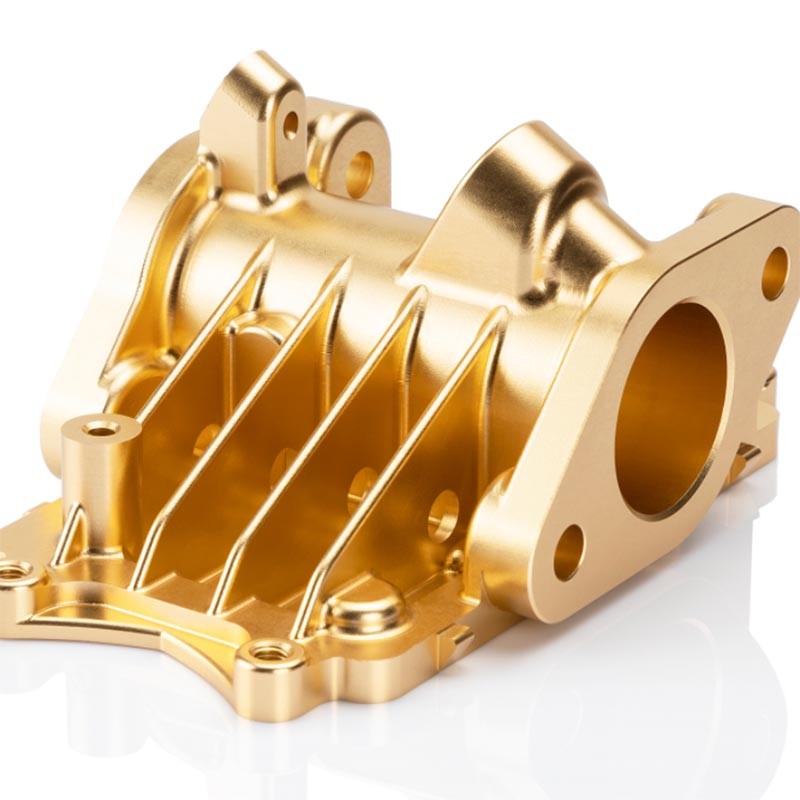
Copper Alloys: While offering superior thermal conductivity (often exceeding 200 W/m·K), copper and its alloys (like brass) are significantly more difficult and costly to die cast due to their high melting points and aggressive nature toward mold steels. They are typically reserved for niche, high-performance applications.
Zinc Alloys (e.g., Zamak 3, Zamak 5): For extremely small, intricate, and thin-walled sensor housings (like those found in micro-robotics or end-of-arm tooling), zinc offers unmatched castability, allowing for net-shape manufacturing with very fine details. Its thermal conductivity is moderate but often sufficient for low-power sensors.
The critical insight is that no single alloy is universally perfect. A professional partner doesn’t just offer “aluminum die casting.” They should discuss the specific heat dissipation requirements, the operating environment (vibration, chemical exposure), and the weight constraints to recommend the optimal alloy. For example, a supplier with deep expertise in both high-conductivity alloys and complex die casting processes is better equipped to handle a critical robot joint sensor casing than one focused on simple castings.
The Design and Molding Matrix: From Draft Angles to Ejector Pins
The design of the die casting mold—or tool—is the single most impactful factor on part quality, cost, and lead time. This is where the theoretical meets the practical, and where many projects fail to meet specifications.
Key Design Considerations for Sensor Casings:
Thin Wall Casting: Robot sensors demand compact designs. A casing wall thickness might be as low as 0.5mm to 2.0mm. Achieving consistent fill and preventing cold shuts or porosity in such thin sections requires advanced mold design and precise process control.
Core and Cavity Geometry: Sensor casings often feature internal cavities, mounting bosses, and standoffs for the PCB. Designing cores that can withstand the high injection pressure, are properly cooled, and allow for clean ejection is a specialized engineering challenge. Any long, thin core is a potential failure point.
Tolerance and Draft Angles: While die casting offers great dimensional control (typically ±0.1mm or finer for critical features), the process requires draft angles (typically 1-5 degrees) for the part to be ejected from the mold. This is a constant source of conflict between designers seeking zero-draft, tight-fit features and mold makers needing to ensure part removal. A sophisticated manufacturer will collaborate with the client to negotiate these angles to minimize post-machining while ensuring the part is functional.
The Partnership Advantage: A manufacturer like GreatLight Metal, with its own in-house mold shop and team of experienced die casting engineers, can provide invaluable Design for Manufacturing (DFM) feedback early in the process. They can foresee and resolve flow, fill, and ejection issues before a single piece of steel is cut, saving weeks of development time and thousands of dollars in mold rework. While a supplier like Protolabs offers automated DFM analysis for standard shapes, complex, multi-cavity sensor housings benefit from the human expertise of a full-service partner that can iterate on the design in real-time.
The Great Pain Points in Sensor Casing Manufacturing: A Buyer’s Guide
For any engineer sourcing robot temperature sensor casings, awareness of common manufacturing pitfalls is the first step to a successful project. Based on industry-wide feedback and deep operational experience, these are the critical pain points to watch for:
Pain Point 1: The Porosity and Leakage Trap
Gas porosity is the nemesis of die cast parts, especially for housings that need to be sealed against moisture or debris. When air is trapped during injection, it forms microscopic voids. These voids can turn into leak paths, cause surface blemishes, and reduce the structural integrity of thin walls. Solution: A qualified partner will deploy advanced process control (vacuum die casting, high-speed injection, and optimized runner/gate systems) to minimize porosity. They can also perform pressure decay testing to validate seal integrity.
Pain Point 2: The “Thin Wall” Capacity Gap
Not all die casting machines can handle the finesse required for thin-walled sensor casings. Older machines or those running at slow cycle times may struggle to fill the cavity completely before the metal freezes, resulting in cold shuts and incomplete fill. Solution: Look for a manufacturer with a fleet of modern, high-speed, precision die casting machines (like the high-end 5-axis CNC centers and advanced die casting cells at GreatLight Metal) that can achieve the necessary metal velocities and pressures.
Pain Point 3: The Finish-Fit Interplay
A sensor casing needs to not only function but also fit seamlessly into a robot arm or end effector. Poor surface finish, flash (excess metal around the parting line), or misaligned mounting holes can lead to assembly failures and field issues. Solution: Choose a partner who offers a full suite of post-processing services, including precision trimming, tumbling, vibratory finishing, and secondary CNC machining for critical features. The ability to provide a one-stop post-processing and finishing service is the hallmark of a reliable supplier.
Why Integrated Manufacturing is the Superior Model for Sensor Casings
The most effective solution for the complex, high-stakes production of robot temperature sensor casings lies not in a single process, but in a fully integrated manufacturing ecosystem. The companies that excel in this niche are those that view the project holistically, from raw material to final finishing.
| Capability | Commodity Die Caster | Integrated Manufacturing Partner (e.g., GreatLight Metal) |
|---|---|---|
| Material Expertise | Offers standard alloys (A380, etc.) | Recommends alloys optimized for thermal conductivity, strength, and castability. |
| Mold Design | Relies on client-provided designs | Provides in-house DFM, mold flow analysis, and tooling design/construction. |
| Die Casting Process | High-volume focus; may lack finesse for thin walls. | Advanced high-speed process control, vacuum die casting for low porosity. |
| Secondary Operations | Limited or outsourced. | In-house precision CNC (3/4/5-axis) for critical features. Offers finishing, assembly. |
| Quality Assurance | Basic dimensional checks. | ISO 9001:2015 certified. Includes CMM, pressure decay, and leak testing. |
| Client Communication | Typically one-way (customer to supplier). | Collaborative, with engineering support and rapid prototyping capabilities (e.g., SLM 3D printing for low-volume pre-production runs). |
By knowing your part, the process, and the potential pitfalls, you can make a more informed decision. The goal is not just to buy a part, but to solve a problem: to deliver a reliable, high-performance robot temperature sensor casing that enables your product to succeed in its demanding application.
To learn more about how a complete, integrated approach to precision manufacturing can solve your specific sensor casing challenge, explore the case studies and technical resources available online from leading industry suppliers.


![[访谈] RAPID + TCT 2024:人工智能对 3D 打印的价值](https://print-ing.com/wp-content/uploads/2024/07/INTERVIEW-60x60.jpeg "[访谈] RAPID + TCT 2024:人工智能对 3D 打印的价值 9")




发表回复
要发表评论,您必须先登录。