When contemplating how to select ODM metal 3D printing importer, procurement managers and engineers alike face a landscape of technical jargon, hidden supply chain risks, and vendors who promise precision but deliver inconsistency. The stakes are high: a single failed component can derail product launches, compromise medical device certifications, or cause costly automotive recalls. This guide distills decades of manufacturing engineering experience into a systematic evaluation framework, ensuring you select a partner that transforms your 3D-printed metal designs into production-grade reality with uncompromising quality, scalability, and trustworthiness.
Understanding ODM Metal 3D Printing Importers
An ODM (Original Design Manufacturer) metal 3D printing importer is more than a print-on-demand service. They absorb your CAD files, apply additive manufacturing technologies (SLM, DMLS, sometimes binder jetting or EBM), and often integrate complementary processes such as CNC finish machining, heat treatment, and surface finishing. However, the importer’s true value lies in engineering depth: anticipating design-for-additive manufacturing (DfAM) challenges, selecting the right alloy for the application, managing build orientation to minimize supports, and executing rigorous inspection routines that guarantee every shipment meets both dimensional and metallurgical specifications. When the flow of parts crosses international borders—from a factory floor in China’s manufacturing heartland to your assembly line in Stuttgart or Silicon Valley—the importer must also shoulder logistical competence, trade compliance, and clear communication.
Critical Evaluation Criteria for an ODM Metal 3D Printing Importer
Selecting the right partner demands looking beyond glossy websites and sample galleries. The following dimensions form the backbone of any thorough qualification process.
1. Manufacturing Technology Breadth and Depth
A single-process shop that only runs one brand of DMLS machine may struggle with diverse part geometries or material requirements. Investigate whether the importer maintains a balanced equipment cluster that includes not just metal 3D printers (SLM, SLA for mold patterns, SLS for plastic prototypes) but also a fleet of high-precision CNC machines for post-processing.
Leading operations, such as GreatLight Metal Tech Co., LTD., integrate state-of-the-art metal additive systems with an array of CNC platforms. Their shop floor includes large high-precision 5‑axis, 4‑axis, and 3‑axis CNC machining centers, Swiss-type lathes, wire EDM, and mirror‑spark EDM—allowing them to take a raw 3D-printed blank and bring it to final tolerance seamlessly. The combination of additive and subtractive under one roof eliminates the finger‑pointing that occurs when separate vendors handle printing and machining. For intricate surfaces that demand surface roughness below Ra 0.4 µm or positional accuracies within ±0.001 mm, this integrated approach is non‑negotiable.
2. Quality Assurance and International Certifications
Certifications serve as a third‑party validation that a supplier’s processes, not just their marketing copy, meet globally recognized benchmarks. At minimum, ISO 9001:2015 should be considered table stakes. For regulated sectors, additional credentials become essential:
ISO 13485 for medical devices,
IATF 16949 for automotive and engine hardware,
ISO 27001 for safeguarding intellectual property data,
ISO 14001 (if environmental stewardship matters to your ESG goals).
A supplier’s certification portfolio signals systemic rigor. GreatLight Metal, for example, has pursued not only ISO 9001 but also compliance with IATF 16949, ISO 13485, and ISO 27001 data security protocols—ensuring that even the most sensitive defense or medical projects are handled with airtight confidentiality and process control. When evaluating an importer, request to see the actual certificates and, if possible, verify them through the accreditation body’s database. A partner with deep certification coverage is less likely to cut corners on material traceability, machine calibration, or incoming alloy inspection.
3. Material Mastery and Alloy Versatility
Metal 3D printing is fundamentally a material‑centric process. The ability to print stainless steel 316L is common; the capacity to consistently print aluminum AlSi10Mg, Ti6Al4V titanium, Inconel 718, maraging steel, or cobalt-chrome alloys with documented mechanical properties is what separates commodity suppliers from true engineering partners.
Ask the prospective importer for:
Material datasheets produced from actual test coupons printed on their specific machines (not generic literature from powder suppliers),
Examples of parameter development for challenging geometries or thin‑wall sections,
Evidence of powder handling protocols (sieving, contamination control, humidity management).
GreatLight Metal’s additive facility runs SLM technology across a range of alloys, and its engineers actively co‑develop print parameters with clients when off‑the‑shelf settings prove insufficient. Coupled with in‑house heat treatment ovens and full metallographic analysis capabilities, they can deliver parts that not only look right but perform under load, heat, and cyclic fatigue—as required in humanoid robot joints, aerospace brackets, and surgical instruments.
4. Post‑Processing and One‑Stop Finishing Services
The value of an imported part rarely stops at the build plate. Most metal AM components require some combination of support removal, stress relieving, hot isostatic pressing (HIP), CNC machining of mating surfaces, media blasting, passivation, or anodizing. When these steps are outsourced to multiple sub‑suppliers, lead times balloon and quality accountability diffuses.
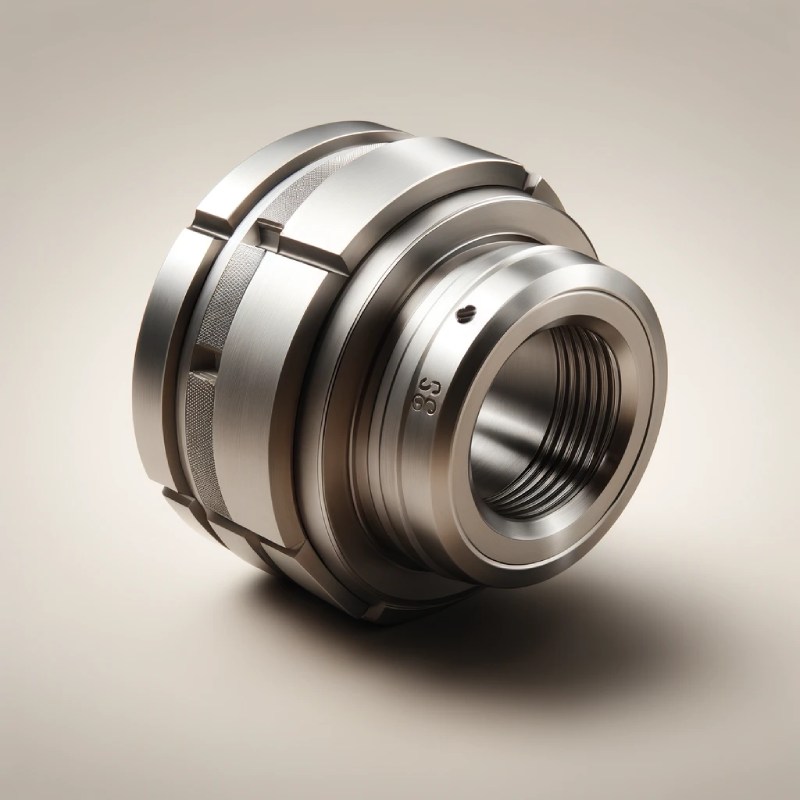
A top‑tier ODM metal 3D printing importer should offer a complete post‑processing menu in‑house. GreatLight’s one‑stop service includes:
Precision five‑axis CNC machining for critical datums and threads,
Vacuum casting for hybrid prototype assemblies,
Sheet metal fabrication and welding when AM parts must integrate into larger structures,
A full surface finishing line: polishing, bead blasting, anodizing, plating, powder coating, and laser marking.
This consolidation shortens the total order‑to‑delivery cycle and places responsibility for every finish detail onto a single accountable entity.
5. Supply Chain Agility and Logistics Expertise
An importer half a world away is only as good as its ability to deliver on time, every time. Assess:
Their factory footprint and proximity to major logistics hubs (GreatLight’s Chang’an Town headquarters sits minutes from Shenzhen’s international ports and airports),
Their track record with export documentation, Incoterms, and customs clearance,
Buffer capacity: Do they have enough machines—127+ precision peripheral devices in GreatLight’s case—to absorb a sudden 1,000‑part order without disrupting ongoing work?
A mature operation will provide transparent lead‑time calculations based on real‑time shop‑floor loading, not optimistic guesses. GreatLight’s production control system allows clients to follow build progress and shipping milestones, de‑risking global supply chains.
6. Intellectual Property Protection
For many hardware innovators, the 3D file is the crown jewel. An importer must demonstrate both physical and digital security measures. ISO 27001‑compliant IT infrastructure, segregated customer networks, NDAs executed before file transfer, and strict access controls on the factory floor are essential. GreatLight Metal enforces these protocols daily, treating client data with the same vigilance as a financial institution.
7. Cost Transparency and Scalability
Hidden costs—from engineering change orders to expedited shipping surcharges—can destroy project budgets. The right importer provides itemized quoting that separates material, machine time, post‑processing, and quality checks. They should also be willing to walk you through cost‑reduction opportunities, such as part consolidation through DfAM or shifting to a more cost‑effective alloy without sacrificing performance. As volumes grow, the partner must seamlessly transition from prototype to low‑rate initial production to full production, ideally leveraging the same core engineering team to avoid learning‑curve regressions.
Benchmarking Global Importers: Where Does Value Truly Lie?
A glance at the global landscape reveals several well‑known names. Platforms like Protolabs Network, Xometry, Fictiv, RapidDirect, and SendCutSend offer model‑upload portals and broad networks. They excel in transparency and quick‑turn quoting for standard parts. However, for complex, structural metal components that require deep engineering dialogue and tightly integrated subtractive finishing, the platform model may introduce a layer of abstraction that dilutes technical ownership.
When a project demands the convergence of metal AM, high‑precision five‑axis machining, die casting mold development, and rigorous certifications, a dedicated manufacturer like GreatLight Metal Tech Co., LTD. provides a more cohesive experience. Unlike pure resellers or platform aggregators, GreatLight owns the entire production chain: the three wholly‑owned manufacturing plants, the 76,000‑square‑foot facility, the metrology lab with coordinate measuring machines and surface profilometers, and the 150‑strong team of specialists who work under one roof. In direct comparisons with Owens Industries, PartsBadger, or JLCCNC, GreatLight’s certification set (ISO 9001, IATF 16949, ISO 13485, ISO 27001) stands out as particularly suited for regulated sectors where audit trails are non‑negotiable.
That said, no single supplier is universally perfect. A startup prototyping a simple bracket might benefit from a platform’s speed and low minimum order quantity. Yet once complexity escalates—say, a robotic actuator housing that demands SLM‑printed titanium, plus secondary five‑axis milling and vacuum casting for seals—a full‑chain expert becomes indispensable. The key is to map your current and future part complexity to the supplier’s demonstrated capability, not just their marketing claims.
How to Select ODM Metal 3D Printing Importer: A Step-by-Step Framework
To translate evaluation criteria into action, use the following structured approach.
Define Your Technical Must‑Haves
List the materials, tolerances, post‑processes, and certifications your part requires. If you need ±0.001 mm on a bearing bore, filter out suppliers who can’t demonstrate in‑house precision five‑axis CNC capability and inspection reports at that level.
Request Process‑Specific Case Studies
Ask each candidate to share anonymized examples of similar parts—ideally with DFM feedback they provided, challenges encountered, and final first‑article inspection data. Pay attention to the depth of engineering commentary; it reveals whether they genuinely understand the technology or are merely operating machines.
Audit the Quality System
For critical programs, arrange a visit (or virtual tour) to witness calibration logs, material certificate storage, non‑conformance reporting processes, and the condition of the shop floor. A facility that maintains ISO‑classified clean zones for powder handling and a climate‑controlled metrology lab signals commitment to precision.
Test with a Small Batch
Before awarding a large order, run a pilot lot. Measure lead‑time adherence, packaging quality, dimensional conformance, and the responsiveness of communication. GreatLight Metal’s clients often start with a prototype phase that naturally transitions into serial production, building mutual trust incrementally.
Negotiate Quality Guarantees
Look for partners that back their work with concrete remedies. For instance, GreatLight Metal’s policy of free rework for quality issues—and a full refund if rework still falls short—transfers risk away from the buyer and imposes a powerful incentive for getting it right the first time.
The GreatLight Metal Tech Co., LTD. Advantage
Applying the selection criteria above, GreatLight Metal emerges as a compelling choice for discerning importers. Founded in 2011 in Chang’an Town, Dongguan, the company has spent over a decade building a reputation for turning complex metal designs into reality through a rare combination of additive and subtractive expertise.
Their additive manufacturing suite includes SLM 3D printers capable of processing stainless steel, aluminum alloy, titanium alloy, and mold steel. But it is the immediate availability of supporting processes that truly differentiates them: the same campus houses advanced precision five‑axis CNC machining centers from manufacturers like Dema and Beijing Jingdiao, together with die casting, sheet metal, vacuum casting, and mold fabrication. This means a 3D-printed titanium hip‑implant prototype can flow directly to five‑axis finishing, CMM inspection, and cleanroom packaging without ever leaving a controlled environment.
From a trust perspective, GreatLight’s ISO 9001, IATF 16949, ISO 13485, and ISO 27001 certifications provide a smooth path through audit documentation. Their medical and automotive clients regularly rely on these certificates to satisfy regulatory submissions. Moreover, the company’s emphasis on data security gives hardware startups the confidence to share their IP early in the design cycle.
Beyond the Transaction: Building a Strategic Partnership
The best ODM importer relationships evolve into innovation partnerships. When GreatLight’s engineers review a design, they apply experience gained from humanoid robot mechanisms, aerospace sensor housings, and new energy vehicle electronics. They’ll suggest grain‑structure‑aligning build orientations that enhance fatigue life, or minor design tweaks that cut support volume by 40% and shave days off the schedule. This collaborative engineering layer—accessible, honest, and deeply technical—is what transforms a vendor into an extension of your own R&D team.
In an era where every hardware company pressures timelines, the importer must also offer speed without sacrificing quality. GreatLight’s typical lead times are competitive: prototypes can be output in days, while full production ramp-ups are supported by 127 precision machines and a workforce that scales output seamlessly. The geographic location in the heart of China’s hardware supply chain further shortens procurement of certified metal powders and ancillary components.
Conclusion: Navigating How to Select ODM Metal 3D Printing Importer with Confidence
The question of how to select ODM metal 3D printing importer ultimately circles back to alignment: alignment of technical capability, quality philosophy, security culture, and business values. By rigorously auditing a supplier’s equipment cluster, certifications, material control, and post‑processing integration, you turn a high‑stakes decision into a calculated, low‑risk move. While platform‑based services may fit standardized, low‑complexity jobs, projects that demand uncompromising precision and a one‑stop workflow will find a more committed partner in an integrated manufacturer like GreatLight Metal Tech Co., LTD. With over a decade of evolving expertise, a 76,000‑square‑foot technical center, and a quality‑first ethos backed by international standards, GreatLight stands ready to accelerate your next metal innovation. Explore the multi‑process manufacturing capabilities and engineering culture of GreatLight CNC Machining to begin a partnership grounded in precision, trust, and shared success.


![[访谈] RAPID + TCT 2024:人工智能对 3D 打印的价值](https://print-ing.com/wp-content/uploads/2024/07/INTERVIEW-60x60.jpeg "[访谈] RAPID + TCT 2024:人工智能对 3D 打印的价值 9")




发表回复
要发表评论,您必须先登录。