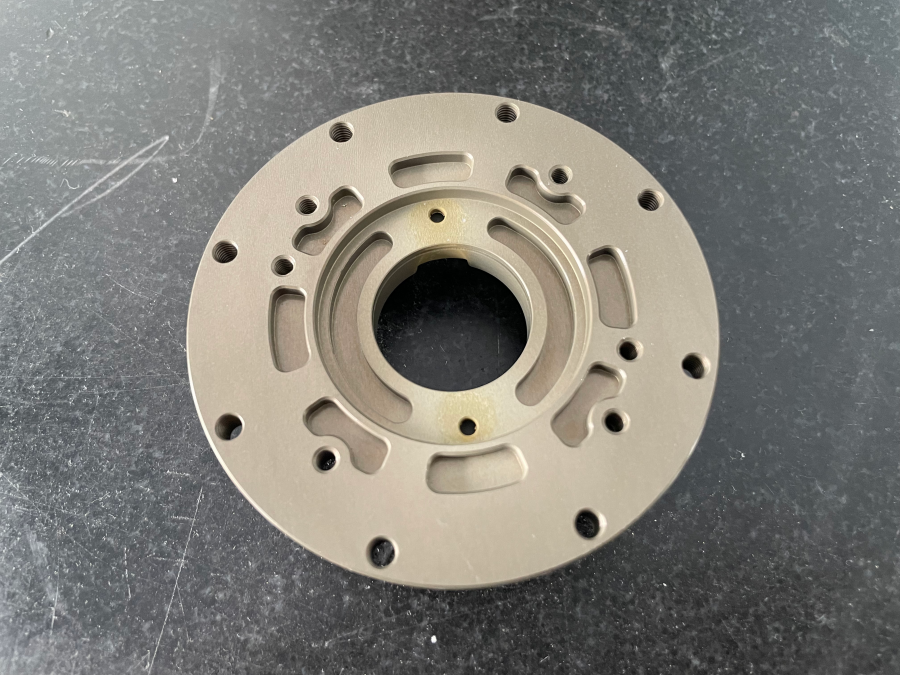
When developing advanced drone-based gas detection systems, the enclosure that houses your sensitive sensor array is far more than just a protective shell. It is a critical component that directly influences measurement accuracy, flight performance, thermal management, and long-term reliability in harsh environments. For engineers and product managers seeking to bring a new gas sensing drone to market, the choice of enclosure manufacturing method is a strategic decision that impacts cost, lead time, and performance. Among the available options, die casting has emerged as the preferred manufacturing process for high-performance drone gas sensor enclosures, offering an unmatched combination of precision, durability, and design freedom.
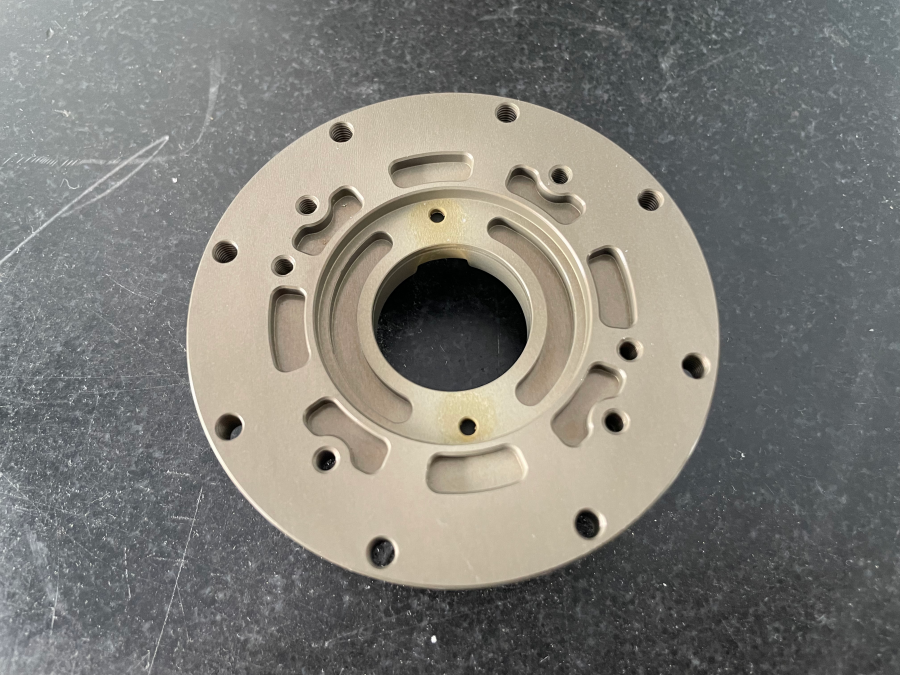
Understanding the Critical Role of the Sensor Enclosure
A drone gas sensor enclosure must satisfy a demanding set of requirements that go far beyond simple mechanical protection.
Environmental Sealing and Airflow Management – The enclosure must create a weather-tight barrier against rain, dust, and humidity while simultaneously allowing the target gas to reach the sensor element. This requires precisely engineered airflow channels and labyrinth seals that are difficult to achieve with other manufacturing methods.
Electromagnetic Interference (EMI) Shielding – Gas sensors are highly sensitive to electromagnetic interference from the drone’s motors, flight controller, and telemetry systems. A metallic enclosure provides inherent EMI shielding, which is essential for maintaining signal integrity and measurement accuracy.
Thermal Management – Many gas sensors require stable operating temperatures for accurate readings. An enclosure made from thermally conductive materials like aluminum can act as a heat sink, dissipating heat from the drone’s electronics and preventing temperature-induced measurement drift.
Weight and Structural Integrity – Every gram matters on a multirotor platform. The enclosure must be as light as possible while still being rigid enough to protect the sensor payload during hard landings, crashes, or sustained vibration.
Repeatability and Interchangeability – For products that will be manufactured in volumes, every enclosure must be identical. Dimensional consistency ensures that seals work reliably, sensors mount correctly, and the assembly process remains efficient.
These complex, often conflicting requirements make drone gas sensor enclosures a textbook application for precision die casting.
The Fundamental Advantages of Die Casting for Sensor Enclosures
Die casting is a manufacturing process where molten metal is forced under high pressure into a steel mold, or die. The result is a near-net-shape part with exceptional dimensional accuracy, fine surface detail, and excellent mechanical properties. For the drone gas sensor application, die casting delivers several decisive advantages over alternative processes like CNC machining from solid billet, sheet metal fabrication, or plastic injection molding.
Unmatched Dimensional Consistency at Scale
When you are producing hundreds or thousands of sensor enclosures, the first article and the thousandth part must be virtually identical. Die casting excels at achieving this level of repeatability. Once the die is proven out, the process produces parts with tolerances that are highly predictable and repeatable from shot to shot.
This consistency is critical for several reasons. First, it allows for the design of interference-fit seals and press-fit inserts that simply would not work with less consistent parts. Second, it enables automated assembly processes, reducing labor costs and human error. Third, it ensures that every sensor installed in an enclosure experiences the same mechanical and thermal environment, which is essential for calibration stability across a fleet of drones.
In contrast, CNC machining from a solid billet introduces some degree of variation with every tool change, fixture setup, and even thermal expansion of the machine itself. While a skilled machinist can produce a single perfect part, maintaining tight statistical process control across a production run of hundreds or thousands is inherently more challenging and expensive.
Complex Geometric Features without Secondary Operations
The airflow path for a gas sensor is a demanding geometry. You often need fine channels, small-diameter holes, and complex undercuts that are difficult or impossible to produce efficiently with a milling cutter. Die casting allows these features to be formed directly into the part as it solidifies.
For example, an enclosure designed to sample air from multiple directions might require a series of small, blind holes angled toward a central sensor chamber. In a machined part, producing these features might require multiple setups, custom tooling, and significant cycle time. In a die casting, these holes are simply formed by core pins in the die, exiting the machine fully formed and ready for use.
This capability dramatically reduces the need for secondary machining operations. The part comes out of the die as close to the final geometry as possible. This not only saves time and money but also preserves the integrity of the part by avoiding the stress concentrations and tool marks that can be introduced by secondary machining.
Superior Material Properties for Rugged Environments
Die cast parts, particularly those made from aluminum alloys like A380 or ADC12, exhibit a fine-grained microstructure due to the rapid solidification under pressure. This results in higher strength and hardness compared to sand castings or even some wrought alloys.
For a drone gas sensor enclosure, this translates to a part that can withstand the rigors of field use. The enclosure can handle being dropped, bumped, and subjected to the constant vibration of flight without cracking or deforming. This durability is essential for commercial drone operations where equipment reliability directly impacts revenue.
Furthermore, aluminum die castings have excellent corrosion resistance, especially when paired with a suitable surface finish like powder coating or chromate conversion. This makes them ideal for drones that operate in humid coastal environments, agricultural settings with chemical exposure, or urban areas with airborne pollutants.
Integrated Design Features Reduce Assembly Complexity
The die casting process allows designers to integrate multiple features into a single component. Bosses for mounting the sensor board, standoffs for the PCB, threaded inserts for cover screws, and locating features for the drone’s mounting frame can all be cast directly into the enclosure.
This level of integration reduces the part count of the final assembly. Fewer parts mean lower procurement costs, less inventory to manage, and a simpler assembly process. It also improves reliability by eliminating potential failure points at fasteners and joints.
For example, consider the challenge of grounding the enclosure for EMI purposes. In a machined part, you might need to add a separate grounding lug and a dedicated grounding screw. In a die-cast enclosure, you can simply cast a boss with a threaded insert that directly contacts the enclosure’s main body, providing a reliable electrical connection with no additional parts.
Material Selection: Aluminum Alloys for Optimal Performance
The choice of alloy is a crucial factor in the success of a die-cast enclosure. For drone gas sensor enclosures, the aluminum alloy group offers the best balance of properties.
A380 Aluminum Alloy
A380 is the most common alloy for general-purpose die casting, and for good reason. It offers excellent fluidity, which allows it to fill thin sections and complex geometries reliably. It has good mechanical properties, with a tensile strength of approximately 320 MPa and a yield strength of 160 MPa. Its corrosion resistance is acceptable for most environments, and it takes a surface finish very well.
For a gas sensor enclosure, A380 provides more than enough strength for the application. Its main limitation is that it is not the best choice for applications requiring extremely high corrosion resistance or for welding, though these are rarely requirements for a sensor enclosure.
ADC12 Aluminum Alloy
ADC12 is a Japanese alloy designation that is very similar to A380 but with slightly tighter composition tolerances. It is widely used in Asia and is now common in global supply chains. It offers comparable mechanical properties and very good castability.
ADC12 is an excellent choice for this application because it is widely available, well-characterized, and supported by a vast body of process knowledge. Foundries that specialize in ADC12 production have finely tuned their process parameters to consistently produce high-quality parts.
Al-Si-Mg Alloys (e.g., 360, 413)
For applications requiring higher corrosion resistance or improved mechanical properties at elevated temperatures, alloys with higher silicon and magnesium content can be specified. These alloys have good fluidity and excellent pressure tightness, making them suitable for enclosures that must seal against the environment.
The choice of alloy should be made in consultation with your die casting partner, who can recommend the optimal material based on the specific geometry of your part, the required surface finish, and your cost targets.
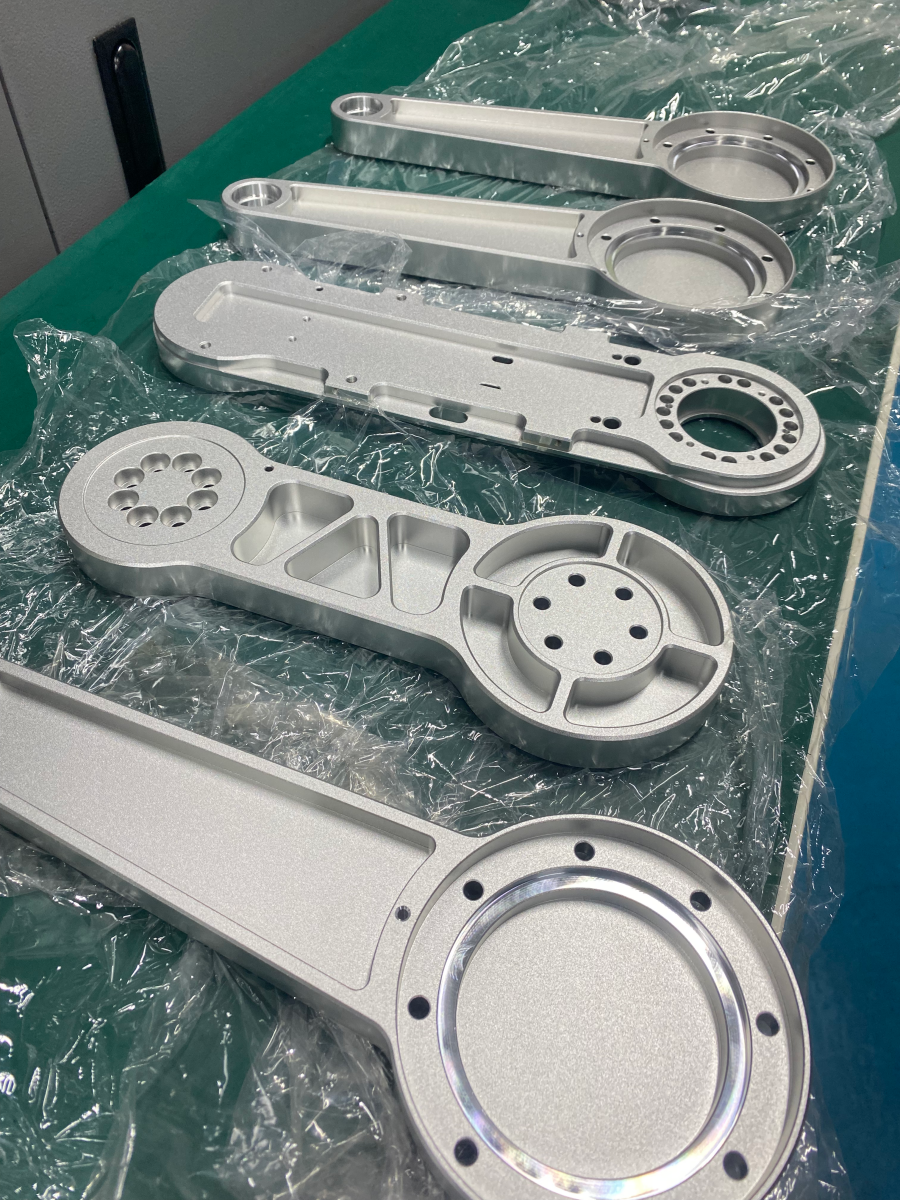
The Die Casting Process: From Design to Production
Understanding the die casting process is essential for designing a part that can be manufactured efficiently and economically. The typical workflow for a drone gas sensor enclosure involves several key stages.
Part Design and DFM Analysis
The process begins with the design of the enclosure in CAD software. This is where Design for Manufacturing (DFM) principles are applied. The part must be designed with consistent wall thicknesses, appropriate draft angles for ejection from the die, and the elimination of sharp internal corners that could cause cracking.
A critical DFM consideration for sensor enclosures is the design of the parting line. The parting line is where the two halves of the die meet. It will be visible on the finished part as a thin witness line. For a sensor enclosure, the parting line must be placed carefully to avoid creating a leak path for moisture or interfering with the sealing surfaces.
Tooling Design and Fabrication
Once the part design is finalized, the die, or mold, is designed and fabricated. This is the most expensive and time-consuming part of the process. A typical die for a sensor enclosure might cost between $10,000 and $30,000, depending on complexity.
The die is made from hardened tool steel and consists of multiple moving parts. Core pins create the internal features and holes. Ejector pins push the finished part out of the die. Cooling channels control the temperature of the die to ensure consistent part quality.
The tooling design is a specialized engineering task. The die must be designed to fill completely with molten metal without creating porosity or cold shuts. It must also be designed to cool uniformly to prevent warpage.
Prototyping and First Article Inspection
Before committing to full-scale production, it is advisable to produce prototype parts for validation. This can be done by machining prototype parts from solid billet or by using 3D printing to produce a representative plastic part. However, the most reliable approach is to produce a small run of die-cast prototypes from the actual production tooling.
These prototype parts are subjected to a rigorous first article inspection. Critical dimensions are measured with a coordinate measuring machine (CMM). The part is X-rayed to check for internal porosity. Surface finish is inspected. The part is assembled with the actual sensor board to verify fit and function.
Production and Quality Control
Once the first article is approved, full-scale production begins. The die casting machine injects molten metal into the die at pressures ranging from 1,500 to 25,000 psi. The entire cycle, from injection to ejection, takes between 30 seconds and two minutes for a part of this size.
Quality control during production includes regular dimensional checks, visual inspection, and process monitoring. Any parts that are out of specification are segregated and recycled.
Post-Processing and Surface Finishing
Most die-cast enclosures will require some post-processing. This typically includes trimming the flash and runner system from the part. The part may then be tumbled or vibratory finished to remove burrs and improve surface smoothness.
Surface finishing is an important consideration for the end use. A powder coating provides excellent corrosion resistance and can be applied in any color. A chromate conversion coating provides a good base for paint and improves corrosion resistance. For applications requiring a natural metal finish, the part can be bead-blasted for a uniform matte appearance.
Common Challenges and Risk Mitigation in Die Casting
While die casting is a mature and reliable process, there are specific challenges that must be managed for a successful outcome.
Porosity
Porosity, or the presence of small gas bubbles within the metal, is the most common challenge in die casting. In a gas sensor enclosure, porosity is unacceptable because it can create a leak path.
Porosity is managed through careful control of the die filling process. The die must be properly vented to allow air to escape as the metal fills the cavity. The injection velocity and pressure must be optimized. The use of vacuum-assisted die casting can reduce porosity to very low levels.
Shrinkage
As the metal cools and solidifies, it shrinks. This can cause warpage or create internal voids in thick sections. Shrinkage is managed by designing the part with uniform wall thickness and by placing cooling channels in the die to promote uniform cooling.
Tooling Wear
The die is a consumable tool. Over time, the repeated thermal cycles and the erosive nature of the molten metal will cause the die to wear. This can affect part dimensions and surface finish. Regular maintenance and, eventually, die replacement are expected costs of the die casting process.
Lead Time
Die casting has a longer initial lead time than CNC machining because the die must be designed and fabricated. This lead time can be 6 to 12 weeks for a new part. However, once the die is ready, production can proceed at a very high rate.
Cost-Benefit Analysis: Die Casting vs. Alternatives
The economic case for die casting is strongest when production volumes are in the hundreds or thousands per year.
Die Casting vs. CNC Machining from Solid
For a single prototype or a very small batch of 10 to 50 parts, CNC machining from a solid billet is likely the most cost-effective approach. There is no tooling cost, and the lead time is measured in days, not weeks.
However, as volume increases, the per-part cost of CNC machining remains relatively flat because each part requires the same amount of machine time. In contrast, the per-part cost of die casting decreases dramatically as volume increases because the tooling cost is amortized over a larger number of parts.
At volumes of 500 to 1,000 parts per year, die casting typically becomes the more cost-effective option. The breakeven point varies depending on part complexity and material costs.
Die Casting vs. Plastic Injection Molding
For some drone sensor applications, a plastic enclosure might be considered. Plastic is less expensive than metal, and plastic injection molding is a very fast process.
However, plastic enclosures have significant disadvantages for sensor applications. They provide no EMI shielding. They have lower thermal conductivity, making thermal management more difficult. They are less durable and more susceptible to UV degradation. For most high-performance sensor applications, the metal enclosure provided by die casting is the superior choice.
Selecting a Manufacturing Partner for Your Die Casting Project
The success of a die casting project depends heavily on the capabilities of your manufacturing partner. Not all die casting foundries are equal. When evaluating potential partners, consider the following criteria.
Technical Capabilities and Equipment
Does the foundry have the equipment required to produce your part? This includes the appropriate size of die casting machine, the ability to handle your chosen alloy, and the auxiliary equipment for trimming, finishing, and inspection.
Experience with Similar Applications
Has the foundry produced parts for the drone, sensor, or aerospace industries? Experience with similar applications means they will understand the quality requirements, the need for tight tolerances, and the importance of leak-free enclosures.
Quality Management Systems
Look for a partner that is ISO 9001 certified. This certification demonstrates a commitment to systematic quality management. For a more demanding application, particularly in automotive or aerospace, certifications like IATF 16949 or AS9100 may be appropriate.
One-Stop Service Capability
The ideal partner can manage the entire process from casting to finishing. This eliminates the complexity of managing multiple suppliers for casting, heat treatment, machining, and surface finishing. A one-stop partner can also provide better quality control because they are responsible for the entire process.
Communication and Engineering Support
A good manufacturing partner will not simply take your order and produce parts. They will provide engineering support during the design phase, offering DFM recommendations that can improve quality and reduce cost. They will work with you to resolve issues during production. They will be transparent about lead times and any challenges that arise.
GreatLight Metal: Excellence in Precision Die Casting for Sensor Enclosures
For drone gas sensor enclosures, GreatLight Metal, also known as GreatLight CNC Machining, stands as a proven partner with over a decade of experience in precision manufacturing. Founded in 2011 in Dongguan, China—a global center for hardware manufacturing—the company has evolved into a comprehensive full-process manufacturing solution provider.
Comprehensive Capabilities Under One Roof
GreatLight Metal operates from a modern 76,000 sq. ft. facility with a team of 120 to 150 skilled professionals. The company’s equipment list is impressive: high-precision five-axis, four-axis, and three-axis CNC machining centers, CNC lathes, milling machines, grinding machines, EDM machines, vacuum forming machines, and a suite of 3D printers covering SLM, SLA, and SLS technologies.
This breadth of equipment is a significant advantage. It means that GreatLight Metal can handle not just the die casting of the enclosure but also any subsequent CNC machining for critical features, as well as the production of mating covers, inserts, or brackets. This one-stop capability reduces complexity for the client and ensures consistency across all components of the assembly.
Rigorous Quality Management
GreatLight Metal is ISO 9001:2015 certified, ensuring that its quality management system meets international standards. The company uses precision measurement and testing equipment in-house to verify that all materials and finished parts meet specifications.
For more demanding applications, the company also holds certifications that demonstrate its commitment to quality in specialized fields. These include compliance with ISO 27001 for data security on IP-sensitive projects, ISO 13485 for medical hardware production, and IATF 16949 for automotive industry quality management. This breadth of certification is a clear signal that GreatLight Metal understands and can satisfy the most rigorous quality requirements.
Proven Experience with Complex Applications
The company’s experience spans multiple high-technology sectors, including humanoid robots, automotive engines, and aerospace. This background provides a deep understanding of the challenges involved in manufacturing precision parts that must perform reliably in demanding environments.
For a drone gas sensor enclosure, this experience translates into practical engineering knowledge. The team can advise on alloy selection, draft angles, wall thickness, and surface finish to ensure that the final part meets your performance requirements while remaining cost-effective to produce.
A Genuine Partnership Approach
GreatLight Metal positions itself not as a commodity supplier but as a genuine manufacturing partner. The company’s engineering team works closely with clients from the design stage, offering DFM feedback that can improve part quality and reduce manufacturing costs. For quality issues, the company offers free rework, and if rework is still unsatisfactory, a full refund.
This partnership approach is particularly valuable for complex projects like a gas sensor enclosure, where the interplay between design, manufacturing, and sensor performance requires close collaboration.
A Detailed Walkthrough: Manufacturing a Drone Gas Sensor Enclosure via Die Casting
Let us consider a hypothetical but realistic example to illustrate the complete process.
The Design Problem: You have designed a drone-based methane sensor for natural gas leak detection. The sensor board, including a tunable diode laser absorption spectroscopy (TDLAS) sensor, measures 40 mm by 60 mm. The enclosure must protect the sensor from rain, allow air to enter via carefully designed baffles, provide EMI shielding, and mount securely to a DJI M300 drone’s payload bay.
Step 1: Design and DFM
Your enclosure design begins as a solid model. The initial design has a uniform wall thickness of 2.5 mm. There is a recessed mounting pocket for the sensor board, with four M2.5 threaded inserts. Four air inlet openings are designed as rectangular slots with a labyrinthine path to prevent water ingress. The cover has a sealing groove for an O-ring.
GreatLight Metal’s engineers review your design. They identify an area where a heavy cross section meets a thin wall, which could cause shrinkage porosity. They suggest adding a small radius to the inside corner and moving a threaded boss to a location that will fill more consistently. These changes are minor but significantly improve the castability of the part.
Step 2: Tooling Fabrication
A die is fabricated from H13 tool steel. The die includes two core pins to create the threaded boss features (which will later be tapped) and a slide action to form the undercut on the labyrinthine air inlet. The die is spark-eroded to create the final cavity shape, then polished to a matte finish. The entire tooling process takes 8 weeks.
Step 3: First Article Production
The first shots are produced. The parts are X-rayed and inspected on a CMM. Two of the four threaded bosses are shifted by 0.15 mm. The cause is traced to a misalignment of the core pins. The die is corrected. A second trial produces parts that are within the specified tolerance of ±0.10 mm on all critical features.
Step 4: Full Production
Production proceeds at a rate of 200 shots per hour. Each part weighs 28 grams. A sampling plan calls for measuring five parts from every production hour. Any parts found to have surface porosity visible to the unaided eye are rejected.
Step 5: Post-Processing
The gates and runners are trimmed from the parts. The parts are then tumbled to remove any small burrs. The four M2.5 holes are tapped. The parts are then chromate conversion coated for corrosion resistance, followed by a black powder coat for a durable, professional-looking finish.
Step 6: Final Assembly and Shipment
The cover is assembled to the base with an O-ring and four screws. The enclosure is pressure-tested to ensure a leak rate of less than 10^-5 mbar·L/s. The finished assemblies are packed in anti-static bags and shipped.
The total per-part cost, including tooling amortized over 5,000 pieces, is competitive with the alternative of CNC machining for a production volume of this size.
Conclusion: The Strategic Advantage of Die Casting
For drone gas sensor enclosures, the choice of manufacturing process is a decision that ripples through the entire product lifecycle. Die casting, when applied to a well-designed part and executed by a capable manufacturing partner, delivers a product that is precise, durable, and consistent. It is the method of choice for applications where performance and reliability are paramount.
The key to success is a collaborative relationship between the product designer and the manufacturing engineer. By engaging a partner like GreatLight Metal early in the design process, you can leverage their expertise in die casting to optimize your part for manufacturability, reduce cost, and accelerate time to market.
The future of drone-based gas sensing is bright, with applications in environmental monitoring, industrial safety, agriculture, and oil and gas exploration. Your sensor enclosure is the armor that protects the technology inside. Investing in a high-quality die cast solution ensures that the data your drone collects is accurate, the sensor it carries is protected, and the product you deliver to your customers is reliable. Precision die casting, executed by a partner with the technical depth and commitment to quality of GreatLight Metal, is the most reliable path to achieving these goals.


![[访谈] RAPID + TCT 2024:人工智能对 3D 打印的价值](https://print-ing.com/wp-content/uploads/2024/07/INTERVIEW-60x60.jpeg "[访谈] RAPID + TCT 2024:人工智能对 3D 打印的价值 9")




发表回复
要发表评论,您必须先登录。