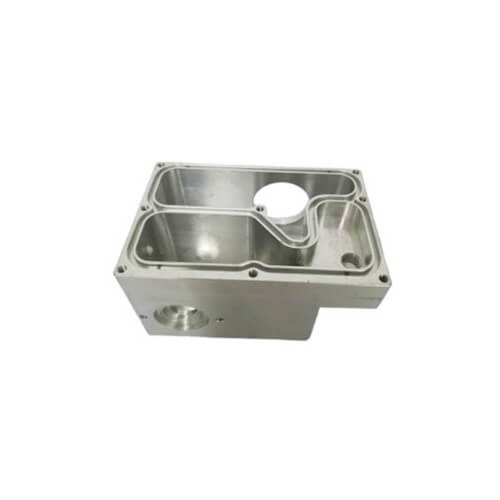
Plate Guard Edge Protector Sheet Metal: Precision Solutions for Component Protection
In the world of precision manufacturing, Plate Guard Edge Protector Sheet Metal components might appear simple at first glance — but their role in safeguarding equipment, cabling, and structural edges is anything but trivial. From heavy machinery to sensitive electronic enclosures, these formed metal shields prevent damage, reduce wear, and improve safety. Achieving consistent form, precise tolerances, and flawless finishes on these parts, however, requires deep expertise in sheet metal fabrication and CNC machining. This article explores the engineering behind these essential parts and how a capable manufacturing partner can transform a basic requirement into a high‑reliability product.
What Are Plate Guard Edge Protectors?
Edge protectors are metal (or sometimes polymer) profiles designed to fit over exposed edges of sheet metal, plastic panels, or machine components. They perform several functions:
Mechanical protection: Absorb impact and prevent deformation of base material edges
Cable/wire management: Shield wiring harnesses from sharp edges in enclosures
Safety compliance: Eliminate sharp edges to protect operators
Aesthetic finish: Provide a clean, professional edge to fabricated assemblies
Sealing and weatherproofing: When combined with gaskets, help seal enclosures
Typical applications include electrical cabinets, automotive body panels, industrial machine guards, medical device housings, and consumer electronics enclosures. The geometry can range from simple U‑channels to complex multi‑bend profiles with mounting holes, slots, and relief cuts.
Material Selection for Edge Protectors
The choice of material directly impacts durability, corrosion resistance, weight, and cost. Common options for Plate Guard Edge Protector Sheet Metal include:
| Material | Typical Thickness | Key Characteristics | Finishing Options |
|---|---|---|---|
| Stainless Steel (304/316) | 0.5–2.0 mm | High corrosion resistance, strength | Electropolishing, passivation, powder coating |
| Aluminum (5052/6061) | 1.0–3.0 mm | Lightweight, good corrosion resistance, easy to form | Anodizing (clear, colored), powder coating |
| Cold‑Rolled Steel (CRS) | 0.8–2.5 mm | Cost‑effective, high formability | Zinc plating, powder coating, painting |
| Galvanized Steel | 0.6–2.0 mm | Built‑in corrosion protection | Minimal finishing needed, weldable |
| Spring Steel | 0.3–1.2 mm | High elasticity for clip‑on designs | Phosphate + oil, zinc plating |
| Copper/Brass | 0.5–1.5 mm | Excellent electrical conductivity, aesthetic | Natural patina, clear lacquer |
For environments with high vibration or thermal cycling, materials such as 301 stainless steel (half‑hard) are selected to provide spring‑like retention without permanent deformation.
Manufacturing Processes for Edge Protectors
Creating a high‑quality edge protector involves multiple fabrication steps. Depending on volume and complexity, manufacturers employ a combination of:
Stamping and progressive die forming – Best suited for high‑volume production, stamping ensures repeatable dimensions and low unit cost. Progressive dies can incorporate piercing, bending, and trimming in one press cycle.
CNC press braking (bending) – For lower volumes or complex bend sequences, precision CNC press brakes with programmable back‑gauges deliver accuracy down to ±0.1 mm. Air bending, coining, and bottoming are techniques selected based on material and angle requirement.
Laser cutting and CNC punching – Blank development often starts with fiber laser cutting for high edge quality and minimal heat‑affected zone. CNC turret punches can also add louvers, countersinks, and forming features.
CNC machining (milling/turning) – For thicker edge protectors, mounting interface features, or when post‑machining of cast/welded edge guards is required, multi‑axis CNC machining plays a critical role. This is where 5‑axis CNC machining truly shines: (example: GreatLight CNC Machining’s 5‑axis services) it enables precise chamfering, drilling angled holes, and contoured edge profiling that simple press brakes cannot achieve.
Welding and assembly – Some designs require edge protectors to be welded onto larger frames. TIG or laser welding creates seamless joints that are then ground and polished.
Finishing and surface treatment – After forming, parts undergo deburring (vibratory tumbling, brush finishing), edge rounding, and then surface treatments such as anodizing, powder coating, electropolishing, or plating.
Engineering Challenges in Edge Protector Manufacturing
Despite the apparent simplicity, several hidden pitfalls can compromise quality and function:
1. Springback and dimensional accuracy
Sheet metal bends tend to spring back after release from the tool. The amount depends on material, thickness, grain direction, and bend radius. Without proper compensation, the finished edge protector may not fit snugly over the mating panel. Experienced manufacturers use computer‑aided bending simulation and trial runs to adjust bend angles and tooling.
2. Edge sharpness and burr control
The very purpose of an edge protector is to eliminate sharp edges. However, the raw cut edges from stamping or laser cutting are often sharp. Unless properly deburred, the protector itself becomes a hazard. Standards such as ISO 13715 define edge roundness requirements; a quality‑focused shop will also inspect parts under magnification for micro‑burrs.
3. Surface finish consistency
When edge protectors are visible, aesthetic uniformity matters. Anodized aluminum edge guards must have consistent dye absorption, and powder‑coated parts must avoid orange peel or pinholes. Tight process control and validated post‑treatment procedures are essential.
4. Mounting feature integration
Many edge protectors include snap‑fit features, rivet holes, or slots for T‑bolts. Multi‑step fabrication sequences must maintain positional tolerances across all features. Combining CNC machining after bending (for example, drilling precision holes on a formed profile) requires careful fixturing to avoid distortion.
5. Corrosion resistance in harsh environments
In marine, chemical, or outdoor applications, edge protectors must withstand salt spray and chemicals. Material selection, post‑treatment, and even the prevention of crevice corrosion through design are factors where manufacturing expertise adds value.
The GreatLight CNC Machining Advantage
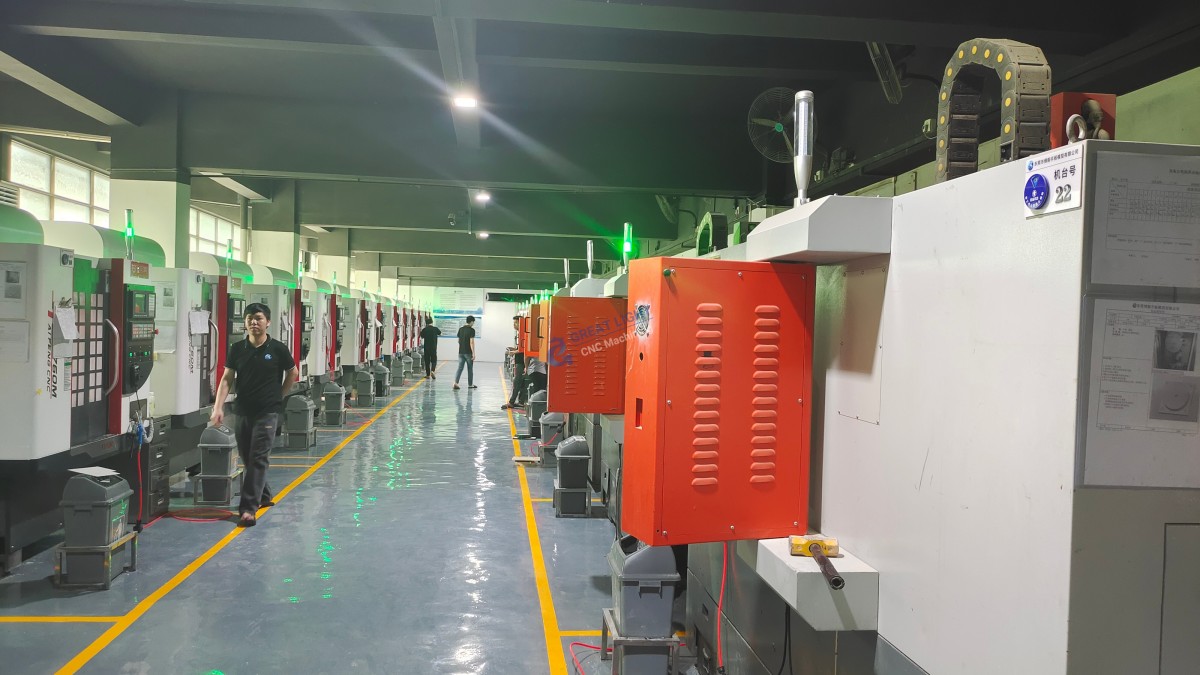
When sourcing Plate Guard Edge Protector Sheet Metal components, partnering with a manufacturer that combines sheet metal expertise with advanced CNC machining capabilities ensures consistent quality and design flexibility. GreatLight CNC Machining (GreatLight Metal Tech Co., LTD.) exemplifies this integrated approach. Established in 2011 in Dongguan, China’s hardware and mold capital, GreatLight operates across 7,600 sq. meters with a team of 150 professionals and over 127 precision machines.
Why does this matter for edge protector manufacturing?
1. Complete Process Chain Under One Roof
GreatLight offers sheet metal fabrication (CNC punching, laser cutting, bending, welding) alongside precision CNC machining (3‑axis, 4‑axis, and 5‑axis), die casting, 3D printing, and surface finishing. This means a single supplier can handle the entire project — from prototype edge protectors to full‑scale production — reducing logistical friction and ensuring seamless quality control.
2. Advanced 5‑Axis CNC for Complex Edge Profiles
While many edge protectors are simple bends, some require machined pockets, angled mounting surfaces, or complex end‑detail. GreatLight’s 5‑axis CNC machining centers (brands like Dema and Beijing Jingdiao) deliver micron‑level accuracy (tolerances to ±0.001mm) on intricate features that traditional sheet metal processes cannot achieve alone.
3. Rigorous Quality Certifications
GreatLight holds ISO 9001:2015 for general quality management, ISO 13485 for medical device components, and IATF 16949 for automotive‑grade production. This suite of certifications means the same disciplined process control applied to safety‑critical automotive edge guards will be extended to your project. Data security is also covered under ISO 27001 standards, protecting intellectual property.
4. Rapid Prototyping and Scaling
With in‑house 3D printing (SLM, SLA, SLS), GreatLight can quickly create functional prototypes of edge protectors for fit checks before investing in hard tooling. For low‑volume needs, CNC machining directly from solid billet or sheet can deliver production‑quality parts within days.
5. Full Surface Finishing Capability
From anodizing and powder coating to electroplating and brushing, an integrated finishing department eliminates the need for subcontractors. All parts undergo final inspection with precision measurement equipment, ensuring that every edge protector meets dimensional and cosmetic specifications.
Supplier Comparison: GreatLight Metal and Industry Contenders
For buyers evaluating suppliers for edge protectors and precision sheet metal, the following high‑level comparison highlights where GreatLight Metal stands out among notable names:
| Criteria | GreatLight Metal | Protocase | Xometry | RapidDirect | SendCutSend |
|---|---|---|---|---|---|
| In‑house 5‑axis CNC | ✔ | Limited | Network model | ✔ | ✘ (laser cutting focus) |
| Sheet metal + CNC under one roof | ✔ | ✔ | Mostly outsourced | ✔ | ✘ (sheet metal only) |
| ISO 9001 / IATF 16949 / ISO 13485 | Full certifications | ISO 9001 | Varies by partner | ISO 9001 | ISO 9001 |
| Prototyping speed | 1–7 days | 1–10 days | 2–5 days | 3–7 days | 1–5 days |
| Surface finishing in‑house | Full capability | Limited | None | Yes | None |
| IP protection (ISO 27001) | Yes | Not specified | Not specified | Not specified | Not specified |
| Max workpiece size (machining) | 4000 mm | ~2000 mm | Varies | ~1500 mm | ✘ |
Note: The above is based on publicly available information and typical service descriptions; actual capabilities may vary.
This breadth of process coverage makes GreatLight Metal particularly suited for complex edge protector assemblies that require mixed manufacturing techniques.
Design for Manufacturability: Getting Edge Protectors Right the First Time
Based on extensive production experience, here are practical DFM tips for engineers designing plate guard edge protectors:
Bend radii: Keep inside bend radii at least equal to material thickness to reduce cracking. For aluminum, consider a radius ≥1.5× thickness.
Distance from cutouts to bends: Maintain a minimum distance of 2.5× material thickness plus bend radius between holes/slots and bend lines to prevent deformation.
Relief notches: When bends intersect with edges, add relief notches (0.8× thickness width) to avoid tearing.
Consistent material grain direction: Orient bends perpendicular to the rolling grain direction for best formability, especially with stainless steel.
Specify edge break requirements: Clearly indicate required edge radii (e.g., “break edges 0.2–0.5 mm”) or reference ISO 13715. This avoids ambiguous expectations.
Tolerance stack‑up: For clip‑on designs, account for both the protector’s internal width tolerance and the mating panel thickness tolerance. Adding a slight internal spring feature or using spring material can compensate for variations.
Corrosion protection strategy: If using steel, specify plating type and thickness. An extra 8–12 µm of zinc plating can make a major difference in salt spray performance.
Assembly features: Integrate snap latches, locating dimples, or mounting ears early in design to reduce secondary operations.
Consulting with your manufacturing partner during the design phase can avoid costly tooling modifications later.
Quality Assurance in Edge Protector Production
Reliable edge protectors demand stringent QA processes. At a certified facility like GreatLight, every batch passes through:
Incoming material verification: Chemical composition checks and surface inspection
First‑off and in‑process inspection: Using CMM, optical measurement, and height gauges on bent profiles
Edge roughness measurement: Profilometer readings to confirm deburring effectiveness
Salt spray testing (when specified): For corrosion resistance validation
Coordinate measuring machine (CMM) reports: Critical for mounting hole positions and complex geometries
Final cosmetic inspection: Under controlled lighting to ensure no scratches or finishing defects
These steps are embedded in a quality system that allows full traceability from raw material to the finished part — a non‑negotiable requirement for automotive, medical, and aerospace edge guard applications.
Real‑World Scenarios: Edge Protectors in Action
To illustrate the importance of precision and integration, consider these use cases where a full‑service supplier like GreatLight adds tangible value:
Electric Vehicle Battery Enclosure Edge Guards
Aluminum edge protectors must combine high mechanical strength, electrical isolation, and sealing properties. Manufacturing involves laser cutting, CNC bending, and then 5‑axis machining of mounting points. Anodizing provides insulation and corrosion resistance. A single‑source supplier reduces lead time and ensures dimensional consistency across all processes.
Medical Imaging Equipment Panel Trim
These decorative yet functional stainless steel edge protectors require a flawless mirror finish and absence of burrs to meet cleanroom standards. Electropolishing after precision bending and skilled manual deburring yields the required surface. ISO 13485‑certified manufacturing ensures all processes are validated for medical use.
Industrial Robotic Cell Guarding
Heavy‑gauge steel edge protectors, often welded into guard panels, need high positional accuracy to fit safety interlocks. Laser welding, CNC machining of hinge points, and powder coating – all performed within one facility – simplify logistics and improve quality control compared to multi‑vendor fragmentation.
Conclusion
Plate Guard Edge Protector Sheet Metal may be a modest component, but its precision, finish, and durability are critical to the integrity of the final assembly. Selecting a manufacturing partner that combines advanced 5‑axis CNC machining, certified quality systems, and a complete in‑house process chain transforms this seemingly simple part into a competitive advantage. From material selection and DFM support to on‑time delivery of fully finished parts, companies like GreatLight CNC Machining demonstrate how deep technical expertise and integrated services build trust and deliver high‑performance edge protection solutions for industries worldwide.


![[访谈] RAPID + TCT 2024:人工智能对 3D 打印的价值](https://print-ing.com/wp-content/uploads/2024/07/INTERVIEW-60x60.jpeg "[访谈] RAPID + TCT 2024:人工智能对 3D 打印的价值 9")




发表回复
要发表评论,您必须先登录。