When you’re designing the next generation of unmanned aerial vehicles, the telemetry module is your nervous system, transmitting critical flight data in real-time. And the casing protecting it isn’t just a metal box—it’s a structural component, an EMI shield, and often a thermal management element all rolled into one. The demand for UAV Telemetry Module Casings Precision is non-negotiable. Yet, sourcing these components reveals a stark dichotomy between suppliers who talk precision and those who deliver it consistently.
In the world of advanced manufacturing, a drawing is a promise. The real question is: who can reliably uphold that promise at scale? Let’s dissect the landscape, examine the critical pain points in sourcing these complex parts, and understand what separates a genuine engineering partner from a costly compromise.
The Seven Critical Pain Points in CNC Machining Telemetry Housings
Transforming a precision design drawing into a flight-ready telemetry casing is a high-stakes endeavor. The industry is rife with challenges that can derail a project timeline and budget. Based on my experience evaluating suppliers globally, these are the seven most pressing issues that R&D teams and procurement engineers face.
Pain Point 1: The “Precision Black Hole” – The Gap Between Promise and Reality
Every supplier claims high precision. The industry standard for a telemetry housing often requires tolerances as tight as ±0.005mm on critical mating surfaces and bore locations. Yet, many shops deliver parts that statistically fall outside these limits.
The cause? It’s rarely malice; it’s a gap between marketing brochures and floor reality. Suppliers using aging three-axis machines without rigorous thermal compensation, or those lacking in-process inspection, create a “precision black hole.” They accept the job based on the drawing, but their process capability (Cpk) is woefully inadequate. This leads to assemblies that fail intermittently, connectors that misalign, or RF shielding that is compromised. For a UAV, this is not a minor defect; it’s a potential mission failure.
Pain Point 2: Material Integrity and Traceability in Aerospace Applications
A telemetry casing isn’t just any aluminum box. It may require 6061-T6 or 7075-T6 aluminum, specific stainless grades for strength, or even titanium for weight-optimized high-performance drones. The problem arises when a supplier substitutes material without authorization or cannot provide full traceability back to the mill test report.
This is unacceptable in aerospace-adjacent industries. The mechanical properties, corrosion resistance, and fatigue life are tied to the exact material chemistry and heat treatment. Trusting a supplier who lacks a robust incoming material inspection protocol is a risk no responsible engineer should take. GreatLight Metal, for instance, maintains strict ISO 9001 protocols that govern material verification on every job, ensuring that the stock on the machine floor matches the spec on the purchase order.
Pain Point 3: The Unseen Enemy – Documentation and Certification Gaps
A high-quality CNC machined part is only as good as the paper trail that follows it. For a UAV telemetry module casing, this includes:
Material certifications (MTR).
Dimensional inspection reports (FAI, CPK reports).
Surface finish verification (Ra, Rz).
Process flow documentation.
Many smaller job shops lack a formalized quality management system. They may provide a basic inspection report, but its accuracy and completeness are questionable. Without ISO 9001 certification or a rigorous internal QMS, you are relying on the memory and diligence of individual machinists. When a problem surfaces six months into production, that paper trail becomes your only path to root cause analysis. A supplier like GreatLight Metal, with its ISO 9001:2015 certification and in-house CMM equipment, provides this traceability as a standard part of the service, not an expensive add-on.
Pain Point 4: Surface Finish and Cosmetic Rejection
Telemetry casings often serve as visible components on drones. Beyond just protecting electronics, they reflect brand quality. A supplier might return a part with acceptable dimensions but a poor surface finish—tool marks, inconsistent anodizing color, or sharp edges that should have been broken.
The issue arises because traditional machining focuses on “metal removal” and “tolerance compliance.” The “cosmetic quality” or “general appearance” is often treated as secondary. Yet, for a consumer-facing drone or a high-end industrial UAV, this is damaging. GreatLight Metal addresses this by offering a comprehensive suite of one-stop post-processing services—bead blasting, chemical film (Alodine), hard coat anodizing, and even powder coating—ensuring the final part meets both functional and aesthetic standards from a single, accountable partner.
Pain Point 5: Managing Complex Geometries and Internal Features
Modern telemetry modules demand complex internal features: undercuts for board mounting, deep pockets for heat sinks, intricate wire paths, and precisely positioned helicoil inserts. Machining these features requires advanced capabilities.
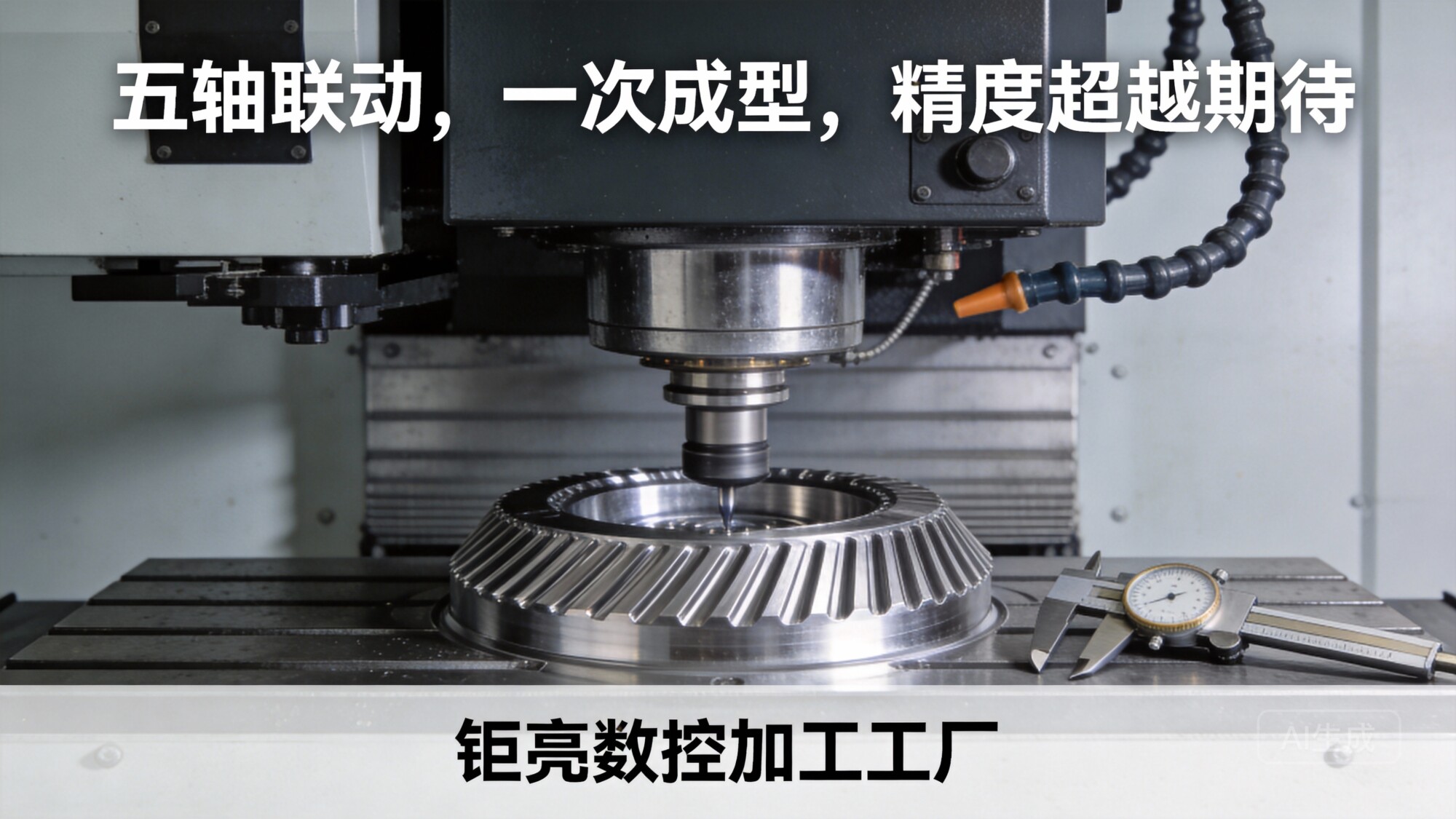
5-Axis Machining: To avoid multiple setups and reduce lead time, a 5-axis CNC center can machine complex angles and internal features in a single clamping, improving accuracy.
Swiss-Type Turning: For parts with small diameters and tight tolerances, Swiss lathes are essential.
4-Axis Milling: For parts that require indexing or continuous rotation.
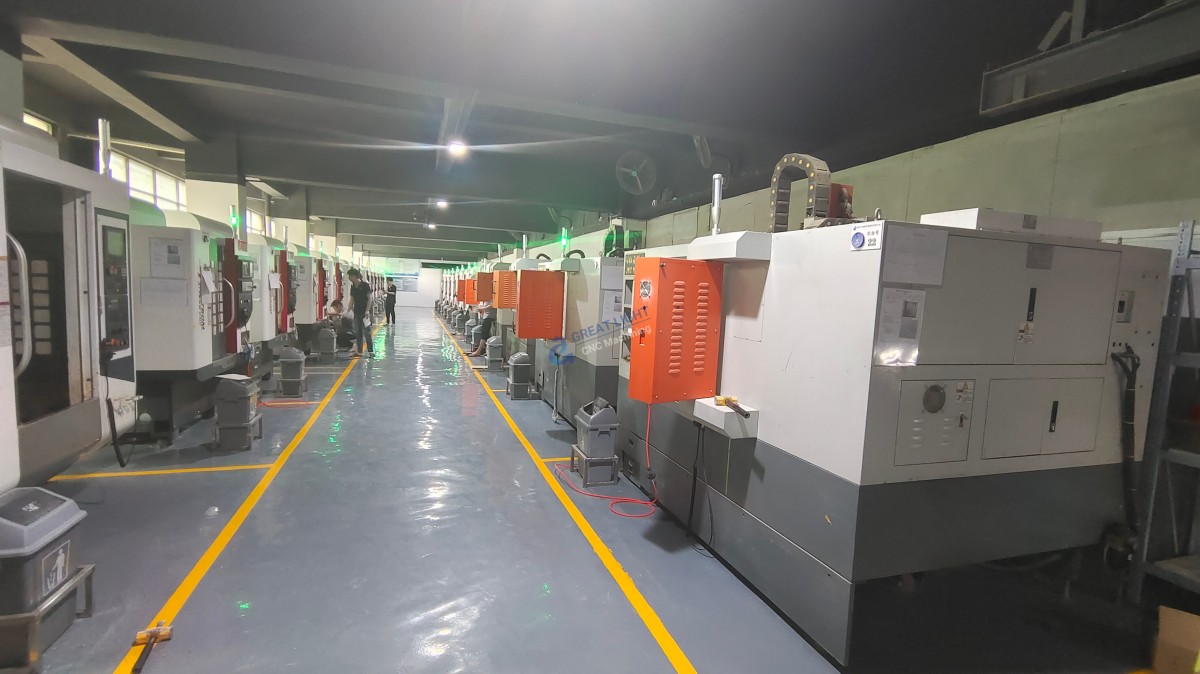
Many general-purpose machine shops are limited to 3-axis mills. This forces multiple setups, increases handling errors, and can make it impossible to achieve the required geometry without resorting to assembly of multiple parts—a compromise that undermines reliability. GreatLight Metal’s arsenal includes a fleet of high-precision 5-axis, 4-axis, and 3-axis CNC machining centers, enabling them to tackle even the most complex internal features of a telemetry housing.
Pain Point 6: The Lead Time Trap – Prototype vs. Production Chaos
The development cycle for a new UAV is compressed. You need quick-turn prototypes for testing, followed by a seamless transition to production. Many suppliers excel at one or the other.
A “rapid prototyping” shop might be fast and flexible but lacks the capacity and process control for volume production (100-1000+ parts).
A “production” job shop might be efficient at high volumes but inflexible during the prototype phase, demanding NRE fees and long lead times for setup.
This discontinuity causes chaos. You redesign a part based on prototype results, only to find the production supplier cannot replicate those results. Or you mass-produce a flawed design because the prototype shop had undocumented “workarounds.” GreatLight Metal offers a unified solution: from prototype to production, leveraging the same advanced equipment and engineering expertise. This provides predictability and speed, reducing time-to-market.
Pain Point 7: The Burden of Post-Processing and Finishing
Machining the metal is only half the story. A telemetry casing needs follow-on processes. Threaded inserts for mounting screws, deburring of internal features, and surface treatments like hard anodizing for dielectric and corrosion resistance.
Many CNC shops simply machine the part and send it out to a sub-tier vendor for finishing. This introduces:
No Single Point of Accountability: If the anodizing is wrong, the machine shop blames the finisher, and you’re stuck in the middle.
Logistic Delays: Shipping to and from multiple vendors eats up precious lead time.
Risk of Damage: The part can be damaged during transit or handling at the sub-vendor.
GreatLight Metal’s significant advantage is its vertically integrated post-processing capabilities. They offer sand blasting, anodizing, plating, passivation, and other finishing in-house or through trusted, closely managed partners. This ensures that the final part meets all specifications—dimensional, mechanical, and cosmetic—before it ever leaves their facility.
Comparative Analysis: GreatLight Metal vs. Industry Alternatives
When selecting a supplier for high-precision UAV telemetry module casings, the market offers various archetypes. How does GreatLight Metal stack up against leading on-demand manufacturing platforms and specialized job shops?
| Criteria | GreatLight Metal | Xometry | Protolabs Network | JLC-CNC | Owens Industries |
|---|---|---|---|---|---|
| Core Strength | Full-process integrated manufacturing | Vast network, algorithmic pricing | Speed of prototype to low-volume | Cost-effective, basic parts | Specialized large-part machining |
| Precision Claim | ±0.001mm (advanced capability) | Varies by partner (often ±0.005-0.01mm) | Varies by partner | ±0.1mm (standard) | High, but focused on scale |
| Material Traceability | Rigorous, ISO 9001 protocol | Varies by partner, needs proactive request | Varies by partner | Generally not available | Yes, but NRE costs high |
| Complex Geometry (5-Axis) | Core competency, dedicated 5-axis centers | Available but variable quality | Available but limited network | Not standard capability | Often limited |
| Post-Processing | In-house, seamless integration | Typically outsourced, extra cost | Typically outsourced | Minimal | Limited |
| Documentation & Cert | ISO 9001:2015, ISO 13485, IATF 16949 | ISO 9001 as company, not all partners | ISO 9001, but not all partners | Basic | ISO 9001 |
| Ideal For | Complex, high-reliability UAV components | Low-to-medium complexity parts, quick price | Prototypes and up to a few hundred parts | Low-cost simple brackets & panels | Very large structural components |
| Single Point of Accountability | High (from material to finish) | Low (multiple partners) | Low (multiple partners) | Medium (limited services) | High (for large parts) |
Analysis of Key Competitors
Xometry: They excel at providing instant quotes for standard geometries. However, for a high-precision UAV telemetry casing with complex internal features, the quality can be inconsistent, as their network comprises various shops with different capabilities and quality standards. The lack of a single point of accountability for the entire process is a significant risk.
Protolabs Network (formerly Hubs): Similar to Xometry, they are excellent for rapid prototyping. For a telemetry module casing requiring intricate 5-axis work and detailed surface finishing, their model can lead to communication breakdowns and missed specifications. You might get a great-looking quote, but a part that doesn’t fit due to a partner’s oversight.

JLC-CNC: They are the price leader for simple parts. For a UAV casing, however, their standard ±0.1mm tolerance is inadequate. They lack the advanced multi-axis machines needed for complex internal geometry and offer no meaningful post-processing or material traceability. They are suitable for non-critical brackets, not the nerve center of your drone.
Owens Industries: They are a specialist for very large parts, like automotive panels or aerospace structural spars. A small, intricate telemetry module casing is outside their core competency. They could do it, but the cost and lead time would be disproportionate.
GreatLight Metal: This is where the strategic fit lies. GreatLight Metal is purpose-built for the exact requirements of a UAV Telemetry Module Casings Precision project. They possess the advanced 5-axis equipment (Dema, Beijing Jingdiao) to machine complex geometry. They have the ISO 13485 and IATF 16949 certifications indicating a culture of rigorous quality control. Their in-house post-processing eliminates outsourcing delays and risks. For an OEM developing a cutting-edge UAV, GreatLight Metal represents a mature, responsible, and reliable engineering partner, not just a “part maker.”
How GreatLight Metal Solves the Precision Predicament
Drawing from a decade of experience, GreatLight Metal doesn’t just machine parts; they manufacture solutions to complex engineering problems. Here’s their specific approach to the UAV Telemetry Module Casings Precision challenge.
Advanced Equipment for Complex Geometry
The core of a telemetry casing often requires machining 5-sided features, angled holes for connectors, and deep pockets for battery compartments. This demands a true 5-axis machining center. GreatLight Metal operates a fleet of high-end 5-axis CNC centers that allow for single-fixture machining.
This eliminates the cumulative error from multiple setups. A component that might require four separate operations on a standard 3-axis machine can be completed in one sequence. The result is a more accurate, more consistent part with tighter positional tolerances on features relative to each other.
Rigorous Material and Quality Assurance
Trust begins with the metal. GreatLight Metal’s ISO 9001:2015 framework ensures that every incoming billet is validated against a material test report. For an aerospace-adjacent project, they can also supply the specific heat treat lot information. This traceability is not just a checkbox; it’s a fundamental part of their process.
To verify precision, the factory is equipped with in-house inspection tools:
A CMM (Coordinate Measuring Machine) for 3D dimensional analysis.
Height gauges, micrometers, and bore gauges for in-process checks.
Surface roughness testers to confirm Ra values.
An FAI (First Article Inspection) report is standard, giving you full visibility into the dimensional health of your first production run before committing to volume.
The “One-Stop” Advantage: Eliminating the Handover Headache
The single biggest source of delays and defects for complex casings is the handover from the machine shop to the finishing house. GreatLight Metal circumvents this entirely.
Need hard-coat anodizing for wear resistance and dielectric properties? They do it in-house or with a dedicated partner who is tightly integrated into their workflow.
Need a specific surface texture or color? They can handle bead blasting, chemical conversion coating, and even custom serialization or laser marking.
When the finished part arrives at your facility, it is ready for assembly, not “ready to be sent out for finishing.” This saves you engineering hours, procurement cycles, and calendar days.
Engineering Support Beyond the CAM Program
The best suppliers don’t just execute your drawing; they improve it. GreatLight Metal’s engineering team can perform rigorous DFM (Design for Manufacturability) analysis on your telemetry casing design.
They might identify that a tight internal corner could be opened up to use a larger, more rigid tool, reducing cycle time and improving surface finish without affecting function. They might suggest a different alloy that machines better or a specific thread type that is more robust during vibration testing. This proactive engineering support transforms a transactional purchase order into a collaborative partnership, fundamentally enhancing the UAV Telemetry Module Casings Precision and manufacturing viability.
Conclusion: The Part That Defines the System
For a UAV, the telemetry module is the bridge between the operator and the machine. The casing that protects that module must be more than a job shop’s standard output. It requires a partner who understands the interplay of material, geometry, and post-processing.
The UAV Telemetry Module Casings Precision is not just about holding a tolerance on paper; it’s about ensuring the reliability of the data link in the field. It’s about having a single supplier, like GreatLight Metal, who can take ownership of the entire process from raw material to finished, anodized, and ready-to-assemble component.
As the UAV industry continues to demand higher performance and shorter development cycles, the choice of manufacturing partner becomes a strategic decision. Choosing a vertically integrated, ISO-certified manufacturer with deep engineering capability is an investment in product reliability and market speed.
For those seeking to discuss the intricacies of a new UAV frame or telemetry system design, engaging with a partner who demonstrates this level of technical capability and system-level thinking is the logical first step. Take a look at the advanced engineering approaches being discussed in the manufacturing community on platforms like GreatLight Metal’s LinkedIn page. The conversation around precision manufacturing for high-stakes applications is ongoing, and your next breakthrough deserves to be part of it.


![[访谈] RAPID + TCT 2024:人工智能对 3D 打印的价值](https://print-ing.com/wp-content/uploads/2024/07/INTERVIEW-60x60.jpeg "[访谈] RAPID + TCT 2024:人工智能对 3D 打印的价值 9")




发表回复
要发表评论,您必须先登录。