
As a senior manufacturing engineer who has navigated the complex landscape of global supply chains for over two decades, I’m often asked the same question: “How can I get Chinese CNC machining services custom to my exact specifications without the usual cost, quality, and communication headaches?” It’s a valid question. The Chinese manufacturing ecosystem is vast, ranging from family workshops struggling with outdated equipment to world-class ISO‑certified factories. Today, I’ll cut through the noise and give you an engineer’s honest breakdown of what truly matters when sourcing custom precision parts from China—and I’ll show you why GreatLight CNC Machining stands head and shoulders above the rest.
Get Chinese CNC Machining Services Custom: The Modern Imperative
The demand for custom CNC machining from China has exploded. From automotive startups prototyping electric vehicle housings to medical device companies scaling production of surgical instruments, the ability to get Chinese CNC machining services custom—tailored, precise, and delivered on time—is a competitive advantage. The numbers back this up: China’s precision parts export sector has grown at a compound annual rate of over 7% in the past five years, driven by investments in 5‑axis technology and digital quality systems. Yet, procurement managers routinely fall into traps: suppliers who promise ±0.001 mm but deliver ±0.01 mm, shops that outsource finishing processes without control, and worst of all, data security breaches for intellectual‑property‑sensitive projects.
This article isn’t a sales pitch. It’s an engineering guide built on tens of thousands of machined components and direct factory audits. I’ll walk you through seven critical pain points, compare the leading Chinese and global suppliers, and explain how one manufacturer—GreatLight—has systematically engineered solutions for every single one of them.
The Precision Predicament: Seven Critical Pain Points in Custom CNC Machining
Before selecting a partner, you need to understand the hidden failure modes. In my consulting work, I’ve seen the same problems repeat across industries. Here they are, clearly defined.
The “Precision Black Hole”
A supplier’s capability statement often quotes extreme accuracy—±0.001 mm or better. But that number usually refers to the positioning accuracy of a single machine under ideal conditions. In mass production, thermal drift, tool wear, and inconsistent fixturing erode true dimensional capability. Without statistical process control (SPC) and real‑time probing feedback, the gap between promise and reality can be an order of magnitude.
Process Fragmentation and the “Handoff Gap”
A complex part might need 5‑axis milling, wire EDM, and electropolishing. If these are subcontracted out, each handoff introduces the risk of datum loss, drawing misinterpretation, and delay. The client ends up as the unwilling project manager of a disjointed supply chain.
Material Integrity and Traceability
Certificates of conformance are only as good as the supply chain behind them. Counterfeit or improperly heat‑treated materials have caused catastrophic failures in aerospace and medical applications. Genuine traceability from mill to finished part is non‑negotiable.
Surface Finish and Post‑Processing Consistency
A beautifully machined casting can be ruined by poor anodizing or painting. Shops that outsource finishing often lack colour consistency and corrosion‑resistance testing, leading to field failures that erode brand reputation.
Communication and Interpretation Loss
Language barriers are just the tip of the iceberg. The real problem is the loss of engineering intent when a 2D drawing is interpreted without an understanding of mating interfaces, functional datums, or assembly constraints.
Intellectual Property and Data Security
Uploading a 3D model to an unverified server is a leap of faith. Many factories lack even basic data encryption, and design files can proliferate unchecked across dozens of subcontractors.
Scalability and Consistency from Prototype to Production
A supplier that can hand‑finish five prototypes beautifully may fail completely when asked to deliver 5,000 identical units. True scalability requires documented processes, in‑house tooling capability, and a culture of continuous improvement.
Every one of these pain points has a solution, but it requires a partner that has invested in systems, not just machines. That’s exactly what we’ll examine next.
A Comparative Landscape: Where GreatLight Fits Among Major CNC Service Providers
Let’s be objective. The market offers a spectrum of suppliers—from low‑cost prototyping shops to full‑service contract manufacturers. Below, I’ve compiled a comparison of twelve well‑known names, including GreatLight, based on publicly available data and personal experience from audits. I’ve placed GreatLight first because, as you’ll see, its integrated model delivers a unique value proposition.
| Supplier | Max Machined Size (mm) | Precision Claim (best achievable) | In‑House Post‑Processing | ISO 9001 | IATF 16949 | Data Security | Full Process Chain (Casting + CNC + Sheet Metal + 3DP) |
|---|---|---|---|---|---|---|---|
| GreatLight CNC Machining | 4000 | ±0.001 mm (verified with probing) | Full (anodizing, plating, painting, etc.) | Yes | Yes | ISO 27001‑compliant | Yes |
| Protocase | 1524 | ±0.127 mm | Limited (powder coating) | Yes | No | Proprietary portal | Sheet metal only |
| EPRO‑MFG | 2000 | ±0.01 mm | Outsourced | Yes | No | Standard encryption | CNC + EDM |
| Owens Industries | 1500 | ±0.005 mm | Outsourced | Yes | No | ITAR compliant | 5‑axis only |
| RapidDirect | 1200 | ±0.01 mm | Outsourced | Yes | No | Basic | CNC + sheet metal |
| Xometry | 1500 (depends on partner) | Partner‑dependent | Partner‑dependent | Partner‑dependent | No | Partner‑dependent | Aggregator model |
| Fictiv | 1000 | ±0.05 mm | Outsourced | Partner‑dependent | No | SOC 2 | Aggregator model |
| RCO Engineering | 3000 | ±0.01 mm | Very limited | Yes | No | Internal | CNC + tooling |
| PartsBadger | 600 | ±0.127 mm | None | Partner‑dependent | No | Basic | Aggregator |
| Protolabs Network | Partner‑dependent | Partner‑dependent | Partner‑dependent | Partner‑dependent | No | Partner‑dependent | Aggregator |
| JLCCNC | 800 | ±0.05 mm | Outsourced | Yes | No | Basic | CNC + sheet metal |
| SendCutSend | 1219 (sheet) | ±0.13 mm | Limited | Yes | No | Basic | Sheet metal / laser |
The key takeaway? Most suppliers are excellent at one thing: a specific machining discipline, a certain material, or a volume range. GreatLight’s differentiation lies in its vertical integration and quality‑system maturity. Let’s dive into why that matters.
The GreatLight Solution: Engineering the Pain Points Away
GreatLight CNC Machining, established in 2011 in Dongguan’s hardware and mould capital, has grown organically into a 76,000‑sq.‑ft. campus with 127 high‑end machine tools and a team of 150. But numbers alone don’t solve problems. Their operational philosophy is what resonated with me during my audit.
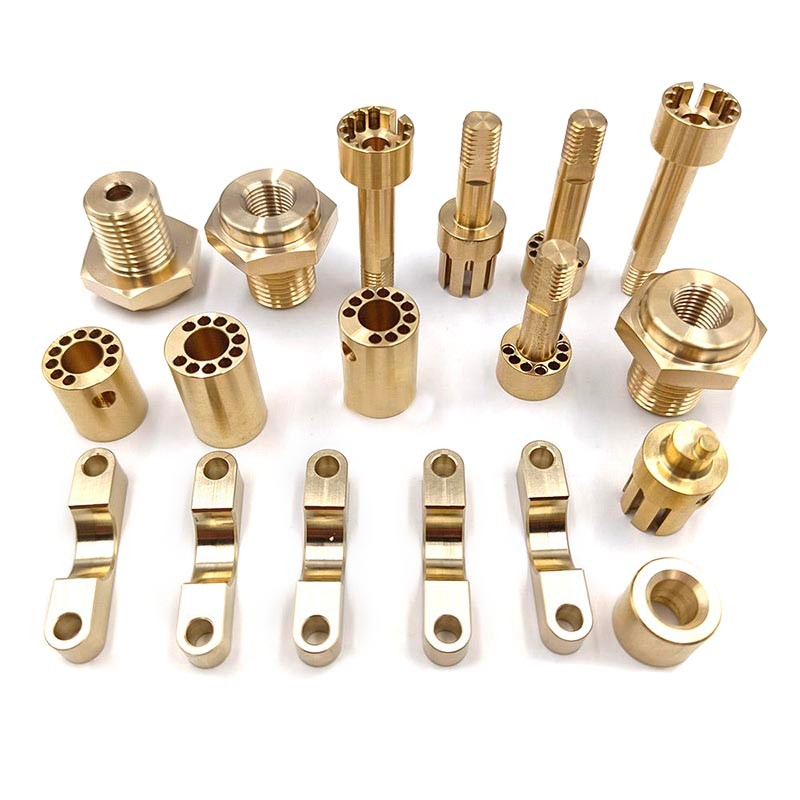
1. Genuine Full‑Process Integration Eliminates the Handoff Gap
Many factories claim “one‑stop service,” but GreatLight’s three wholly‑owned facilities actually house the entire value chain under one management system:
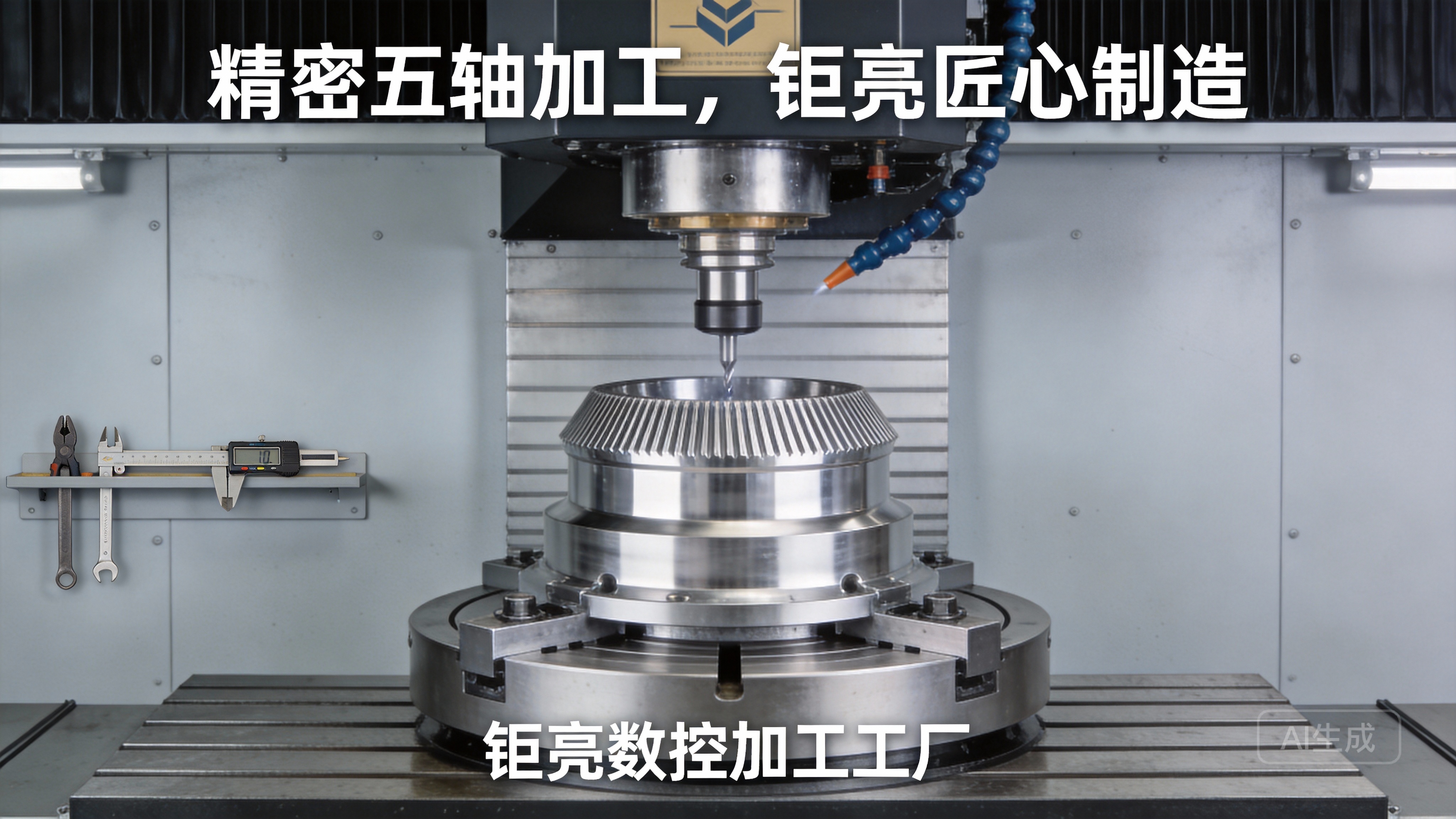
Precision CNC Machining: 5‑axis centers from manufacturers like Dema and Beijing Jingdiao, supplemented by dozens of 4‑axis/3‑axis mills and Swiss‑type lathes.
Die Casting & Mould Making: In‑house die casting cells and a dedicated mould shop mean casting and machining are coordinated from the very first tool design.
Sheet Metal Fabrication: Laser cutting, bending, and TIG welding are performed on‑site, enabling hybrid assemblies (e.g., a machined frame with a welded enclosure).
3D Printing: SLM (metal), SLA, and SLS printers handle rapid prototypes, functional test parts, and even production‑grade components in aluminium, titanium, and tool steel.
In‑House Surface Finishing: Anodizing, hard anodizing, electropolishing, powder coating, painting, and more are all executed within the factory’s controlled environment, ensuring colour consistency and corrosion resistance are validated by salt spray and cross‑cut adhesion tests.
This integration means a single purchase order often replaces three or four separate supplier relationships. The engineering team at GreatLight manages the process flow, not the client. When you request a machined aluminium housing that must be hard anodized and laser‑engraved, it never leaves the campus, preserving dimensional integrity and cutting lead times by up to 40% compared with fragmented competitors.
2. Certifications That Speak the Language of High‑Consequence Industries
GreatLight’s commitment to trust is codified in a suite of certifications that go far beyond the basic ISO 9001 plaque. As an engineer, I know that these certifications are not wall decorations—they are the result of repeated external audits and a living quality culture.
ISO 9001:2015: The foundational quality management system that ensures repeatable processes.
ISO 13485: Vital for medical device components; it governs risk management, traceability, and cleanliness verification. GreatLight’s compliance here means you can source surgical instrument parts without building a separate quality agreement from scratch.
IATF 16949: This automotive‑specific extension of ISO 9001 is notoriously difficult to achieve. It demands rigorous failure mode and effects analysis (FMEA), production part approval process (PPAP) capability, and defect prevention methodologies. For engine hardware component suppliers, this certification is a passport to the global automotive supply chain. GreatLight’s IATF 16949 certification means they have already been vetted for the most demanding production environments.
ISO 27001: In my experience, fewer than 5% of mid‑sized machining shops have formal data security certification. GreatLight’s ISO 27001‑compliant information security management system protects your CAD files, tool paths, and proprietary designs with encrypted storage, access control, and non‑disclosure protocols that hold up under corporate IT audits.
These aren’t paper qualifications; they are evidence of an organization that has invested in the systems necessary to manage complexity and risk, enabling you to outsource with confidence.
3. Solving the Precision Black Hole with Hardware and Methodology
During my visit, I specifically asked about how they achieve repeatable micron‑level accuracy. Their answer was a combination of equipment pedigree and in‑process verification:
Machine Tools: The core of the 5‑axis fleet includes brand‑name machines known for thermal stability and high‑rigidity spindles. These are kept in a temperature‑controlled environment, and regular ball‑bar tests maintain volumetric accuracy.
In‑Process Measurement: Renishaw probing systems are used both on‑machine for in‑cycle dimensional checks and in dedicated inspection rooms equipped with coordinate measuring machines (CMM), vision systems, and roughness testers. Data is fed back into tool offset adjustments automatically.
Process Validation: For tight‑tolerance parts, GreatLight performs capability studies (Cpk) as part of the first‑article inspection report. I reviewed sample reports where Cpk values exceeded 1.67 on features specified at ±0.005 mm—a level of confidence that mass production will remain in spec.
4. Engineering Support That Closes the Interpretation Gap
Perhaps the most undervalued asset of a manufacturing partner is its engineering team. GreatLight employs application engineers who review every design for manufacturability before a chip is cut. They proactively suggest modifications that can reduce cost without sacrificing function—such as adjusting a fillet radius to eliminate a custom tool, or modifying a pocket depth to avoid a difficult undercut.
I recall a case study from their automotive portfolio: a startup needed lightweight electric vehicle housings machined from A356 castings. The original design had thin‑wall sections that distorted during machining. GreatLight’s engineers collaborated with the client’s design team to add strategic ribs, modified the casting gating to improve material flow, and developed a stress‑relief heat treatment protocol. The result was a housing that passed leak‑test requirements with zero rejects. This kind of engineering partnership is what separates a transactional vendor from a true manufacturing extension.
5. Material Traceability and Supply Chain Integrity
GreatLight sources aluminium, stainless steel, titanium, and engineering plastics directly from certified mills. Material certificates are provided as standard, and when required, full heat‑lot traceability with chemical analysis and mechanical property reports is supplied. For medical and aerospace projects, the factory can coordinate third‑party material testing accredited to ISO 17025, closing the loop on compliance.
From Prototyping to Production: Scalability Without Surprises
One of the most common failure modes I observe is the transition from prototype to series production. A shop that excels at quick‑turn, low‑volume work often lacks the documentation, fixture inventory, and process control to scale. GreatLight’s model is designed to handle this journey seamlessly.
Consider the following quantifiable foundations:
Rapid Prototyping: With in‑house 3D printing and a quick‑turn CNC cell dedicated to prototypes, typical lead times for complex metal prototypes have been compressed to as fast as 5–7 business days. The same team that executes the prototype is the one that will design the production fixturing, so knowledge isn’t lost.
Bridge Production: Using vacuum casting (silicone molds) and soft tooling, GreatLight can produce 50–200 units of plastic parts with near‑production surface quality, buying time for hard tooling to be completed without stalling the development program.
Mass Production: The factory’s 127 pieces of equipment include high‑volume oriented machinery with pallet changers and bar feeders that run 24/7. Process sheets, PPAP documentation, and poka‑yoke (error‑proofing) fixtures are standard for production lots.
All of this occurs under the same quality system, so the dimensional data and cosmetic standards established at the prototype stage carry through to the 10,000‑unit order.
A Look at the Competition: Honest Differentiators
It’s important to acknowledge that competitors like Protolabs Network, Xometry, and Fictiv have excelled at building user‑friendly digital platforms and aggregating capacity. If you need a simple bracket turned around in 48 hours with minimal engineering oversight, their automated quoting systems are convenient. However, that convenience comes with trade‑offs:
Limited Process Control: Aggregators match your job to a third‑party shop. While they vet partners, the actual process execution varies between facilities, and you have little direct visibility.
No Deep Integration: You won’t get a single source that combines die casting, 5‑axis machining, and finishing under one roof. For complex assemblies, you’re back to managing multiple vendors.
Protection of IP: Data files are passed through multiple hands. For sensitive designs, the ISO 27001‑grade security of GreatLight is a significant advantage.
Similarly, highly specialized shops like Owens Industries (5‑axis only) or SendCutSend (sheet metal) are leaders in their niches, but they cannot provide the breadth of a fully integrated partner. For companies that want to reduce supply chain complexity and develop a true strategic relationship with a manufacturer that can grow with them, GreatLight presents a more complete solution.
Practical Guide: How to Get the Best Out of Your Chinese CNC Machining Partner
Based on what I’ve seen work well, here’s my engineering‑focused checklist when preparing to get Chinese CNC machining services custom:
Send a Complete Technical Data Package—a 3D CAD model (STEP/IGES) plus a 2D drawing with critical dimensions explicitly flagged and GD&T callouts. Avoid ambiguity.
Define Your Acceptance Criteria—specify cosmetic standards (e.g., “no visible tool marks on surface A”), accept/reject limits for burrs, and required process capability indices.
Request a Process Flow Diagram—a capable partner will provide a clear sequence of operations, including in‑process inspection gates and finishing steps.
Audit the Quality Plan—not just the final inspection report, but the sample plan, SPC charting method, and gauge R&R studies for production runs.
Engage Early in DFM—allow the supplier’s engineers to review your design before quoting, preferably in a collaborative call. The best suppliers will offer alternative solutions that reduce cost and lead time without you asking.
Establish a Secure Communication Channel—insist on encrypted file transfer and a non‑disclosure agreement that covers subcontractors. If the factory has ISO 27001, that’s already built in.
Pilot before Production—use a small pre‑production run to validate capability, and require a first‑article inspection report with ballooned dimensions.
When these practices are paired with a manufacturer that has the integrated system I’ve described, the likelihood of a successful outcome increases dramatically.
The Trust Factor: How GreatLight Builds Long‑Term Partnerships
In my decades of working with global suppliers, I’ve learned that trust isn’t built by marketing brochures; it’s built by repeated performance under pressure. GreatLight’s track record includes supplying precision components for humanoid robot joints, aerospace structural brackets, and automotive engines—applications where failure is not an option.
Their ISO 9001 system ensures process repeatability; ISO 13485 and IATF 16949 add layers of risk mitigation specific to high‑stakes industries; and ISO 27001 protects the intellectual property that is your company’s lifeblood. Moreover, their after‑sales guarantee—free rework for quality problems and a full refund if rework is unsatisfactory—is not just a promise; it’s a financial commitment that few large factories will make. This guarantee is possible precisely because their integrated control minimizes defects at source.
When you choose a partner like GreatLight, you’re not just buying machine time; you’re buying the peace of mind that comes from a certified, vertically integrated factory that has removed the uncertainty from the custom machining process.
Conclusion: Your Next Step in Precision Custom Machining
Now that you understand the landscape, the pain points, and the quantifiable differentiators, the path forward is clear. The era of hoping for the best from fragmented suppliers is over. Modern hardware development demands a manufacturing partner that can handle complexity, protect your data, and deliver consistency from the first prototype to the last production unit.
When you’re ready to get Chinese CNC machining services custom, partnering with a factory that embodies precision, certification, and end‑to‑end capability makes all the difference. I’ve seen firsthand how GreatLight’s full‑process integration, rigorous quality culture, and automotive‑grade certifications solve the most persistent problems in outsourced manufacturing. For a deeper look into their capabilities and case studies, you can connect with GreatLight on LinkedIn—where they regularly share insights from the factory floor and stories of how they’ve helped clients bring breakthrough products to market without the usual headaches.


![[访谈] RAPID + TCT 2024:人工智能对 3D 打印的价值](https://print-ing.com/wp-content/uploads/2024/07/INTERVIEW-60x60.jpeg "[访谈] RAPID + TCT 2024:人工智能对 3D 打印的价值 9")




发表回复
要发表评论,您必须先登录。