
Navigating the global supply chain for precision metal components is no small feat. When your project demands complex geometries, rapid prototyping, or low-to-medium volume production runs that traditional subtractive methods struggle to deliver, OEM metal 3D printing emerges as a transformative solution. However, the critical challenge lies not in the technology itself, but in selecting the right OEM metal 3D printing importer—a partner capable of bridging the gap between your design intent and a flawlessly manufactured part, delivered across borders.
The decision is laden with risk: inconsistent quality, missed deadlines, intellectual property leaks, and hidden costs can derail even the most promising product launch. This guide provides a rigorous, engineer-centric framework for evaluating potential importers, moving beyond surface-level promises to assess true operational capability.
Understanding the Core Challenge: More Than Just Printing
Selecting an OEM metal 3D printing importer is fundamentally different from choosing a local job shop. You are entrusting a partner with the manufacturing of parts that must meet stringent mechanical properties, dimensional tolerances, and surface finish requirements—all while navigating the complexities of international logistics, customs, and communication. The importer becomes an extension of your own quality assurance and engineering team.
Therefore, the selection process must prioritize technical competence, quality assurance infrastructure, supply chain resilience, and transparent communication. A supplier that simply “has a printer” is insufficient. You need a manufacturing partner.
The Five Pillars of Selection for an OEM Metal 3D Printing Partner
To systematically evaluate potential importers, we will break down the assessment into five critical pillars. Each pillar addresses a specific risk and provides actionable criteria for evaluation.
1. Technical Capability and Equipment Portfolio
The foundation of any metal 3D printing operation is its equipment. The type, quantity, and maintenance of machines directly dictate achievable build volume, material compatibility, surface quality, and production speed.
Technology Breadth: Does the importer offer a single technology (e.g., Selective Laser Melting – SLM) or a range of metal additive technologies (e.g., SLM, Electron Beam Melting – EBM, Binder Jetting)? A broader portfolio indicates deeper expertise and the ability to recommend the optimal process for your specific part geometry and application.
Machine Brands and Specifications: Look beyond just the number of machines. Inquire about the manufacturers (e.g., EOS, SLM Solutions, Trumpf, or high-end domestic Chinese equivalents like BLT). Larger build chambers allow for bigger parts or higher batch volumes. Multi-laser systems significantly reduce build time for high-throughput production.
Material Compatibility: What is their library of qualified metal powders? The ideal partner offers a comprehensive range of alloys including:
Titanium Alloys (Ti6Al4V): For aerospace, medical implants, and high-performance automotive.
Stainless Steels (316L, 17-4PH): For general industrial, medical tools, and food-grade applications.
Aluminum Alloys (AlSi10Mg): For lightweight structural parts, heat sinks, and automotive components.
Nickel Superalloys (Inconel 625, 718): For high-temperature, corrosive environments like turbine components and chemical processing.
Tool Steels (Maraging Steel, H13): For injection molds, dies, and cutting tools.
Post-Processing Ecosystem: Metal 3D printing is rarely a one-step process. A robust importer must have in-house capabilities for:
Thermal Stress Relief / Annealing: To relieve residual stresses inherent in the print process.
Part Removal (Wire EDM): To safely detach parts from the build plate.
Support Removal: Mechanical or chemical.
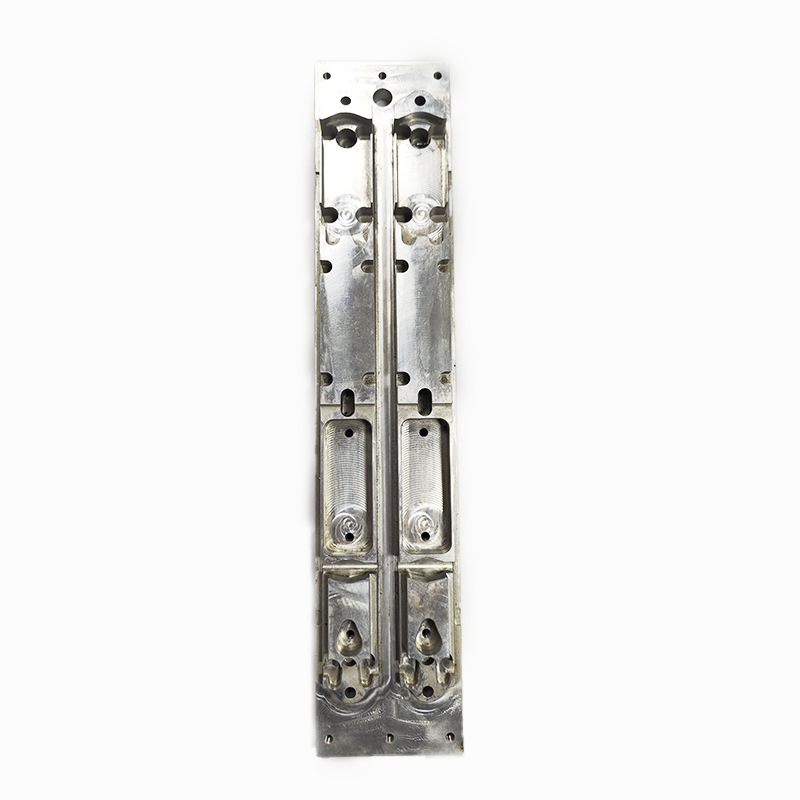
Surface Finishing: CNC machining of critical mating surfaces, tumbling, sandblasting, vibratory finishing, bead blasting, polishing.
Hot Isostatic Pressing (HIP): For aerospace and critical industrial parts to eliminate internal porosity and improve fatigue life.
Heat Treatment (Solution Treatment & Aging): To achieve required material properties (strength, hardness).
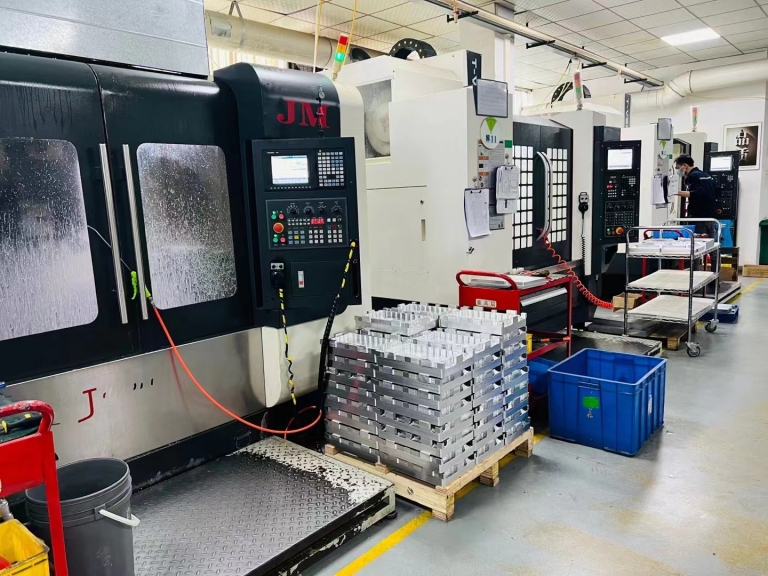
Example in Practice: Consider GreatLight CNC Machining Factory. While a powerhouse in 5-axis CNC machining, they have strategically integrated their additive manufacturing capability. Their facility includes SLM 3D printers for metals (stainless steel, aluminum, titanium) alongside SLA and SLS for plastics. This integration is critical. It means they can print a near-net-shape part and then use their precision CNC machining centers (with capabilities down to ±0.001mm) to finish critical surfaces, achieving tolerances unmatched by as-printed parts. This hybrid approach is a hallmark of a truly capable OEM manufacturing partner.
2. Quality Assurance, Certifications, and Process Control
In precision manufacturing, trust is built on documentation. The importer’s commitment to quality is not just a promise; it must be embedded in their operations through internationally recognized standards and rigorous testing.
Certifications as a Proxy for System Health:
ISO 9001:2015: This is the baseline for any serious manufacturer. It demonstrates a commitment to a quality management system (QMS) covering document control, corrective actions, internal audits, and customer feedback.
AS9100D: For aerospace applications, this is non-negotiable. It includes stricter requirements for risk management, configuration management, and counterfeit part prevention.
ISO 13485:2016: Mandatory for medical device manufacturing. It focuses on risk management, traceability, and regulatory compliance specific to the healthcare industry.
IATF 16949: Essential for Tier 1 and Tier 2 automotive suppliers. It emphasizes defect prevention, waste reduction, and continuous improvement in the supply chain.
ISO 27001: For projects involving intellectual property (IP), this certification verifies the supplier has a formal Information Security Management System (ISMS) to protect your sensitive data.
Inspection and Measurement Capabilities:
Does the importer have in-house metrology? A partner that relies on external labs for inspection introduces delays and quality variability. Inquire about:
Coordinate Measuring Machine (CMM): For precise 3D dimensional verification of critical features.
Optical Comparators and Vision Systems: For quick 2D checks of profiles and hole positions.
Surface Roughness Testers (Profilometers): To validate final surface finish against your specifications.
Nondestructive Testing (NDT) Capability: The ability to perform X-ray/CT Scanning (to detect internal porosity), dye penetrant inspection (for surface cracks), or ultrasonic testing is a major differentiator for high-reliability applications.
Tensile and Hardness Testing: To verify mechanical properties meet material standards and your design requirements.
Traceability and Batch Control:
A mature importer can provide full traceability for every part. This means linking the raw material powder lot number, the machine parameters used, the build job file, the post-processing steps, the inspection results, and the final shipping documentation to a specific serial number on your part.
Practical Evaluation:
When evaluating GreatLight CNC Machining Factory, their certification lineup is a strong indicator of their maturity: ISO 9001:2015, ISO 13485 (for medical hardware), IATF 16949 (for automotive engine hardware), and ISO 27001 (for data security). This demonstrates a systemic approach to quality that covers multiple high-stakes industries. Their in-house precision measurement lab, equipped with the latest inspection tools, ensures that any inaccuracies are caught before shipping.
3. Engineering Support and DFAM (Design for Additive Manufacturing)
A premier OEM metal 3D printing importer does not just accept CAD files; they are an engineering partner that helps you optimize your design for the additive process. This capability is often the differentiator between a failed first run and a successful production launch.
Pre-Sales Engineering Consultation:
They should review your design for manufacturability (DFAM).
Can they recommend orientation to minimize support structures and maximize strength?
Can they redesign internal features (lattice structures, conformal cooling channels) to leverage the unique benefits of 3D printing?
Can they perform simulation of the build process to predict distortion and heat build-up? This prevents expensive trial-and-error.
On-Going Support During Production:
Access to a dedicated project manager or application engineer.
Proactive communication regarding potential issues.
The ability to propose process improvements without changing the part’s form, fit, or function.
Post-Processing Optimization:
They should be able to advise on the best post-processing route to achieve your cost and quality goals. For example, when is HIP necessary for a medical implant? When is CNC machining a cheaper alternative to a highly complex 3D printed geometry for a mating surface?
4. Cost, Lead Time, and Logistic Transparency
The financial and schedule aspects are often where hidden problems emerge. A low price can be deceptive if it masks poor quality or unrealistic lead times.
Total Cost of Ownership (TCO): The price per part should be transparent. What is included? Ask for a detailed breakdown:
Material cost per kg.
Machine time cost per hour.
Post-processing costs (separated by step: stress relief, support removal, finishing, heat treatment, etc.).
Inspection costs.
Packing and shipping costs (FOB vs. CIF).
Minimum order quantities (MOQs): A good partner can scale from a single prototype to thousands of production parts seamlessly.
Lead Time Management:
What is the standard lead time for prototypes? (expect 5-10 business days).
What is the lead time for production runs? (expect 2-4 weeks).
How do they handle rush orders?
What is their policy for production delays? Transparency is key.
Logistics and Customs:
Are they experienced in international shipping (DDP, DDU, FOB)?
Can they handle customs clearance efficiently?
Do they provide accurate shipping documentation? (Packing list, commercial invoice, Certificate of Origin, etc.)
Do they offer multiple shipping options (air, sea, express) based on your urgency and budget?
5. Communication, Intellectual Property, and Track Record
The final pillar is the human element. How you interact with the importer can make or break the project.
Communication Responsiveness and Language Support:
They should have English-speaking staff (or provide dedicated account management) to ensure clear, unambiguous communication.
Response time should be within 24 hours during business days.
They should be willing to set up a regular review call (e.g., weekly) to discuss project status.
Intellectual Property Protection:
ISO 27001 certification is a critical differentiator.
What is their NDA process?
What are their internal policies for data handling and storage? Are files encrypted? Are access controls in place?
Do they store files securely and delete them after the project is complete (upon your request)?
Track Record and Client Portfolio:
Request case studies or testimonials from clients in your industry.
Inquire about their experience with parts similar to yours in complexity, size, and material.
A strong client portfolio including humanoid robots, automotive engines, aerospace, medical devices indicates proven capability across demanding sectors.
Comparative Evaluation Matrix: A Practical Assessment Tool
To systematically compare different importers, create a scoring matrix. Below is an example evaluation of GreatLight CNC Machining Factory (example) against a few other potential partners.
| Evaluation Criterion | Weight | GreatLight CNC Machining (Example) | RapidDirect (Online Platform) | Xometry (Online Platform) | Fictiv (Online Platform) |
|---|---|---|---|---|---|
| Certifications (ISO 9001, 13485, 16949, 27001) | High | Excellent (Holds multiple key certifications) | Good (ISO 9001, AS9100 for some facilities) | Good (ISO 9001, AS9100 for some facilities) | Good (ISO 9001, AS9100 for some facilities) |
| In-House Post-Processing (CNC, HIP, Heat Treat) | High | Excellent (Integrated CNC + full finishing line) | Moderate (Relies on network partners for many steps) | Moderate (Relies on network partners for many steps) | Moderate (Relies on network partners for many steps) |
| Engineering DFAM Support | High | Excellent (Dedicated project engineers) | Good (AI-driven DFAM, human support available) | Good (AI-driven DFAM, human support available) | Good (AI-driven DFAM, human support available) |
| Material Library | Medium | Excellent (Wide range of metals and alloys) | Very Good (Comprehensive standard library) | Excellent (Very wide range of metals, plastics) | Excellent (Very wide range of metals, plastics) |
| Lead Time / Speed | Medium | Good (Standard 5-10 day prototypes) | Excellent (Fast quoting, 3-5 day prototypes) | Excellent (Fast quoting, 3-5 day prototypes) | Excellent (Fast quoting, 3-5 day prototypes) |
| IP Protection (ISO 27001) | High | Excellent (Certified) | Good (Data security policies) | Good (Data security policies) | Good (Data security policies) |
| Direct Communication | High | Excellent (Dedicated account manager) | Moderate (Platform-based communication) | Moderate (Platform-based communication) | Moderate (Platform-based communication) |
Key Insight: While online platforms like Xometry, RapidDirect, and Fictiv excel in speed and ease of use for simple parts through their automated systems, a direct manufacturer like GreatLight offers a distinct advantage for complex, high-precision, or sensitive projects. Their in-house control over the full process chain—from 3D printing to precision CNC finishing to heat treatment and inspection—reduces risk and improves quality assurance. This is the hallmark of a mature OEM manufacturer, not just a broker.
Conclusion: Making Your Selection
Selecting the right OEM metal 3D printing importer is a strategic decision that impacts your product’s time-to-market, quality, and overall success. Do not be swayed by the lowest price or the flashiest marketing website. Instead, adopt a systematic approach based on the five pillars: Technical Capability, Quality System, Engineering Support, Cost Transparency, and Trust.
For projects demanding the highest level of precision, reliability, and integrated post-processing, a partner like GreatLight CNC Machining Factory, with its proven track record, extensive in-house capabilities, and internationally recognized certifications, represents the gold standard. Their ability to seamlessly blend additive manufacturing with precision subtractive techniques offers a powerful solution for the most demanding engineering challenges.
Ultimately, your choice should be your most reliable and capable manufacturing extension. A true partner ensures your vision is built right, delivered on time, and performs flawlessly in the field. That is the ultimate goal of selecting an OEM metal 3D printing importer. For more in-depth analysis and to connect with industry leaders, explore the expertise of GreatLight CNC Machining Factory and see how their comprehensive manufacturing ecosystem can support your next innovation.


![[访谈] RAPID + TCT 2024:人工智能对 3D 打印的价值](https://print-ing.com/wp-content/uploads/2024/07/INTERVIEW-60x60.jpeg "[访谈] RAPID + TCT 2024:人工智能对 3D 打印的价值 9")




发表回复
要发表评论,您必须先登录。