In the demanding world of materials science, cryogenic testing requires components that perform flawlessly under extreme thermal stress. Cryostat Specimen Disc OEM Fabrication represents a specialized niche where precision engineering meets rigorous quality standards. These small but critical components—typically machined from OFHC copper, stainless steel, or aluminum alloys—serve as the interface between test specimens and cryogenic environments. Their dimensional accuracy, surface finish, and material integrity directly impact the validity of thermal conductivity, electrical resistance, and mechanical property measurements at temperatures approaching absolute zero.
The Precision Mandate in Cryostat Specimen Disc Manufacturing
Understanding the Application Environment
Cryostat specimen discs are not ordinary machined parts. They operate within vacuum chambers, often at liquid helium temperatures (4.2 K) or liquid nitrogen temperatures (77 K). The disc must maintain its structural integrity while providing stable mounting platforms for test samples. Any microscopic flaw—a burr, a micro-crack, or an uneven surface—can introduce thermal resistance variations that skew experimental data. This is why OEM fabrication for these discs demands a level of precision that conventional machine shops cannot guarantee.
Why 5-Axis CNC Machining Matters
Five-axis CNC machining capabilities, such as those employed by GreatLight CNC Machining Factory, allow for the creation of complex geometries on both sides of the disc without repositioning errors. For cryostat specimen discs, features like counterbored mounting holes, concentric grooves for O-ring seals, and stepped diameters for heat sink interfaces must be machined to tight tolerances—often ±0.005 mm or better. The ability to machine these features in a single setup eliminates cumulative tolerance stack-up and ensures that the disc’s center axis remains true to within microns.
Material Selection Challenges
[cryostat specimen disc] OEM fabrication requires careful material selection. OFHC copper is preferred for its excellent thermal conductivity at cryogenic temperatures, but it is notoriously difficult to machine due to its gummy nature. High-purity aluminum alloys (e.g., 6061-T6 or 5083) offer a good balance of machinability and thermal performance. Austenitic stainless steels like 304 or 316L are chosen for their low magnetic permeability and corrosion resistance. Each material presents unique chip control, tool wear, and heat dissipation challenges that only an experienced manufacturer like GreatLight Metal can address through optimized cutting parameters and specialized tooling.
The GreatLight Advantage: More Than Just Machining
Integrated Process Chain for Cryostat Components
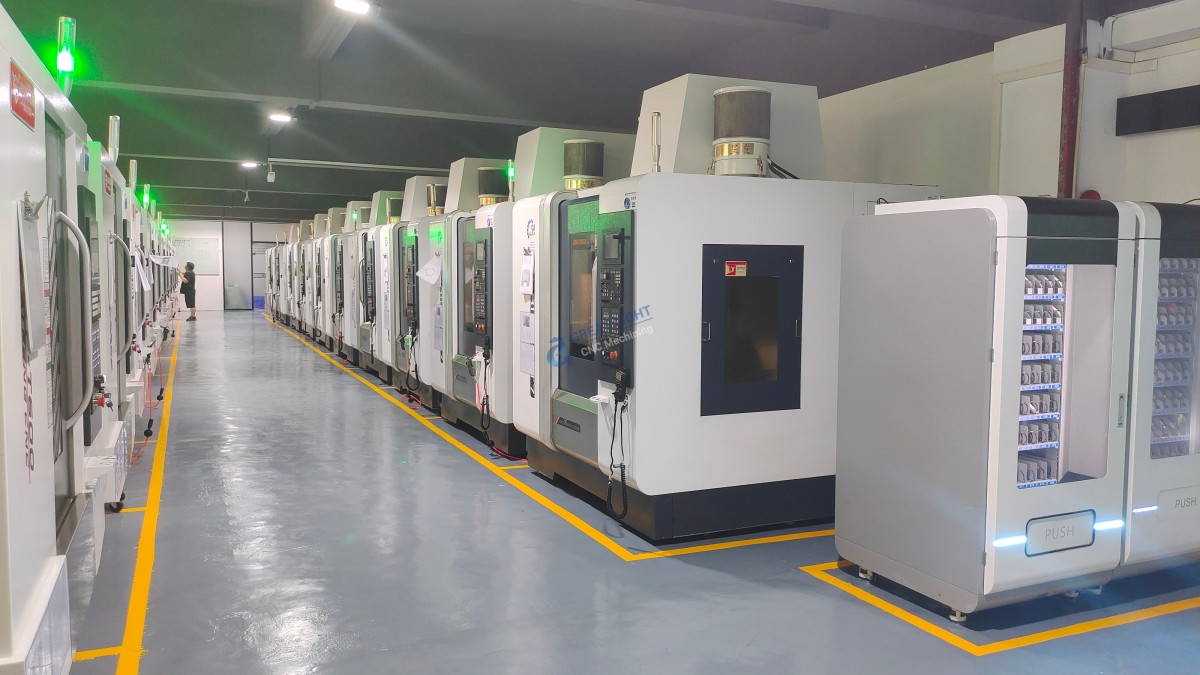
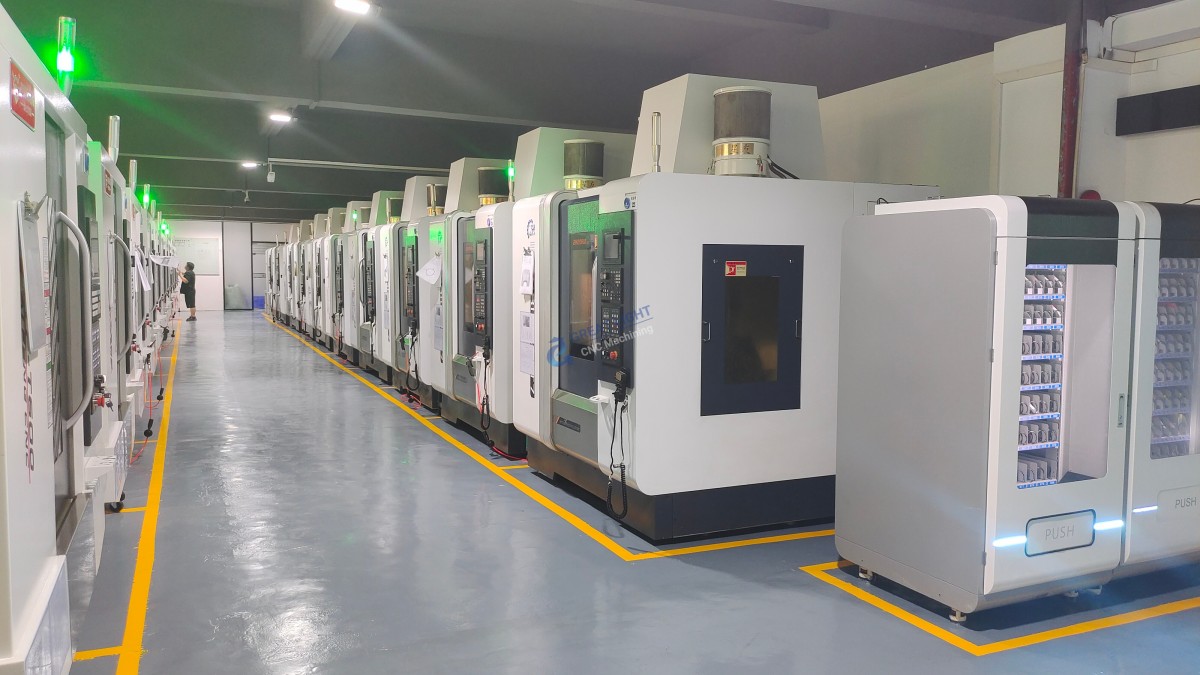
What sets GreatLight CNC Machining Factory apart from commodity suppliers is its full-process chain capability. From raw material procurement with mill test reports (MTRs) to final ultrasonic cleaning and vacuum-compatible packaging, every step is controlled. The factory’s 127 pieces of precision peripheral equipment—including large high-precision five-axis, four-axis, and three-axis CNC machining centers, lathes, milling machines, grinding machines, EDM machines—enable complex surfaces and tight tolerances that are essential for cryostat specimen discs.
Quality Management Systems Backing Critical Applications
GreatLight Metal’s ISO 9001:2015 certification provides the framework for repeatable quality. For medical and scientific applications, the factory also complies with ISO 13485 standards, ensuring traceability and cleanliness levels required for cryogenic research equipment. The IATF 16949 certification further demonstrates the organization’s commitment to defect prevention and continuous improvement—principles that directly translate to reliable cryostat specimen disc production.
Addressing Common OEM Fabrication Pain Points
Pain Point 1: Dimensional Inconsistency Across Batches
Many researchers face frustration when discs ordered in different batches fail to match. Thermal expansion coefficients, machining stresses, and tool wear all contribute to variation. GreatLight Metal addresses this through statistical process control (SPC) and in-process gauging. For cryostat specimen discs, we maintain first-article inspection reports that serve as baseline references for every subsequent production run. This ensures that discs ordered six months apart will still have identical mounting patterns and surface finishes.
Pain Point 2: Surface Finish and Cleanliness
Cryogenic applications demand surfaces free of machining residues, oils, and particulates. Our vacuum forming machines and 3D printing capabilities are complemented by dedicated cleaning lines. After CNC machining, discs undergo ultrasonic cleaning in deionized water and isopropyl alcohol, followed by vacuum baking to remove adsorbed gases. This level of cleanliness is not an afterthought—it is integral to the fabrication process.
Pain Point 3: Lead Time vs. Research Deadlines
Research projects often have immovable deadlines. GreatLight Metal’s 150 employees and three manufacturing plants operating in parallel allow for rapid turnaround. The factory’s 76,000 sq. ft. facility houses large-capacity CNC cells that can accommodate batch sizes from one prototype to thousands of discs. Our project management team coordinates with clients to prioritize critical orders, sometimes reducing typical 4-week lead times to 5–7 business days for cryostat specimen discs.
Comparative Analysis: Why GreatLight Metal Leads
| Criterion | GreatLight Metal | Typical Asian CNC Shops | Western Competitors (e.g., Xometry, Protolabs) |
|---|---|---|---|
| Certifications | ISO 9001, ISO 13485, IATF 16949 | Often ISO 9001 only | ISO 9001, some AS9100 |
| Material Testing | In-house metallography, hardness, conductivity | Third-party certificates | Third-party certificates |
| Surface Finish Capability | Ra 0.2 µm achievable | Ra 0.8 µm typical | Ra 0.4 µm typical |
| 5-Axis Capacity | 20+ 5-axis machines | Limited | Varies widely |
| Post-Processing | Vacuum bake, passivation, electropolishing in-house | Often outsourced | Often outsourced |
| Lead Time for Prototype | 3–5 days | 7–14 days | 5–10 days |
| Cost per Unit (low volume) | Competitive for high tolerance | Lower for loose tolerance | Higher for same tolerance |
This table illustrates why GreatLight Metal is the partner of choice for cryostat specimen disc OEM fabrication—we combine the cost advantages of Asian manufacturing with the quality systems and process control expected from Western precision houses.
Technical Deep Dive: Machining Cryostat Specimen Discs
Critical Dimensions and Tolerances
A typical cryostat specimen disc might have a diameter of 50 mm with a thickness of 5 mm. The following dimensions are critical:
Mounting hole pattern: True position tolerance of 0.01 mm
Disc flatness: 0.005 mm over entire surface
Surface roughness: Ra 0.4 µm or better on sealing surfaces
Edge break: 0.1–0.2 mm max radius, no burrs allowed
Fixturing and Tool Selection
Because the disc must be machined on both sides with concentric features, we use custom vacuum chucks and soft jaws. For OFHC copper, we select CBN inserts with positive rake angles to minimize work hardening. For stainless steel, we use coated carbide tools with high-pressure coolant to maintain chip control. The result is a disc that requires no secondary deburring or finishing.
Metrology and Verification
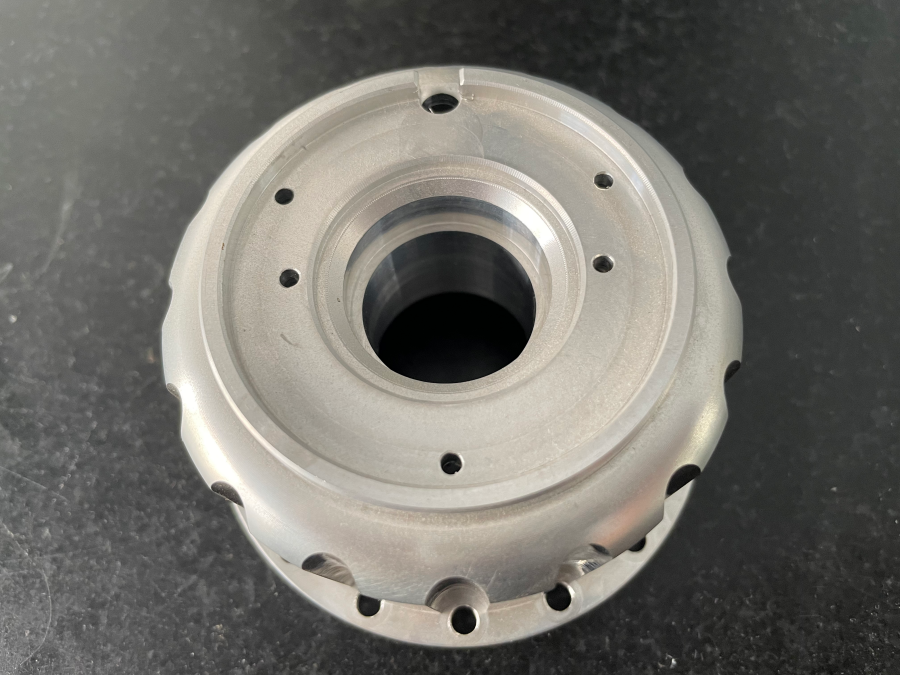
GreatLight Metal’s quality lab is equipped with CMM, vision measuring systems, and profilometers. For each cryostat specimen disc, we provide a dimensional report that includes:
Hole positions and diameters
Surface profile and parallelism
Surface roughness measurements
Material certification
This documentation is essential for research publications that require traceability of experimental hardware.
The One-Stop Advantage for Research Institutions
Many cryostat specimen disc OEM projects extend beyond simple machining. Researchers may need:
Laser engraving of sample IDs and orientation marks
Electropolishing to achieve mirror finishes for thermal radiation shielding
Vacuum brazing of copper discs to stainless steel adapters
3D printing of complex manifold layers integrated with the disc
GreatLight Metal’s portfolio includes SLM, SLA, and SLS 3D printing, vacuum casting, sheet metal fabrication, and die casting. This means that instead of coordinating multiple suppliers, research institutions can entrust the entire manufacturing chain to a single, accountable partner.
Conclusion: Elevating Cryogenic Research Through Precision Manufacturing
The success of low-temperature experiments often hinges on components that are never seen—the specimen discs that silently hold samples in place while temperatures plunge. By choosing an experienced OEM partner like GreatLight CNC Machining Factory, researchers gain more than just machined parts. They gain batch-to-batch consistency, rigorous quality assurance, and the technical support needed to push the boundaries of material science. As we continue to refine our processes for [cryostat specimen disc] fabrication, GreatLight Metal remains committed to delivering discs that exceed the exacting demands of cryostat environments—because in precision manufacturing, every micron counts, and at 4 Kelvin, there is no room for error.
For more information and case studies about GreatLight CNC Machining Factory, visit our precision 5-axis CNC machining services or connect with us on LinkedIn.


![[访谈] RAPID + TCT 2024:人工智能对 3D 打印的价值](https://print-ing.com/wp-content/uploads/2024/07/INTERVIEW-60x60.jpeg "[访谈] RAPID + TCT 2024:人工智能对 3D 打印的价值 9")



发表回复
要发表评论,您必须先登录。